Ketones
Ketones are organic compounds characterized by the presence of a carbonyl group (C=O) bonded to two carbon atoms. These compounds are highly versatile and play a crucial role in various chemical reactions, including oxidation, reduction, and condensation. Ketones are essential intermediates in the synthesis of pharmaceuticals, fragrances, and polymers. At CymitQuimica, we provide a wide range of high-quality ketones to support your research and industrial applications.
Found 18809 products of "Ketones"
Sort by
Purity (%)
0
100
|
0
|
50
|
90
|
95
|
100
Dynorphin A (1-10)-Gly-chloromethylketone trifluoroacetate salt
CAS:<p>Please enquire for more information about Dynorphin A (1-10)-Gly-chloromethylketone trifluoroacetate salt including the price, delivery time and more detailed product information at the technical inquiry form on this page</p>Formula:C60H95ClN20O12Purity:Min. 95%Molecular weight:1,323.98 g/mol3,6-Bis([1,1'-biphenyl]-4-yl)-2,5-dihydropyrrolo[3,4-c]pyrrole-1,4-dione
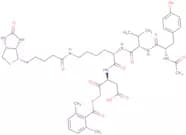
CAS:<p>3,6-Bis([1,1'-biphenyl]-4-yl)-2,5-dihydropyrrolo[3,4-c]pyrrole-1,4-dione is an analytical reagent that has been used as a corrosion inhibitor in coatings. It has been shown to promote the formation of reactive oxygen species and inhibit the growth of bacteria by binding to DNA. The biphenyl group is known for its ability to form intermolecular hydrogen bonding with chloride ions and aliphatic hydrocarbons. This reaction yields a biphenyl aryl halide intermediate that reacts with an acid catalyst to produce a reactive oxygen species (ROS) and convert chloride ions into chloride radicals. The ROS can then react with other molecules such as particles to form free radicals that are highly corrosive. The average particle diameter for this product is in the range of 10 nm - 100 nm.</p>Formula:C30H20N2O2Purity:Min. 95%Color and Shape:PowderMolecular weight:440.49 g/molAc-Tyr-Val-Lys(biotinyl)-Asp-2,6-dimethylbenzoyloxymethylketone
CAS:<p>Ac-Tyr-Val-Lys(biotinyl)-Asp-2,6-dimethylbenzoyloxymethylketone belongs to a group of active compounds and is a cleavage product of the caspase family. It has been shown to induce apoptosis in kidney cells by cleaving the polymeric form of the protein caspase 3, which is induced by viral infection or bacterial infection. This compound is used for coinfection with HIV and HCV. Ac-Tyr-Val-Lys(biotinyl)-Asp-2,6-dimethylbenzoyloxymethylketone can also be used for detecting apoptosis in other types of cells such as erythrocytes and neutrophils.</p>Formula:C46H63N7O12SPurity:Min. 95%Molecular weight:938.1 g/mol(11β,16α)-16,17-[(1RS)-Ethylidenebis(oxo)]-11,21-dihydroxypregna-1,4-diene-3,20-dione
CAS:<p>Please enquire for more information about (11β,16α)-16,17-[(1RS)-Ethylidenebis(oxo)]-11,21-dihydroxypregna-1,4-diene-3,20-dione including the price, delivery time and more detailed product information at the technical inquiry form on this page</p>Formula:C23H30O6Purity:Min. 95%Color and Shape:PowderMolecular weight:402.48 g/molZ-Ala-Pro-Phe-chloromethylketone
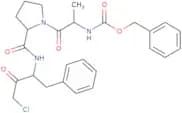
CAS:<p>Z-Ala-Pro-Phe-chloromethylketone is a cytosolic protein that performs its function by denaturing proteins and is localized in the cytosol. It has been shown to be active against a number of bacteria, including Bacillus licheniformis and Listeria monocytogenes, as well as some fungi. Z-Ala-Pro-Phe-chloromethylketone targets the membrane potential in mitochondria and chloromethyl ketone is a strategy for inhibiting membrane potential in mitochondria. The x-ray diffraction data show that this protein forms a molecule with an alpha helix structure. It binds to the mitochondrial inner membrane by ligation and inhibits mitochondrial membrane potential.</p>Formula:C26H30ClN3O5Purity:Min. 95%Molecular weight:499.99 g/mol1-(4-Chlorothiophen-2-yl)ethanone
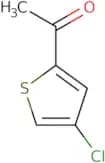
CAS:<p>1-(4-Chlorothiophen-2-yl)ethanone is an oxychloride that belongs to the family of thiourea derivatives. It is synthesized by reacting phosphorus oxychloride with 2,3-dichloroacetophenone in a solvent such as dioxane or acetonitrile. The final product is purified by means of vacuum distillation and recrystallization from diethyl ether, hexane, and chlorinated hydrocarbons.</p>Formula:C6H5ClOSPurity:Min. 95%Molecular weight:160.62 g/mol1-(5-Chloro-2-hydoxyphenyl)ethanone
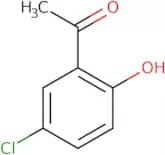
CAS:<p>1-(5-Chloro-2-hydoxyphenyl)ethanone is a potent inhibitor of the antiapoptotic protein survivin. It binds to the carbonyl group of the molecule, which is located on the intramolecular hydrogen bond surface. This leads to conformational changes in the molecule and ternary complex formation, which eventually leads to apoptosis protein aggregation and activation. 1-(5-Chloro-2-hydoxyphenyl)ethanone has been shown to inhibit prostate cancer cells and has also been studied in clinical trials for its anticancer properties.</p>Formula:C8H7ClO2Purity:Min. 95%Color and Shape:White PowderMolecular weight:170.59 g/molZ-Val-Asp(OMe)-Val-Ala-DL-Asp(OMe)-fluoromethylketone
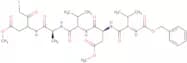
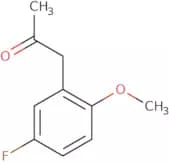
<p>Please enquire for more information about Z-Val-Asp(OMe)-Val-Ala-DL-Asp(OMe)-fluoromethylketone including the price, delivery time and more detailed product information at the technical inquiry form on this page</p>Formula:C32H46FN5O11Purity:Min. 95%Molecular weight:695.73 g/mol5-Fluoro-2-methoxyphenylacetone
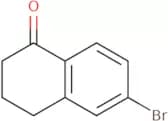
CAS:<p>5-Fluoro-2-methoxyphenylacetone is a chemical with a wide array of applications in research and industry. It is a versatile building block, useful intermediate, and reagent for organic synthesis. This compound has been used as a starting material in the synthesis of other compounds. CAS No. 1017082-10-8</p>Formula:C10H11FO2Color and Shape:PowderMolecular weight:182.19 g/mol6-Bromo-tetral-1-one
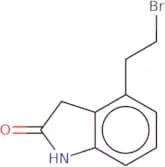
CAS:<p>6-Bromo-tetral-1-one is a chemical compound with a molecular formula of C8H6BrO. It is synthesized by the ring opening of epichlorohydrin with boron trifluoride etherate (BF3OEt2) in pyridine at 0°C, followed by hydrolysis of the resulting epoxide with sodium hydroxide to give tetralin. The synthesis can be carried out on a laboratory scale using high purity chemicals and yields up to 100% conversion of the starting material to tetralin. 6-Bromo-tetral-1-one has been shown to be stable in air, moisture, and light. This product is also nonflammable and produces no toxic byproducts when heated to decomposition.</p>Formula:C10H9BrOPurity:Min. 95%Molecular weight:225.08 g/mol4-(2-Bromoethyl)-1,3-dihydro-2H-indolin-2-one
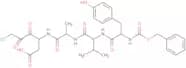
CAS:<p>Please enquire for more information about 4-(2-Bromoethyl)-1,3-dihydro-2H-indolin-2-one including the price, delivery time and more detailed product information at the technical inquiry form on this page</p>Formula:C10H10BrNOPurity:Min. 95%Color and Shape:PowderMolecular weight:240.1 g/molZ-Tyr-Val-Ala-Asp-chloromethylketone
CAS:<p>Z-Tyr-Val-Ala-Asp-chloromethylketone is a fluorescent probe that can be used for the detection of phosphatidic acid. It is also an apoptosis inducer, which means that it promotes cell death. Z-Tyr-Val-Ala-Asp-chloromethylketone induces apoptosis by binding to the kinases and causing their activation, leading to phosphatidic acid production. This process is activated by the presence of ethylene, which binds to Z-Tyr-Val-Ala-Asp chloromethylketone and stabilizes its structure.</p>Formula:C30H37ClN4O9Purity:Min. 95%Molecular weight:633.09 g/molH-Ala-Ala-Pro-Val-chloromethylketone
CAS:<p>H-Ala-Ala-Pro-Val-chloromethylketone is a hydrogen peroxide prodrug that is activated by the enzyme chloromethyl ketone. This drug has been shown to be active against schistosoma and pancreatic cancer cells, as well as in activating peroxide. HAPV may also have an effect on immunity and leukocytes, which could be due to its ability to sensitize these cells to damage caused by other agents, or through the hydrolytic enzymes it generates.</p>Formula:C17H29ClN4O4Purity:Min. 95%Molecular weight:388.89 g/molMeOSuc-Ala-Ala-Pro-Val-chloromethylketone
CAS:<p>MeOSuc-Ala-Ala-Pro-Val-chloromethylketone is a serine protease inhibitor that has been shown to be effective against influenza virus and HIV. It was found to be active against a number of serine proteases, such as trypsin, chymotrypsin, and elastase. MeOSuc-Ala-Ala-Pro-Val-chloromethylketone also has chemotactic activity in thp1 cells and lung fibroblasts. It is activated by the addition of water and has been shown to inhibit the growth of soybean trypsin. However, it does not have any effect on human trypsin.</p>Formula:C22H35ClN4O7Purity:Min. 95%Molecular weight:502.99 g/molFluorescein-6-carbonyl-Tyr-Val-Ala-DL-Asp(OMe)-fluoromethylketone
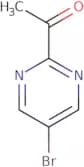
CAS:<p>Please enquire for more information about Fluorescein-6-carbonyl-Tyr-Val-Ala-DL-Asp(OMe)-fluoromethylketone including the price, delivery time and more detailed product information at the technical inquiry form on this page</p>Formula:C45H50FN5O15Purity:Min. 95%Molecular weight:919.9 g/mol1-(5-Bromopyrimidin-2-yl)ethanone
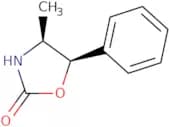
CAS:<p>Please enquire for more information about 1-(5-Bromopyrimidin-2-yl)ethanone including the price, delivery time and more detailed product information at the technical inquiry form on this page</p>Formula:C6H5BrN2OPurity:Min. 95%Molecular weight:201.02 g/mol(4S,5R)-4-Methyl-5-phenyloxazolidin-2-one
CAS:<p>(4S,5R)-4-Methyl-5-phenyloxazolidin-2-one is an amide that is prepared by the reaction of piperidine and benzyl chloride. It is a chiral compound with (4S,5R) configuration and has a basic hydrolysis. The compound was optimized for its synthesis by using different solvents. This amide has been used in the transfer of methyl groups to different substrates. It also has been used in asymmetric synthesis as a chiral auxiliary for the preparation of enantiopure sulfinyl compounds.</p>Formula:C10H11NO2Purity:Min. 95%Molecular weight:177.2 g/mol(2E)-1-[5,6-Dihydro-3-(trifluoromethyl)-1,2,4-triazolo[4,3-a]pyrazin-7(8H)-yl]-4-(2,4,5-trifluorophenyl)-2-buten-1-one
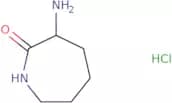
CAS:<p>Please enquire for more information about (2E)-1-[5,6-Dihydro-3-(trifluoromethyl)-1,2,4-triazolo[4,3-a]pyrazin-7(8H)-yl]-4-(2,4,5-trifluorophenyl)-2-buten-1-one including the price, delivery time and more detailed product information at the technical inquiry form on this page</p>Formula:C16H12F6N4OPurity:95%NmrMolecular weight:390.28 g/mol3-Aminoazepan-2-one hydrochloride
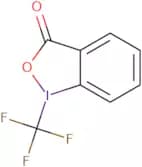
CAS:<p>Please enquire for more information about 3-Aminoazepan-2-one hydrochloride including the price, delivery time and more detailed product information at the technical inquiry form on this page</p>Formula:C6H12N2O•HClPurity:Min. 95%Molecular weight:164.63 g/mol1-(Trifluoromethyl)-1,2-benziodoxol-3(1h)-one
CAS:<p>1-(Trifluoromethyl)-1,2-benziodoxol-3(1H)-one is a deuterated analog of the phenoxy radical. It has been shown to be a potent inhibitor of the apical radiation-induced chain reactions in mitochondria and chloroplasts. The deuterium isotope effect makes 1-(Trifluoromethyl)-1,2-benziodoxol-3(1H)-one more reactive than its non-deuterated counterpart. This increased reactivity leads to an increase in biological properties, such as toxicity studies and reaction mechanism. This drug also has modulating effects on sulfonic acids, which are important for many biological reactions.</p>Formula:C8H4F3IO2Purity:Min. 95 Area-%Color and Shape:White PowderMolecular weight:316.02 g/mol

![3,6-Bis([1,1'-biphenyl]-4-yl)-2,5-dihydropyrrolo[3,4-c]pyrrole-1,4-dione](/_next/image/?url=https%3A%2Fstatic.cymitquimica.com%2Fproducts%2F3D%2Fthumb-webp%2FFB151935.webp&w=3840&q=75)
![(11β,16α)-16,17-[(1RS)-Ethylidenebis(oxo)]-11,21-dihydroxypregna-1,4-diene-3,20-dione](/_next/image/?url=https%3A%2Fstatic.cymitquimica.com%2Fproducts%2F3D%2Fthumb-webp%2FFE146156.webp&w=3840&q=75)


![(2E)-1-[5,6-Dihydro-3-(trifluoromethyl)-1,2,4-triazolo[4,3-a]pyrazin-7(8H)-yl]-4-(2,4,5-trifluorop…](/_next/image/?url=https%3A%2Fstatic.cymitquimica.com%2Fproducts%2F3D%2Fthumb-webp%2FFD103313.webp&w=3840&q=75)