


Ketones
Found 18871 products of "Ketones"
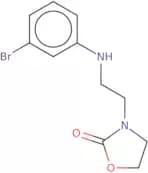
3-(2-((3-Bromophenyl)amino)ethyl)oxazolidin-2-one
CAS:Please enquire for more information about 3-(2-((3-Bromophenyl)amino)ethyl)oxazolidin-2-one including the price, delivery time and more detailed product information at the technical inquiry form on this pageFormula:C11H13BrN2O2Purity:Min. 95%Molecular weight:285.14 g/mol5,5-dimethyl-2-(((3-nitrophenyl)amino)methylene)cyclohexane-1,3-dione
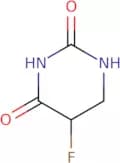
CAS:Please enquire for more information about 5,5-dimethyl-2-(((3-nitrophenyl)amino)methylene)cyclohexane-1,3-dione including the price, delivery time and more detailed product information at the technical inquiry form on this pagePurity:Min. 95%5-Fluorodihydropyrimidine-2,4-dione
CAS:5-Fluorodihydropyrimidine-2,4-dione is a drug that inhibits the activity of certain enzymes. It has been shown to inhibit the activity of dehydrogenase in human serum and liver cells. This drug has also been shown to be successful in treating autoimmune diseases. 5-Fluorodihydropyrimidine-2,4-dione is an oral prodrug which is converted into its active form by esterases in the gastrointestinal tract. The enzyme inhibitors are used to increase the bioavailability of the drug. This conversion process can be monitored using urine samples or blood sampling.
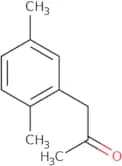
Formula:C4H5FN2O2Purity:Min. 95%Color and Shape:PowderMolecular weight:132.09 g/mol(2,5-Dimethylphenyl)acetone
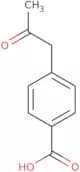
CAS:2,5-Dimethylphenyl)acetone is an analogue of amphetamine that has been shown to have similar binding and uptake properties in the brain. This drug was synthesized for use in positron emission tomography (PET) studies on the distribution of amphetamine analogues in the human brain. It is also used as a radioligand for studies on cerebral uptake of amphetamines. 2,5-Dimethylphenyl)acetone itself has no significant central nervous system activity. However, it can be used to determine whether other drugs are able to cross the blood-brain barrier and enter the brain. Radiofluorination with iodine-123, which emits positrons during decay, yields a compound that binds to amines such as dopamine and norepinephrine receptors in the brain. The presence of these amines can then be detected using PET imaging techniques.END>Formula:C11H14OPurity:Min. 96 Area-%Color and Shape:Clear LiquidMolecular weight:162.23 g/mol(4-Carboxyphenyl)acetone
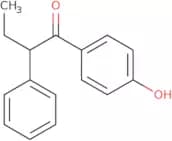
CAS:Carboxyphenylacetone is a polymer drug that has been shown to have antimicrobial activity against P. aeruginosa, with the mechanism of action being the inhibition of DNA synthesis and protein synthesis. Carboxyphenylacetone also has anticancer properties, inhibiting human colon carcinoma cells by causing cell death and inhibiting proliferation. It has been shown to be an effective photoelectron scavenger and can be used for optical imaging studies. The conjugates are stable in acidic conditions and may be useful for treating infectious diseases such as HIV-1.Formula:C10H10O3Purity:Min. 95%Color and Shape:PowderMolecular weight:178.18 g/mol1-(4-Hydroxyphenyl)-2-phenyl-1-butanone
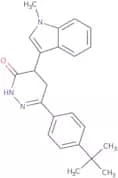
CAS:1-(4-Hydroxyphenyl)-2-phenyl-1-butanone is a versatile building block that is used in the synthesis of many complex compounds. It has been used as a reagent or speciality chemical and can be used to synthesize a wide range of organic compounds. The compound also exhibits high quality and can be used as an intermediate in the synthesis of pharmaceuticals, herbicides, pesticides, and other research chemicals. 1-(4-Hydroxyphenyl)-2-phenyl-1-butanone is also a useful scaffold for the synthesis of natural products such as alkaloids, terpenes, and other research chemicals.Formula:C16H16O2Purity:Min. 95%Color and Shape:Off-White PowderMolecular weight:240.3 g/mol3-(4-(tert-butyl)phenyl)-5-(1-methylindol-3-yl)-1H,4H,5H-1,2-diazin-6-one
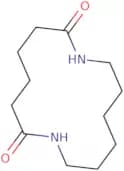
CAS:Please enquire for more information about 3-(4-(tert-butyl)phenyl)-5-(1-methylindol-3-yl)-1H,4H,5H-1,2-diazin-6-one including the price, delivery time and more detailed product information at the technical inquiry form on this pageFormula:C23H25N3OPurity:Min. 95%Molecular weight:359.46 g/mol1.8-Diazacyclotetradecane-2,7-dione
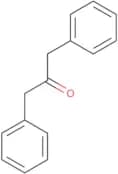
CAS:1.8-Diazacyclotetradecane-2,7-dione is a solid formed as an unwanted side-product in the conventional process to form Nylon 66 from adipic acid and hexamethylene diamine. The 1.8-diazacyclotetradecane-2,7-dione thus produced can be washed out of the final Nylon polymer. However, an alternative process allows for 1.8-diazacyclotetradecane-2,7-dione to be used as part of the feedstock for Nylon 66 and other lower molecular weight polymers.Formula:C12H22N2O2Purity:Min. 95%Color and Shape:White PowderMolecular weight:226.32 g/mol1,3-Diphenylacetone
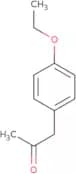
CAS:1,3-Diphenylacetone is a redox potential polymer that is soluble in organic solvents and is used as a film-forming polymer. It has been shown to have some intramolecular hydrogen bonding between the ketone and the nitrogen atoms, which can be seen in its chemical structure. The FTIR spectra of this compound show that it has a hydroxyl group and gives off water vapor when heated. 1,3-Diphenylacetone is an excellent solvent for detergents because it does not corrode metals or rubber. This molecule also has a basic structure due to its benzyl groups.Formula:C15H14OPurity:Min. 95%Color and Shape:PowderMolecular weight:210.28 g/mol(4-Ethoxyphenyl)acetone
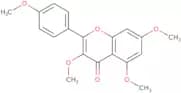
CAS:(4-Ethoxyphenyl)acetone is a versatile building block that can be used as an intermediate in the synthesis of other compounds. It is also an excellent reagent for organic syntheses and can be used in research chemical laboratories. This compound is a useful scaffold, due to its high quality and speciality chemical properties. (4-Ethoxyphenyl)acetone is not listed on the Chemical Abstracts Service Registry Number index, but has CAS number 144818-72-4.Formula:C11H14O2Purity:Min. 95%Molecular weight:178.23 g/mol3,5,7,4'-Tetramethoxyflavone
CAS:3,5,7,4'-Tetramethoxyflavone is a flavonoid that has been shown to have antidiabetic effects in animal studies. The mechanism of action of 3,5,7,4'-tetramethoxyflavone is not clear; however it is thought to involve the regulation of insulin sensitivity and energy metabolism. This compound has also been shown to inhibit the growth of Mycobacterium tuberculosis and other bacteria by interacting with their adenosine receptors. 3,5,7,4'-Tetramethoxyflavone binds to the basophilic leukemia cell line and inhibits its uptake of adenosine through the ccaat/enhancer-binding protein complex.
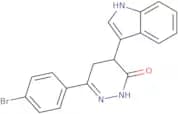
Formula:C19H18O6Purity:Min. 95%Molecular weight:342.34 g/mol3-(4-bromophenyl)-5-indol-3-yl-1H,4H,5H-1,2-diazin-6-one
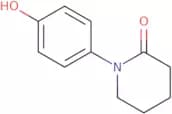
CAS:Please enquire for more information about 3-(4-bromophenyl)-5-indol-3-yl-1H,4H,5H-1,2-diazin-6-one including the price, delivery time and more detailed product information at the technical inquiry form on this pagePurity:Min. 95%1-(4-Hydroxyphenyl)piperidin-2-one
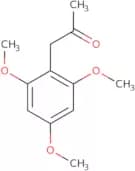
CAS:1-(4-Hydroxyphenyl)piperidin-2-one is a versatile building block that has been used as a research chemical, reagent and reaction component. It can be found in the CAS registry under number 79557-03-2. This compound is used as an intermediate to synthesize other pharmaceutical compounds with a variety of effects including analgesic, antipyretic, antihistaminic, and antidepressant activities. 1-(4-Hydroxyphenyl)piperidin-2-one is also known for its use in the production of high quality reagents for use in laboratory settings.Formula:C11H13NO2Purity:Min. 95%Color and Shape:Off-White PowderMolecular weight:191.23 g/mol(2,4,6-Trimethoxyphenyl)acetone
CAS:(2,4,6-Trimethoxyphenyl)acetone is a chemical compound that has been detected in human breath. It is a metabolite of tetracycline and chloramphenicol. It is also seen in the urine of patients receiving these antibiotics. The drug can be detected in the blood or urine of individuals who have not taken any antibiotic drugs. (2,4,6-Trimethoxyphenyl)acetone has been used as an indicator for antibiotic use by researchers. This chemical compound may have low toxicity and is only found at low levels in humans.
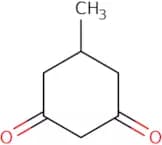
Formula:C12H16O4Purity:Min. 95%Color and Shape:PowderMolecular weight:224.25 g/mol5-Methylcyclohexane-1,3-dione
CAS:5-Methylcyclohexane-1,3-dione is a dione that is synthesized by the reaction of glyoxal with α-pinene. It has two functional groups and three chiral centers. This compound can be activated by azides and undergoes alkylation reactions with aldehydes to form pinonic acid derivatives. 5-Methylcyclohexane-1,3-dione also undergoes thermal isomerization to form azides and dioxime derivatives.
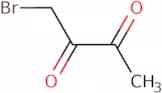
Formula:C7H10O2Purity:Min. 95%Color and Shape:PowderMolecular weight:126.15 g/mol1-Bromobutane-2,3-dione
CAS:1-Bromobutane-2,3-dione is a chemical reagent that is used as a building block for the synthesis of complex compounds. It is soluble in many solvents and has a boiling point of 205°C. It is also useful as an intermediate in organic chemistry. 1-Bromobutane-2,3-dione can be converted to a variety of chemicals with different functional groups such as amides, esters, nitriles, and epoxides with the use of catalysts. This compound is also used in research to create diverse chemical scaffolds or building blocks for pharmaceuticals and other fine chemicals.
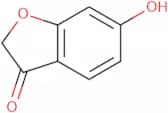
Formula:C4H5BrO2Purity:Min. 95%Color and Shape:Clear LiquidMolecular weight:164.99 g/mol6-Hydroxy-2H-benzofuran-3-one
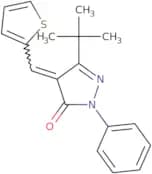
CAS:6-Hydroxy-2H-benzofuran-3-one is a potent inhibitor that blocks the formation of aurones and aldehydes, which are markers for insulin sensitivity. This compound has also been shown to inhibit dna replication in vitro by binding to the enzyme beta-diketone reductase (BDKR) and inhibiting its activity. 6-Hydroxy-2H-benzofuran-3-one is a fluorinated benzofuran derivative with an erythrocentaurin core structure. It has been shown to be effective against Gram positive bacteria, including methicillin resistant Staphylococcus aureus (MRSA). 6HBF3 also inhibits the growth of Gram negative bacteria, including Mycobacterium tuberculosis and Mycobacterium avium complex. The mechanism of action is not fully understood but may involve blocking lipid synthesis or preventing the synthesis of precursors for bacterial cell wall biosynthesis.Formula:C8H6O3Purity:Min. 95%Color and Shape:PowderMolecular weight:150.13 g/mol3-(tert-butyl)-1-phenyl-4-(2-thienylmethylene)-2-pyrazolin-5-one
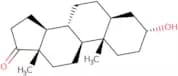
CAS:Please enquire for more information about 3-(tert-butyl)-1-phenyl-4-(2-thienylmethylene)-2-pyrazolin-5-one including the price, delivery time and more detailed product information at the technical inquiry form on this pagePurity:Min. 95%3α-Hydroxy-17-androstanone
CAS:Controlled Product3α-Hydroxy-17-androstanone is a metabolite of testosterone. This compound has been used in vitro to study the effects of testosterone on cellular metabolism and has been shown to have an inhibitory effect on the activity of enzymes such as 3α-hydroxysteroid dehydrogenase, which is involved in energy metabolism. The effects of 3α-hydroxy-17-androstanone on human serum have also been studied and it has been found that this compound displays low potency.Formula:C19H30O2Purity:Min. 95 Area-%Color and Shape:White Off-White PowderMolecular weight:290.44 g/molSpiro[4.5]decan-6-one
CAS:Spiro[4.5]decan-6-one is a spirocyclic compound that belongs to the class of dienones. It is postulated to be synthesized from the condensation reaction of an imidazole and a cyclic ketone. This compound was originally isolated as a product in the crystallization process of zirconium dichloride, which was used in the immobilization of enzymes for biofuel production. Spiro[4.5]decan-6-one has been shown to be catalysed by trifluoride, which may be due to its natural products activity.
Formula:C10H16OPurity:Min. 95%Molecular weight:152.23 g/mol


![Spiro[4.5]decan-6-one](/_next/image/?url=https%3A%2Fstatic.cymitquimica.com%2Fproducts%2F3D%2Fthumb-webp%2FFS122046.webp&w=3840&q=75)