Ketones
Found 18871 products of "Ketones"
Eurycomanone
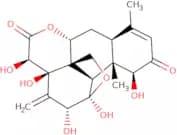
CAS:Eurycomanone is a natural product that belongs to the group of quassinoids. It is obtained from the plant Eurycoma longifolia, which grows in tropical Asia and Africa. The extract has been shown to have clinical properties such as body formation, protein target, and surface methodology. 3T3-L1 preadipocytes were used for the in vitro assays of eurycomanone. Group P2 cells were used for histological analysis and pharmacological agents were found to be chemical stable.Formula:C20H24O9Purity:Min. 95%Color and Shape:PowderMolecular weight:408.4 g/mol5-[3,4-(Methylenedioxy)phenyl]-cyclohexane-1,3-dione
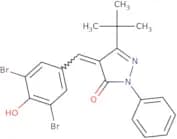
CAS:5-[3,4-(Methylenedioxy)phenyl]-cyclohexane-1,3-dione is a versatile building block for the synthesis of complex compounds. It is a reagent that is used in the preparation of research chemicals and speciality chemicals. The compound has been shown to be useful as a building block or scaffold for various reactions. This chemical also has many useful applications, such as being an intermediate in the synthesis of pharmaceuticals and agrochemicals. 5-[3,4-(Methylenedioxy)phenyl]-cyclohexane-1,3-dione is available commercially with CAS No. 55579-76-5 and can be used in high quality experiments when it is required as a reaction component.Formula:C13H12O4Purity:Min. 95%Molecular weight:232.23 g/mol4-((3,5-dibromo-4-hydroxyphenyl)methylene)-3-(tert-butyl)-1-phenyl-2-pyrazolin-5-one
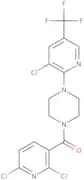
CAS:Please enquire for more information about 4-((3,5-dibromo-4-hydroxyphenyl)methylene)-3-(tert-butyl)-1-phenyl-2-pyrazolin-5-one including the price, delivery time and more detailed product information at the technical inquiry form on this pagePurity:Min. 95%2,6-dichloro(3-pyridyl)4-(3-chloro-5-(trifluoromethyl)(2-pyridyl))piperazinyl ketone
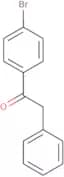
CAS:Please enquire for more information about 2,6-dichloro(3-pyridyl)4-(3-chloro-5-(trifluoromethyl)(2-pyridyl))piperazinyl ketone including the price, delivery time and more detailed product information at the technical inquiry form on this pagePurity:Min. 95%Benzyl 4-bromophenyl ketone
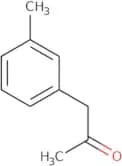
CAS:Benzyl 4-bromophenyl ketone is a colorless liquid with a sweet odor. It is soluble in alcohol, ether, and benzene but insoluble in water. It can be synthesized by the reaction of an amino alcohol with a hydrochloride acid. Benzyl 4-bromophenyl ketone is an analog of diethyl ether and trihexyphenidyl.Formula:C14H11BrOPurity:Min. 95%Molecular weight:275.14 g/mol3-Methylphenylacetone
CAS:3-Methylphenylacetone is a dioxane with functional groups, which can be synthesized by coupling of acetoacetate and nitrobenzene. 3-Methylphenylacetone is a versatile precursor for the synthesis of various esters, such as phenylethyl acetate. This compound can also be deacylated to form 3-methylphenol, which is used in the synthesis of nitrophenols. In addition, 3-methylphenylacetone can be used in the production of acetophenones, ketones, and other aromatic compounds by using catalysts such as iodine or phosphoric acid. Nitro groups on 3-methylphenylacetone react with chloro-, bromo-, or methoxy-substituted substrates to form nitrosated derivatives. The tert-butyl group is eliminated spontaneously to form an amine.Formula:C10H12OPurity:Min. 95%Color and Shape:Clear LiquidMolecular weight:148.2 g/mol(R)-3-Aminopyrrolidin-2-one
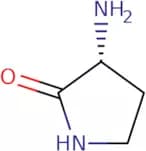
CAS:(R)-3-Aminopyrrolidin-2-one is a versatile building block used as a reagent, intermediate or speciality chemical in research. CAS No. 121010-86-4 is a fine chemical that can be used to synthesize complex compounds. It is an important intermediate for the synthesis of many biologically active compounds and has been extensively studied as a drug candidate for cancer treatment. (R)-3-Aminopyrrolidin-2-one has also been shown to have antiviral effects against HIV and influenza A virus and may be useful in the treatment of viral infections.Formula:C4H8N2OPurity:Min. 95%Color and Shape:PowderMolecular weight:100.12 g/mol(3-Nitrophenyl)acetone
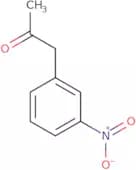
CAS:3-Nitrophenylacetone is a white solid that is soluble in water and polar organic solvents. 3-Nitrophenylacetone can be used as a building block for the synthesis of other compounds, such as pharmaceuticals and dyes. This compound has been researched for its ability to inhibit protein glycosylation. 3-Nitrophenylacetone is also used as an intermediate in the synthesis of polyurethanes and polycarbonates.Formula:C9H9NO3Purity:Min. 95%Color and Shape:White PowderMolecular weight:179.17 g/mol3-(tert-butyl)-4-((2-hydroxy-3-methoxyphenyl)methylene)-1-phenyl-2-pyrazolin-5-one
CAS:Please enquire for more information about 3-(tert-butyl)-4-((2-hydroxy-3-methoxyphenyl)methylene)-1-phenyl-2-pyrazolin-5-one including the price, delivery time and more detailed product information at the technical inquiry form on this pagePurity:Min. 95%4-Pregnen-17alpha,20alpha,21-triol-3-one
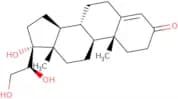
CAS:Controlled Product4-Pregnen-17alpha,20alpha,21-triol-3-one (4PT) is a versatile building block that can be used in the synthesis of complex compounds. It has been used as a reagent and speciality chemical in research chemicals and as an intermediate for pharmaceuticals and other organic syntheses. 4PT also has been shown to have high quality with a reaction component and scaffold for organic synthesis.Formula:C21H32O4Purity:Min. 95%Color and Shape:PowderMolecular weight:348.48 g/mol2-Ethyl-2-methyl-1,2,3-trihydroquinazolin-4-one
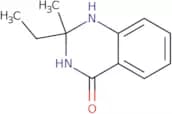
CAS:Please enquire for more information about 2-Ethyl-2-methyl-1,2,3-trihydroquinazolin-4-one including the price, delivery time and more detailed product information at the technical inquiry form on this page
Purity:Min. 95%4-Chloro-1-(3-Fluorophenyl)-1-Butanone
CAS:4-Chloro-1-(3-fluorophenyl)-1-butanone is a reagent that is used in the synthesis of complex compounds. It has been used as an intermediate in the synthesis of a variety of useful compounds and as a building block for more complex molecules. This chemical is one of the most versatile building blocks available, and can be used for reactions involving deprotection, coupling, and polymerization. The CAS number for this compound is 3110-52-9.Formula:C10H10ClFOPurity:Min. 95%Color and Shape:Clear LiquidMolecular weight:200.64 g/mol3-Methoxy-4-methylphenylacetone
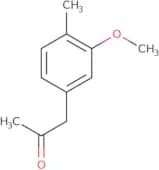
CAS:3-Methoxy-4-methylphenylacetone is a reagent that can be used as a useful intermediate for the synthesis of complex organic compounds. It is soluble in water, but insoluble in most organic solvents. 3-Methoxy-4-methylphenylacetone is also a fine chemical with CAS No. 51814-28-9 and has been shown to be an effective building block for synthetic chemistry. It is used in the synthesis of speciality chemicals and research chemicals, such as pharmaceuticals and agrochemicals. This compound can be used as a versatile building block in many reactions and has been shown to react with epoxide, nitrile, amine, thioether, amide, alcohols, carboxylic acids or esters.Formula:C11H14O2Purity:Min. 95%Color and Shape:PowderMolecular weight:178.23 g/molFlavanone diacetyl hydrazone
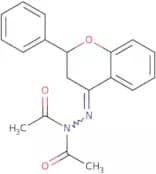
CAS:Flavanone diacetyl hydrazone is a hydrogenated flavonoid derivative, which is synthesized from natural flavonoid sources. This compound exhibits its mode of action primarily through its ability to donate hydrogen atoms, effectively scavenging free radicals and inhibiting oxidative stress. Furthermore, it interacts with various cellular pathways to exert anti-inflammatory effects, making it a potential therapeutic agent in oxidative stress-related disorders.
Formula:C19H18N2O3Purity:Min. 95%Molecular weight:322.36 g/molIsothiazol-3-one
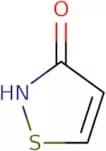
CAS:Isothiazol-3-one is a microbicidal agent that is used as an additive to water in the form of a liquid or powder. It is classified as reactive and hydrochloric acid, which means it reacts with water to produce chlorine and hydrochloric acid. The biocidal activity of the chemical is due to its ability to inhibit the growth of bacteria by reacting with their cell walls and destroying them. Isothiazol-3-one has also been shown to have an effect on insulin resistance in rats. This effect may be due to its ability to inhibit cholesterol esterase, an enzyme involved in lipid metabolism that has been shown to be associated with diabetes. Isothiazol-3-one is also known for its high values of carbonyl groups and chlorine atoms, making it useful for analytical chemistry experiments using gas chromatography (GC), as well as in agricultural research.Formula:C3H3NOSPurity:Min. 95%Color and Shape:PowderMolecular weight:101.13 g/molHydrocortisone
CAS:Controlled ProductHydrocortisone is a hormone that belongs to the glucocorticoid class. It is used in the treatment of various diseases, such as rheumatoid arthritis, ulcerative colitis, lupus erythematosus, and others. Hydrocortisone has been shown to inhibit cell lysis by decreasing the activity of some enzymes responsible for this process. In addition, hydrocortisone can also bind to specific receptors in the brain and regulate neurotransmitter release. Hydrocortisone has been shown to be effective against infectious diseases such as sepsis and pneumonia. However, it may cause side effects such as weight gain or mood swings when taken for a long period of time.Formula:C21H30O5Purity:Min. 97.0 Area-%Color and Shape:White PowderMolecular weight:362.46 g/mol(2,3-Dimethoxyphenyl)acetone
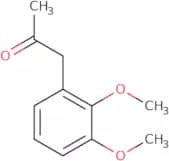
CAS:2,3-Dimethoxyphenylacetone is a synthetic compound that has been used as a precursor to other compounds. The synthesis of 2,3-dimethoxyphenylacetone requires the reaction of lithium aluminum hydride with acrylonitrile and hydriodic acid. The molecule can be cyclized in two different ways to form either 2,3-dimethoxybenzaldehyde or 3-methoxybenzaldehyde. The structure of 2,3-dimethoxyphenylacetone is similar to that of hydrazoic acid which has been used as an intermediate in the synthesis of other compounds such as pyrazines.
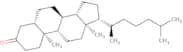
Formula:C11H14O3Purity:Min. 95%Color and Shape:PowderMolecular weight:194.23 g/mol5-a-Cholestan-3-one
CAS:Controlled Product5-a-Cholestan-3-one is a sterol that has been shown to have antiinflammatory activity and inhibit skin tumor formation. The sterols are the primary lipids in the human body, with 5-a-cholestan-3-one being one of the most abundant, making up about 50% of total sterols. The 5-a-cholestan-3-one is found in cholesterol, which is an important component of cell membranes. It also plays a role in the synthesis of bile acids and coprostanol. This compound can be found in fecal samples as well as wastewater treatment plants, where it is used for sample preparation. There are two different forms of 5-a-cholestan 3 one; protocatechuic acid, which is an acidic form found mainly in plants, and neutral cholic acid which can be found in humans or animals.Formula:C27H46OPurity:Min. 95%Color and Shape:PowderMolecular weight:386.65 g/mol8-Cyclohexadecen-1-one
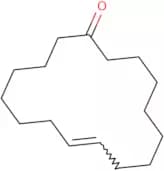
CAS:8-Cyclohexadecen-1-one is a mixture of isomers consisting of cyclohexadecane-1,2-dione. This chemical has been shown to enhance the activity of wst-8 in reconstituted systems with dietary concentrations. 8-Cyclohexadecen-1-one is also found in fatty acid esters and unsaturated ketones and can be produced by metathesis reactions.Formula:C16H28OPurity:Min. 95 Area-%Color and Shape:White PowderMolecular weight:236.39 g/mol19-Hydroxy-androstene-4-ene-3,17-dione
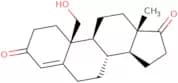
CAS:Controlled Product19-hydroxy-androstene-4-ene-3,17-dione is a metabolite of androstenedione that has been shown to have inhibitory effects on prostate cancer cells. This compound binds to the plasma membrane of these cells, leading to changes in its structure and function. 19-hydoxy-androstene-4-ene-3,17-dione has also been shown to have an inhibitory effect on human chorionic gonadotropin (HCG) and oestrone production by inhibiting the release of luteinizing hormone from the pituitary gland. This compound also inhibits the activity of protein kinase C (PKC), which is important for cell signaling. 19 hydroxyandrostene 4, 17 dione inhibits tissue culture reactions that rely on PKC as well as other enzymes involved in this process.Formula:C19H26O3Purity:Min. 98 Area-%Color and Shape:Off-White PowderMolecular weight:302.41 g/mol

![5-[3,4-(Methylenedioxy)phenyl]-cyclohexane-1,3-dione](/_next/image/?url=https%3A%2Fstatic.cymitquimica.com%2Fproducts%2F3D%2Fthumb-webp%2FFM66989.webp&w=3840&q=75)