Ketones
Found 18871 products of "Ketones"
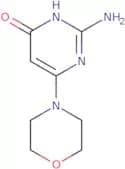
2-Amino-6-morpholin-4-ylpyrimidin-4(3H)-one
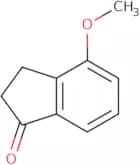
CAS:2-Amino-6-morpholin-4-ylpyrimidin-4(3H)-one (2AP) is a versatile building block for the synthesis of complex compounds. It is used as a reaction component in organic chemistry, as well as a reagent for the synthesis of other chemical substances. 2AP is also useful as an intermediate in the production of pharmaceuticals, agrochemicals, and other research chemicals. 2AP has been shown to be useful in the synthesis of fine chemicals, such as amorphous silicon dioxide and polystyrene sulfonic acid. This substance can be used to make a variety of products with different properties, which makes it an excellent scaffold for research purposes. 2AP can be found under CAS number 37409-97-5.Formula:C8H12N4O2Purity:Min. 95%Color and Shape:PowderMolecular weight:196.21 g/mol4-Methoxy-1-indanone
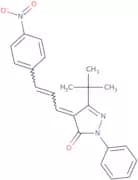
CAS:4-Methoxy-1-indanone is a quinoline derivative that is used as an intermediate for the synthesis of a number of bioactive molecules, such as gephyrotoxin (a potent neurotoxin) and oxime derivatives. 4-Methoxy-1-indanone has been shown to be activated by metal ions and oximes to form iminium cations. These cations are then converted into chloride or carbonic anions by dehydrogenase enzymes, which are important in the metabolism of carbohydrates in living organisms.Formula:C10H10O2Purity:Min. 95%Color and Shape:PowderMolecular weight:162.19 g/mol3-(tert-butyl)-4-(3-(4-nitrophenyl)prop-2-enylidene)-1-phenyl-2-pyrazolin-5-one
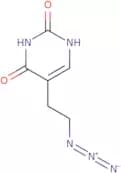
CAS:Please enquire for more information about 3-(tert-butyl)-4-(3-(4-nitrophenyl)prop-2-enylidene)-1-phenyl-2-pyrazolin-5-one including the price, delivery time and more detailed product information at the technical inquiry form on this pagePurity:Min. 95%5-(2-Azidoethyl)pyrimidine-2,4(1H,3H)-dione
CAS:Sodium dodecyl sulfate (SDS) is a surfactant that is used in the laboratory to create micelles. The micelles have an interparticle distance of about 10 nm. SDS is ionic and hydrophilic with a high affinity for water molecules, which are attracted by the negative charge on its head group. This property makes it useful as a detergent in many applications, including cleaning products and shampoo. Sodium dodecyl sulfate has been shown to inhibit the growth of bacteria by interacting with their cell membranes, making them more permeable and less stable.Formula:C6H7N5O2Purity:Min. 95%Color and Shape:White PowderMolecular weight:181.15 g/mol4-Methyl-2(5H)-furanone
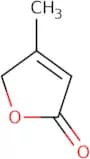
CAS:4-Methyl-2(5H)-furanone is an isomeric compound that can be isolated from various plant sources including isoprene, chalcones, and other plant extracts. It has been shown to inhibit the formation of dental plaque and the growth of oral bacteria in a functional group study. 4-Methyl-2(5H)-furanone is also known as a chalcone and has been shown to have antibacterial properties. This chemical reaction can be used as an alternative to chlorhexidine for the treatment of dental plaque.Formula:C5H6O2Purity:Min. 95%Color and Shape:Clear LiquidMolecular weight:98.1 g/mol2-Bromo-1-(1H-indol-3-yl)propan-1-one
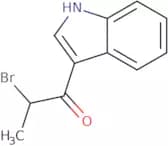
CAS:Controlled ProductPlease enquire for more information about 2-Bromo-1-(1H-indol-3-yl)propan-1-one including the price, delivery time and more detailed product information at the technical inquiry form on this pageFormula:C11H10BrNOPurity:Min. 85%Color and Shape:PowderMolecular weight:252.11 g/mol7α-Hydroxy-4-cholesten-3-one
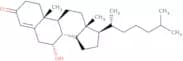
CAS:Controlled ProductIntermediate in bile acids biosynthesisFormula:C27H44O2Purity:Min. 98 Area-%Color and Shape:PowderMolecular weight:400.64 g/mol2-(2-aza-1-(4-methoxyphenyl)-2-(amino)vinyl)indane-1,3-dione
CAS:Please enquire for more information about 2-(2-aza-1-(4-methoxyphenyl)-2-(amino)vinyl)indane-1,3-dione including the price, delivery time and more detailed product information at the technical inquiry form on this pageFormula:C17H14N2O3Purity:Min. 95%Color and Shape:PowderMolecular weight:294.3 g/molHydrocortisone
CAS:Controlled ProductHydrocortisone is a hormone that belongs to the glucocorticoid class. It is used in the treatment of various diseases, such as rheumatoid arthritis, ulcerative colitis, lupus erythematosus, and others. Hydrocortisone has been shown to inhibit cell lysis by decreasing the activity of some enzymes responsible for this process. In addition, hydrocortisone can also bind to specific receptors in the brain and regulate neurotransmitter release. Hydrocortisone has been shown to be effective against infectious diseases such as sepsis and pneumonia. However, it may cause side effects such as weight gain or mood swings when taken for a long period of time.Formula:C21H30O5Purity:Min. 97.0 Area-%Color and Shape:White PowderMolecular weight:362.46 g/mol1,5-Diphenyl-penta-2,4-dien-1-one
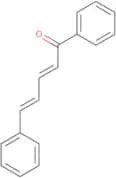
CAS:1,5-Diphenyl-penta-2,4-dien-1-one is a natural compound that has been shown to have cytotoxic activity against human pathogens. It has been shown to inhibit the growth of gram-positive bacterial species by binding to dipole groups and preventing the formation of an enzyme complex required for cell division. 1,5-Diphenyl-penta-2,4-dien-1-one also inhibits the production of pyrazolines from benzoates in bacteria. When this molecule is metabolized by bacteria, it forms an aliphatic hydrocarbon with a chemical structure similar to that found in some carcinogens. 1,5 -Diphenyl penta 2,4 dien 1 one can be detected using NMR spectroscopy because it has a unique molecular structure. This compound also exhibits pharmacokinetic properties that are different from those of other molecules.
Formula:C17H14OPurity:Min. 95%Molecular weight:234.29 g/molZ-Val-Ala-DL-Asp-fluoromethylketone
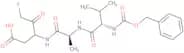
CAS:Z-Val-Ala-DL-Asp-fluoromethylketone is a drug that is used for the treatment of cancer. It can be used in combination with other chemotherapeutic drugs, such as z-vad-fmk, to induce apoptosis in cancer cells. Z-Val-Ala-DL-Asp-fluoromethylketone also inhibits autophagy and neuronal death by inhibiting caspase activation, which prevents the release of proapoptotic proteins from mitochondria into the cytosol. This drug has been shown to have antiinflammatory effects on IL2 receptor signaling pathways and inhibits the production of proinflammatory cytokines by binding to IL2.Formula:C21H28FN3O7Purity:Min. 95%Color and Shape:PowderMolecular weight:453.46 g/mol5-Chloro-2-adamantanone
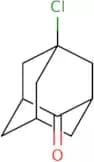
CAS:5-Chloro-2-adamantanone is an organic solvent that has nucleophilic properties. It can act as a reactive, nucleophile, or carbonyl group. 5-Chloro-2-adamantanone is synthesized by the reaction of 2-chloroadamantane with chlorosulfonic acid in the presence of zinc chloride at room temperature. The yield of this reaction is dependent on the concentration of zinc chloride used and ranges from 23% to 66%. This reaction can be optimized by altering the reaction time and temperature, as well as by using different halides.Formula:C10H13ClOPurity:Min. 95%Molecular weight:184.66 g/mol(4-Bromophenyl)cyclopropylmethanone
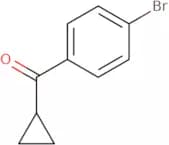
CAS:(4-Bromophenyl)cyclopropylmethanone is a cyclopropane derivative that can be synthesized from 4-bromobenzaldehyde and cyclopropylmagnesium bromide. It is an important precursor to fluoroquinolones in the pharmaceutical industry, as well as to other derivatives used in the synthesis of antihistamines and antimalarial drugs. This compound has been shown to have biomolecular mediated intramolecular cyclopropane ring formation and pentacyclic cyclopropane ring formation.
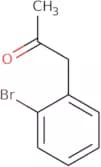
Formula:C10H9BrOPurity:Min. 95%Color and Shape:PowderMolecular weight:225.09 g/mol2-Bromophenylacetone
CAS:Controlled Product2-Bromophenylacetone is a reagent that is used to synthesize sulfonamides. It can be prepared by the reaction of phenylacetic acid with bromine in the presence of sodium hydroxide. The product can then be treated with sulfuric acid and hydrochloric acid to give 2-bromophenylacetone. This compound has been shown to have bacteriostatic activity against Gram-positive bacteria, as well as being an efficient method for synthesizing thiosemicarbazide.Formula:C9H9BrOPurity:Min. 95%Color and Shape:Clear LiquidMolecular weight:213.07 g/mol8-Chloro-5,10-dihydro-11H-dibenzo[b,e][1,4]-diazepin-11-one
CAS:8-Chloro-5,10-dihydro-11H-dibenzo[b,e][1,4]-diazepin-11-one is a polycyclic multicyclic compound that has stable properties. It is an atypical antipsychotic and antidepressant with high stability. This drug can be prepared by the process of optimization of reaction time and is an orthogonal molecule to typical antipsychotics. 8CBDD can be used in the preparation of atypical antipsychotics and antidepressants.Formula:C13H9ClN2OPurity:Min. 95%Color and Shape:PowderMolecular weight:244.68 g/mol4-Phenyl-2-butanone
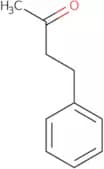
CAS:4-Phenyl-2-butanone is an organic compound that is used as a solvent. It has been shown to be effective against a wide range of bacteria, including Gram positive and Gram negative bacteria. 4-Phenyl-2-butanone disrupts the cell membrane by binding to glycol ether, which is an important part of the lipid bilayer. It also inhibits the synthesis of two important molecules in bacterial cells, dinucleotide phosphate and phospholipids. This process leads to bacterial cell death. 4-Phenyl-2-butanone also has antimicrobial properties due to its ability to destroy water vapor and inhibit growth of microorganisms on skin.
Formula:C10H12OPurity:Min. 97.5 Area-%Color and Shape:Colorless Clear LiquidMolecular weight:148.2 g/mol6-Methoxypyrimidine-2,4(1H,3H)-dione
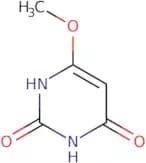
CAS:Controlled Product6-Methoxypyrimidine-2,4(1H,3H)-dione is a nucleophilic compound that is formed by the reaction of an electron with a carbon atom in an organic molecule. It is used as a reagent in organic synthesis. 6-Methoxypyrimidine-2,4(1H,3H)-dione can be synthesized from 2-amino-5-methoxybenzaldehyde and chloroacetic acid in three steps. The chloride ion reacts with the 6-methoxypyridine to form the desired product. 6-Methoxypyrimidine-2,4(1H,3H)-dione can also be used as a reagent to catalyze chemical reactions such as alkylation and allylation reactions. 6-Methoxypyrimidine-2,4(1H,3H)-dione has been shown to have barbiturate activityFormula:C5H6N2O3Purity:Min. 95%Molecular weight:142.11 g/mol6-Bromo-1-indanone
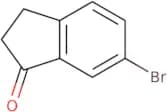
CAS:6-Bromo-1-indanone is a chemical compound with the molecular formula C5H5BrNO. It belongs to the class of aromatic ketones and has a herringbone structure. 6-Bromo-1-indanone has been shown to inhibit cancer cells by binding to their a2a adenosine receptors and disrupting their function. This analog also inhibits survivin, an enzyme that regulates cell death, which may be due to its ability to form intramolecular hydrogen bonds. The crystal structure of 6-bromo-1-indanone was determined using crystallography and found to have two different conformations in solution, which is stereoselective.Formula:C9H7BrOPurity:Min. 95%Color and Shape:White PowderMolecular weight:211.06 g/mol3-(3-Fluorophenyl)-2-Methylquinazolin-4(3H)-One
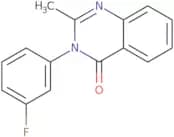
CAS:Controlled ProductQuinazolinones are a class of chemicals that inhibit the enzyme acetylcholinesterase. 3-Fluorophenyl-2-methylquinazolin-4(3H)-one (3FPMQ) is a connector molecule that has been shown to be an inhibitor of acetylcholinesterase, the enzyme responsible for the breakdown of the neurotransmitter acetylcholine. It is also an antenna molecule that can be used in ethyl esters and enzymatic assays. The high resistance of this molecule has been shown by chemical treatments and chemical analyses. Amplitudes generated by 3FPMQ have been shown to be effective at positioning it next to naphthalene, which is a ring structure with two c1-c6 alkoxy groups on either side. This molecule has also shown muscle relaxant properties.Formula:C15H11FN2OPurity:Min. 95%Molecular weight:254.26 g/molEurycomanone
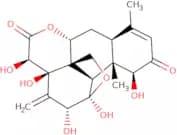
CAS:Eurycomanone is a natural product that belongs to the group of quassinoids. It is obtained from the plant Eurycoma longifolia, which grows in tropical Asia and Africa. The extract has been shown to have clinical properties such as body formation, protein target, and surface methodology. 3T3-L1 preadipocytes were used for the in vitro assays of eurycomanone. Group P2 cells were used for histological analysis and pharmacological agents were found to be chemical stable.Formula:C20H24O9Purity:Min. 95%Color and Shape:PowderMolecular weight:408.4 g/mol



![8-Chloro-5,10-dihydro-11H-dibenzo[b,e][1,4]-diazepin-11-one](/_next/image/?url=https%3A%2Fstatic.cymitquimica.com%2Fproducts%2F3D%2Fthumb-webp%2FFC20115.webp&w=3840&q=75)