Amides
Amides are a wide range of chemical compounds that contain at least one heterocyclic ring, which has atoms of at least two different elements in the ring structure, and at least one amide group (-CONH2). These compounds are crucial in the synthesis of pharmaceuticals, polymers, and agrochemicals. Amides exhibit unique properties and reactivity, making them valuable intermediates in organic synthesis. At CymitQuimica, we offer a comprehensive selection of high-quality amides to support your research and industrial needs.
Found 16485 products of "Amides"
Sort by
Purity (%)
0
100
|
0
|
50
|
90
|
95
|
100
4-(furan-2-carbonyl)-8-methyl-1-oxa-4,8-diazaspiro[4.5]decane-3-carboxylic acid
CAS:Purity:95.0%Molecular weight:294.30700683593758-methyl-4-(2-methylbenzoyl)-1-oxa-4,8-diazaspiro[4.5]decane-3-carboxylic acid
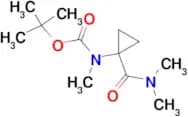
CAS:Purity:95.0%Molecular weight:318.37298583984375TERT-BUTYL (1-(DIMETHYLCARBAMOYL)CYCLOPROPYL)(METHYL)CARBAMATE
Purity:95.0%Molecular weight:242.319000244140628-benzyl-4-pentanoyl-1-oxa-4,8-diazaspiro[4.5]decane-3-carboxylic acid
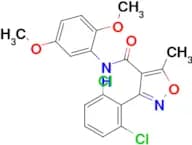
CAS:Purity:95.0%Molecular weight:360.45401000976563-(2,6-Dichlorophenyl)-N-(2,5-dimethoxyphenyl)-5-methylisoxazole-4-carboxamide
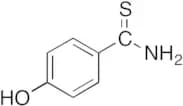
CAS:Purity:97%Molecular weight:407.254-Hydroxythiobenzamide
CAS:<p>Applications 4-Hydroxythiobenzamide is used in the synthesis of PPARα agonists used in increasing HDLc levels. Also used in the synthesis of potent CDK5 inhibitors in the treatment of Alzheimer’s disease.<br>References Sierra, M. et al.: J. Med. Chem., 50, 685 (2007); Zhong, W. et al.: Bioorg. Med. Chem. Lett., 17, 5384 (2007);<br></p>Formula:C7H7NOSColor and Shape:NeatMolecular weight:153.2(1R,2R)-2-(3,4-Difluorophenyl)cyclopropanecarboxamide
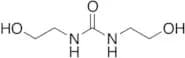
CAS:Controlled Product<p>Applications (1R,2R)-2-(3,4-Difluorophenyl)cyclopropanecarboxamide is a part of the synthetic preparation of the synthesis and inhibitory effect on ADP-induced platelet aggregation of ticagrelor derivatives as antiplatelets agents.<br>References Zhang, H., et al.: Bioorganic Med. Chem. Lett., 22, 3598 (2012).<br></p>Formula:C10H9F2NOColor and Shape:NeatMolecular weight:197.181NN'-Bis(2-hydroxyethyl)urea
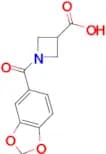
CAS:<p>Applications NN'-Bis(2-hydroxyethyl)urea (cas# 15438-70-7) is a useful research chemical.<br></p>Formula:C5H12N2O3Color and Shape:NeatMolecular weight:148.161-(1,3-benzodioxol-5-ylcarbonyl)azetidine-3-carboxylic acid
CAS:Purity:95.0%Molecular weight:249.2220001220703N-[2-(1,2,6,7-Tetrahydro-8H-indeno[5,4-b]furan-8-ylidene)ethyl]propanamide
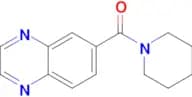
CAS:Purity:98%Molecular weight:257.3330078125Piperidin-1-yl(quinoxalin-6-yl)methanone
CAS:Purity:95.0%Color and Shape:SolidMolecular weight:241.294006347656254-[2-(4-chlorophenyl)acetyl]-1-oxa-4-azaspiro[4.5]decane-3-carboxylic acid
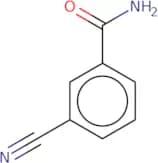
CAS:Purity:95.0%Molecular weight:337.799987792968753-Cyanobenzamide
CAS:3-Cyanobenzamide is an organic compound with the formula CHC(N)NH. It is a white crystalline solid that can be obtained by reacting benzamide with cyanoacetylene. There are three possible isomers of 3-cyanobenzamide: 3-cyano-1-(substituted phenyl)benzamide, 3-cyano-2-(substituted phenyl)benzamide, and 3-cyano-3-(substituted phenyl)benzamide. The optimal reaction conditions for the synthesis of 3-cyanobenzamide are in the presence of hydrogen bonding, such as n-hexane, amide, and phase equilibrium. Studies have determined that 3-cyanobenzamide has the potential to cause cancer or liver toxicity in humans. In addition, this chemical has been shown to be an effective inhibitor of alpha glucosidase enzymes in vitro and in vivo.Formula:C8H6N2OPurity:Min. 90%Molecular weight:146.15 g/mol2-Chloro-5-nitrobenzene sulfonamide
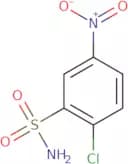
CAS:<p>2-Chloro-5-nitrobenzene sulfonamide (2CNS) is a glycol ether that has been shown to inhibit the activity of carbonic anhydrase. It has been shown to be a competitive inhibitor of the enzyme, and can be used as a lead compound for developing new drugs. 2CNS has been shown to inhibit an anhydrase that is found in bacteria, such as Streptococcus pneumoniae, Haemophilus influenzae, and Staphylococcus aureus. This inhibition causes increased levels of hydrogen ions in the bacterial environment, which leads to the acidification of their surroundings. 2CNS also inhibits chloride ion uptake in these bacteria.<br>2CNS's pharmacophore includes two aromatic hydrocarbon rings with at least one hydrogen bond acceptor group on each ring. This pharmacophore is responsible for its inhibition of carbonic anhydrase and chloride ion binding site.</p>Formula:C6H5ClN2O4SPurity:Min. 97 Area-%Color and Shape:White Off-White PowderMolecular weight:236.63 g/mol(2-chloro(3-pyridyl))-N-((3-(trifluoromethoxy)phenyl)methyl)formamide
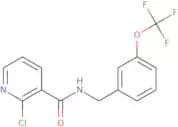
CAS:Please enquire for more information about (2-chloro(3-pyridyl))-N-((3-(trifluoromethoxy)phenyl)methyl)formamide including the price, delivery time and more detailed product information at the technical inquiry form on this pagePurity:Min. 95%N-(5-Chloro-2-hydroxyphenyl)-2-chloropropanamide
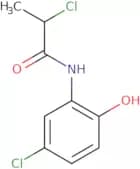
CAS:Please enquire for more information about N-(5-Chloro-2-hydroxyphenyl)-2-chloropropanamide including the price, delivery time and more detailed product information at the technical inquiry form on this pagePurity:Min. 95%Lacosamide
CAS:Controlled Product<p>Lacosamide is a drug that is used for the treatment of epilepsy. It has been shown to inhibit neuronal death in vitro and in animal models, and has been extensively studied for its potential benefits in the treatment of bowel disease. The mechanism of action for lacosamide involves inhibition of the transport of neurotransmitters from the synaptic cleft by binding to the neuronal sodium channels and increasing their recovery rate. Lacosamide has also been found to affect energy metabolism by inhibiting the activity of mitochondrial enzymes such as matrix effect and complex I/III.</p>Formula:C13H18N2O3Purity:Min. 98 Area-%Color and Shape:PowderMolecular weight:250.29 g/mol
![4-(furan-2-carbonyl)-8-methyl-1-oxa-4,8-diazaspiro[4.5]decane-3-carboxylic acid](/_next/image/?url=https%3A%2Fstatic.cymitquimica.com%2Fproducts%2F10%2Fthumb-webp%2FF525626.webp&w=3840&q=75)

![8-methyl-4-(2-methylbenzoyl)-1-oxa-4,8-diazaspiro[4.5]decane-3-carboxylic acid](/_next/image/?url=https%3A%2Fstatic.cymitquimica.com%2Fproducts%2F10%2Fthumb-webp%2FF525627.webp&w=3840&q=75)
![8-benzyl-4-pentanoyl-1-oxa-4,8-diazaspiro[4.5]decane-3-carboxylic acid](/_next/image/?url=https%3A%2Fstatic.cymitquimica.com%2Fproducts%2F10%2Fthumb-webp%2FF525789.webp&w=3840&q=75)


![N-[2-(1,2,6,7-Tetrahydro-8H-indeno[5,4-b]furan-8-ylidene)ethyl]propanamide](/_next/image/?url=https%3A%2Fstatic.cymitquimica.com%2Fproducts%2F10%2Fthumb-webp%2FF788113.webp&w=3840&q=75)
![4-[2-(4-chlorophenyl)acetyl]-1-oxa-4-azaspiro[4.5]decane-3-carboxylic acid](/_next/image/?url=https%3A%2Fstatic.cymitquimica.com%2Fproducts%2F10%2Fthumb-webp%2FF525558.webp&w=3840&q=75)