Amides
Amides are a wide range of chemical compounds that contain at least one heterocyclic ring, which has atoms of at least two different elements in the ring structure, and at least one amide group (-CONH2). These compounds are crucial in the synthesis of pharmaceuticals, polymers, and agrochemicals. Amides exhibit unique properties and reactivity, making them valuable intermediates in organic synthesis. At CymitQuimica, we offer a comprehensive selection of high-quality amides to support your research and industrial needs.
Found 16399 products of "Amides"
Sort by
Purity (%)
0
100
|
0
|
50
|
90
|
95
|
100
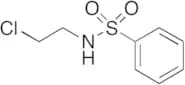
N-(2-Chloroethyl)benzenesulfonamide
CAS:Controlled Product<p>Applications N-(2-Chloroethyl)benzenesulfonamide is an intermediate for the synthesis of Bensulide (B166000), which is an organophosphate acetylcholinesterase inhibitor used as an herbicide (1) in the protection of crops through pesticides (2). Drinking water contaminant candidate list 3 (CCL 3) compound as per United States Environmental Protection Agency (EPA), environmental, and food contaminants.<br></p>Formula:C8H10ClNO2SColor and Shape:NeatMolecular weight:219.69N-Trimethylsilylacetamide
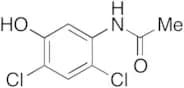
CAS:Controlled Product<p>Stability Moisture Sensitive<br>Applications N-Trimethylsilylacetamide is a silylating agent used in organic synthesis. N-Trimethylsilylacetamide is used in the preparation of the antibacterial agent Cefdinir (C242670).<br>References Takano, R. et al.: J. Carb. Chem., 14, 885 (1995); Rao, K. et al.: Synth. Comm., 37, 2275 (2007);<br></p>Formula:C5H13NOSiColor and Shape:NeatMolecular weight:131.25N-(2,4-Dichloro-5-hydroxyphenyl)acetamide
CAS:Controlled ProductFormula:C8H7Cl2NO2Color and Shape:NeatMolecular weight:220.053p-Vinylguaiacol-d3
CAS:Controlled Product<p>Applications p-Vinylguaiacol-d3 is the isotope labelled analog of p-Vinylguaiacol (V424960); an aromatic substance, one of the compounds responsible for the natural aroma of buckwheat, and also one of the major pyrolytic products of (E)-N-[(4-hydroxy-3-methoxy)-phenethyl]-3-[(3-methoxy-4-O-β-D-glucopyranosyloxy) phenyl] acrylamide; a new gycloside in tobacco.<br>References Janes, Damjan., et al.: Food Chem., 112(1), 120-124 (2009); Zhou, Rong., et al.: Yancao Keji, (7), 34-36, 42 (2013)<br></p>Formula:C9H7D3O2Color and Shape:Clear ColourlessMolecular weight:153.19(AlphaS)-α-Amino-4-nitrobenzenepropanamide
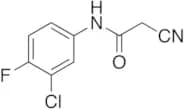
CAS:Controlled Product<p>Applications (αS)-α-Amino-4-nitrobenzenepropanamide (cas# 81677-61-4) is a compound useful in organic synthesis.<br></p>Formula:C9H11N3O3Color and Shape:NeatMolecular weight:209.2N-(3-Chloro-4-fluorophenyl)-2-cyanoacetamide
CAS:Controlled Product<p>Applications N-(3-Chloro-4-fluorophenyl)-2-cyanoacetamide (cas# 219529-31-4) is a compound useful in organic synthesis.<br></p>Formula:C9H6ClFN2OColor and Shape:NeatMolecular weight:212.61N-[2-[3,4-Bis(phenylmethoxy)phenyl]ethyl]-3,4,5-trimethoxybenzeneacetamide
CAS:Controlled Product<p>Applications N-[2-[3,4-Bis(phenylmethoxy)phenyl]ethyl]-3,4,5-trimethoxybenzeneacetamide is an intermediate used in the synthesis of S-(-)-Tretoquinol Hydrochloride (T798100), which belongs to the class of adrenergic inhalants, selective β-2-adrenoreceptor agonists. S-(-)-Tretoquinol is used in the treatment of obstructive airway diseases. S-(-)-Tretoquinol is a bronchodilator.<br>References Meshi, et al.: Biochem. Pharmacol., 19, 2937 (1970), Satoh, et al.: Chem. Pharm. Bull., 19, 667 (1971),<br></p>Formula:C33H35NO6Color and Shape:NeatMolecular weight:541.63rac-cis-[3-Hydroxycyclohexyl]benzamide
CAS:Controlled Product<p>Applications rac-cis-[3-Hydroxycyclohexyl]benzamide (cas# 177366-89-1) is a compound useful in organic synthesis.<br></p>Formula:C13H17NO2Color and Shape:NeatMolecular weight:219.284-Hydroxybenzamide
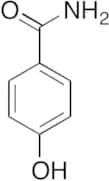
CAS:Controlled Product<p>Applications 4-Hydroxybenzamide is a secondary metabolite from marine sponge Phakellia fusca.<br>References Deng, Z., et. al.: Zhongyaocai, 36, 919 (2013)<br></p>Formula:C7H7NO2Color and Shape:NeatMolecular weight:137.14N-(3-Acetylphenyl)-N-ethylacetamide
CAS:Controlled Product<p>Applications N-(3-Acetylphenyl)-N-ethylacetamide is a reactant used in the preparation of 5-Oxo-Zaleplon (O870470), a metabolite of Zaleplon (Z145000).<br></p>Formula:C12H15NO2Color and Shape:NeatMolecular weight:205.25p-Hydroxymandelamide
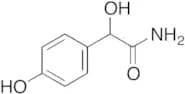
CAS:Controlled Product<p>Applications p-Hydroxymandelamide is a useful synthetic intermediate in the synthesis of Hydroxyatenolol (H802480); a metabolite of Atenolol (A790075) which is a cardioselective β-adrenergic blocker, antihypertensive, antianginal, and antiarrhythmic (class II).<br>References Escher, B., et al.: Environ. Sci. Technol., 40, 7402 (2006); Caplar, V., et al.: Anal. Profiles Drug Subs., 13, 1 (1984)<br></p>Formula:C8H9NO3Color and Shape:NeatMolecular weight:167.16N,N-Bis(2-hydroxyethyl)benzenesulfonamide
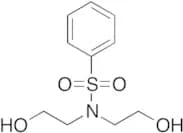
CAS:Controlled Product<p>Applications N,N-Bis(2-hydroxyethyl)benzenesulfonamide is used in the synthesis of N,N-Bis(2-chloroethyl)benzenesulfonamide (B418910), which is a novel intermediate in the synthesis of Cetirizine (C281100).<br></p>Formula:C10H15NO4SColor and Shape:NeatMolecular weight:245.3Sulfamide
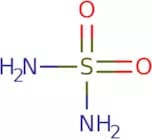
CAS:<p>Sulfamide is a pharmacological agent that inhibits the growth of bacteria. Sulfamide has been shown to be reactive with hydrogen fluoride, which may result in the formation of sulfamoyl chloride. This reactive form of sulfamide may react with other compounds and cause unwanted side-effects. <br>Sulfamides are used for the treatment of infectious diseases such as pneumonia and urinary tract infections, as well as for the treatment of other conditions like congestive heart failure and rheumatoid arthritis. They work by inhibiting enzymes necessary for bacterial growth, including target enzymes such as dihydropteroate synthase, which is involved in folate synthesis. Sulfamides also have inhibitory properties on human osteosarcoma cell proliferation.</p>Formula:H4N2O2SPurity:Min. 99%Color and Shape:White PowderMolecular weight:96.11 g/mol3,5-Diacetoxybenzamide
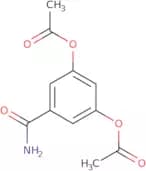
CAS:<p>3,5-Diacetoxybenzamide technical is a solvent that can be used in organic synthesis. It is soluble in hydrochloric acid and has a boiling point of 210 degrees Celsius. 3,5-Diacetoxybenzamide technical is soluble in water and has an LD50 (lethal dose) of over 5 g/kg when administered orally to pigs. 3,5-Diacetoxybenzamide technical is also used as a reagent for the preparation of peracetates and esters of aromatic ketones. This product can be used as a reaction medium for lipase or porcine pancreatic lipase. It is also used in the manufacture of pharmaceuticals, fragrances, dyes, herbicides and pesticides.</p>Formula:C11H11NO5Purity:Min. 95%Color and Shape:PowderMolecular weight:237.21 g/mol2'-Hydroxy-5'-nitrohexadecanamide sodium
CAS:<p>2'-Hydroxy-5'-nitrohexadecanamide sodium is a reagent that can be used for a variety of laboratory reactions. It is a versatile building block, useful intermediate, and useful building block for complex compounds. This compound has also been shown to be useful in the synthesis of pharmaceuticals and other fine chemicals.</p>Formula:C22H36N2O4NaPurity:Min. 95%Molecular weight:415.52 g/molN-(4-Butylphenyl)acetamide
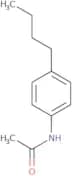
CAS:<p>N-(4-Butylphenyl)acetamide is a reactant that can be used in the production of other chemicals. It is an intermediate for the synthesis of a wide range of organic compounds, which makes it a useful building block. N-(4-Butylphenyl)acetamide has been shown to have antihistamine and anti-inflammatory properties. It is also known as acetanilide or 4-butylaniline. This chemical has CAS number 3663-20-5 and a molecular weight of 150.06 g/mol.</p>Formula:C12H17NOPurity:Min. 95%Color and Shape:White/Off-White SolidMolecular weight:191.27 g/mol2-Amino-2-cyanoacetamide
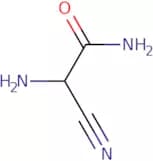
CAS:<p>2-Amino-2-cyanoacetamide is a chemical compound that has been shown to be reactive in the human liver and animal models. It is a purine derivative with a diatomic molecule, which has been shown to inhibit cancer cells in animals. 2-Amino-2-cyanoacetamide has been shown to inhibit the replication of pestivirus, an RNA virus that causes encephalitis and other diseases in humans. The nitrogen atoms on this molecule are responsible for its transport properties, including uptake by the gut and its ability to cross the blood brain barrier. 2-Amino-2-cyanoacetamide also inhibits the activity of amide hydrolase, which is an enzyme responsible for hydrolyzing peptides into amino acids. This process leads to a decrease in protein synthesis, which can lead to cell death.</p>Formula:C3H5N3OPurity:Min. 95%Color and Shape:Beige To Tan SolidMolecular weight:99.09 g/molN1-Methyl-β-alaninamide
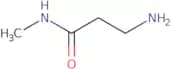
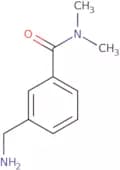
CAS:<p>N1-Methyl-beta-alaninamide (NMA) is an organic compound that is used as a reagent, useful scaffold, or high quality research chemical. NMA belongs to the group of compounds called amino acid amides. It can be used as a building block for complex compounds and fine chemicals. The CAS number for this product is 4874-18-4.</p>Formula:C4H10N2OPurity:Min. 95%Color and Shape:Orange PowderMolecular weight:102.14 g/mol3-(Aminomethyl)-N,N-dimethylbenzamide
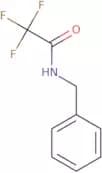
CAS:<p>3-(Aminomethyl)-N,N-dimethylbenzamide (DMBA) is a compound that can be used as a chemical marker for the identification of bacteria. It has been tested on an automated DNA sequencer and found to be effective in identifying different strains of bacteria. DMBA is applied to plates containing bacterial colonies and then contacted with a device containing the sequence analyzer. The analyzer measures the amount of DMBA that binds to the bacterial colony and generates a profile of the colony's DNA. This information can then be used to identify the bacterial colony type.</p>Formula:C10H14N2OPurity:Min. 95%Color and Shape:Brown PowderMolecular weight:178.23 g/molN-Benzyltrifluoroacetamide
CAS:<p>N-Benzyltrifluoroacetamide is an amide that inhibits the activity of the enzyme fatty acid synthase, which catalyzes the synthesis of fatty acids. It has been shown to be effective against a number of cancers and has been used in the treatment of patients infected with HIV. N-Benzyltrifluoroacetamide is active against a range of cancer cell lines, including breast, pancreatic, ovarian, prostate, and colorectal carcinomas. Its mechanism of action is not known but may involve inhibition of protein synthesis or induction of apoptosis.</p>Formula:C9H8F3NOPurity:Min. 95%Color and Shape:White To Off-White SolidMolecular weight:203.16 g/mol




![N-[2-[3,4-Bis(phenylmethoxy)phenyl]ethyl]-3,4,5-trimethoxybenzeneacetamide](/_next/image/?url=https%3A%2Fstatic.cymitquimica.com%2Fproducts%2FTR%2Fthumb-webp%2FB521325.webp&w=3840&q=75)
![rac-cis-[3-Hydroxycyclohexyl]benzamide](/_next/image/?url=https%3A%2Fstatic.cymitquimica.com%2Fproducts%2FTR%2Fthumb-webp%2FH827000.webp&w=3840&q=75)