Amides
Amides are a wide range of chemical compounds that contain at least one heterocyclic ring, which has atoms of at least two different elements in the ring structure, and at least one amide group (-CONH2). These compounds are crucial in the synthesis of pharmaceuticals, polymers, and agrochemicals. Amides exhibit unique properties and reactivity, making them valuable intermediates in organic synthesis. At CymitQuimica, we offer a comprehensive selection of high-quality amides to support your research and industrial needs.
Found 16399 products of "Amides"
Sort by
Purity (%)
0
100
|
0
|
50
|
90
|
95
|
100
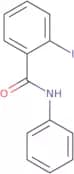
2-Iodo-N-phenylbenzamide
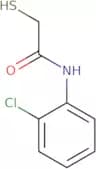
CAS:<p>2-Iodo-N-phenylbenzamide is a palladium compound that inhibits bacterial growth by binding to DNA and preventing transcription. The drug binds to the DNA as a monomer, but also forms polymeric matrixes with other drugs. 2-Iodo-N-phenylbenzamide has been shown to have genotoxic effects on subtilis and methicillin resistant Staphylococcus aureus (MRSA) in vitro, which may be due to its ability to form crosslinks between adjacent strands of DNA. 2-Iodo-N-phenylbenzamide has been shown to be an effective anti-bacterial agent against MRSA, methicillin resistant coagulase negative staphylococci and erythromycin resistant strains of Streptococcus pyogenes.</p>Formula:C13H10INOPurity:Min. 95%Molecular weight:323.13 g/molN-(2-Chlorophenyl)-2-mercaptoacetamide
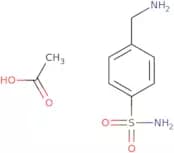
CAS:<p>2-Chloroacetamide is a useful building block that can be used to synthesize a variety of compounds. This chemical is also a versatile intermediate and can be used in the preparation of fine chemicals, research chemicals, and speciality chemicals. It is also a reaction component that can be used in the synthesis of complex compounds. 2-Chloroacetamide has been shown to have high quality properties and is often used as a reagent.</p>Formula:C8H8ClNOSPurity:Min. 95%Color and Shape:White PowderMolecular weight:201.67 g/mol4-(Aminomethyl)benzenesulfonamide acetate
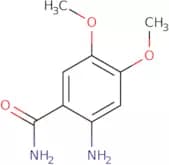
CAS:Controlled Product<p>4-(Aminomethyl)benzenesulfonamide acetate is a biocompatible polymer that is used in the treatment of infectious diseases. It has antibacterial efficacy against a range of microorganisms, including methicillin-resistant Staphylococcus aureus and Pseudomonas aeruginosa. This polymer binds to sulfadiazine and antimicrobial peptides, which then act as antimicrobial agents. 4-(Aminomethyl)benzenesulfonamide acetate also exhibits good chemical stability in vivo and has been shown to inhibit the growth of skin cells.</p>Formula:C9H14N2O4SPurity:Min. 95%Color and Shape:PowderMolecular weight:246.28 g/mol2-Amino-4,5-dimethoxybenzamide
CAS:<p>2-Amino-4,5-dimethoxybenzamide is an anticancer agent that inhibits the epidermal growth factor receptor tyrosine kinase. It binds to the linker region of the epidermal growth factor receptor and prevents autophosphorylation. 2-Amino-4,5-dimethoxybenzamide has shown in vitro cytotoxic activity against testicular cancer cells and acute lymphoblastic leukemia cells. 2-Amino-4,5-dimethoxybenzamide is a synthetic compound that has been shown to have bioisosteric properties with other growth factors such as epidermal growth factor.</p>Formula:C9H12N2O3Purity:Min. 95%Color and Shape:PowderMolecular weight:196.2 g/molN-Methyl-N-(1-naphthyl)-2-iodobenzamide
CAS:<p>N-Methyl-N-(1-naphthyl)-2-iodobenzamide is a chemical building block that is used in the synthesis of new compounds. It reacts with other chemicals to form new compounds, and can be used as a reaction component or reagent. N-Methyl-N-(1-naphthyl)-2-iodobenzamide has been shown to have high quality and is useful as a research chemical. This compound can be used as a versatile building block in the synthesis of complex compounds and fine chemicals.</p>Formula:C18H14INOPurity:Min. 95%Molecular weight:387.21 g/molN-(5-Aminopentyl)-2-nitrobenzenesulfonamide Hydrochloride
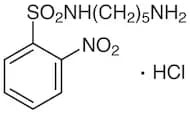
CAS:Formula:C11H17N3O4S·HClPurity:>98.0%(T)Color and Shape:Light orange to Yellow to Green powder to crystalMolecular weight:323.79(R)-2-Aminobutanamide hydrochloride
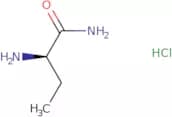
CAS:<p>(R)-2-Aminobutanamide hydrochloride is a compound that contains chloride gas. This compound is an alkylating agent, which means it can form new carbon-nitrogen bonds by adding to the electrophilic center of a molecule. This process is used industrially to produce butyronitrile, which is a precursor for nylon and other plastics. The introduction of (R)-2-aminobutanamide hydrochloride into industrial processes has decreased the use of l-tartaric acid, diluent, and hydrogen chloride. The impurities in this compound are typically quantified using gas chromatography with flame ionization detection.<br>(R)-2-Aminobutanamide hydrochloride is an acidic compound that dissociates in water to release hydrogen chloride. It has two chiral forms: <br>The enantiomers have different chemical properties due to their different configurations around the central carbon atom. In the case of (</p>Formula:C4H10N2O·HClPurity:Min. 95%Color and Shape:White PowderMolecular weight:138.6 g/molN-Methyl-N-(1-naphthyl)-2-bromobenzamide
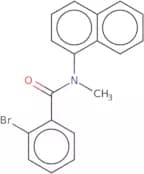
CAS:<p>N-Methyl-N-(1-naphthyl)-2-bromobenzamide is a high quality reagent that is used as a complex compound. It has CAS No. 74881-58-6 and it can be used as a useful intermediate, fine chemical or speciality chemical. N-Methyl-N-(1-naphthyl)-2-bromobenzamide is also a versatile building block that is used in reactions to synthesize other compounds.</p>Formula:C18H14BrNOPurity:Min. 95%Molecular weight:340.21 g/mol1-Methyl-nicotinamide iodide
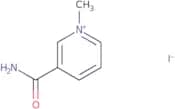
CAS:<p>1-Methyl-nicotinamide iodide is a drug that has been used in clinical trials for the treatment of type 2 diabetes mellitus. It is thought to work by increasing the sensitivity of cells to insulin, which may be related to its ability to bind to protein amide groups and form hydrogen bonds with the amino acid side chains. The compound also has been shown to increase the activity of the enzyme glycogen synthase in rats. 1-Methyl-nicotinamide iodide is soluble in water and human serum, and shows low solubility in ethanol. It has not been studied in humans, but animal studies have shown that it can be absorbed orally and metabolized into hippuric acid, which is excreted as a metabolic product through urine. Animal studies also showed that 1-methyl-nicotinamide iodide inhibits glucose production by pancreatic beta cells, which may lead to an increased insulin response after eating.</p>Formula:C7H9IN2OPurity:Min. 95%Color and Shape:Off-White PowderMolecular weight:264.06 g/molβ-Casomorphin (1-4) amide (bovine) acetate salt
CAS:<p>Beta-casomorphin (1-4) amide (bovine) acetate salt is a peptide hormone. It is an opioid and has been shown to bind to the kappa-opioid and δ receptors. Beta-casomorphin (1-4) amide (bovine) acetate salt has also been shown to have biological properties. Beta-casomorphin (1-4) amide (bovine) acetate salt is structurally similar to morphiceptin and analogs of this drug have been synthesized that are more potent than beta-casomorphin (1-4) amide (bovine) acetate salt. These analogs have not yet been tested in vitro or in vivo, but it is believed that they will be more potent than beta-casomorphin (1-4) amide (bovine) acetate salt because of their structural similarity.</p>Formula:C28H35N5O5Purity:Min. 95%Color and Shape:White PowderMolecular weight:521.61 g/molGly-pro-4-methoxy-β-naphthylamide
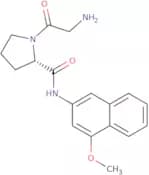
CAS:<p>Gly-pro-4-methoxy-beta-naphthylamide is a synthetic substrate that is used to measure the activity of human plasma phosphatases. Gly-pro-4-methoxy-beta-naphthylamide is synthesized in an organic solvent and then reacted with diazonium salt to form a glycosylated aminophosphonic acid. The product is purified by chromatography and identified by mass spectrometry. Gly-pro-4-methoxy beta naphthylamide has been shown to inhibit the growth of cancer cells in vitro, as well as having antiinflammatory properties. This drug also has been shown to be effective in treating patients with severe hyperbilirubinemia who are undergoing hematopoietic stem cell transplantation.</p>Formula:C18H21N3O3Purity:Min. 95%Molecular weight:327.38 g/molN-[3-(Diethylaminomethyl)-4-hydroxyphenyl]acetamide
CAS:<p>N-[3-(Diethylaminomethyl)-4-hydroxyphenyl]acetamide is a molecule that has been shown to have acetylcholine esterase (AChE) inhibitory activity. It binds to the active site of AChE, preventing it from breaking down acetylcholine, leading to the accumulation of this neurotransmitter. The inhibition of AChE by N-[3-(Diethylaminomethyl)-4-hydroxyphenyl]acetamide prevents muscle contraction and leads to paralysis and death by asphyxiation. This drug has been used in the treatment of sarin gas poisoning. The molecular structure of N-[3-(Diethylaminomethyl)-4-hydroxyphenyl]acetamide is similar to that of pyridinium chlorides, which are used for synthesizing nerve agents such as sarin and soman. This drug also has a proton</p>Formula:C13H20N2O2Purity:Min. 95%Color and Shape:PowderMolecular weight:236.31 g/mol4-(tert-Butyl)benzenesulfonamide
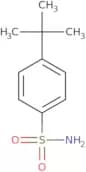
CAS:<p>4-(tert-Butyl)benzenesulfonamide is a pyrimidine derivative that has an affinity for metal ions and can be used as a catalyst. It is insoluble in water but soluble in acetonitrile and other organic solvents. This compound is a strong oxidant when it reacts with ethylene, styrene, or propyl gallate. 4-(tert-Butyl)benzenesulfonamide has been shown to be highly reactive with the oxygen in air, leading to the formation of 4-dimethylaminobenzoic acid, formyl group, and phosphorus oxychloride.</p>Formula:C10H15NO2SPurity:Min. 95%Color and Shape:PowderMolecular weight:213.3 g/mol1-Butyl-N-(2,6-dimethylphenyl)-piperidine-2-carboxamide
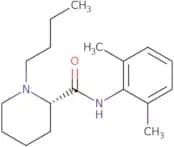
CAS:<p>Ropivacaine is a local anaesthetic of the amino ester group that is used to provide relief from pain caused by surgery or other medical procedures. It is a potent inhibitor of the enzyme activity of cholinesterases, which are enzymes responsible for the degradation of acetylcholine. Ropivacaine also inhibits the activity of cardiac Na+/K+ ATPase and Na+-Ca2+ exchanger, thereby reducing the excitability and contractility of heart muscle. This drug has shown pharmacokinetic properties in maternal blood that are similar to those observed in plasma, indicating that it can cross the placenta. Ropivacaine has been shown to have bactericidal effects against bacterial strains such as Escherichia coli and Staphylococcus aureus. In addition, ropivacaine has been shown to inhibit colorectal adenocarcinoma cells in vitro and in vivo. Levobupivacaine</p>Formula:C18H28N2OPurity:Min. 95%Color and Shape:White/Off-White SolidMolecular weight:288.43 g/mol3-(Aminomethyl)-N,N-dimethylbenzamide
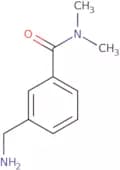
CAS:<p>3-(Aminomethyl)-N,N-dimethylbenzamide (DMBA) is a compound that can be used as a chemical marker for the identification of bacteria. It has been tested on an automated DNA sequencer and found to be effective in identifying different strains of bacteria. DMBA is applied to plates containing bacterial colonies and then contacted with a device containing the sequence analyzer. The analyzer measures the amount of DMBA that binds to the bacterial colony and generates a profile of the colony's DNA. This information can then be used to identify the bacterial colony type.</p>Formula:C10H14N2OPurity:Min. 95%Color and Shape:Brown PowderMolecular weight:178.23 g/mol2-Iodo-N-methyl-N-p-tolylbenzamide
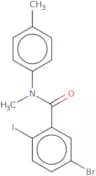
CAS:<p>2-Iodo-N-methyl-N-p-tolylbenzamide is a fine chemical that has the CAS No. 1387529-49-8 and is a versatile building block with a wide range of applications, including research chemicals, reaction components and speciality chemicals. 2-Iodo-N-methyl-N-p-tolylbenzamide is soluble in organic solvents such as ethers, chloroform and benzene, while insoluble in water. It has been shown to be a useful intermediate for the synthesis of complex compounds and can be used as a reagent to prepare other compounds. 2Iodo-Nmethyl--Np--tolylbenzamide has been shown to have high quality and is an excellent building block for synthesizing pharmaceuticals.</p>Formula:C15H13BrINOPurity:Min. 95%Molecular weight:430.08 g/mol2-Hydroxy-N-(2-hydroxyethyl)propanamide
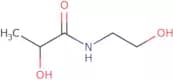
CAS:<p>2-Hydroxy-N-(2-hydroxyethyl)propanamide is a cationic surfactant that has been shown to inhibit the activity of tyrosinase and tnf-α. 2-Hydroxy-N-(2-hydroxyethyl)propanamide is used as a skin conditioning agent in cosmetic formulations and also has antimicrobial properties. It has been shown to be effective against a range of microorganisms, including gram positive bacteria, gram negative bacteria, yeast, and fungi. 2-Hydoxy-N-(2-hydroxyethyl)propanamide does not damage the skin but may cause dryness if it is left on for an extended period of time. It is also an antioxidant compound with a phase transition temperature of -19 degrees Celsius.</p>Formula:C5H11NO3Purity:Min. 95%Color and Shape:Colorless Clear LiquidMolecular weight:133.15 g/molN-1-Adamantyl-2-chloroacetamide
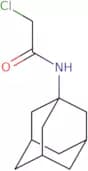
CAS:<p>Adamantyl-2-chloroacetamide is an analog of adamantyl acetamide and has been shown to be a potent inhibitor of Mycobacterium tuberculosis. Adamantyl-2-chloroacetamide inhibits the growth of Mycobacterium tuberculosis by inhibiting the synthesis of DNA, RNA, and protein. This compound also shows selectivity for Mycobacterium tuberculosis over other bacteria such as Escherichia coli. Adamantyl-2-chloroacetamide may have a role in the treatment of tuberculosis because it can inhibit the synthesis of DNA, RNA, and protein in Mycobacterium tuberculosis while leaving these functions intact in other bacteria.</p>Formula:C12H18ClNOPurity:Min. 95%Color and Shape:PowderMolecular weight:227.73 g/molα-Naphthamide
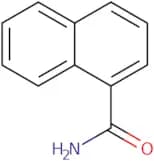
CAS:<p>Alpha-naphthamide is a high-resistance antimicrobial agent that belongs to the group of benzalkonium chloride. It is used in disinfectant products and has been shown to be effective against invertebrates such as mosquitoes and leeches. Alpha-naphthamide binds to the dinucleotide phosphate and inhibits enzyme activities by acting as an alkylsulfonyl and cytosolic Ca2+ inhibitor, leading to cell death. Alpha-naphthamide has also been shown to inhibit multidrug efflux pump activity in bacterial cells, which may be due to its structural similarity with c1-c6.</p>Formula:C11H9NOPurity:Min. 95%Color and Shape:SolidMolecular weight:171.2 g/mol1-Butyl-3-methylimidazolium dicyanamide
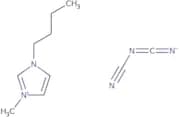
CAS:<p>1-Butyl-3-methylimidazolium dicyanamide is an ionic liquid that is a colorless, volatile liquid. It is a hydrophobic compound that has been shown to have a high thermal expansion coefficient and a low viscosity. This compound has been shown to form stable complexes with many metals and nonmetals, such as lithium, sodium, silver, copper, gold, palladium, nickel, cobalt and zinc. 1-Butyl-3-methylimidazolium dicyanamide has been used for solvent extraction of metals and as an electrolyte in electrochemical studies. The solubility of this compound in water has been found to be dependent on the concentration of the hydrogen bond acceptor sites on the surface of the solute molecule.</p>Formula:C10H15N5Purity:Min. 95%Color and Shape:Red Clear LiquidMolecular weight:205.26 g/mol




![N-[3-(Diethylaminomethyl)-4-hydroxyphenyl]acetamide](/_next/image/?url=https%3A%2Fstatic.cymitquimica.com%2Fproducts%2F3D%2Fthumb-webp%2FFD71897.webp&w=3840&q=75)