Amides
Amides are a wide range of chemical compounds that contain at least one heterocyclic ring, which has atoms of at least two different elements in the ring structure, and at least one amide group (-CONH2). These compounds are crucial in the synthesis of pharmaceuticals, polymers, and agrochemicals. Amides exhibit unique properties and reactivity, making them valuable intermediates in organic synthesis. At CymitQuimica, we offer a comprehensive selection of high-quality amides to support your research and industrial needs.
Found 16399 products of "Amides"
Sort by
Purity (%)
0
100
|
0
|
50
|
90
|
95
|
100
3-Fluorobenzamide
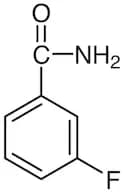
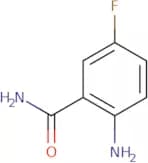
CAS:Formula:C7H6FNOPurity:>97.0%(HPLC)(N)Color and Shape:White to Almost white powder to crystalMolecular weight:139.132-Amino-5-fluorobenzamide
CAS:<p>2-Amino-5-fluorobenzamide (2AFB) is a compound that has been shown to have neurotoxic properties. 2AFB is a ring-opening agent, which means it can open the six-membered ring of aromatic compounds such as benzene or pyridine. 2AFB also has affinity for metal ions and therefore can be used in magnetic separations. The reaction system of 2AFB includes an enzyme, pentylenetetrazole (PTZ), that catalyzes the reaction between 2AFB and its substrate, 4-nitrophenol (4NP). This reaction produces free radicals that react with oxygen to produce peroxides. These peroxides are then detected by a chemiluminescence assay. In this way, the amount of 2AFB and 4NP can be measured quantitatively.<br>2AFB also has antioxidant properties, which may be due to its ability to scavenge free radicals from</p>Formula:C7H7FN2OPurity:Min. 95%Color and Shape:PowderMolecular weight:154.14 g/mol2-Cyano-N,N-diethylacetamide
CAS:Formula:C7H12N2OPurity:>98.0%(GC)Color and Shape:Colorless to Light yellow clear liquidMolecular weight:140.191-Methyl-N-(9-methyl-9-azabicyclo[3.3.1]non-3-yl)-indazole-3-carboxamide
CAS:Controlled Product<p>1-Methyl-N-(9-methyl-9-azabicyclo[3.3.1]non-3-yl)-indazole-3-carboxamide is a chemical inhibitor of the 5HT2 receptor, which is responsible for regulating nausea and vomiting. It has been shown to have antiemetic properties, and can be used in chemotherapy to control nausea and vomiting. The 5HT2 receptor is coupled to Gs proteins and inhibits adenylyl cyclase activity, while 1MMAI binds to the 5HT2A receptor and blocks serotonin from binding. This prevents serotonin from activating Gq protein receptors, which are involved in the generation of intracellular calcium concentrations that lead to neurotransmitter release. 1MMAI also inhibits the activation of phospholipase C by serotonin, resulting in decreased levels of diacylglycerol (DAG) and inositol triphosphate (IP3). These changes inhibit plate</p>Formula:C18H24N4OPurity:Min. 95%Color and Shape:White Off-White PowderMolecular weight:312.41 g/molN-α-[2,4-Dinitro-5-fluorophenyl]-D-alanine amide
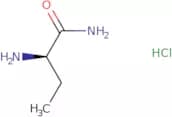
CAS:<p>N-alpha-[2,4-Dinitro-5-fluorophenyl]-D-alanine amide is a potential drug for the treatment of cancer. It has been shown to be effective in inhibiting the proliferation of human prostate carcinoma cells in culture. This compound is a potential anticancer drug that binds to DNA and inhibits topoisomerase II, which is an enzyme involved in DNA replication. The mechanism of action of this drug was studied using methods such as optimization, isomers, plates, trifluoroacetic acid, tautomers, amino acid analysis and nanomolar concentrations. N-alpha-[2,4-Dinitro-5-fluorophenyl]-D-alanine amide has also been shown to inhibit cyanobacteria growth.</p>Formula:C9H9N4O5FPurity:Min. 95%Color and Shape:Light (Or Pale) Yellow To Yellow SolidMolecular weight:272.0557(R)-2-Aminobutanamide hydrochloride
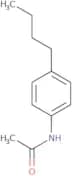
CAS:<p>(R)-2-Aminobutanamide hydrochloride is a compound that contains chloride gas. This compound is an alkylating agent, which means it can form new carbon-nitrogen bonds by adding to the electrophilic center of a molecule. This process is used industrially to produce butyronitrile, which is a precursor for nylon and other plastics. The introduction of (R)-2-aminobutanamide hydrochloride into industrial processes has decreased the use of l-tartaric acid, diluent, and hydrogen chloride. The impurities in this compound are typically quantified using gas chromatography with flame ionization detection.<br>(R)-2-Aminobutanamide hydrochloride is an acidic compound that dissociates in water to release hydrogen chloride. It has two chiral forms: <br>The enantiomers have different chemical properties due to their different configurations around the central carbon atom. In the case of (</p>Formula:C4H10N2O·HClPurity:Min. 95%Color and Shape:White PowderMolecular weight:138.6 g/molN-(4-Butylphenyl)acetamide
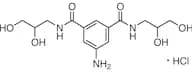
CAS:<p>N-(4-Butylphenyl)acetamide is a reactant that can be used in the production of other chemicals. It is an intermediate for the synthesis of a wide range of organic compounds, which makes it a useful building block. N-(4-Butylphenyl)acetamide has been shown to have antihistamine and anti-inflammatory properties. It is also known as acetanilide or 4-butylaniline. This chemical has CAS number 3663-20-5 and a molecular weight of 150.06 g/mol.</p>Formula:C12H17NOPurity:Min. 95%Color and Shape:White/Off-White SolidMolecular weight:191.27 g/mol5-Amino-N,N'-bis(2,3-dihydroxypropyl)isophthalamide Hydrochloride
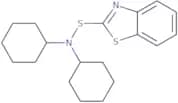
CAS:Formula:C14H21N3O6·HClPurity:>98.0%(HPLC)(N)Color and Shape:White to Almost white powder to crystalMolecular weight:363.80N,N-Dicyclohexyl-2-benzothiazolsulfene amide
CAS:<p>2-Benzothiazolylsulfenamide is a heterocyclic amine that is used as a chemical intermediate. It reacts with hydrochloric acid to produce the corresponding dicyclohexyl amide, which then reacts with ammonia in the presence of an organic base to produce N,N-dicyclohexyl-2-benzothiazolsulfene amide. This reaction mechanism can be summarized as follows:</p>Formula:C19H26N2S2Purity:Min. 95%Color and Shape:PowderMolecular weight:346.56 g/mol1-Butyl-3-methylimidazolium dicyanamide
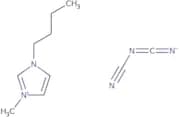
CAS:<p>1-Butyl-3-methylimidazolium dicyanamide is an ionic liquid that is a colorless, volatile liquid. It is a hydrophobic compound that has been shown to have a high thermal expansion coefficient and a low viscosity. This compound has been shown to form stable complexes with many metals and nonmetals, such as lithium, sodium, silver, copper, gold, palladium, nickel, cobalt and zinc. 1-Butyl-3-methylimidazolium dicyanamide has been used for solvent extraction of metals and as an electrolyte in electrochemical studies. The solubility of this compound in water has been found to be dependent on the concentration of the hydrogen bond acceptor sites on the surface of the solute molecule.</p>Formula:C10H15N5Purity:Min. 95%Color and Shape:Red Clear LiquidMolecular weight:205.26 g/mol2-Chloro-N-(hydroxymethyl)acetamide
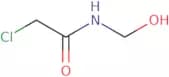
CAS:<p>2-Chloro-N-(hydroxymethyl)acetamide (2CHAA) is an inhibitor that has been shown to be effective against a number of infectious diseases. 2CHAA inhibits the growth of bacteria by inhibiting the synthesis of proteins from RNA. This drug is also active against viruses, including herpes simplex virus and human immunodeficiency virus type 1, as well as fungi, such as Aspergillus niger. 2CHAA has no genotoxic effects in humans, but it does have carcinogenic potential and can cause allergic reactions. It also reacts with strong acids to form toxic compounds.</p>Formula:C3H6ClNO2Purity:Min. 95%Color and Shape:White PowderMolecular weight:123.54 g/molN-(2-Chlorophenyl)-2-mercaptoacetamide
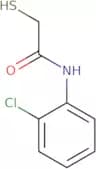
CAS:<p>2-Chloroacetamide is a useful building block that can be used to synthesize a variety of compounds. This chemical is also a versatile intermediate and can be used in the preparation of fine chemicals, research chemicals, and speciality chemicals. It is also a reaction component that can be used in the synthesis of complex compounds. 2-Chloroacetamide has been shown to have high quality properties and is often used as a reagent.</p>Formula:C8H8ClNOSPurity:Min. 95%Color and Shape:White PowderMolecular weight:201.67 g/mol3,5-Diacetoxybenzamide
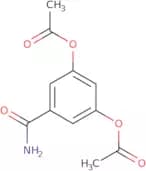
CAS:<p>3,5-Diacetoxybenzamide technical is a solvent that can be used in organic synthesis. It is soluble in hydrochloric acid and has a boiling point of 210 degrees Celsius. 3,5-Diacetoxybenzamide technical is soluble in water and has an LD50 (lethal dose) of over 5 g/kg when administered orally to pigs. 3,5-Diacetoxybenzamide technical is also used as a reagent for the preparation of peracetates and esters of aromatic ketones. This product can be used as a reaction medium for lipase or porcine pancreatic lipase. It is also used in the manufacture of pharmaceuticals, fragrances, dyes, herbicides and pesticides.</p>Formula:C11H11NO5Purity:Min. 95%Color and Shape:PowderMolecular weight:237.21 g/mol4-(tert-Butyl)benzenesulfonamide
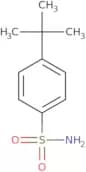
CAS:<p>4-(tert-Butyl)benzenesulfonamide is a pyrimidine derivative that has an affinity for metal ions and can be used as a catalyst. It is insoluble in water but soluble in acetonitrile and other organic solvents. This compound is a strong oxidant when it reacts with ethylene, styrene, or propyl gallate. 4-(tert-Butyl)benzenesulfonamide has been shown to be highly reactive with the oxygen in air, leading to the formation of 4-dimethylaminobenzoic acid, formyl group, and phosphorus oxychloride.</p>Formula:C10H15NO2SPurity:Min. 95%Color and Shape:PowderMolecular weight:213.3 g/mol2,2-Dimethylthiopropionamide
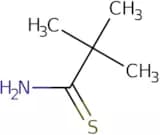
CAS:<p>2,2-Dimethylthiopropionamide is an organic compound with the chemical formula C4H7NOS. It is a nucleophilic, unsymmetrical, n-benzyltrifluoroacetamide that is soluble in chloroform and reacts with nucleophiles to give products of desulfurization. 2,2-Dimethylthiopropionamide has been shown to react with electron-deficient amines such as azetidine and elucidate their structures. The reaction of 2,2-Dimethylthiopropionamide with chloroformate gives a dipole product and can be analysed by infrared spectroscopy.</p>Formula:C5H11NSPurity:Min. 95%Molecular weight:117.21 g/molN,N'-Ethylenebis(iodoacetamide)
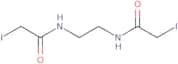
CAS:<p>N,N'-Ethylenebis(iodoacetamide) is a molecule that binds to peptides and is used in cancer research. It has been shown to inhibit the growth of leukemia cells by inhibiting the synthesis of DNA. N,N'-Ethylenebis(iodoacetamide) has been shown to be an active analog for artemisinin, a drug used for malaria prophylaxis, and podophyllotoxin, a natural product used for the treatment of cancer. The molecule also inhibits cancer cell proliferation through its effects on protein synthesis.</p>Formula:C6H10I2N2O2Purity:Min. 95%Color and Shape:PowderMolecular weight:395.96 g/mol2-Iodo-N-phenylbenzamide
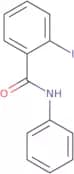
CAS:<p>2-Iodo-N-phenylbenzamide is a palladium compound that inhibits bacterial growth by binding to DNA and preventing transcription. The drug binds to the DNA as a monomer, but also forms polymeric matrixes with other drugs. 2-Iodo-N-phenylbenzamide has been shown to have genotoxic effects on subtilis and methicillin resistant Staphylococcus aureus (MRSA) in vitro, which may be due to its ability to form crosslinks between adjacent strands of DNA. 2-Iodo-N-phenylbenzamide has been shown to be an effective anti-bacterial agent against MRSA, methicillin resistant coagulase negative staphylococci and erythromycin resistant strains of Streptococcus pyogenes.</p>Formula:C13H10INOPurity:Min. 95%Molecular weight:323.13 g/molPivalamide
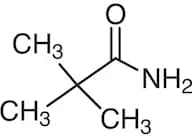
CAS:Formula:C5H11NOPurity:>98.0%(GC)(N)Color and Shape:White to Almost white powder to crystalMolecular weight:101.152-Chloro-N,N'-di-p-tolylbenzamide
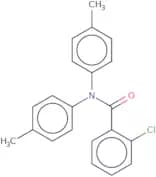
CAS:<p>2-Chloro-N,N'-di-p-tolylbenzamide is a fine chemical that is used in the synthesis of complex compounds. It has a wide range of applications, including research chemicals and reagents. This compound is also a useful building block for the preparation of high quality pharmaceuticals and speciality chemicals. 2-Chloro-N,N'-di-p-tolylbenzamide may be used as a reaction component or scaffold in organic synthesis.</p>Formula:C21H18ClNOPurity:Min. 95%Molecular weight:335.83 g/molGly-pro-4-methoxy-β-naphthylamide
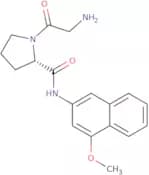
CAS:<p>Gly-pro-4-methoxy-beta-naphthylamide is a synthetic substrate that is used to measure the activity of human plasma phosphatases. Gly-pro-4-methoxy-beta-naphthylamide is synthesized in an organic solvent and then reacted with diazonium salt to form a glycosylated aminophosphonic acid. The product is purified by chromatography and identified by mass spectrometry. Gly-pro-4-methoxy beta naphthylamide has been shown to inhibit the growth of cancer cells in vitro, as well as having antiinflammatory properties. This drug also has been shown to be effective in treating patients with severe hyperbilirubinemia who are undergoing hematopoietic stem cell transplantation.</p>Formula:C18H21N3O3Purity:Min. 95%Molecular weight:327.38 g/mol



![1-Methyl-N-(9-methyl-9-azabicyclo[3.3.1]non-3-yl)-indazole-3-carboxamide](/_next/image/?url=https%3A%2Fstatic.cymitquimica.com%2Fproducts%2F3D%2Fthumb-webp%2FFM137557.webp&w=3840&q=75)
![N-α-[2,4-Dinitro-5-fluorophenyl]-D-alanine amide](/_next/image/?url=https%3A%2Fstatic.cymitquimica.com%2Fproducts%2F3D%2Fthumb-webp%2FFD48427.webp&w=3840&q=75)