Amides
Amides are a wide range of chemical compounds that contain at least one heterocyclic ring, which has atoms of at least two different elements in the ring structure, and at least one amide group (-CONH2). These compounds are crucial in the synthesis of pharmaceuticals, polymers, and agrochemicals. Amides exhibit unique properties and reactivity, making them valuable intermediates in organic synthesis. At CymitQuimica, we offer a comprehensive selection of high-quality amides to support your research and industrial needs.
Found 16399 products of "Amides"
Sort by
Purity (%)
0
100
|
0
|
50
|
90
|
95
|
100
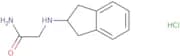
2-(Indenylamino)acetamide, hydrochloride salt
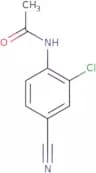
CAS:<p>2-(Indenylamino)acetamide, hydrochloride salt is a potential drug that is an uptake inhibitor. It prevents the uptake of dopamine in the brain and has been shown to be neuroprotective in animal research. It also has potential to treat diabetic neuropathy, inflammatory diseases, and pain. The kinetic properties of this drug were studied using rat striatal cells. 2-(Indenylamino)acetamide, hydrochloride salt inhibits the transport of dopamine into these cells by blocking the movement of dopamine from outside the cell to inside the cell. This drug could potentially be used for treatment of Parkinson's disease or other conditions involving dopaminergic dysfunction.</p>Formula:C11H15ClN2OPurity:Min. 95%Color and Shape:PowderMolecular weight:226.7 g/molN-(4-Cyano-2-chlorophenyl)acetamide
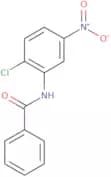
CAS:<p>N-(4-Cyano-2-chlorophenyl)acetamide is a versatile building block that is used in the synthesis of complex compounds. N-(4-Cyano-2-chlorophenyl)acetamide has been shown to be a useful intermediate in the synthesis of important compounds such as 4-aminoantipyrine, 4,5-dichloroanthranilic acid and 2,6-dichloropurine. This chemical has also been found to be an effective reagent for the preparation of other chemicals.</p>Formula:C9H7ClN2OPurity:Min. 95%Molecular weight:194.62 g/molN-(2-Chloro-5-Nitrophenyl)Benzamide
CAS:<p>Please enquire for more information about N-(2-Chloro-5-Nitrophenyl)Benzamide including the price, delivery time and more detailed product information at the technical inquiry form on this page</p>Formula:C13H9ClN2O3Purity:Min. 95%Color and Shape:PowderMolecular weight:276.67 g/mol2-Amino-2-cyanoacetamide
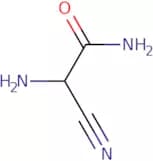
CAS:<p>2-Amino-2-cyanoacetamide is a chemical compound that has been shown to be reactive in the human liver and animal models. It is a purine derivative with a diatomic molecule, which has been shown to inhibit cancer cells in animals. 2-Amino-2-cyanoacetamide has been shown to inhibit the replication of pestivirus, an RNA virus that causes encephalitis and other diseases in humans. The nitrogen atoms on this molecule are responsible for its transport properties, including uptake by the gut and its ability to cross the blood brain barrier. 2-Amino-2-cyanoacetamide also inhibits the activity of amide hydrolase, which is an enzyme responsible for hydrolyzing peptides into amino acids. This process leads to a decrease in protein synthesis, which can lead to cell death.</p>Formula:C3H5N3OPurity:Min. 95%Color and Shape:Beige To Tan SolidMolecular weight:99.09 g/mol2-Amino-4,5-dimethoxybenzamide
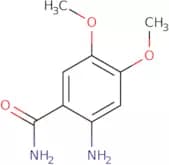
CAS:<p>2-Amino-4,5-dimethoxybenzamide is an anticancer agent that inhibits the epidermal growth factor receptor tyrosine kinase. It binds to the linker region of the epidermal growth factor receptor and prevents autophosphorylation. 2-Amino-4,5-dimethoxybenzamide has shown in vitro cytotoxic activity against testicular cancer cells and acute lymphoblastic leukemia cells. 2-Amino-4,5-dimethoxybenzamide is a synthetic compound that has been shown to have bioisosteric properties with other growth factors such as epidermal growth factor.</p>Formula:C9H12N2O3Purity:Min. 95%Color and Shape:PowderMolecular weight:196.2 g/mol2-Cyano-N,N-diethylacetamide
CAS:Formula:C7H12N2OPurity:>98.0%(GC)Color and Shape:Colorless to Light yellow clear liquidMolecular weight:140.194-(tert-Butyl)benzenesulfonamide
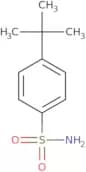
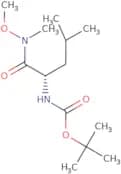
CAS:<p>4-(tert-Butyl)benzenesulfonamide is a pyrimidine derivative that has an affinity for metal ions and can be used as a catalyst. It is insoluble in water but soluble in acetonitrile and other organic solvents. This compound is a strong oxidant when it reacts with ethylene, styrene, or propyl gallate. 4-(tert-Butyl)benzenesulfonamide has been shown to be highly reactive with the oxygen in air, leading to the formation of 4-dimethylaminobenzoic acid, formyl group, and phosphorus oxychloride.</p>Formula:C10H15NO2SPurity:Min. 95%Color and Shape:PowderMolecular weight:213.3 g/molBoc-L-leucine N,O-dimethylhydroxamide
CAS:<p>Boc-L-leucine N,O-dimethylhydroxamide is a chemical compound with CAS number 87694-50-6. It is a white crystalline solid and has a molecular weight of 144.17 g. This product is soluble in water and ethanol, but insoluble in ether. Boc-L-leucine N,O-dimethylhydroxamide can be used as a reaction component or reagent for organic synthesis, including research chemicals and speciality chemicals. It can also be used as an intermediate for the production of complex compounds and fine chemicals.</p>Formula:C13H26N2O4Purity:Min. 95%Color and Shape:White Clear LiquidMolecular weight:274.36 g/molL-Valinamide hydrochloride
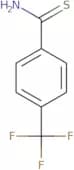
CAS:<p>L-Valinamide hydrochloride is an amide with a reactive group. It binds to the CB2 receptor and the CB1 receptor, which are found in the brain and immune system. L-Valinamide hydrochloride has been shown to have anti-inflammatory effects in animal models of inflammatory diseases, such as rheumatoid arthritis. L-Valinamide hydrochloride has also been shown to be a synthetic cannabinoid that inhibits pain transmission by binding to the same receptors as delta-9 tetrahydrocannabinol (THC), one of the active components of cannabis.</p>Formula:C5H12N2O·HClColor and Shape:White Off-White PowderMolecular weight:152.62 g/mol4-Trifluoromethylbenzene-1-carbothioamide
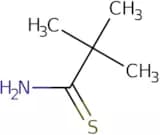
CAS:<p>4-Trifluoromethylbenzene-1-carbothioamide (4FBA) is a non-toxic, organosulfur compound that is found in the fructus of Aurantii or Garcinia mangostana. 4FBA inhibits oxidant enzymes by reacting with their sulfhydryl groups and, as a result, prevents oxidation of other molecules. It has been shown to have antioxidant properties and inhibitory activity against two important enzymes that are involved in the progression of oxidative stress and inflammation. 4FBA has also been shown to be an effective inhibitor of chloride channels which may provide therapeutic potential for diseases such as sclerosis.</p>Formula:C8H6F3NSPurity:Min. 95%Color and Shape:PowderMolecular weight:205.2 g/mol2,2-Dimethylthiopropionamide
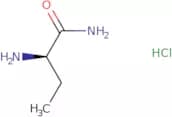
CAS:<p>2,2-Dimethylthiopropionamide is an organic compound with the chemical formula C4H7NOS. It is a nucleophilic, unsymmetrical, n-benzyltrifluoroacetamide that is soluble in chloroform and reacts with nucleophiles to give products of desulfurization. 2,2-Dimethylthiopropionamide has been shown to react with electron-deficient amines such as azetidine and elucidate their structures. The reaction of 2,2-Dimethylthiopropionamide with chloroformate gives a dipole product and can be analysed by infrared spectroscopy.</p>Formula:C5H11NSPurity:Min. 95%Molecular weight:117.21 g/mol(R)-2-Aminobutanamide hydrochloride
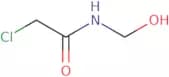
CAS:<p>(R)-2-Aminobutanamide hydrochloride is a compound that contains chloride gas. This compound is an alkylating agent, which means it can form new carbon-nitrogen bonds by adding to the electrophilic center of a molecule. This process is used industrially to produce butyronitrile, which is a precursor for nylon and other plastics. The introduction of (R)-2-aminobutanamide hydrochloride into industrial processes has decreased the use of l-tartaric acid, diluent, and hydrogen chloride. The impurities in this compound are typically quantified using gas chromatography with flame ionization detection.<br>(R)-2-Aminobutanamide hydrochloride is an acidic compound that dissociates in water to release hydrogen chloride. It has two chiral forms: <br>The enantiomers have different chemical properties due to their different configurations around the central carbon atom. In the case of (</p>Formula:C4H10N2O·HClPurity:Min. 95%Color and Shape:White PowderMolecular weight:138.6 g/mol2-Chloro-N-(hydroxymethyl)acetamide
CAS:<p>2-Chloro-N-(hydroxymethyl)acetamide (2CHAA) is an inhibitor that has been shown to be effective against a number of infectious diseases. 2CHAA inhibits the growth of bacteria by inhibiting the synthesis of proteins from RNA. This drug is also active against viruses, including herpes simplex virus and human immunodeficiency virus type 1, as well as fungi, such as Aspergillus niger. 2CHAA has no genotoxic effects in humans, but it does have carcinogenic potential and can cause allergic reactions. It also reacts with strong acids to form toxic compounds.</p>Formula:C3H6ClNO2Purity:Min. 95%Color and Shape:White PowderMolecular weight:123.54 g/mol1-Methyl-N-(9-methyl-9-azabicyclo[3.3.1]non-3-yl)-indazole-3-carboxamide
CAS:Controlled Product<p>1-Methyl-N-(9-methyl-9-azabicyclo[3.3.1]non-3-yl)-indazole-3-carboxamide is a chemical inhibitor of the 5HT2 receptor, which is responsible for regulating nausea and vomiting. It has been shown to have antiemetic properties, and can be used in chemotherapy to control nausea and vomiting. The 5HT2 receptor is coupled to Gs proteins and inhibits adenylyl cyclase activity, while 1MMAI binds to the 5HT2A receptor and blocks serotonin from binding. This prevents serotonin from activating Gq protein receptors, which are involved in the generation of intracellular calcium concentrations that lead to neurotransmitter release. 1MMAI also inhibits the activation of phospholipase C by serotonin, resulting in decreased levels of diacylglycerol (DAG) and inositol triphosphate (IP3). These changes inhibit plate</p>Formula:C18H24N4OPurity:Min. 95%Color and Shape:White Off-White PowderMolecular weight:312.41 g/molN-Methyl-N-(1-naphthyl)-2-bromobenzamide
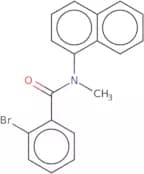
CAS:<p>N-Methyl-N-(1-naphthyl)-2-bromobenzamide is a high quality reagent that is used as a complex compound. It has CAS No. 74881-58-6 and it can be used as a useful intermediate, fine chemical or speciality chemical. N-Methyl-N-(1-naphthyl)-2-bromobenzamide is also a versatile building block that is used in reactions to synthesize other compounds.</p>Formula:C18H14BrNOPurity:Min. 95%Molecular weight:340.21 g/mol(4-Butoxyphenyl)acetamide
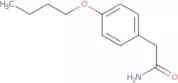
CAS:<p>4-Butoxyphenyl)acetamide is a synthetically produced chemoattractant that is used in vitro to study the migration of cells. It is soluble in non-polar solvents and can be expressed from many organisms, including bacteria and plants. 4-Butoxyphenyl)acetamide has been shown to induce cell movement by binding to the G protein coupled receptor that stimulates the release of calcium ions from intracellular stores. This molecule also has photophysical properties, which have been studied in rat liver microsomes and hydrochloric acid, hydroxamic acids, and spermatozoa. 4-Butoxyphenyl)acetamide can be absorbed from the intestine into plasma, where it binds to odorant receptors on sensory neurons in the nose. These receptors are also found in plant physiology, where they are responsible for detecting chemicals that attract pollinators such as bees or insects.</p>Formula:C12H17NO2Purity:Min. 90 Area-%Color and Shape:PowderMolecular weight:207.27 g/molThiophene-2-carboxamide
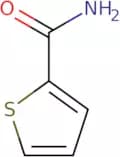
CAS:<p>Thiophene-2-carboxamide is a synthetic chemical that is an inhibitor of the efflux pump, receptor activity, and recombinant cytochrome p450. It has been shown to be effective against colorectal carcinoma cells in vitro and in vivo. Thiophene-2-carboxamide also inhibits the mitochondrial membrane potential and hydrogen bond formation. This compound has potent inhibitory activity for the enzyme synthetase, which may be a potential drug target for cancer treatment. Nitrogen atoms are present in this molecule.</p>Formula:C5H5NOSPurity:Min. 95%Color and Shape:White PowderMolecular weight:127.17 g/molN-Ethyl-o-crotonotoluidide
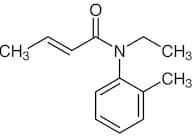
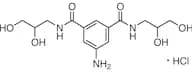
CAS:Formula:C13H17NOPurity:>95.0%(GC)Color and Shape:Colorless to Light yellow to Light orange clear liquidMolecular weight:203.295-Amino-N,N'-bis(2,3-dihydroxypropyl)isophthalamide Hydrochloride
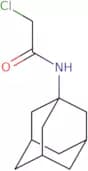
CAS:Formula:C14H21N3O6·HClPurity:>98.0%(HPLC)(N)Color and Shape:White to Almost white powder to crystalMolecular weight:363.80N-1-Adamantyl-2-chloroacetamide
CAS:<p>Adamantyl-2-chloroacetamide is an analog of adamantyl acetamide and has been shown to be a potent inhibitor of Mycobacterium tuberculosis. Adamantyl-2-chloroacetamide inhibits the growth of Mycobacterium tuberculosis by inhibiting the synthesis of DNA, RNA, and protein. This compound also shows selectivity for Mycobacterium tuberculosis over other bacteria such as Escherichia coli. Adamantyl-2-chloroacetamide may have a role in the treatment of tuberculosis because it can inhibit the synthesis of DNA, RNA, and protein in Mycobacterium tuberculosis while leaving these functions intact in other bacteria.</p>Formula:C12H18ClNOPurity:Min. 95%Color and Shape:PowderMolecular weight:227.73 g/mol




![1-Methyl-N-(9-methyl-9-azabicyclo[3.3.1]non-3-yl)-indazole-3-carboxamide](/_next/image/?url=https%3A%2Fstatic.cymitquimica.com%2Fproducts%2F3D%2Fthumb-webp%2FFM137557.webp&w=3840&q=75)