Amides
Amides are a wide range of chemical compounds that contain at least one heterocyclic ring, which has atoms of at least two different elements in the ring structure, and at least one amide group (-CONH2). These compounds are crucial in the synthesis of pharmaceuticals, polymers, and agrochemicals. Amides exhibit unique properties and reactivity, making them valuable intermediates in organic synthesis. At CymitQuimica, we offer a comprehensive selection of high-quality amides to support your research and industrial needs.
Found 16401 products of "Amides"
Sort by
Purity (%)
0
100
|
0
|
50
|
90
|
95
|
100
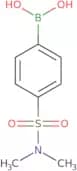
N,N-Dimethyl 4-boronobenzenesulfonamide
CAS:<p>Please enquire for more information about N,N-Dimethyl 4-boronobenzenesulfonamide including the price, delivery time and more detailed product information at the technical inquiry form on this page</p>Formula:C8H12BNO4SPurity:Min. 95%Molecular weight:229.06 g/molN,N'-Dimethylethanebis(thioamide)
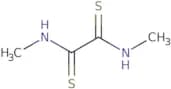
CAS:<p>N,N'-Dimethylethanebis(thioamide) is a ligand that binds to the metal rhenium. It has been shown to be an efficient catalyst for the oxidation of nitrates and organic compounds. N,N'-Dimethylethanebis(thioamide) is also used as a fertility agent in oral doses because it can increase the production of sperm in males and ovulation in females. The vibrational spectra of this compound show strong intermolecular hydrogen bonds with halogens and nitrogen atoms. This ligand has been shown to have high affinity for metal ions such as rhenium due to its chelate ring structure.</p>Formula:C4H8N2S2Purity:Min. 95%Molecular weight:148.25 g/molN-(3-Bromo-4-hydroxyphenethyl)-N-(2-bromo-5-hydroxy-4-methoxybenzyl)formamide
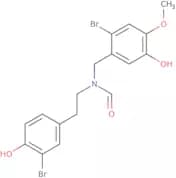
CAS:Controlled Product<p>Please enquire for more information about N-(3-Bromo-4-hydroxyphenethyl)-N-(2-bromo-5-hydroxy-4-methoxybenzyl)formamide including the price, delivery time and more detailed product information at the technical inquiry form on this page</p>Formula:C17H17Br2NO4Purity:Min. 95%Molecular weight:459.13 g/molN-Bromoacetamide
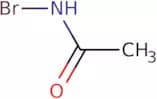
CAS:<p>N-Bromoacetamide is a reactive chemical that can react with the sodium channel to produce a postulated effect. It has been shown to inhibit the kinetics of the sodium channel in whole-cell voltage clamp experiments. This inhibition is reversible and does not depend on the pH of the solution. Bromoacetamide has been shown to have an irreversible inhibition on potassium channels, which may be due to its ability to form covalent bonds with sulfhydryl groups. Bromoacetamide also inhibits voltage-gated calcium channels, but at a slower rate than it does for sodium channels. N-Bromoacetamide has been shown to be effective in pharmacological treatments for epilepsy, myasthenia gravis, and multiple sclerosis.</p>Formula:C2H4BrNOPurity:Min. 95%Color and Shape:PowderMolecular weight:137.96 g/molN-[2-[4-(Aminosulfonyl)-phenyl]-ethyl]-5-methyl-2-pyrazinecarboxamide
CAS:<p>Fluoxetine is a potent inhibitor of the enzyme cytochrome P450 (CYP) 2C19. The inhibition of CYP2C19 by fluoxetine may lead to an increase in the plasma concentration of other drugs that are metabolized by this enzyme, such as glipizide and hydroxycyclohexyl. Fluoxetine inhibits human uric acid secretion and increases plasma concentrations of uric acid. This drug also inhibits human erythrocyte dihydropyrimidine dehydrogenase, leading to increased blood levels of pyrimidines, especially cytotoxic ones like 6-fluoro-3-indoxyl-beta-D-galactopyranoside. Fluoxetine has been shown to have a protective effect against acetaminophen toxicity in rats because it enhances the conversion of acetaminophen to its less toxic metabolite N-acetylcysteine.</p>Formula:C14H16N4O3SPurity:Min. 95%Color and Shape:White To Off-White SolidMolecular weight:320.37 g/molN-(2,3-Dihydro-1H-inden-5-yl)acetamide
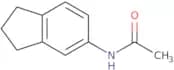
CAS:<p>N-(2,3-Dihydro-1H-inden-5-yl)acetamide (DHICA) is an organic compound that is used in the synthesis of stilbazolium and trichophyton. It has been shown to be a kinetic model for photoisomerization of indene derivatives, which is important in the study of chemistry. DHICA has also been shown to be active against the violaceum fungus. The fluorescence properties of DHICA have been studied extensively and it has been found to have high quantum yields and a large number of channels.</p>Formula:C11H13NOPurity:Min. 95%Molecular weight:175.23 g/molN-(4-Bromonaphthalene-1-yl)-acetamide
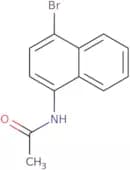
CAS:<p>The N-(4-bromonaphthalene-1-yl)-acetamide is a high quality chemical that is used as a reaction component in the synthesis of pharmaceuticals and other speciality chemicals. It can also be used as a building block for creating more complex compounds. This compound is a versatile building block that can be used to synthesise many different types of products.</p>Formula:C12H10BrNOPurity:Min. 95%Molecular weight:264.12 g/molN-(tert-Butoxycarbonyl)glycine N'-methoxy-N'-methylamide
CAS:<p>Please enquire for more information about N-(tert-Butoxycarbonyl)glycine N'-methoxy-N'-methylamide including the price, delivery time and more detailed product information at the technical inquiry form on this page</p>Formula:C9H18N2O4Purity:Min. 95%Molecular weight:218.25 g/molAcetyl-L-alanine methyl amide
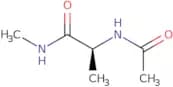
CAS:<p>Acetyl-L-alanine methyl amide is a pharmaceutical drug that is structurally similar to L-lysine. It has been synthesized as a model system for the study of receptor binding and intracellular signaling. Acetyl-L-alanine methyl amide has shown to be reactive and can form intramolecular hydrogen bonds with other molecules in the cell. This drug also reacts with microglia cells, which are responsible for clearing out dead cells and debris in the brain. Acetyl-L-alanine methyl amide is a proton donor, which may cause steric interactions with lysine residues on proteins due to their proximity within the cell. This drug also has an intermolecular hydrogen bond between its two molecules that could lead to an α subunit conformational change within the protein.</p>Formula:C6H12N2O2Purity:Min. 95%Molecular weight:144.17 g/molN-(1,2,3,4-Tetrahydro-7-methoxy-1-oxo-2-naphthalenyl)propanamide
CAS:Controlled Product<p>Please enquire for more information about N-(1,2,3,4-Tetrahydro-7-methoxy-1-oxo-2-naphthalenyl)propanamide including the price, delivery time and more detailed product information at the technical inquiry form on this page</p>Formula:C14H17NO3Purity:Min. 95%Molecular weight:247.29 g/molN,N-Dimethyl-2-chloroacetamide
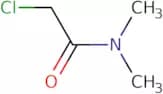
CAS:<p>N,N-Dimethyl-2-chloroacetamide is a chlorinated organic compound that has a reaction rate of 1.4 × 10^6. It is used as a treatment for acrylonitrile poisoning, and it is also used in the synthesis of thienopyridine and cetirizine. N,N-Dimethyl-2-chloroacetamide reacts with an amine to produce an amide; this reaction takes place in an organic solvent with a dicarboxylate, such as ethyl acetate or butyl acetate. This reaction produces a solution that is colorless to pale yellow. The time required for the reaction to complete depends on the concentration of reactants and the type of solvent used.</p>Formula:C4H8ClNOPurity:Min. 95%Molecular weight:121.57 g/molBoc-L-proline N,O-dimethylhydroxamide
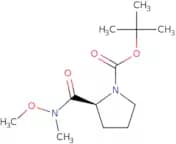
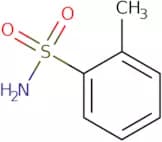
CAS:<p>Please enquire for more information about Boc-L-proline N,O-dimethylhydroxamide including the price, delivery time and more detailed product information at the technical inquiry form on this page</p>Formula:C12H22N2O4Purity:Min. 95%Molecular weight:258.31 g/mol2-Methylbenzenesulfonamide
CAS:<p>2-Methylbenzenesulfonamide is a chemical compound that has been shown to induce apoptosis in bladder cancer cells. It is an acid conjugate of the drug 2-methylbenzene-1,4-sulfonamide and it can be used for the treatment of bladder cancer. The compound binds to the apoptosis protein and inhibits its function, leading to cell death. The cytotoxic effects of 2-methylbenzenesulfonamide have been shown in short term toxicity studies in rats. In long term animal studies, this compound showed no adverse effects on the liver or kidneys, but did show some indication of reproductive toxicity. 2-Methylbenzenesulfonamide is not mutagenic and does not affect male fertility when given orally at doses up to 2000 mg/kg body weight for 90 days. 2-Methylbenzenesulfonamide binds to receptors on the surface of cancerous cells and induces apoptosis by inhib</p>Formula:C7H9NO2SPurity:Min. 95%Molecular weight:171.0354Metoclopramide base
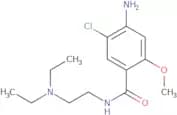
CAS:<p>Dopamine (D2) receptor antagonist</p>Formula:C14H22ClN3O2Purity:Min. 95%Color and Shape:White PowderMolecular weight:299.8 g/molWAY 316606
CAS:<p>WAY 316606 is a potent, orally administered small molecule that inhibits the Wnt signaling pathway by blocking the action of β-catenin. It has been shown to have potential for treating eye disorders, including age-related macular degeneration. This drug also has potential for treatment of cell and nervous system diseases such as Alzheimer's disease and Huntington's disease. WAY 316606 inhibits the transcriptional activity of the β-catenin/Tcf4 complex by binding to it and preventing its translocation into the nucleus. In addition, WAY 316606 prevents downstream activation of genes regulated by β-catenin signaling, including c-myc and cyclin D1. This drug also blocks growth factor receptor tyrosine kinases and monoclonal antibodies that activate these receptors.</p>Formula:C18H19F3N2O4S2Purity:Min. 95%Molecular weight:448.48 g/mol[4-(4-Aminophenoxy)(2-pyridyl)]-N-methylcarboxamide
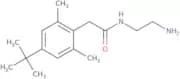
CAS:<p>4-(4-Aminophenoxy)(2-pyridyl)]-N-methylcarboxamide is a chemical compound that inhibits the growth of cancer cells by binding to the active site of b-raf and blocking its activity. It has been shown in a pharmacokinetics study that 4-(4-aminophenoxy)(2-pyridyl)]-N-methylcarboxamide is absorbed rapidly through the oral administration, excreted in urine, and eliminated rapidly from the body. The optimal reaction for this drug was found to be at pH 7.0 with an ionic strength of 0.1 M (sodium chloride). This drug also has significant inhibitory activities against human cervical carcinoma and breast cancer cell lines (MDA-MB-231).</p>Formula:C13H13N3O2Purity:Min. 95%Color and Shape:Off-White To Beige To Light Brown SolidMolecular weight:243.26 g/molN-(2-Aminoethyl)-4-(1,1-dimethylethyl)-2,6-dimethylbenzeneacetamide
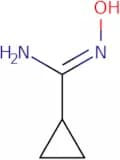
CAS:<p>Please enquire for more information about N-(2-Aminoethyl)-4-(1,1-dimethylethyl)-2,6-dimethylbenzeneacetamide including the price, delivery time and more detailed product information at the technical inquiry form on this page</p>Formula:C16H26N2OPurity:Min. 95%Color and Shape:PowderMolecular weight:262.39 g/molN'-Hydroxycyclopropanecarboximidamide
CAS:<p>N'-Hydroxycyclopropanecarboximidamide (N-HCPC) is an alkoxycarbonyl-containing heterocycle that is structurally related to the benzodiazepine class of drugs. It has been shown to have depressant activity in animal models and may be useful as a treatment for epilepsy, but it also has psychoactive properties. N-HCPC can cause epileptic seizures in humans, although this effect appears to be dose dependent. It may also have potential use as a treatment for Alzheimer's disease and depression due to its ability to bind to the benzodiazepine receptor. The drug binds with high affinity to muscle tissue, which may explain its effects on muscle control and movement.</p>Formula:C4H8N2OPurity:Min. 95%Molecular weight:100.12 g/mol(2R)-2-Amino-3-phenylpropionyl amide
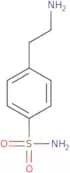
CAS:<p>(2R)-2-Amino-3-phenylpropionyl amide is a synthetic cannabinoid that has been shown to bind to the CB2 receptor. It has been found to be an effective analgesic in rat models of inflammatory and neuropathic pain. This drug is also a serine protease inhibitor, with activity against ochrobactrum, an antibiotic-resistant bacteria. (2R)-2-Amino-3-phenylpropionyl amide is also used as a substrate for d-alanine synthesis and has been sequenced. It can form hydrogen bonds with water molecules and chloride ions. (2R)-2-Amino-3-phenylpropionyl amide has been synthesized by Clostridium coli K12 cells and is expected to have similar effects on human cells.</p>Formula:C9H12N2OPurity:Min. 95%Molecular weight:164.2 g/mol4-(2-Aminoethyl)benzene sulfonamide
CAS:<p>4-(2-Aminoethyl)benzene sulfonamide is a small-molecule drug that inhibits the activity of proteases, including serine and cysteine proteases. It has been shown to inhibit the growth of human renal cell cancer cells, as well as subcutaneous tumors in mice. 4-(2-Aminoethyl)benzene sulfonamide also inhibits the proliferation of Hl-60 cells and shows antitumor activity in a mouse model system. This drug is an inhibitor of prostaglandin endoperoxide synthase (PGHS), which is involved in tumorigenesis by causing inflammation and oxidative stress. 4-(2-Aminoethyl)benzene sulfonamide has been shown to be effective for treating colorectal adenocarcinoma, with no significant side effects on other organs.</p>Formula:C8H12N2O2SPurity:Min. 95%Molecular weight:200.26 g/mol

![N-[2-[4-(Aminosulfonyl)-phenyl]-ethyl]-5-methyl-2-pyrazinecarboxamide](/_next/image/?url=https%3A%2Fstatic.cymitquimica.com%2Fproducts%2F3D%2Fthumb-webp%2FFA150607.webp&w=3840&q=75)



![[4-(4-Aminophenoxy)(2-pyridyl)]-N-methylcarboxamide](/_next/image/?url=https%3A%2Fstatic.cymitquimica.com%2Fproducts%2F3D%2Fthumb-webp%2FFA17813.webp&w=3840&q=75)