Amides
Found 16537 products of "Amides"
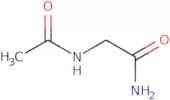
N-Acetylglycinamide
CAS:Controlled ProductN-Acetylglycinamide is an amide that is structurally similar to the amino acid glycine. It has been shown to have anti-inflammatory properties by inhibiting prostaglandin synthesis in vitro. In vivo, N-acetylglycinamide is metabolized and excreted as the non-polar solvents n-acetylglycine and chloride. This amide is soluble in non-polar solvents such as chloroform, dichloromethane, or ether. N-acetylglycinamide also has a pairwise orientational order with respect to solvent molecules and exhibits a low degree of hydrogen bonding interactions with water molecules.Purity:Min. 95%N-(tert-Butoxycarbonyl)glycine N'-methoxy-N'-methylamide
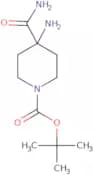
CAS:Please enquire for more information about N-(tert-Butoxycarbonyl)glycine N'-methoxy-N'-methylamide including the price, delivery time and more detailed product information at the technical inquiry form on this pageFormula:C9H18N2O4Purity:Min. 95%Molecular weight:218.25 g/mol4-Amino-1-Boc-piperidine-4-carboxamide
CAS:Please enquire for more information about 4-Amino-1-Boc-piperidine-4-carboxamide including the price, delivery time and more detailed product information at the technical inquiry form on this page
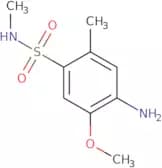
Formula:C11H21N3O3Purity:Min. 95%Molecular weight:243.3 g/mol4-Amino-5-methoxy-2-methyl-N-methylbenzenesulfonamide
CAS:4-Amino-5-methoxy-2-methyl-N-methylbenzenesulfonamide is a surfactant that is used in the chemical industry to dissolve diazotized aromatic amines. It is also used in the preparation of coupling agents, such as naphthol, and hydrochloric acid. 4-Amino-5-methoxy-2-methylbenzenesulfonamide can be prepared by the diazotization of aniline followed by coupling with hydrochloric acid and sodium phosphate. The product can then be purified by recrystallization from a salt solution containing sodium acetate.Formula:C9H14N2O3SPurity:Min. 95%Molecular weight:230.29 g/molN-(1,2,3,4-Tetrahydro-7-methoxy-1-oxo-2-naphthalenyl)propanamide
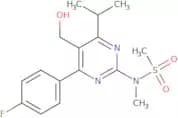
CAS:Controlled ProductPlease enquire for more information about N-(1,2,3,4-Tetrahydro-7-methoxy-1-oxo-2-naphthalenyl)propanamide including the price, delivery time and more detailed product information at the technical inquiry form on this pageFormula:C14H17NO3Purity:Min. 95%Molecular weight:247.29 g/molN-(4-(4-Fluorophenyl)-5-(hydroxymethyl)-6-isopropylpyrimidin-2-yl)-Nmethylmethanesulfonamide
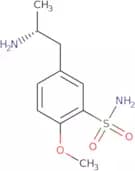
CAS:Please enquire for more information about N-(4-(4-Fluorophenyl)-5-(hydroxymethyl)-6-isopropylpyrimidin-2-yl)-Nmethylmethanesulfonamide including the price, delivery time and more detailed product information at the technical inquiry form on this pageFormula:C16H20FN3O3SPurity:Min. 95%Molecular weight:353.41 g/mol(R)-5-(2-Aminopropyl)-2-methoxybenzenesulfonamide
CAS:Controlled Product(R)-5-(2-Aminopropyl)-2-methoxybenzenesulfonamide is an amide. It is a hydrochloric acid salt that can regulate the reaction system and introduce filtration, which can be used to separate the components of the reaction system. The kinetic and chiral properties of this compound are derived from Friedel-Crafts reactions with phosphites and Friedel-Crafts reactions with d-alanine. (R)-5-(2-Aminopropyl)-2-methoxybenzenesulfonamide can also catalyze ammonolysis and catalysis with phenoxy.Formula:C10H16N2O3SPurity:Min. 95%Color and Shape:PowderMolecular weight:244.31 g/molN,N-Dimethyformamide diethy acetal
CAS:N,N-Dimethyformamide diethy acetal is a compound with a pyrazole ring and an ethyl formate substituent. It is an amide that can be synthesized by the reaction of dimethylformamide with ethyl formate. This compound has been found to inhibit the production of inflammatory cytokines such as chemokines in bowel disease patients. N,N-Dimethyformamide diethy acetal's amine group can also bind to adenosine receptors with high affinity. The hybridized nitrogen atoms in this molecule are more soluble than other amines and can be used as a supercritical fluid extraction solvent for solubility data.
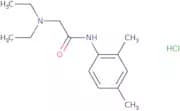
Formula:C7H17NO2Purity:Min. 95%Color and Shape:Clear LiquidMolecular weight:147.22 g/mol2-(Diethylamino)-N-(2,4-dimethylphenyl ) acetamide HCl
CAS:Please enquire for more information about 2-(Diethylamino)-N-(2,4-dimethylphenyl ) acetamide HCl including the price, delivery time and more detailed product information at the technical inquiry form on this page
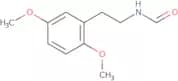
Formula:C14H22N2O·HClPurity:Min. 95 Area-%Molecular weight:270.8 g/mol2-(2,5-Dimethoxyphenyl)ethylformamide
CAS:Controlled ProductPlease enquire for more information about 2-(2,5-Dimethoxyphenyl)ethylformamide including the price, delivery time and more detailed product information at the technical inquiry form on this page
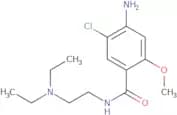
Formula:C11H15NO3Purity:Min. 95%Molecular weight:209.24 g/molMetoclopramide base
CAS:Dopamine (D2) receptor antagonist
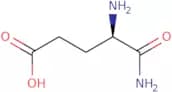
Formula:C14H22ClN3O2Purity:Min. 95%Color and Shape:White PowderMolecular weight:299.8 g/molD-Glutamic acid alpha-amide
CAS:D-Glutamic acid alpha-amide is a carbohydrate that has been shown to have antibiotic properties. It can be produced by chemoenzymatic synthesis and is used as an animal feed additive. D-Glutamic acid alpha-amide is a conjugate of D-glutamic acid with either glycine or beta-alanine. The residue of this compound on red blood cells is measured in order to assess the amount of D-glutamic acid alpha-amide that has been ingested. This compound has also been shown to have antigenic properties, which can elicit immune responses when injected into animals. The meningococcal vaccine that contains D-glutamic acid alpha-amide was found to be effective at stimulating an immune response in mice against meningitis caused by gram negative species, such as Neisseria meningitidis.Formula:C5H10N2O3Purity:Min. 95%Color and Shape:PowderMolecular weight:146.14 g/molC8-Ceramide
CAS:C8-Ceramide is a glucosylceramide that is involved in the production of C8-ceramides. It has shown to have potent apoptosis activity and inhibit p21, an inhibitor of cell cycle progression. C8-Ceramide also has been shown to be an inhibitor of tumor necrosis factor alpha (TNF-α) induced inflammation and apoptosis in mouse tumor cells. In addition, it can induce apoptosis by inhibiting the epidermal growth factor receptor (EGFR) pathway. This polymerase chain reaction (PCR) product was found to bind to DNA in a model system using calf thymus DNA as well as bacterial DNA gyrase and topoisomerase IV enzymes.
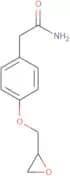
Formula:C26H51NO3Purity:Min. 95%Molecular weight:425.69 g/mol4-(2,3-Epoxypropoxy)phenylacetamide
CAS:Please enquire for more information about 4-(2,3-Epoxypropoxy)phenylacetamide including the price, delivery time and more detailed product information at the technical inquiry form on this pageFormula:C11H13NO3Purity:Min. 95%Molecular weight:207.23 g/molN,N'-Propane-1,3-diylbis[3-(3,5-di-tert-butyl-4-hydroxyphenyl)propionamide]
CAS:Please enquire for more information about N,N'-Propane-1,3-diylbis[3-(3,5-di-tert-butyl-4-hydroxyphenyl)propionamide] including the price, delivery time and more detailed product information at the technical inquiry form on this page
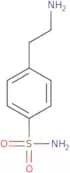
Formula:C37H58N2O4Purity:Min. 95%Color and Shape:SolidMolecular weight:594.87 g/mol4-(2-Aminoethyl)benzene sulfonamide
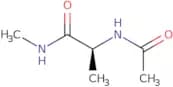
CAS:4-(2-Aminoethyl)benzene sulfonamide is a small-molecule drug that inhibits the activity of proteases, including serine and cysteine proteases. It has been shown to inhibit the growth of human renal cell cancer cells, as well as subcutaneous tumors in mice. 4-(2-Aminoethyl)benzene sulfonamide also inhibits the proliferation of Hl-60 cells and shows antitumor activity in a mouse model system. This drug is an inhibitor of prostaglandin endoperoxide synthase (PGHS), which is involved in tumorigenesis by causing inflammation and oxidative stress. 4-(2-Aminoethyl)benzene sulfonamide has been shown to be effective for treating colorectal adenocarcinoma, with no significant side effects on other organs.Formula:C8H12N2O2SPurity:Min. 95%Molecular weight:200.26 g/molAcetyl-L-alanine methyl amide
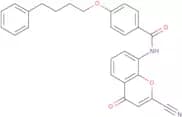
CAS:Acetyl-L-alanine methyl amide is a pharmaceutical drug that is structurally similar to L-lysine. It has been synthesized as a model system for the study of receptor binding and intracellular signaling. Acetyl-L-alanine methyl amide has shown to be reactive and can form intramolecular hydrogen bonds with other molecules in the cell. This drug also reacts with microglia cells, which are responsible for clearing out dead cells and debris in the brain. Acetyl-L-alanine methyl amide is a proton donor, which may cause steric interactions with lysine residues on proteins due to their proximity within the cell. This drug also has an intermolecular hydrogen bond between its two molecules that could lead to an α subunit conformational change within the protein.Formula:C6H12N2O2Purity:Min. 95%Molecular weight:144.17 g/molN-(2-Cyano-4-oxo-4H-1-benzopyran-8-yl)-4-(4-phenylbutoxy)benzamide
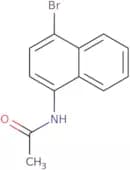
CAS:Please enquire for more information about N-(2-Cyano-4-oxo-4H-1-benzopyran-8-yl)-4-(4-phenylbutoxy)benzamide including the price, delivery time and more detailed product information at the technical inquiry form on this pageFormula:C27H22N2O4Purity:Min. 95%Molecular weight:438.47 g/molN-(4-Bromonaphthalene-1-yl)-acetamide
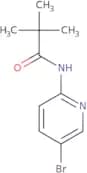
CAS:The N-(4-bromonaphthalene-1-yl)-acetamide is a high quality chemical that is used as a reaction component in the synthesis of pharmaceuticals and other speciality chemicals. It can also be used as a building block for creating more complex compounds. This compound is a versatile building block that can be used to synthesise many different types of products.Formula:C12H10BrNOPurity:Min. 95%Molecular weight:264.12 g/molN-(5-bromo-pyridin-2-yl)-2,2-dimethyl-propionamide
CAS:Please enquire for more information about N-(5-bromo-pyridin-2-yl)-2,2-dimethyl-propionamide including the price, delivery time and more detailed product information at the technical inquiry form on this pageFormula:C10H13BrN2OPurity:Min. 95%Molecular weight:257.13 g/mol





![N,N'-Propane-1,3-diylbis[3-(3,5-di-tert-butyl-4-hydroxyphenyl)propionamide]](/_next/image/?url=https%3A%2Fstatic.cymitquimica.com%2Fproducts%2F3D%2Fthumb-webp%2FFP40365.webp&w=3840&q=75)