Amides
Amides are a wide range of chemical compounds that contain at least one heterocyclic ring, which has atoms of at least two different elements in the ring structure, and at least one amide group (-CONH2). These compounds are crucial in the synthesis of pharmaceuticals, polymers, and agrochemicals. Amides exhibit unique properties and reactivity, making them valuable intermediates in organic synthesis. At CymitQuimica, we offer a comprehensive selection of high-quality amides to support your research and industrial needs.
Found 16393 products of "Amides"
Sort by
Purity (%)
0
100
|
0
|
50
|
90
|
95
|
100
N-Benzyl-4-(benzylamino)-6-methyl-2-oxocyclohex-3-ene-1-carboxamide
CAS:Purity:96.0%Molecular weight:348.4460144042969Ethyl 3-(2-(chloromethyl)-1-methyl-N-(pyridin-2-yl)-1H-benzo[d]imidazole-5-carboxamido)propanoate
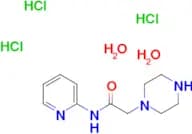
CAS:Purity:98%Molecular weight:400.85998535156252-(Piperazin-1-yl)acetic acid N-(2-pyridyl)amidetrihydrochloride dihydrate
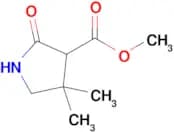
CAS:Formula:C11H23Cl3N4O3Color and Shape:SolidMolecular weight:365.68METHYL 4,4-DIMETHYL-2-OXOPYRROLIDINE-3-CARBOXYLATE
CAS:Purity:97.0%Molecular weight:171.19599914550788-tert-butyl-4-(pyridine-4-carbonyl)-1-oxa-4-azaspiro[4.5]decane-3-carboxylic acid
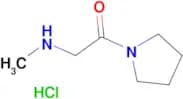
CAS:Purity:95.0%Molecular weight:346.4270019531252-Methylamino-1-pyrrolidin-1-yl-ethanonehydrochloride
CAS:Purity:98.0%Color and Shape:SolidMolecular weight:178.660003662109381',4'-dihydro-3'H-spiro[piperidine-4,2'-quinoxalin]-3'-one hydrochloride
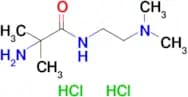
CAS:Purity:95.0%Molecular weight:253.729995727539062-Amino-N-(2-(dimethylamino)ethyl)-2-methylpropanamide dihydrochloride
CAS:Purity:97%Molecular weight:246.179992675781253,6-Bis(5-bromothiophen-2-yl)-2,5-dioctylpyrrolo[3,4-c]pyrrole-1,4(2H,5H)-dione
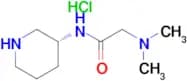
CAS:Purity:95%Molecular weight:682.5700073242188(R)-2-(Dimethylamino)-N-(piperidin-3-yl)acetamide hydrochloride
CAS:Purity:95.0%Molecular weight:221.729995727539061-(Piperidin-4-yl)piperidin-2-one hydrochloride
CAS:Purity:95.0%Color and Shape:SolidMolecular weight:218.729995727539063-Amino-4-furan-2-yl-6-trifluoromethyl-thieno[2,3- b ]pyridine-2-carboxylic acid amide
CAS:Formula:C13H8F3N3O2SPurity:97%Color and Shape:SolidMolecular weight:327.288-benzyl-4-heptanoyl-1-oxa-4,8-diazaspiro[4.5]decane-3-carboxylic acid
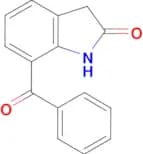
CAS:Purity:95.0%Molecular weight:388.507995605468757-Benzoyl-1,3-dihydro-indol-2-one
CAS:Purity:97.0%Color and Shape:SolidMolecular weight:237.257995605468752-(3,4-DIMETHOXYBENZAMIDO)-4,5,6,7-TETRAHYDROBENZO[B]THIOPHENE-3-CARBOXAMIDE
CAS:Purity:95.0%Molecular weight:360.429992675781258-benzyl-4-(4-methylbenzoyl)-1-oxa-4,8-diazaspiro[4.5]decane-3-carboxylic acid
CAS:Purity:95.0%Molecular weight:394.471008300781253-AMINO-N-[(4-METHOXYPHENYL)METHYL]-4,6-DIMETHYLTHIENO[2,3-B]PYRIDINE-2-CARBOXAMIDE
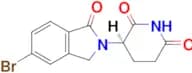
CAS:Purity:95.0%Molecular weight:341.42999267578125(R)-3-(5-Bromo-1-oxoisoindolin-2-yl)piperidine-2,6-dione
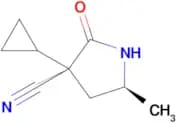
CAS:Purity:98%Molecular weight:323.14599609375(3r,5s)-3-Cyclopropyl-5-methyl-2-oxo-pyrrolidine-3-carbonitrile
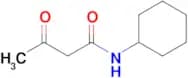
CAS:Purity:98%Molecular weight:164.207992553710945-Chloro-N-cyclohexylpentanamide
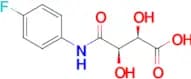
CAS:<p>Stability Hygroscopic<br>Applications 5-Chloro-N-cyclohexylpentanamide (cas# 15865-18-6) is a compound useful in organic synthesis.<br></p>Formula:C11H20ClNOColor and Shape:NeatMolecular weight:217.736(+)-4-Fluorotartranilic acid
CAS:Formula:C10H10FNO5Purity:98%Color and Shape:SolidMolecular weight:243.192-(Benzoylamino)-5,6-dihydro-4H-cyclopenta[d][1,3]thiazole-4-carboxylic acid
CAS:Purity:95.0%Molecular weight:288.320007324218758-Bromo-1,8a-dihydro-imidazo[1,2-a]pyridine-2-carboxylic acid amide
Purity:95.0%Molecular weight:242.07600402832038-methyl-4-(naphthalene-2-carbonyl)-1-oxa-4-azaspiro[4.5]decane-3-carboxylic acid
CAS:Purity:95.0%Molecular weight:353.41799926757811H-SPIRO[[1,8]NAPHTHYRIDINE-4,4'-PIPERIDIN]-2(3H)-ONE
CAS:Purity:95.0%Molecular weight:217.27200317382812Tert-Butyl 2-benzyl-1-oxo-2,5-diazaspiro[3.4]octane-5-carboxylate
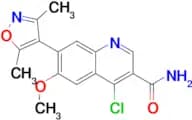
CAS:Purity:97%Molecular weight:316.40100097656254-Chloro-7-(3,5-dimethylisoxazol-4-yl)-6-methoxyquinoline-3-carboxamide
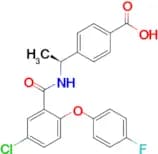
CAS:Purity:97%Molecular weight:331.7600097656254-((S)-1-(2-(4-Fluorophenoxy)-5-chlorobenzamido) ethyl)benzoic acid
CAS:Purity:85.0%Molecular weight:413.82998657226562-amino-10-ethyldibenzo[b,f][1,4]oxazepin-11(10H)-one
CAS:Purity:95.0%Molecular weight:254.28900146484375Spiro[1,2,3-trihydroquinazoline-2,1'-cyclopentane]-4-one
CAS:Purity:95.0%Molecular weight:202.2570037841797N-[(9H-Fluoren-9-ylmethoxy)carbonyl]-L-phenylalanylglycylglycine
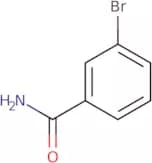
CAS:Purity:98%Molecular weight:501.539001464843753-Bromobenzamide
CAS:<p>3-Bromobenzamide is an amide compound, which is a functional group. It has a molecular weight of 273.3 g/mol and three amine groups. The 3-methoxybenzamide moiety in the molecule can be protonated, which provides the hydration of the molecule and increases its solubility in water. This molecule also has a dipole moment due to the presence of two amide groups.<br>The synthesis of 3-bromobenzamide starts with the reaction between 3-aminobenzoic acid and benzoyl chloride to form 3-benzoyloxybenzoic acid. This is then reacted with ammonia to form 3-aminobenzamide. Finally this is converted into 3-bromobenzamide by reacting it with bromine in the presence of potassium carbonate as a catalyst. <br>This molecule is used as an inhibitory compound for mammalian cell proliferation, specifically for cancer cells</p>Formula:C7H6BrNOPurity:Min. 95%Color and Shape:PowderMolecular weight:200.03 g/molCoconut diethanolamide
CAS:Controlled Product<p>Coconut diethanolamide is a chemical substance that is used as a test compound in carcinogenesis studies. It is a fatty acid and a fatty alcohol, and it has been shown to promote the growth of cancer cells. Coconut diethanolamide has not been found to be an allergen, but it has shown carcinogenic potential. The bioassay for long-term exposure to coconut diethanolamide showed epidermal hyperplasia in mice.</p>Color and Shape:Brown Yellow Clear Viscous LiquidN-Dechloroethyl cyclophosphamide
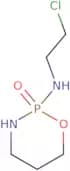
CAS:<p>N-Dechloroethyl cyclophosphamide is a metabolic inhibitor that is used in the treatment of cancer. It is classified as an alkylating agent and inhibits ribonucleotide reductase, which prevents the production of DNA, RNA, and protein. The chemical ionization technique has been used to measure the concentration of this compound in human liver and urine samples. N-Dechloroethyl cyclophosphamide can be analyzed using chromatography or mass spectrometry methods.</p>Formula:C5H12ClN2O2PPurity:Min. 95%Color and Shape:PowderMolecular weight:198.59 g/mol4-Hydroxyphenylacetamide
CAS:<p>4-Hydroxyphenylacetamide is a natural product that has been shown to have antibiotic properties. It inhibits the growth of bacteria by inhibiting the synthesis of p-hydroxybenzoic acid, which is an essential precursor for the biosynthesis of aromatic amino acids and other important compounds. 4-Hydroxyphenylacetamide also inhibits dopamine oxidation, which may lead to its anti-infective properties. The biological properties of 4-hydroxyphenylacetamide have been studied using electrochemical impedance spectroscopy (EIS) on bacterial strains and in vitro studies on P. aeruginosa. This compound is not metabolized by microorganisms and does not mineralize or react with oxygen at physiological pH levels. It can be used as a pharmaceutical dosage form for treatment of infectious diseases.</p>Formula:C8H9NO2Purity:Min. 95%Color and Shape:White PowderMolecular weight:151.16 g/molN-(4-Methylphenyl)-2-phenylacetamide
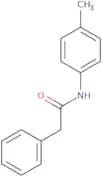
CAS:<p>2-Phenylacetamide is a solvent that can be used as a component in alkylation reactions. It is commonly used as a component of chlorinated solvents and has been shown to catalyze the reaction with benzyl chloride. 2-Phenylacetamide can be used to produce solar cells by sensitizing the surface of silicon wafers with this solvent. Researchers have also studied the alkylation reaction of phenylacetamide with methyl iodide and benzyl chloride, which can be carried out at room temperature and does not require any catalyst. This reaction was found to proceed well under gas chromatographic conditions.</p>Formula:C15H15NOPurity:Min. 95%Molecular weight:225.29 g/molPiperazinophenylacetic acid benzylamide hydrochloride
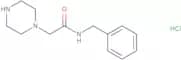
CAS:<p>Piperazinophenylacetic acid benzylamide hydrochloride is a versatile building block that can be used in the synthesis of complex compounds for research and development. It is a reagent for the preparation of speciality chemicals and also a useful intermediate for the synthesis of reaction components. Piperazinophenylacetic acid benzylamide hydrochloride is a high quality, commercially available chemical that can be used as a scaffold for the preparation of new chemical compounds.</p>Formula:C13H19N3O•HClPurity:Min. 95%Color and Shape:PowderMolecular weight:269.77 g/mol2-Veratramide
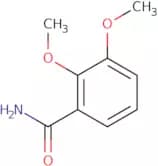
CAS:<p>2-Veratramide is a drug that belongs to the group of amides. It is a highly soluble, water-soluble and lipophilic molecule. The molecular modeling study revealed that it has a hydroxyl group in its structure and a hydrogen bond with the intramolecular hydrogen atom. 2-Veratramide has been observed to inhibit protein synthesis and cellular proliferation by binding to cancer cells or inflammatory cells. It also binds to dopamine receptors, inhibiting uptake of dopamine and subsequent activation of downstream signaling pathways. 2-Veratramide is an inhibitor of nitric oxide synthase (NOS), which plays an important role in inflammation, vascular tone, neurotransmission, and cell proliferation.<br>2-Veratramide inhibits NOS by competitively binding to the heme moiety at the active site of the enzyme, thereby blocking access to substrate arginine.</p>Formula:C9H11NO3Purity:Min. 97%Color and Shape:PowderMolecular weight:181.19 g/molN-[4-[[(1-Methylethyl)amino]acetyl]phenyl]-methanesulfonamide monohydrochloride
CAS:<p>Please enquire for more information about N-[4-[[(1-Methylethyl)amino]acetyl]phenyl]-methanesulfonamide monohydrochloride including the price, delivery time and more detailed product information at the technical inquiry form on this page</p>Formula:C12H18N2O3S•HClPurity:Min. 95%Color and Shape:PowderMolecular weight:306.81 g/molMorpholine-4-carboxamide
CAS:<p>Morpholine-4-carboxamide is a polymerase chain inhibitor that inhibits the activity of DNA polymerases. It binds to the DNA template strand and prevents the enzyme from adding nucleotides to the primer strand, thereby inhibiting DNA synthesis. Morpholine-4-carboxamide has shown efficacy in treating hyperproliferative diseases such as cancer cells and psoriasis. This drug has been shown to inhibit caspase activation and histone protein acetylation, which may be related to its anti-cancer properties. Morpholine-4-carboxamide also binds to cannabinoid receptor 2 (CB2) and may have therapeutic effects on inflammatory diseases such as psoriasis and arthritis.</p>Formula:C5H10N2O2Purity:Min. 95%Molecular weight:130.15 g/mol2-Phthalimidoyl-N-(methylsulfonyl)propanamide
<p>2-Phthalimidoyl-N-(methylsulfonyl)propanamide is a fine chemical that is used as a building block for research chemicals. It is a versatile intermediate that can be used as a reaction component. 2-Phthalimidoyl-N-(methylsulfonyl)propanamide has been shown to have high quality and can be used as a reagent in the synthesis of complex compounds.</p>Formula:C12H12N2O5SMolecular weight:296.30 g/molDiclofenac amide
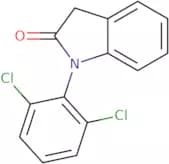
CAS:<p>COX inhibitor; non-steroidal anti-inflammatory drug</p>Formula:C14H9Cl2NOPurity:Min. 95%Color and Shape:Yellow PowderMolecular weight:278.13 g/molN,O-Bis(trimethylsilyl) acetamide
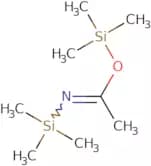
CAS:<p>N,O-Bis(trimethylsilyl) acetamide is a protein that is used as a reagent for the detection of integrin receptors. It can be used to identify human immunoglobulin and human serum proteins. This compound has been shown to be pluripotent in cells, which means that it can differentiate into any type of cell. N,O-Bis(trimethylsilyl) acetamide has been shown to have surfactant properties and can be used as an alternative in toxicity studies. This compound has been shown to be toxic to bowel disease cells when tested with a dose of 3mg/mL. The disulfide bond within this molecule may be important for its biological activity. Synchronous fluorescence spectroscopy and plasma mass spectrometry are two methods that have been used to study the structure of this molecule. Electrochemical impedance spectroscopy is another method that has been used in the structural analysis of this molecule.</p>Formula:C8H21NOSi2Purity:Min. 95 Area-%Color and Shape:Colorless Yellow Clear LiquidMolecular weight:203.43 g/molNiclosamide
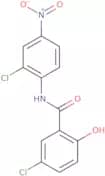
CAS:<p>Chemically a chlorinated salicylanilide, niclosamide is clinically used as an anthelmintic agent. The action of niclosamide has been proven to proceed by inhibiting the STAT3 signaling pathway. Recently, niclosamide, has been considered as an antiproliferative agent in cancer treatment, e.g. melanoma and colorectal cancer. In 2021, niclosamide has been tested for the treatment of COVID-19 patients.</p>Formula:C13H8Cl2N2O4Purity:Min. 98 Area-%Color and Shape:Off-White PowderMolecular weight:327.12 g/mol


![Ethyl 3-(2-(chloromethyl)-1-methyl-N-(pyridin-2-yl)-1H-benzo[d]imidazole-5-carboxamido)propanoate](/_next/image/?url=https%3A%2Fstatic.cymitquimica.com%2Fproducts%2F10%2Fthumb-webp%2FF752907.webp&w=3840&q=75)
![8-tert-butyl-4-(pyridine-4-carbonyl)-1-oxa-4-azaspiro[4.5]decane-3-carboxylic acid](/_next/image/?url=https%3A%2Fstatic.cymitquimica.com%2Fproducts%2F10%2Fthumb-webp%2FF525774.webp&w=3840&q=75)
![1',4'-dihydro-3'H-spiro[piperidine-4,2'-quinoxalin]-3'-one hydrochloride](/_next/image/?url=https%3A%2Fstatic.cymitquimica.com%2Fproducts%2F10%2Fthumb-webp%2FF402050.webp&w=3840&q=75)
![3,6-Bis(5-bromothiophen-2-yl)-2,5-dioctylpyrrolo[3,4-c]pyrrole-1,4(2H,5H)-dione](/_next/image/?url=https%3A%2Fstatic.cymitquimica.com%2Fproducts%2F10%2Fthumb-webp%2FF694915.webp&w=3840&q=75)

![3-Amino-4-furan-2-yl-6-trifluoromethyl-thieno[2,3- b ]pyridine-2-carboxylic acid amide](/_next/image/?url=https%3A%2Fstatic.cymitquimica.com%2Fproducts%2F10%2Fthumb-webp%2FF030392.webp&w=3840&q=75)
![8-benzyl-4-heptanoyl-1-oxa-4,8-diazaspiro[4.5]decane-3-carboxylic acid](/_next/image/?url=https%3A%2Fstatic.cymitquimica.com%2Fproducts%2F10%2Fthumb-webp%2FF525806.webp&w=3840&q=75)
![2-(3,4-DIMETHOXYBENZAMIDO)-4,5,6,7-TETRAHYDROBENZO[B]THIOPHENE-3-CARBOXAMIDE](/_next/image/?url=https%3A%2Fstatic.cymitquimica.com%2Fproducts%2F10%2Fthumb-webp%2FF386466.webp&w=3840&q=75)
![8-benzyl-4-(4-methylbenzoyl)-1-oxa-4,8-diazaspiro[4.5]decane-3-carboxylic acid](/_next/image/?url=https%3A%2Fstatic.cymitquimica.com%2Fproducts%2F10%2Fthumb-webp%2FF525795.webp&w=3840&q=75)

![3-AMINO-N-[(4-METHOXYPHENYL)METHYL]-4,6-DIMETHYLTHIENO[2,3-B]PYRIDINE-2-CARBOXAMIDE](/_next/image/?url=https%3A%2Fstatic.cymitquimica.com%2Fproducts%2F10%2Fthumb-webp%2FF513222.webp&w=3840&q=75)


![2-(Benzoylamino)-5,6-dihydro-4H-cyclopenta[d][1,3]thiazole-4-carboxylic acid](/_next/image/?url=https%3A%2Fstatic.cymitquimica.com%2Fproducts%2F10%2Fthumb-webp%2FF495762.webp&w=3840&q=75)
![8-Bromo-1,8a-dihydro-imidazo[1,2-a]pyridine-2-carboxylic acid amide](/_next/image/?url=https%3A%2Fstatic.cymitquimica.com%2Fproducts%2F10%2Fthumb-webp%2FF545696.webp&w=3840&q=75)
![8-methyl-4-(naphthalene-2-carbonyl)-1-oxa-4-azaspiro[4.5]decane-3-carboxylic acid](/_next/image/?url=https%3A%2Fstatic.cymitquimica.com%2Fproducts%2F10%2Fthumb-webp%2FF525587.webp&w=3840&q=75)
![1H-SPIRO[[1,8]NAPHTHYRIDINE-4,4'-PIPERIDIN]-2(3H)-ONE](/_next/image/?url=https%3A%2Fstatic.cymitquimica.com%2Fproducts%2F10%2Fthumb-webp%2FF332906.webp&w=3840&q=75)
![Tert-Butyl 2-benzyl-1-oxo-2,5-diazaspiro[3.4]octane-5-carboxylate](/_next/image/?url=https%3A%2Fstatic.cymitquimica.com%2Fproducts%2F10%2Fthumb-webp%2FF789348.webp&w=3840&q=75)
![2-amino-10-ethyldibenzo[b,f][1,4]oxazepin-11(10H)-one](/_next/image/?url=https%3A%2Fstatic.cymitquimica.com%2Fproducts%2F10%2Fthumb-webp%2FF496237.webp&w=3840&q=75)
![Spiro[1,2,3-trihydroquinazoline-2,1'-cyclopentane]-4-one](/_next/image/?url=https%3A%2Fstatic.cymitquimica.com%2Fproducts%2F10%2Fthumb-webp%2FF069246.webp&w=3840&q=75)
![N-[(9H-Fluoren-9-ylmethoxy)carbonyl]-L-phenylalanylglycylglycine](/_next/image/?url=https%3A%2Fstatic.cymitquimica.com%2Fproducts%2F10%2Fthumb-webp%2FF614430.webp&w=3840&q=75)



![N-[4-[[(1-Methylethyl)amino]acetyl]phenyl]-methanesulfonamide monohydrochloride](/_next/image/?url=https%3A%2Fstatic.cymitquimica.com%2Fproducts%2F3D%2Fthumb-webp%2FFI150565.webp&w=3840&q=75)