Amides
Amides are a wide range of chemical compounds that contain at least one heterocyclic ring, which has atoms of at least two different elements in the ring structure, and at least one amide group (-CONH2). These compounds are crucial in the synthesis of pharmaceuticals, polymers, and agrochemicals. Amides exhibit unique properties and reactivity, making them valuable intermediates in organic synthesis. At CymitQuimica, we offer a comprehensive selection of high-quality amides to support your research and industrial needs.
Found 16399 products of "Amides"
Sort by
Purity (%)
0
100
|
0
|
50
|
90
|
95
|
100
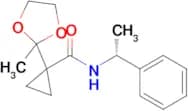
(R)-1-(2-METHYL-1,3-DIOXOLAN-2-YL)-N-(1-PHENYLETHYL)CYCLOPROPANECARBOXAMIDE
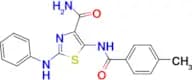
CAS:Purity:95.0%Molecular weight:275.34799194335945-(4-METHYLBENZAMIDO)-2-(PHENYLAMINO)THIAZOLE-4-CARBOXAMIDE
CAS:Purity:95.0%Molecular weight:352.4100036621094(2,3-Dihydro-benzo[1,4]dioxin-6-yl)-piperazin-1-yl-methanone hydrochloride
CAS:Purity:95.0%Molecular weight:284.7399902343752-(2-([1,2,4]TRIAZOLO[1,5-A]PYRIDIN-2-YL)ETHYL)-7-CHLORO-5-METHYL-2,3-DIHYDRO-1H-PYRROLO[3,4-C]PYRIDINE-1,6(5H)-DIONE
CAS:Purity:95.0%Molecular weight:343.76998901367197-CHLORO-5-METHYL-2-(2-(1-METHYL-1H-BENZO[D]IMIDAZOL-2-YL)ETHYL)-2,3-DIHYDRO-1H-PYRROLO[3,4-C]PYRIDINE-1,6(5H)-DIONE
CAS:Purity:95.0%Molecular weight:356.809997558593759-(TERT-BUTYL)-7,12-DIHYDROBENZO[2,3]AZEPINO[4,5-B]INDOL-6(5H)-ONE
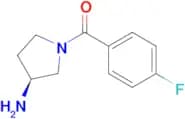
CAS:Purity:95.0%Molecular weight:304.39300537109375(S)-(3-Aminopyrrolidin-1-yl)(4-fluorophenyl)methanone
CAS:Purity:95.0%Molecular weight:208.23599243164062Tert-Butyl 2-pyrazin-2-yl-5-(pyrrolidin-1-ylcarbonyl)-5,7-dihydro-6H-pyrrolo[3,4-d]pyrimidine-6-carboxylate
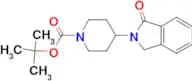
CAS:Molecular weight:396.45098876953125Tert-Butyl 4-(1-oxoisoindolin-2-yl)piperidine-1-carboxylate
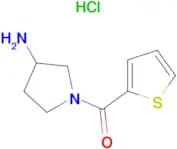
CAS:Purity:95.0%Molecular weight:316.4010009765625(3-Amino-pyrrolidin-1-yl)-thiophen-2-yl-methanone hydrochloride
CAS:Purity:95.0%Molecular weight:232.729995727539064-(3-nitrobenzoyl)-8-propyl-1-oxa-4,8-diazaspiro[4.5]decane-3-carboxylic acid
CAS:Purity:95.0%Molecular weight:377.39700317382818-benzyl-4-propanoyl-1-oxa-4,8-diazaspiro[4.5]decane-3-carboxylic acid
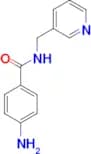
CAS:Purity:95.0%Molecular weight:332.39999389648444-Amino-N-pyridin-3-ylmethylbenzamide
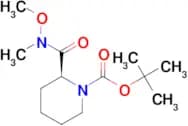
CAS:Formula:C13H13N3OPurity:97%Color and Shape:SolidMolecular weight:227.267(S)-TERT-BUTYL 2-(METHOXY(METHYL)CARBAMOYL)PIPERIDINE-1-CARBOXYLATE
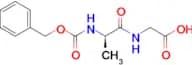
CAS:Purity:95.0%Molecular weight:272.3450012207031(R)-2-(2-(((Benzyloxy)carbonyl)amino)propanamido)acetic acid
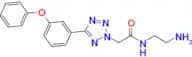
CAS:Purity:95.0%Molecular weight:280.2799987792969N-(2-aminoethyl)-2-(5-(3-phenoxyphenyl)-2H-tetrazol-2-yl)acetamide
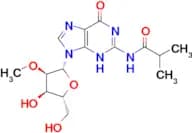
CAS:Purity:98%Molecular weight:338.3710021972656N2-ISOBUTYRYL-2'-O-METHYL-GUANOSINE
CAS:Purity:95.0%Color and Shape:SolidMolecular weight:367.361999511718758-methyl-4-(naphthalene-1-carbonyl)-1-oxa-4-azaspiro[4.5]decane-3-carboxylic acid
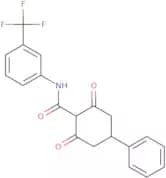
CAS:Purity:95.0%Molecular weight:353.4179992675781(2,6-dioxo-4-phenylcyclohexyl)-N-(3-(trifluoromethyl)phenyl)formamide
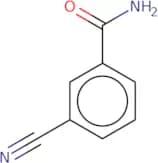
CAS:<p>Please enquire for more information about (2,6-dioxo-4-phenylcyclohexyl)-N-(3-(trifluoromethyl)phenyl)formamide including the price, delivery time and more detailed product information at the technical inquiry form on this page</p>Purity:Min. 95%3-Cyanobenzamide
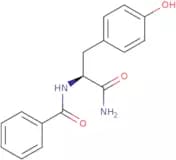
CAS:<p>3-Cyanobenzamide is an organic compound with the formula CHC(N)NH. It is a white crystalline solid that can be obtained by reacting benzamide with cyanoacetylene. There are three possible isomers of 3-cyanobenzamide: 3-cyano-1-(substituted phenyl)benzamide, 3-cyano-2-(substituted phenyl)benzamide, and 3-cyano-3-(substituted phenyl)benzamide. The optimal reaction conditions for the synthesis of 3-cyanobenzamide are in the presence of hydrogen bonding, such as n-hexane, amide, and phase equilibrium. Studies have determined that 3-cyanobenzamide has the potential to cause cancer or liver toxicity in humans. In addition, this chemical has been shown to be an effective inhibitor of alpha glucosidase enzymes in vitro and in vivo.</p>Formula:C8H6N2OPurity:Min. 90%Molecular weight:146.15 g/molBenzoyl-L-tyrosine amide
CAS:<p>Benzoyl-L-tyrosine amide is a reaction intermediate that is a competitive inhibitor of serine proteases. It binds to the active site of the enzyme and inhibits the breakdown of proteins by blocking the access of other reactants. Benzoyl-L-tyrosine amide has been shown to inhibit proteolytic activity in subtilis, an enzyme isolated from Bacillus licheniformis. The amino acid composition and binding properties are similar to those found in natural substrates. Benzoyl-L-tyrosine amide has been synthesized and its binding affinity towards histidine residues has been determined by titration calorimetry and fluorophosphate assay.</p>Formula:C16H16N2O3Purity:Min. 95%Color and Shape:PowderMolecular weight:284.31 g/mol(2R)-1-(Phenylmethyl)-N-[3-(spiro[isobenzofuran-1(3H),4'-piperidin]-1-yl)propyl-2-pyrrolidinecarboxamide HCl
CAS:<p>(2R)-1-(Phenylmethyl)-N-[3-(spiro[isobenzofuran-1(3H),4'-piperidin]-1-yl)propyl-2-pyrrolidinecarboxamide HCl is an endogenous opioid that has been shown to have antidepressant-like effects. It can bind to γ-aminobutyric acid (GABA) receptors, catecholamine receptors, and nociceptin receptors. This drug also has anti-cancer properties and may be used for the treatment of autoimmune diseases. The interaction of this drug with other drugs is not well understood, but it has been shown to modulate the effects of opioids and increase the aversive nature of some substances.</p>Formula:C27H35N3O2Purity:Min. 95%Color and Shape:PowderMolecular weight:433.59 g/molThioacetamide
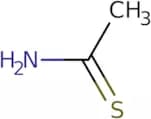
CAS:Controlled Product<p>Thioacetamide is a chemical compound that has been used as a model system to study apoptosis. It is also known to cause injury and biochemical changes in cells. Thioacetamide is metabolized by cytochrome P450 enzymes and conjugated with glucuronic acid, which prevents it from binding to DNA or protein. The oxidation of thioacetamide by cytochrome P450 enzymes leads to the formation of reactive oxygen species that may cause DNA damage. Apoptosis induced by thioacetamide has been shown to be mediated through the mitochondrial pathway, which involves the release of cytochrome C, activation of caspase-9, and cleavage of poly (ADP-ribose) polymerase (PARP). Thioacetamide also inhibits sorbitol dehydrogenase activity, which leads to an accumulation of sorbitol in cells. This accumulation can activate transcriptional factors such as nuclear factor kappa B (NF-κB), leading to</p>Formula:C2H5NSPurity:Min. 98 Area-%Color and Shape:PowderMolecular weight:75.13 g/molPantethine
CAS:<p>Pantethine is a dietary supplement, which is a derivative of pantothenic acid, sourced from vitamin B5. As a biologically active compound, it undergoes conversion to pantetheine, which then forms coenzyme A (CoA) and acyl-carrier proteins. This conversion is critical, as CoA is an essential cofactor involved in numerous biochemical reactions that are integral to fatty acid metabolism, among other processes.</p>Formula:C22H42N4O8S2Purity:Min. 95%Color and Shape:PowderMolecular weight:554.72 g/mol2,2,2-Trifluoro-N-(4-piperidinyl)acetamide
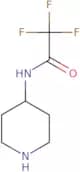
CAS:<p>2,2,2-Trifluoro-N-(4-piperidinyl)acetamide (TFAPA) is a nucleic acid analog that binds to the target nucleic acid. TFAPA is a morpholino compound with an amide linkage between the morpholine ring and the acetic acid group. TFAPA is a sequence-specific DNA analog that inhibits protein synthesis by binding to the target nucleic acid. TFAPA can also be used as a probe for the detection of abnormal sequences in RNA.</p>Formula:C7H11F3N2OPurity:Min. 95%Color and Shape:White PowderMolecular weight:196.17 g/molDodeca 2E,4E,8Z,10E,Z-tetraenoic acid isobutylamide - ca. 10 mg/ml acetonitrile solution
CAS:<p>Dodeca 2E,4E,8Z,10E,Z-tetraenoic acid isobutylamide (DETBA) is a versatile building block that is used in the synthesis of natural products and pharmaceuticals. DETBA can be used as a reaction component in organic synthesis to form complex compounds such as polyesters, polyamides, polyurethanes, and polyimides. It also has high quality and can be used in research or speciality chemical applications.</p>Formula:C16H25NOPurity:Min. 96 Area-%Color and Shape:Clear LiquidMolecular weight:247.38 g/mol3-Oxo-2-phenyl butanamide
CAS:Controlled Product<p>3-Oxo-2-phenyl butanamide is an amphetamine that has been shown to be a potential marker for wastewater. 3-Oxo-2-phenyl butanamide is one of the many intermediates in the synthesis of amphetamine from phenylacetone and can be found in wastewater as an impurity. This compound has also been used as a marker for wastewater treatment malfunctioning. 3-Oxo-2-phenyl butanamide is excreted into the environment through urine, and its presence can be measured in water samples by gas chromatography/mass spectrometry or liquid chromatography/mass spectrometry.</p>Formula:C10H11NO2Purity:Min. 95%Color and Shape:PowderMolecular weight:177.2 g/molN,N-Dimethylsulfamide
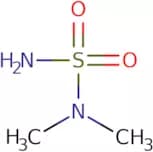
CAS:<p>N,N-Dimethylsulfamide (DMS) is a chemical compound with a molecular formula of CH3SO2NH2 that is used as an industrial solvent. It is an environmental biocide that can be used to treat wastewater and as a sample preparation agent, such as for chemical ionization in gas chromatography. DMS has been shown to have biological properties that are active against mammalian cells, but not against bacteria. This property may be due to the presence of nitrogen atoms in the molecule's structure that are capable of forming coordination complexes with metals such as copper and iron.</p>Formula:C2H8N2O2SPurity:Min. 98 Area-%Color and Shape:White Off-White PowderMolecular weight:124.16 g/molN,N'-Dimethyl benzamide
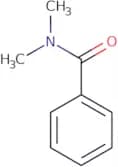
CAS:<p>N,N'-Dimethyl benzamide (DMAB) is an aryl halide that reacts with hydrogen to form the corresponding carbonyl group. The reaction solution of DMAB and hydrogen gas produces a chemical structure that resembles a hydrogen bond. DMAB has been shown to have anti-inflammatory effects in animals with inflammatory diseases. It has also been studied for its ability to inhibit the formation of amyloid plaque, which is associated with Alzheimer's disease. In addition, DMAB has been shown to have therapeutic effects against boron nitride and amides.<br>The crystal structure of DMAB can be found in both crystalline polymorphs: monoclinic and triclinic. The triclinic form is stable at room temperature and pressure, while the monoclinic form is only stable at higher temperatures. The monoclinic form is more soluble than the triclinic form, as it contains fewer hydrogen bonds between</p>Formula:C9H11NOPurity:Min. 95%Color and Shape:White PowderMolecular weight:149.19 g/molN-((4-(2-Furylcarbonyl)piperazinyl)thioxomethyl)benzamide
CAS:<p>Please enquire for more information about N-((4-(2-Furylcarbonyl)piperazinyl)thioxomethyl)benzamide including the price, delivery time and more detailed product information at the technical inquiry form on this page</p>Formula:C17H17N3O3SPurity:Min. 95%Color and Shape:PowderMolecular weight:343.4 g/molNiclosamide
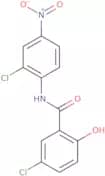
CAS:<p>Chemically a chlorinated salicylanilide, niclosamide is clinically used as an anthelmintic agent. The action of niclosamide has been proven to proceed by inhibiting the STAT3 signaling pathway. Recently, niclosamide, has been considered as an antiproliferative agent in cancer treatment, e.g. melanoma and colorectal cancer. In 2021, niclosamide has been tested for the treatment of COVID-19 patients.</p>Formula:C13H8Cl2N2O4Purity:Min. 98 Area-%Color and Shape:Off-White PowderMolecular weight:327.12 g/molN-(3-Hydroxypropyl)trifluoroacetamide
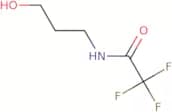
CAS:<p>N-(3-Hydroxypropyl)trifluoroacetamide is an alkaline hydrolysis product of 3-hydroxypropyl trifluoroacetate. It is a primary amino compound that can be used as an intermediate in the production of vinyl ethers and acetals. This chemical is used for the synthesis of vinyl acetals, which are important intermediates in the manufacturing of polymers.</p>Formula:C5H8F3NO2Purity:90%Color and Shape:PowderMolecular weight:171.12 g/mol4-Amino-N-((2R,3S)-3-amino-2-hydroxy-4-phenylbutyl)-N-ispobutylbenzenesulfonamide
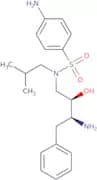
CAS:<p>4-Amino-N-((2R,3S)-3-amino-2-hydroxy-4-phenylbutyl)-N-isobutylbenzenesulfonamide is an amide that is used to treat HIV infections. It has been shown to have potent anti-viral activity against HIV infected cells in the laboratory and can inhibit the replication of HIV by interfering with the virus's ability to use the reverse transcriptase enzyme. 4ABAB has been shown to bind to the enzyme ribonuclease H (crth2), which is responsible for breaking down viral RNA. This binding prevents crth2 from cleaving viral RNA, thus inhibiting DNA synthesis and preventing cell death. 4ABAB also interferes with a hydrogen bond between ethyl group and the hydroxyl group on crth2, leading to a decrease in activity.</p>Formula:C20H29N3O3SPurity:Min. 95%Color and Shape:White PowderMolecular weight:391.53 g/mol2-Chloro-N-(4-chlorophenyl)propanamide
CAS:<p>2-Chloro-N-(4-chlorophenyl)propanamide is an acetanilide that is used as a research chemical in the preparation of other compounds. It also has been used to synthesize chloroacetanilides and chloroanilides. 2-Chloro-N-(4-chlorophenyl)propanamide can be prepared by reacting 4-chloroaniline with acetic anhydride and potassium chloride in a basic solution. The reaction will take place at room temperature, but will produce a greater yield when heated to 40°C for 1 hour. This compound can be used as a starting material for the synthesis of other compounds, such as chlorinated analogues of acetaminophen (paracetamol).</p>Formula:C9H9Cl2NOPurity:Min. 95%Molecular weight:218.08 g/molMetoclopramide hydrochloride hydrate
CAS:<p>Dopamine (D2) receptor antagonist; 5-HT4 serotonin receptor agonist</p>Formula:C14H22ClN3O2·HCl·H2OColor and Shape:White Off-White PowderMolecular weight:354.27 g/molN-[(4-Amino-2-methylpyrimidin-5-yl)methyl]formamide
CAS:<p>N-[(4-Amino-2-methylpyrimidin-5-yl)methyl]formamide (NAMPT) is a triazolo compound that inhibits the ATP binding cassette transporter and blocks the uptake of uridine and pyrimidine compounds. It also inhibits inorganic pyrophosphatase, which is an enzyme that catalyzes the hydrolysis of pyrophosphate to inorganic phosphate. NAMPT has been shown to be a substrate for hypochlorous acid production in neutrophils, suggesting it may play a role in the regulation of oxidative stress. Chemical biology studies have demonstrated that NAMPT plays a physiological function as an intermediate in vitamin B1 biosynthesis.</p>Formula:C7H10N4OPurity:Min. 95%Color and Shape:PowderMolecular weight:166.18 g/mol2-indol-3-yl-2-oxo-N-(4-(trifluoromethoxy)phenyl)ethanamide
CAS:<p>Please enquire for more information about 2-indol-3-yl-2-oxo-N-(4-(trifluoromethoxy)phenyl)ethanamide including the price, delivery time and more detailed product information at the technical inquiry form on this page</p>Formula:C17H11F3N2O3Purity:Min. 95%Color and Shape:PowderMolecular weight:348.28 g/mol4-Chloro-3-nitrophenylacetamide
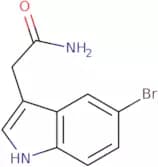
CAS:<p>4-Chloro-3-nitrophenylacetamide is a chemical compound that can be used as a reagent, useful scaffold for research, and a high quality research chemical. CAS No. 5540-60-3, this versatile building block is useful for the synthesis of complex compounds and fine chemicals.</p>Formula:C8H7ClN2O3Purity:Min. 98 Area-%Color and Shape:PowderMolecular weight:214.61 g/mol2-(5-Bromo-1H-indol-3-yl)acetamide
CAS:<p>2-(5-Bromo-1H-indol-3-yl)acetamide is a high quality, reagent, complex compound, useful intermediate and fine chemical. It is also a useful scaffold or building block for the synthesis of speciality chemicals. 2-(5-Bromo-1H-indol-3-yl)acetamide is used in research and development as a versatile building block for the synthesis of new compounds. The CAS number for this compound is 196081-79-5.</p>Formula:C10H9BrN2OPurity:Min. 98 Area-%Color and Shape:PowderMolecular weight:253.1 g/mol2-chloro-n-(4-chlorophenyl)acetamide
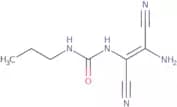
CAS:<p>2-Chloro-N-(4-chlorophenyl)acetamide (2CPA) is an antimycobacterial agent that inhibits the growth of Mycobacterium tuberculosis. The antimycobacterial activity of 2CPA has been demonstrated in a dilution method, where it reduced the number of viable cells in cultures of M. tuberculosis and Mycobacterium smegmatis. The antimicrobial activity of 2CPA was confirmed using a fluorescence assay, which showed that this compound is active against M. tuberculosis H37Rv and M. smegmatis at concentrations above 0.1 mM. 2CPA also has a potent bactericidal effect on Staphylococcus aureus with an MIC value of 0.06 mg/mL at 30 minutes and is active against Enterococcus faecalis with an MIC value of 4 mg/mL at 30 minutes.</p>Formula:C8H7Cl2NOPurity:Min. 95%Molecular weight:204.05 g/molN-(2-Amino-1,2-dinitrilovinyl)(propylamino)formamide
CAS:<p>Please enquire for more information about N-(2-Amino-1,2-dinitrilovinyl)(propylamino)formamide including the price, delivery time and more detailed product information at the technical inquiry form on this page</p>Formula:C8H11N5OPurity:Min. 95%Color and Shape:PowderMolecular weight:193.21 g/mol

![(2,3-Dihydro-benzo[1,4]dioxin-6-yl)-piperazin-1-yl-methanone hydrochloride](/_next/image/?url=https%3A%2Fstatic.cymitquimica.com%2Fproducts%2F10%2Fthumb-webp%2FF090237.webp&w=3840&q=75)

![2-(2-([1,2,4]TRIAZOLO[1,5-A]PYRIDIN-2-YL)ETHYL)-7-CHLORO-5-METHYL-2,3-DIHYDRO-1H-PYRROLO[3,4-C]PYR…](/_next/image/?url=https%3A%2Fstatic.cymitquimica.com%2Fproducts%2F10%2Fthumb-webp%2FF386425.webp&w=3840&q=75)
![3,4-DIHYDRO-PYRROLO[3,4-B]INDOL-1(2H)-ONE](/_next/image/?url=https%3A%2Fstatic.cymitquimica.com%2Fproducts%2F10%2Fthumb-webp%2FF527360.webp&w=3840&q=75)
![7-CHLORO-5-METHYL-2-(2-(1-METHYL-1H-BENZO[D]IMIDAZOL-2-YL)ETHYL)-2,3-DIHYDRO-1H-PYRROLO[3,4-C]PYRI…](/_next/image/?url=https%3A%2Fstatic.cymitquimica.com%2Fproducts%2F10%2Fthumb-webp%2FF332590.webp&w=3840&q=75)
![9-(TERT-BUTYL)-7,12-DIHYDROBENZO[2,3]AZEPINO[4,5-B]INDOL-6(5H)-ONE](/_next/image/?url=https%3A%2Fstatic.cymitquimica.com%2Fproducts%2F10%2Fthumb-webp%2FF530246.webp&w=3840&q=75)
![Tert-Butyl 2-pyrazin-2-yl-5-(pyrrolidin-1-ylcarbonyl)-5,7-dihydro-6H-pyrrolo[3,4-d]pyrimidine-6-ca…](/_next/image/?url=https%3A%2Fstatic.cymitquimica.com%2Fproducts%2F10%2Fthumb-webp%2FF300100.webp&w=3840&q=75)

![4-(3-nitrobenzoyl)-8-propyl-1-oxa-4,8-diazaspiro[4.5]decane-3-carboxylic acid](/_next/image/?url=https%3A%2Fstatic.cymitquimica.com%2Fproducts%2F10%2Fthumb-webp%2FF525721.webp&w=3840&q=75)
![8-benzyl-4-propanoyl-1-oxa-4,8-diazaspiro[4.5]decane-3-carboxylic acid](/_next/image/?url=https%3A%2Fstatic.cymitquimica.com%2Fproducts%2F10%2Fthumb-webp%2FF525787.webp&w=3840&q=75)

![8-methyl-4-(naphthalene-1-carbonyl)-1-oxa-4-azaspiro[4.5]decane-3-carboxylic acid](/_next/image/?url=https%3A%2Fstatic.cymitquimica.com%2Fproducts%2F10%2Fthumb-webp%2FF525586.webp&w=3840&q=75)

![(2R)-1-(Phenylmethyl)-N-[3-(spiro[isobenzofuran-1(3H),4'-piperidin]-1-yl)propyl-2-pyrrolidinecarbo…](/_next/image/?url=https%3A%2Fstatic.cymitquimica.com%2Fproducts%2F3D%2Fthumb-webp%2FFP73252.webp&w=3840&q=75)






![N-[(4-Amino-2-methylpyrimidin-5-yl)methyl]formamide](/_next/image/?url=https%3A%2Fstatic.cymitquimica.com%2Fproducts%2F3D%2Fthumb-webp%2FFA31702.webp&w=3840&q=75)