Amides
Amides are a wide range of chemical compounds that contain at least one heterocyclic ring, which has atoms of at least two different elements in the ring structure, and at least one amide group (-CONH2). These compounds are crucial in the synthesis of pharmaceuticals, polymers, and agrochemicals. Amides exhibit unique properties and reactivity, making them valuable intermediates in organic synthesis. At CymitQuimica, we offer a comprehensive selection of high-quality amides to support your research and industrial needs.
Found 16399 products of "Amides"
Sort by
Purity (%)
0
100
|
0
|
50
|
90
|
95
|
100
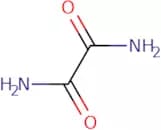
Oxamide
CAS:<p>Oxamide is a chemical compound with the molecular formula CHNO. It is a white solid that is moderately soluble in water and alcohol, but not in ether. Oxamide has been shown to have antioxidative properties and to inhibit the formation of reactive oxygen species. This drug also has an effect on thermal expansion and on the blood flow rate in human serum.</p>Formula:C2H4N2O2Purity:Min. 95%Molecular weight:88.07 g/molC20-Ceramide
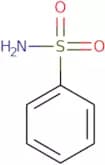
CAS:<p>Ceramide is a group of sphingolipids that are found in the outermost layer of cells. Ceramides have been shown to be important for maintaining cell structure and function, as well as regulating cellular processes such as apoptosis, insulin resistance, and inflammation. A ceramide profile can be used to identify an individual's risk for developing certain conditions such as cardiovascular disease, chronic kidney disease, or cancer. In addition to its role in cell biology, ceramide has been shown to increase insulin sensitivity in animals by increasing glucose uptake in adipocytes. Ceramides are also produced by the body from other lipids such as cholesterol or fatty acids. They are found in various tissues and organs including the brain, skin, lungs, and gut.</p>Formula:C38H75NO3Purity:Min. 95%Molecular weight:594.01 g/molBenzenesulphonamide
CAS:<p>Benzenesulphonamide is a biologically active compound that has been shown to bind to an integrin receptor, which mediates the attachment of leukocytes to the endothelium. It also binds to a basic protein found in human immunoglobulin. Benzenesulphonamide has been shown to have cytotoxic effects on synchronous fluorescence cells and can be used for the treatment of bowel disease. This drug has also been shown to be toxic in vitro and in vivo, with a moderate acute oral toxicity and low chronic oral toxicity. Benzenesulphonamide has been shown to act as a surfactant by binding with sodium dodecyl sulfate (SDS), which is commonly used in detergents, disinfectants, shampoos, soaps, and other household products. The biological properties of benzenesulphonamide are not well-known due to its low solubility in water.</p>Formula:C6H7NO2SPurity:Min. 95%Molecular weight:157.19 g/molL-Alanine amide hydrobromide
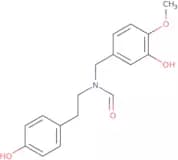
CAS:<p>L-Alanine amide hydrobromide is a carboxylic acid that can be used as an antibacterial agent. It reacts with the amino group of l-tyrosine and alkylsulfonyl groups to form an amide. L-Alanine amide hydrobromide has been shown to inhibit bacterial growth in vitro, and it also has anti-inflammatory properties. The antibacterial activity of L-alanine amide hydrobromide is activated by reaction time, which may be due to its ability to react with the basic proteins found in bacteria. This drug also interacts with vinyl alcohol, which may be important for its immobilized application.</p>Formula:C3H8N2O·HBrPurity:Min. 95%Molecular weight:169.02 g/molN-(p-Hydroxyphenethyl)-N-(3-hydroxy-4-methoxybenzyl)formamide
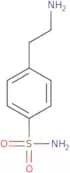
CAS:Controlled Product<p>Please enquire for more information about N-(p-Hydroxyphenethyl)-N-(3-hydroxy-4-methoxybenzyl)formamide including the price, delivery time and more detailed product information at the technical inquiry form on this page</p>Formula:C17H19NO4Purity:Min. 95%Molecular weight:301.34 g/mol4-(2-Aminoethyl)benzene sulfonamide
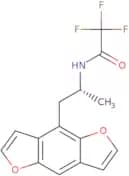
CAS:<p>4-(2-Aminoethyl)benzene sulfonamide is a small-molecule drug that inhibits the activity of proteases, including serine and cysteine proteases. It has been shown to inhibit the growth of human renal cell cancer cells, as well as subcutaneous tumors in mice. 4-(2-Aminoethyl)benzene sulfonamide also inhibits the proliferation of Hl-60 cells and shows antitumor activity in a mouse model system. This drug is an inhibitor of prostaglandin endoperoxide synthase (PGHS), which is involved in tumorigenesis by causing inflammation and oxidative stress. 4-(2-Aminoethyl)benzene sulfonamide has been shown to be effective for treating colorectal adenocarcinoma, with no significant side effects on other organs.</p>Formula:C8H12N2O2SPurity:Min. 95%Molecular weight:200.26 g/mol(R)-Dragonfly N-trifluoroacetamide
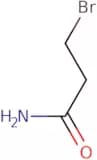
CAS:Controlled Product<p>Please enquire for more information about (R)-Dragonfly N-trifluoroacetamide including the price, delivery time and more detailed product information at the technical inquiry form on this page</p>Formula:C15H12F3NO3Purity:Min. 95%Molecular weight:311.26 g/mol3-Bromopropionamide
CAS:<p>3-Bromopropionamide is an antibacterial agent that inhibits bacterial growth by blocking the synthesis of proteins. It is a synthetic amide with significant antibacterial activity against S. aureus. 3-Bromopropionamide has been shown to be effective against drug-resistant bacteria, including those that are resistant to metalloid salts or alkylene compounds. This substance also has psychomimetic effects and may be useful for studying the kinetics of protein synthesis in cells. 3-Bromopropionamide can be used as a linker to attach other molecules to proteins, which could allow them to penetrate cell membranes more easily.</p>Formula:C3H6ONBrPurity:Min. 95%Color and Shape:PowderMolecular weight:151.99 g/molN-Methyl-2-[[3-[(1e)-2-(2-pyridinyl)ethenyl]-1-(tetrahydro-2H-pyran-2-yl)-1H-indazol-6-yl]thio]benzamide
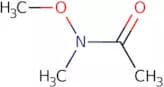
CAS:<p>Please enquire for more information about N-Methyl-2-[[3-[(1e)-2-(2-pyridinyl)ethenyl]-1-(tetrahydro-2H-pyran-2-yl)-1H-indazol-6-yl]thio]benzamide including the price, delivery time and more detailed product information at the technical inquiry form on this page</p>Formula:C27H26N4O2SPurity:Min. 95%Molecular weight:470.59 g/molN-Methoxy-N-methylacetamide
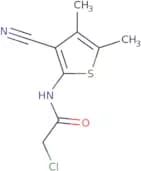
CAS:<p>N-Methoxy-N-methylacetamide is a nucleophilic amide that can be synthesized by the reaction of acetamide with methylmagnesium chloride. It has been used to synthesize an enantiopure derivative of 2-aminopropanol, which is used in the synthesis of potent antitumor agents. N-Methoxy-N-methylacetamide has shown potent anticancer activity in mice and rats. This molecule exhibits a carbonyl group that can act as an enolate, which is a reactive intermediate within chemical reactions. The nucleophilic attack on this carbonyl group leads to intramolecular hydrogen transfer, producing a more stable product.</p>Formula:C4H9NO2Purity:Min. 95%Molecular weight:103.12 g/mol2-Chloro-N-(3-cyano-4,5-dimethylthien-2-yl)acetamide
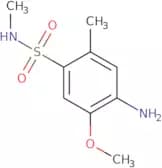
CAS:<p>Please enquire for more information about 2-Chloro-N-(3-cyano-4,5-dimethylthien-2-yl)acetamide including the price, delivery time and more detailed product information at the technical inquiry form on this page</p>Formula:C9H9ClN2OSPurity:Min. 95%Molecular weight:228.7 g/mol4-Amino-5-methoxy-2-methyl-N-methylbenzenesulfonamide
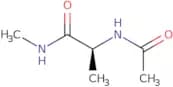
CAS:<p>4-Amino-5-methoxy-2-methyl-N-methylbenzenesulfonamide is a surfactant that is used in the chemical industry to dissolve diazotized aromatic amines. It is also used in the preparation of coupling agents, such as naphthol, and hydrochloric acid. 4-Amino-5-methoxy-2-methylbenzenesulfonamide can be prepared by the diazotization of aniline followed by coupling with hydrochloric acid and sodium phosphate. The product can then be purified by recrystallization from a salt solution containing sodium acetate.</p>Formula:C9H14N2O3SPurity:Min. 95%Molecular weight:230.29 g/molAcetyl-L-alanine methyl amide
CAS:<p>Acetyl-L-alanine methyl amide is a pharmaceutical drug that is structurally similar to L-lysine. It has been synthesized as a model system for the study of receptor binding and intracellular signaling. Acetyl-L-alanine methyl amide has shown to be reactive and can form intramolecular hydrogen bonds with other molecules in the cell. This drug also reacts with microglia cells, which are responsible for clearing out dead cells and debris in the brain. Acetyl-L-alanine methyl amide is a proton donor, which may cause steric interactions with lysine residues on proteins due to their proximity within the cell. This drug also has an intermolecular hydrogen bond between its two molecules that could lead to an α subunit conformational change within the protein.</p>Formula:C6H12N2O2Purity:Min. 95%Molecular weight:144.17 g/molN-[4-Amino-3-(trifluoromethyl)phenyl]-2-methylpropanamide
CAS:<p>Please enquire for more information about N-[4-Amino-3-(trifluoromethyl)phenyl]-2-methylpropanamide including the price, delivery time and more detailed product information at the technical inquiry form on this page</p>Formula:C11H13F3N2OPurity:Min. 95%Molecular weight:246.23 g/molN-Bromoacetamide
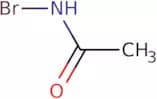
CAS:<p>N-Bromoacetamide is a reactive chemical that can react with the sodium channel to produce a postulated effect. It has been shown to inhibit the kinetics of the sodium channel in whole-cell voltage clamp experiments. This inhibition is reversible and does not depend on the pH of the solution. Bromoacetamide has been shown to have an irreversible inhibition on potassium channels, which may be due to its ability to form covalent bonds with sulfhydryl groups. Bromoacetamide also inhibits voltage-gated calcium channels, but at a slower rate than it does for sodium channels. N-Bromoacetamide has been shown to be effective in pharmacological treatments for epilepsy, myasthenia gravis, and multiple sclerosis.</p>Formula:C2H4BrNOPurity:Min. 95%Color and Shape:PowderMolecular weight:137.96 g/molN,N-Dimethyformamide diethy acetal
CAS:<p>N,N-Dimethyformamide diethy acetal is a compound with a pyrazole ring and an ethyl formate substituent. It is an amide that can be synthesized by the reaction of dimethylformamide with ethyl formate. This compound has been found to inhibit the production of inflammatory cytokines such as chemokines in bowel disease patients. N,N-Dimethyformamide diethy acetal's amine group can also bind to adenosine receptors with high affinity. The hybridized nitrogen atoms in this molecule are more soluble than other amines and can be used as a supercritical fluid extraction solvent for solubility data.</p>Formula:C7H17NO2Purity:Min. 95%Color and Shape:Clear LiquidMolecular weight:147.22 g/mol(S)-(+)-2-Phenylglycine amide
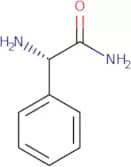
CAS:<p>(S)-(+)-2-Phenylglycine amide is a racemic mixture of the (R) and (S) enantiomers. It is an inhibitor of the enzyme, racemase, which converts one type of amino acid to another. This inhibition prevents allergic reactions that can be caused by acylation reactions or ph profiles in the body. The amino acid composition of this drug is unique because it contains an ester hydrochloride group, which does not exist in other drugs. The kinetic and thermodynamic properties of (S)-(+)-2-phenylglycine amide have been studied extensively, but there are no reports on its ability to inhibit inflammatory diseases. However, it has been shown that the β-amino acid in this drug can inhibit amide hydroxamic acids and stereoselective hydroxamic acids.</p>Formula:C8H10N2OPurity:Min. 95%Molecular weight:150.18 g/molFormamide
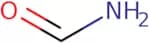
CAS:Controlled Product<p>Formamide is a colorless, volatile chemical compound that is most commonly used in the laboratory for the preparation of dna duplexes. It can also be used to treat bowel disease and HIV infection. It is not active against viruses or bacteria but has been shown to bind to toll-like receptors on cells. Formamide is an organic substance that exists as a gas at room temperature and pressure. Formaldehyde reacts with water in the presence of sodium carbonate to form formamide, which is soluble in water. Formamide has been used as a reaction solution for surface methodology experiments because it evaporates quickly and leaves no residue on surfaces. Formamide has been shown to inhibit epidermal growth factor (EGF) activity by binding to the EGF receptor protein and preventing its activation. This inhibition leads to decreased cell proliferation, reduced protein synthesis, and inhibition of DNA replication.</p>Formula:CH3NOPurity:Min. 95%Color and Shape:Colorless PowderMolecular weight:45.04 g/molN-(2-Cyano-4-oxo-4H-1-benzopyran-8-yl)-4-(4-phenylbutoxy)benzamide
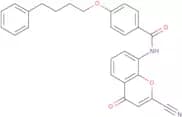
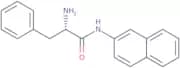
CAS:<p>Please enquire for more information about N-(2-Cyano-4-oxo-4H-1-benzopyran-8-yl)-4-(4-phenylbutoxy)benzamide including the price, delivery time and more detailed product information at the technical inquiry form on this page</p>Formula:C27H22N2O4Purity:Min. 95%Molecular weight:438.47 g/molL-Phenylalanine b-naphthylamide
CAS:<p>L-Phenylalanine b-naphthylamide is a phenylalanine derivative that can be used as an indicator for the detection of Clostridium, 2-naphthylamine, and other anaerobes. This compound is a chromogenic substrate that reacts with amino groups in amino acids and amides in peptides to form a variety of color products. The condensation of phenylalanine with 2-naphthylamine is catalyzed by enzymes found in clostridia. When L-phenylalanine b-naphthylamide is incubated with tissue from animals or humans, it produces a pink coloration that indicates the presence of clostridia. The aerobic conditions necessary for this reaction are also found in the environment and within the body.</p>Formula:C19H18N2OPurity:Min. 95%Molecular weight:290.36 g/mol



![N-Methyl-2-[[3-[(1e)-2-(2-pyridinyl)ethenyl]-1-(tetrahydro-2H-pyran-2-yl)-1H-indazol-6-yl]thio]ben…](/_next/image/?url=https%3A%2Fstatic.cymitquimica.com%2Fproducts%2F3D%2Fthumb-webp%2FFM151517.webp&w=3840&q=75)
![N-[4-Amino-3-(trifluoromethyl)phenyl]-2-methylpropanamide](/_next/image/?url=https%3A%2Fstatic.cymitquimica.com%2Fproducts%2F3D%2Fthumb-webp%2FFA17485.webp&w=3840&q=75)