Amides
Amides are a wide range of chemical compounds that contain at least one heterocyclic ring, which has atoms of at least two different elements in the ring structure, and at least one amide group (-CONH2). These compounds are crucial in the synthesis of pharmaceuticals, polymers, and agrochemicals. Amides exhibit unique properties and reactivity, making them valuable intermediates in organic synthesis. At CymitQuimica, we offer a comprehensive selection of high-quality amides to support your research and industrial needs.
Found 16393 products of "Amides"
Sort by
Purity (%)
0
100
|
0
|
50
|
90
|
95
|
100
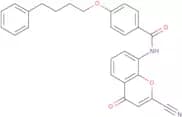
N-(2-Cyano-4-oxo-4H-1-benzopyran-8-yl)-4-(4-phenylbutoxy)benzamide
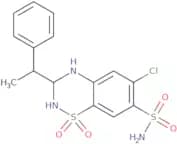
CAS:<p>Please enquire for more information about N-(2-Cyano-4-oxo-4H-1-benzopyran-8-yl)-4-(4-phenylbutoxy)benzamide including the price, delivery time and more detailed product information at the technical inquiry form on this page</p>Formula:C27H22N2O4Purity:Min. 95%Molecular weight:438.47 g/mol6-Chloro-3,4-dihydro-3-(a-methylbenzyl)-2H-1,2,4-benzothiadiazine-7-sulfonamide 1,1-dioxide
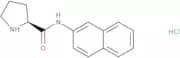
CAS:<p>6-Chloro-3,4-dihydro-3-(a-methylbenzyl)-2H-1,2,4-benzothiadiazine-7-sulfonamide 1,1-dioxide is an active metabolite of the drug benzbromarone. It is primarily administered as a diuretic to treat high blood pressure and congestive heart failure. The pharmacodynamics of this drug are related to its ability to inhibit the activity of sodium channels in vascular smooth muscle cells and thereby reduce the force of contraction and relax the vessel wall. 6CBDMTD has shown an increase in glomerular filtration rate in patients with congestive heart failure. This drug also decreases the plasma concentration of fatty acids by inhibiting the formation of lipoprotein particles. 6CBDMTD has been shown to be effective at lowering diastolic and systolic blood pressure levels in patients with hypertension.</p>Formula:C15H16ClN3O4S2Purity:Min. 95%Molecular weight:401.89 g/molL-Proline-β-naphthylamide hydrochloride
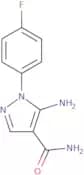
CAS:<p>L-proline analogue</p>Formula:C15H16N2O·HClPurity:Min. 95%Molecular weight:276.76 g/mol5-Amino-1-(4-Fluorophenyl)-1H-Pyrazole-4-Carboxamide
CAS:<p>Please enquire for more information about 5-Amino-1-(4-Fluorophenyl)-1H-Pyrazole-4-Carboxamide including the price, delivery time and more detailed product information at the technical inquiry form on this page</p>Formula:C10H9FN4OPurity:Min. 95%Molecular weight:220.2 g/molFormamide
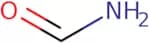
CAS:Controlled Product<p>Formamide is a colorless, volatile chemical compound that is most commonly used in the laboratory for the preparation of dna duplexes. It can also be used to treat bowel disease and HIV infection. It is not active against viruses or bacteria but has been shown to bind to toll-like receptors on cells. Formamide is an organic substance that exists as a gas at room temperature and pressure. Formaldehyde reacts with water in the presence of sodium carbonate to form formamide, which is soluble in water. Formamide has been used as a reaction solution for surface methodology experiments because it evaporates quickly and leaves no residue on surfaces. Formamide has been shown to inhibit epidermal growth factor (EGF) activity by binding to the EGF receptor protein and preventing its activation. This inhibition leads to decreased cell proliferation, reduced protein synthesis, and inhibition of DNA replication.</p>Formula:CH3NOPurity:Min. 95%Color and Shape:Colorless PowderMolecular weight:45.04 g/molN-[(1S)-1-(Aminocarbonyl)propyl]-4-chlorobutanamide
CAS:<p>Please enquire for more information about N-[(1S)-1-(Aminocarbonyl)propyl]-4-chlorobutanamide including the price, delivery time and more detailed product information at the technical inquiry form on this page</p>Formula:C8H15ClN2O2Purity:Min. 95%Color and Shape:PowderMolecular weight:206.67 g/molTRAP-6 amide trifluoroacetate salt
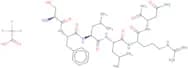
CAS:<p>Protease-activated receptor 1 (PAR-1) selective activating peptide, TFA salt. 98%.</p>Formula:C34H57N11O8Purity:Min. 95%Color and Shape:PowderMolecular weight:747.89 g/molpTH-Related Protein (67-86) amide (human, bovine, dog, mouse, ovine, rat) trifluoroacetate salt
CAS:<p>Please enquire for more information about pTH-Related Protein (67-86) amide (human, bovine, dog, mouse, ovine, rat) trifluoroacetate salt including the price, delivery time and more detailed product information at the technical inquiry form on this page</p>Formula:C108H173N27O35Purity:Min. 95%Molecular weight:2,409.69 g/molGalanin Message Associated Peptide (44-59) amide
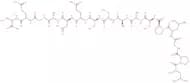
CAS:<p>Please enquire for more information about Galanin Message Associated Peptide (44-59) amide including the price, delivery time and more detailed product information at the technical inquiry form on this page</p>Formula:C61H100N18O25Purity:Min. 95%Molecular weight:1,485.55 g/mol(Phe1-psi(CH2NH)Gly2)-Nociceptin (1-13) amide
<p>Please enquire for more information about (Phe1-psi(CH2NH)Gly2)-Nociceptin (1-13) amide including the price, delivery time and more detailed product information at the technical inquiry form on this page</p>Formula:C61H102N22O14Purity:Min. 95%Molecular weight:1,367.6 g/molN-[2-[(2-Bromo-4,6-dinitrophenyl)azo]-5-(diethylamino)phenyl]acetamide
CAS:<p>N-2-[(2-bromo-4,6-dinitrophenyl)azo]-5-(diethylamino)phenyl]acetamide (NBDPA) is a yellowish solid that is soluble in water. It has a molecular weight of 308.3 and chemical formula C14H21BrN2O4. NBDPA is used as an analytical reagent for the kinetic data of liver cells and in wastewater treatment. This compound has been shown to exhibit carcinogenic potential in rats, causing genetic damage to the DNA of liver cells and kidney tissue. NBDPA has also been shown to be toxic to fish embryos and larvae, with significant effects on the development of larvae at high concentrations.</p>Formula:C18H19BrN6O5Purity:90%MinMolecular weight:479.28 g/molDnp-(Leu421)-Collagen Type VIII a1 Chain (419-426) amide (human, mouse) trifluoroacetate salt
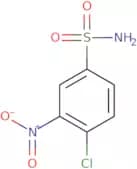
<p>Please enquire for more information about Dnp-(Leu421)-Collagen Type VIII a1 Chain (419-426) amide (human, mouse) trifluoroacetate salt including the price, delivery time and more detailed product information at the technical inquiry form on this page</p>Formula:C40H64N14O12SPurity:Min. 95%Molecular weight:965.09 g/mol4-Chloro-3-nitrobenzenesulfonamide
CAS:<p>4-Chloro-3-nitrobenzenesulfonamide is a fluorogenic probe that can be used in the diagnosis of cancer. It inhibits the activity of MCL-1, which is an antiapoptotic protein. The skeleton of 4-Chloro-3-nitrobenzenesulfonamide has been shown to have carbonic and fluorescence properties. This chemical compound is also metabolized by azobenzene to form a fluorescent derivative that can be used for optical imaging in vivo.</p>Formula:C6H5ClN2O4SPurity:Min. 95%Molecular weight:236.63 g/mol4-Methylsalicylamide
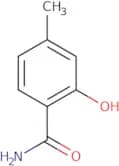
CAS:<p>4-Methylsalicylamide is a chemical compound that belongs to the class of isonicotinic amides. It is a potent anti-inflammatory agent with minimal inhibitory concentration (MIC) values of 4 µg/mL for gram-positive bacteria and 8 µg/mL for gram-negative bacteria. This compound has been shown to be effective against methicillin-resistant Staphylococcus aureus (MRSA) and Clostridium perfringens, although is not active against acid-fast bacteria such as Mycobacterium tuberculosis or Mycobacterium avium complex. 4-Methylsalicylamide has been shown to have an inhibitory effect on ring-opening, which may be due to its ability to acetylate mitochondrial membranes, altering the membrane potential. The molecular modeling studies also showed that 4MSAM binds at the same site as antibiotics such as penicillin and erythromycin in bacterial ribos</p>Formula:C8H9NO2Purity:Min. 95%Color and Shape:PowderMolecular weight:151.16 g/mol4-Bromo-2-fluoro-N-methylbenzamide
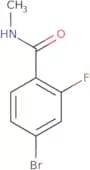
CAS:<p>4-Bromo-2-fluoro-N-methylbenzamide is an impurity in the pharmaceutical drug nilutamide. It is a ligand that binds to the androgen receptor and inhibits the binding of dihydrotestosterone, reducing its effect on prostate cells. 4-Bromo-2-fluoro-N-methylbenzamide has been shown to have pharmacokinetic properties similar to nilutamide, which is a drug used for treating prostate cancer. This impurity is also found in small quantities in other drugs including cyclobutanone, 2-aminoisobutyric acid, and chloral hydrate. The elucidation of these impurities can help regulate the quality of pharmaceutical drugs.</p>Formula:C8H7BrFNOPurity:Min. 95%Color and Shape:White Off-White PowderMolecular weight:232.05 g/mol(D-Ala2)-GRF (1-29) amide (human)
CAS:<p>Please enquire for more information about (D-Ala2)-GRF (1-29) amide (human) including the price, delivery time and more detailed product information at the technical inquiry form on this page</p>Formula:C149H246N44O42SPurity:Min. 95%Molecular weight:3,357.88 g/mol(Deamino-Cys3, Nle 4,Arg5,D-2-Nal 7,Cys11)-a-MSH (3-11) amide trifluoroacetate salt
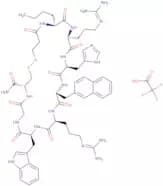
CAS:<p>Please enquire for more information about (Deamino-Cys3, Nle 4,Arg5,D-2-Nal 7,Cys11)-a-MSH (3-11) amide trifluoroacetate salt including the price, delivery time and more detailed product information at the technical inquiry form on this page</p>Formula:C56H76N18O9S2Purity:Min. 95%Molecular weight:1,209.45 g/molFmoc-rink amide resin
CAS:<p>Fmoc-rink amide resin is a synthetic, radionuclide, and constant polymer. It is used in chemical ligation to produce peptides from amines and growth factors. Fmoc-rink amide resin also has antimicrobial properties due to its ability to inhibit the growth of bacteria and fungi by binding to their cell membranes. This polymer can be conjugated with growth factor or antimicrobial peptides for use as a therapeutic agent or used in the production of antibodies against a particular protein. Fmoc-rink amide resin has been shown to increase epidermal growth factor (EGF) uptake into cells by targeting EGF receptors on the cell surface.</p>Purity:Min. 95%2-Chloro-N-[2-(diethylamino)ethyl]-4-quinolinecarboxamide
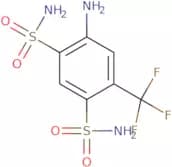
CAS:<p>2-Chloro-N-[2-(diethylamino)ethyl]-4-quinolinecarboxamide is a carboxamide analog of dibucaine. It is synthesized from chloroacetyl chloride and isatin in the presence of sodium hydroxide. The synthesis has been scaled to an industrial level. 2-Chloro-N-[2-(diethylamino)ethyl]-4-quinolinecarboxamide has been shown to have analgesic properties, similar to those of dibucaine. Radiolysis of this compound gives a carboxylic acid and a heterocyclic ring product.</p>Formula:C16H20ClN3OPurity:95%MinColor and Shape:PowderMolecular weight:305.8 g/mol4-Amino-6-(trifluoromethyl)benzene-1,3-disulfonamide
CAS:<p>4-Amino-6-(trifluoromethyl)benzene-1,3-disulfonamide (4AFBDS) is a chemical compound that can be used for the treatment of wastewater. It has shown to be effective against anhydrase, which is an enzyme that catalyzes the conversion of water to hydrogen peroxide and hydroxide ion. 4AFBDS also attenuates oxidative stress in cardiac cells and inhibits the production of active oxygen species by inhibiting the activity of carbonic anhydrase. The chromatographic method used to detect 4AFBDS was found to be more sensitive than a standard colorimetric assay, making it a better tool for detecting this compound in wastewater samples. br> br> br> br> br> This compound has been shown to have inhibitory effects on e3 ubiquitin ligase, which plays a role in protein degradation via aut</p>Formula:C7H8F3N3O4S2Purity:Min. 95%Molecular weight:319.28 g/mol

![N-[(1S)-1-(Aminocarbonyl)propyl]-4-chlorobutanamide](/_next/image/?url=https%3A%2Fstatic.cymitquimica.com%2Fproducts%2F3D%2Fthumb-webp%2FFA171302.webp&w=3840&q=75)
![N-[2-[(2-Bromo-4,6-dinitrophenyl)azo]-5-(diethylamino)phenyl]acetamide](/_next/image/?url=https%3A%2Fstatic.cymitquimica.com%2Fproducts%2F3D%2Fthumb-webp%2FFB151321.webp&w=3840&q=75)


![2-Chloro-N-[2-(diethylamino)ethyl]-4-quinolinecarboxamide](/_next/image/?url=https%3A%2Fstatic.cymitquimica.com%2Fproducts%2F3D%2Fthumb-webp%2FFC20289.webp&w=3840&q=75)