Amides
Amides are a wide range of chemical compounds that contain at least one heterocyclic ring, which has atoms of at least two different elements in the ring structure, and at least one amide group (-CONH2). These compounds are crucial in the synthesis of pharmaceuticals, polymers, and agrochemicals. Amides exhibit unique properties and reactivity, making them valuable intermediates in organic synthesis. At CymitQuimica, we offer a comprehensive selection of high-quality amides to support your research and industrial needs.
Found 16485 products of "Amides"
Sort by
Purity (%)
0
100
|
0
|
50
|
90
|
95
|
100
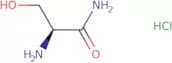
L-Serine amide hydrochloride
CAS:<p>L-Serine amide hydrochloride is a synthetic, anti-HIV drug that is used as an antiviral agent. It inhibits the viral life cycle by inhibiting the activity of acyclic nucleoside phosphonates, which are vital to viral DNA synthesis. L-Serine amide hydrochloride binds to the cyclopentane ring of guanosine and prevents its interaction with the enzyme ribonucleotide reductase. This binding prevents the conversion of guanosine into GTP, thereby preventing HIV from using this molecule in their life cycle. L-Serine amide hydrochloride is not active against cellular proteins or prostaglandins.</p>Formula:C3H8N2O2·HClPurity:Min. 95%Molecular weight:140.57 g/molOxamide
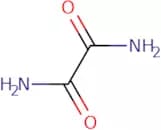
CAS:<p>Oxamide is a chemical compound with the molecular formula CHNO. It is a white solid that is moderately soluble in water and alcohol, but not in ether. Oxamide has been shown to have antioxidative properties and to inhibit the formation of reactive oxygen species. This drug also has an effect on thermal expansion and on the blood flow rate in human serum.</p>Formula:C2H4N2O2Purity:Min. 95%Molecular weight:88.07 g/mol6-Chloro-3,4-dihydro-3-(a-methylbenzyl)-2H-1,2,4-benzothiadiazine-7-sulfonamide 1,1-dioxide
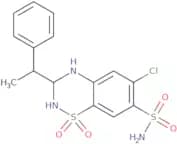
CAS:<p>6-Chloro-3,4-dihydro-3-(a-methylbenzyl)-2H-1,2,4-benzothiadiazine-7-sulfonamide 1,1-dioxide is an active metabolite of the drug benzbromarone. It is primarily administered as a diuretic to treat high blood pressure and congestive heart failure. The pharmacodynamics of this drug are related to its ability to inhibit the activity of sodium channels in vascular smooth muscle cells and thereby reduce the force of contraction and relax the vessel wall. 6CBDMTD has shown an increase in glomerular filtration rate in patients with congestive heart failure. This drug also decreases the plasma concentration of fatty acids by inhibiting the formation of lipoprotein particles. 6CBDMTD has been shown to be effective at lowering diastolic and systolic blood pressure levels in patients with hypertension.</p>Formula:C15H16ClN3O4S2Purity:Min. 95%Molecular weight:401.89 g/mol2-Chloro-N-(2-oxotetrahydro-3-thienyl)acetamide
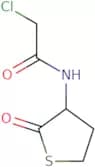
CAS:<p>2-Chloro-N-(2-oxotetrahydro-3-thienyl)acetamide is a chemical compound that is used as an intermediate in the synthesis of other organic compounds. The impurities are minimized by using organic solvents such as acetone, pyridine, and tetrahydrofuran. The product can be precipitated by adding sodium carbonate or potassium carbonate to the solution, or it can be crystallized from a mixture of methanol and water. 2-Chloro-N-(2-oxotetrahydro-3-thienyl)acetamide is also soluble in ethers such as erdosteine and acetonitrile, which can be used to remove the last traces of water.</p>Formula:C6H8ClNO2SPurity:Min. 95%Molecular weight:193.65 g/mol(2R)-2-Amino-3-phenylpropionyl amide
CAS:<p>(2R)-2-Amino-3-phenylpropionyl amide is a synthetic cannabinoid that has been shown to bind to the CB2 receptor. It has been found to be an effective analgesic in rat models of inflammatory and neuropathic pain. This drug is also a serine protease inhibitor, with activity against ochrobactrum, an antibiotic-resistant bacteria. (2R)-2-Amino-3-phenylpropionyl amide is also used as a substrate for d-alanine synthesis and has been sequenced. It can form hydrogen bonds with water molecules and chloride ions. (2R)-2-Amino-3-phenylpropionyl amide has been synthesized by Clostridium coli K12 cells and is expected to have similar effects on human cells.</p>Formula:C9H12N2OPurity:Min. 95%Molecular weight:164.2 g/molTridecafluoro-N-(2-Hydroxyethyl)-N-Methylhexanesulphonamide
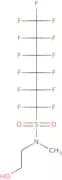
CAS:Please enquire for more information about Tridecafluoro-N-(2-Hydroxyethyl)-N-Methylhexanesulphonamide including the price, delivery time and more detailed product information at the technical inquiry form on this pageFormula:C9H8F13NO3SPurity:Min. 95%Molecular weight:457.21 g/mol[4-(4-Aminophenoxy)(2-pyridyl)]-N-methylcarboxamide
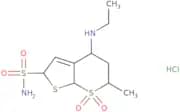
CAS:4-(4-Aminophenoxy)(2-pyridyl)]-N-methylcarboxamide is a chemical compound that inhibits the growth of cancer cells by binding to the active site of b-raf and blocking its activity. It has been shown in a pharmacokinetics study that 4-(4-aminophenoxy)(2-pyridyl)]-N-methylcarboxamide is absorbed rapidly through the oral administration, excreted in urine, and eliminated rapidly from the body. The optimal reaction for this drug was found to be at pH 7.0 with an ionic strength of 0.1 M (sodium chloride). This drug also has significant inhibitory activities against human cervical carcinoma and breast cancer cell lines (MDA-MB-231).Formula:C13H13N3O2Purity:Min. 95%Color and Shape:Off-White To Beige To Light Brown SolidMolecular weight:243.26 g/molDorzolamide hydrochloride related compound A
CAS:<p>Please enquire for more information about Dorzolamide hydrochloride related compound A including the price, delivery time and more detailed product information at the technical inquiry form on this page</p>Formula:C10H16N2O4S3·HClPurity:Min. 95%Molecular weight:360.9 g/molDesmethyl lacosamide
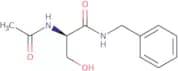
CAS:<p>Lacosamide is an antiepileptic drug that has been shown to be bioequivalent to the reference product, Gabapentin. Lacosamide binds to voltage-gated sodium channels and is thought to have a similar clinical profile as Gabapentin. It is used in the treatment of partial seizures (with or without secondary generalization) and adjunctive therapy for generalized seizures in adults and children aged 2 years or older. Lacosamide can interact with other drugs, such as gabapentin, by increasing their serum concentrations. This interaction may lead to adverse effects such as dizziness and confusion. Lacosamide plasma concentrations are measured using LC-MS/MS methods after a two-way crossover study in healthy human volunteers. This study also showed that lacosamide is excreted unchanged in urine samples at a rate of about 50% over 24 hours, indicating that it does not undergo extensive metabolism in humans.</p>Formula:C12H16N2O3Purity:Min. 95%Color and Shape:White Off-White PowderMolecular weight:236.27 g/mol4-Hydroxy-N-(2-Piperidinylmethyl)-2,5-Bis(2,2,2-Trifluoroethoxy)Benzamide
CAS:<p>Please enquire for more information about 4-Hydroxy-N-(2-Piperidinylmethyl)-2,5-Bis(2,2,2-Trifluoroethoxy)Benzamide including the price, delivery time and more detailed product information at the technical inquiry form on this page</p>Formula:C17H20F6N2O4Purity:Min. 95%Molecular weight:430.34 g/molN-(tert-Butoxycarbonyl)glycine N'-methoxy-N'-methylamide
CAS:<p>Please enquire for more information about N-(tert-Butoxycarbonyl)glycine N'-methoxy-N'-methylamide including the price, delivery time and more detailed product information at the technical inquiry form on this page</p>Formula:C9H18N2O4Purity:Min. 95%Molecular weight:218.25 g/molD-Glutamic acid α-amide
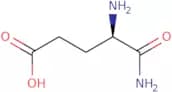
CAS:D-Glutamic acid alpha-amide is a carbohydrate that has been shown to have antibiotic properties. It can be produced by chemoenzymatic synthesis and is used as an animal feed additive. D-Glutamic acid alpha-amide is a conjugate of D-glutamic acid with either glycine or beta-alanine. The residue of this compound on red blood cells is measured in order to assess the amount of D-glutamic acid alpha-amide that has been ingested. This compound has also been shown to have antigenic properties, which can elicit immune responses when injected into animals. The meningococcal vaccine that contains D-glutamic acid alpha-amide was found to be effective at stimulating an immune response in mice against meningitis caused by gram negative species, such as Neisseria meningitidis.Formula:C5H10N2O3Purity:Min. 95%Color and Shape:PowderMolecular weight:146.14 g/molN-(4-(4-Fluorophenyl)-5-(hydroxymethyl)-6-isopropylpyrimidin-2-yl)-Nmethylmethanesulfonamide
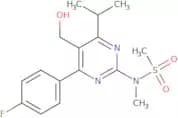
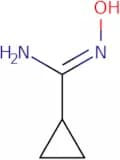
CAS:<p>Please enquire for more information about N-(4-(4-Fluorophenyl)-5-(hydroxymethyl)-6-isopropylpyrimidin-2-yl)-Nmethylmethanesulfonamide including the price, delivery time and more detailed product information at the technical inquiry form on this page</p>Formula:C16H20FN3O3SPurity:Min. 95%Molecular weight:353.41 g/molN'-Hydroxycyclopropanecarboximidamide
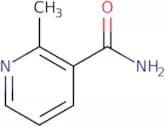
CAS:<p>N'-Hydroxycyclopropanecarboximidamide (N-HCPC) is an alkoxycarbonyl-containing heterocycle that is structurally related to the benzodiazepine class of drugs. It has been shown to have depressant activity in animal models and may be useful as a treatment for epilepsy, but it also has psychoactive properties. N-HCPC can cause epileptic seizures in humans, although this effect appears to be dose dependent. It may also have potential use as a treatment for Alzheimer's disease and depression due to its ability to bind to the benzodiazepine receptor. The drug binds with high affinity to muscle tissue, which may explain its effects on muscle control and movement.</p>Formula:C4H8N2OPurity:Min. 95%Molecular weight:100.12 g/mol2-Methylnicotinamide
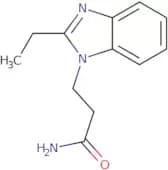
CAS:<p>2-Methylnicotinamide is an amide that is used to treat inflammatory bowel disease. It inhibits the production of glutamate and aspartate, which are neurotransmitters that are involved in the inflammation process. 2-Methylnicotinamide has been shown to have a protective effect on renal function by reducing blood flow to the kidneys, thereby decreasing renal damage caused by glutamate and aspartate. This drug also has anticancer properties, which may be due to its ability to inhibit viral replication and reduce the incidence of cancer in animals. 2-Methylnicotinamide has not yet been tested on humans, but it is thought to be safe for use in pharmaceutical dosages.</p>Formula:C7H8N2OPurity:Min. 95%Molecular weight:136.15 g/mol3-(2-Ethyl-1H-benzimidazol-1-yl)propanamide
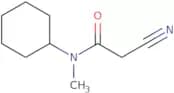
CAS:Controlled ProductPlease enquire for more information about 3-(2-Ethyl-1H-benzimidazol-1-yl)propanamide including the price, delivery time and more detailed product information at the technical inquiry form on this pageFormula:C12H15N3OPurity:Min. 95%Molecular weight:217.27 g/mol2-Cyano-N-cyclohexyl-N-methylacetamide
CAS:<p>Please enquire for more information about 2-Cyano-N-cyclohexyl-N-methylacetamide including the price, delivery time and more detailed product information at the technical inquiry form on this page</p>Formula:C10H16N2OPurity:Min. 95%Molecular weight:180.25 g/molN,N-Dimethyformamide diethy acetal
CAS:<p>N,N-Dimethyformamide diethy acetal is a compound with a pyrazole ring and an ethyl formate substituent. It is an amide that can be synthesized by the reaction of dimethylformamide with ethyl formate. This compound has been found to inhibit the production of inflammatory cytokines such as chemokines in bowel disease patients. N,N-Dimethyformamide diethy acetal's amine group can also bind to adenosine receptors with high affinity. The hybridized nitrogen atoms in this molecule are more soluble than other amines and can be used as a supercritical fluid extraction solvent for solubility data.</p>Formula:C7H17NO2Purity:Min. 95%Color and Shape:Clear LiquidMolecular weight:147.22 g/molL-Alanine amide hydrobromide
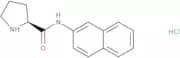
CAS:<p>L-Alanine amide hydrobromide is a carboxylic acid that can be used as an antibacterial agent. It reacts with the amino group of l-tyrosine and alkylsulfonyl groups to form an amide. L-Alanine amide hydrobromide has been shown to inhibit bacterial growth in vitro, and it also has anti-inflammatory properties. The antibacterial activity of L-alanine amide hydrobromide is activated by reaction time, which may be due to its ability to react with the basic proteins found in bacteria. This drug also interacts with vinyl alcohol, which may be important for its immobilized application.</p>Formula:C3H8N2O·HBrPurity:Min. 95%Molecular weight:169.02 g/molL-Proline-beta-naphthylamide hydrochloride
CAS:<p>L-proline analogue</p>Formula:C15H16N2O·HClPurity:Min. 95%Molecular weight:276.76 g/mol


![[4-(4-Aminophenoxy)(2-pyridyl)]-N-methylcarboxamide](/_next/image/?url=https%3A%2Fstatic.cymitquimica.com%2Fproducts%2F3D%2Fthumb-webp%2FFA17813.webp&w=3840&q=75)