Amides
Amides are a wide range of chemical compounds that contain at least one heterocyclic ring, which has atoms of at least two different elements in the ring structure, and at least one amide group (-CONH2). These compounds are crucial in the synthesis of pharmaceuticals, polymers, and agrochemicals. Amides exhibit unique properties and reactivity, making them valuable intermediates in organic synthesis. At CymitQuimica, we offer a comprehensive selection of high-quality amides to support your research and industrial needs.
Found 16485 products of "Amides"
Sort by
Purity (%)
0
100
|
0
|
50
|
90
|
95
|
100
N,N'-Dimethylethanebis(thioamide)
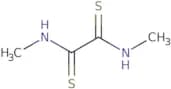
CAS:<p>N,N'-Dimethylethanebis(thioamide) is a ligand that binds to the metal rhenium. It has been shown to be an efficient catalyst for the oxidation of nitrates and organic compounds. N,N'-Dimethylethanebis(thioamide) is also used as a fertility agent in oral doses because it can increase the production of sperm in males and ovulation in females. The vibrational spectra of this compound show strong intermolecular hydrogen bonds with halogens and nitrogen atoms. This ligand has been shown to have high affinity for metal ions such as rhenium due to its chelate ring structure.</p>Formula:C4H8N2S2Purity:Min. 95%Molecular weight:148.25 g/molL-2-Aminobutanamide
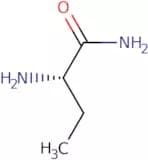
CAS:<p>L-2-Aminobutanamide is a compound that is used as an industrial preparation and as a reagent in kinetic studies. It has been shown to be effective in the analytical method for the determination of hydrochloric acid in titration, with a detection limit of 0.1%. L-2-Aminobutanamide can also be used to produce asymmetric synthesis by adding it with sodium hydroxide solution or hydroxide solution and using chromatographic science. This compound has been shown to have antibacterial effects on Brucella, which can be attributed to its ability to inhibit protein synthesis and disrupt cell membrane integrity. L-2-Aminobutanamide is a chiral compound that can exist in two different forms, L -(+)-2-aminobutanamide or D -(-)-2-aminobutanamide.</p>Formula:C4H10N2OPurity:Min. 95%Molecular weight:102.14 g/molTridecafluoro-N-(2-Hydroxyethyl)-N-Methylhexanesulphonamide
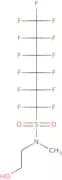
CAS:Please enquire for more information about Tridecafluoro-N-(2-Hydroxyethyl)-N-Methylhexanesulphonamide including the price, delivery time and more detailed product information at the technical inquiry form on this pageFormula:C9H8F13NO3SPurity:Min. 95%Molecular weight:457.21 g/mol6-Chloro-3,4-dihydro-3-(a-methylbenzyl)-2H-1,2,4-benzothiadiazine-7-sulfonamide 1,1-dioxide
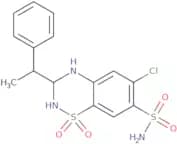
CAS:<p>6-Chloro-3,4-dihydro-3-(a-methylbenzyl)-2H-1,2,4-benzothiadiazine-7-sulfonamide 1,1-dioxide is an active metabolite of the drug benzbromarone. It is primarily administered as a diuretic to treat high blood pressure and congestive heart failure. The pharmacodynamics of this drug are related to its ability to inhibit the activity of sodium channels in vascular smooth muscle cells and thereby reduce the force of contraction and relax the vessel wall. 6CBDMTD has shown an increase in glomerular filtration rate in patients with congestive heart failure. This drug also decreases the plasma concentration of fatty acids by inhibiting the formation of lipoprotein particles. 6CBDMTD has been shown to be effective at lowering diastolic and systolic blood pressure levels in patients with hypertension.</p>Formula:C15H16ClN3O4S2Purity:Min. 95%Molecular weight:401.89 g/molDorzolamide hydrochloride related compound A
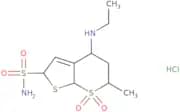
CAS:<p>Please enquire for more information about Dorzolamide hydrochloride related compound A including the price, delivery time and more detailed product information at the technical inquiry form on this page</p>Formula:C10H16N2O4S3·HClPurity:Min. 95%Molecular weight:360.9 g/molDesmethyl lacosamide
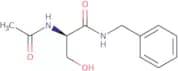
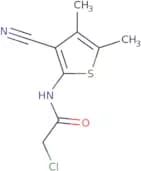
CAS:<p>Lacosamide is an antiepileptic drug that has been shown to be bioequivalent to the reference product, Gabapentin. Lacosamide binds to voltage-gated sodium channels and is thought to have a similar clinical profile as Gabapentin. It is used in the treatment of partial seizures (with or without secondary generalization) and adjunctive therapy for generalized seizures in adults and children aged 2 years or older. Lacosamide can interact with other drugs, such as gabapentin, by increasing their serum concentrations. This interaction may lead to adverse effects such as dizziness and confusion. Lacosamide plasma concentrations are measured using LC-MS/MS methods after a two-way crossover study in healthy human volunteers. This study also showed that lacosamide is excreted unchanged in urine samples at a rate of about 50% over 24 hours, indicating that it does not undergo extensive metabolism in humans.</p>Formula:C12H16N2O3Purity:Min. 95%Color and Shape:White Off-White PowderMolecular weight:236.27 g/mol2-Chloro-N-(3-cyano-4,5-dimethylthien-2-yl)acetamide
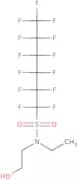
CAS:<p>Please enquire for more information about 2-Chloro-N-(3-cyano-4,5-dimethylthien-2-yl)acetamide including the price, delivery time and more detailed product information at the technical inquiry form on this page</p>Formula:C9H9ClN2OSPurity:Min. 95%Molecular weight:228.7 g/molN-Ethyl-1,1,2,2,3,3,4,4,5,5,6,6,6-tridecafluoro-N-(2-hydroxyethyl)Hexane-1-sulfonamide
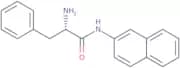
CAS:Please enquire for more information about N-Ethyl-1,1,2,2,3,3,4,4,5,5,6,6,6-tridecafluoro-N-(2-hydroxyethyl)Hexane-1-sulfonamide including the price, delivery time and more detailed product information at the technical inquiry form on this pageFormula:C10H10F13NO3SPurity:Min. 95%Color and Shape:PowderMolecular weight:471.24 g/molL-Phenylalanine b-naphthylamide
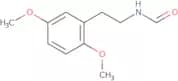
CAS:<p>L-Phenylalanine b-naphthylamide is a phenylalanine derivative that can be used as an indicator for the detection of Clostridium, 2-naphthylamine, and other anaerobes. This compound is a chromogenic substrate that reacts with amino groups in amino acids and amides in peptides to form a variety of color products. The condensation of phenylalanine with 2-naphthylamine is catalyzed by enzymes found in clostridia. When L-phenylalanine b-naphthylamide is incubated with tissue from animals or humans, it produces a pink coloration that indicates the presence of clostridia. The aerobic conditions necessary for this reaction are also found in the environment and within the body.</p>Formula:C19H18N2OPurity:Min. 95%Molecular weight:290.36 g/mol2-(2,5-Dimethoxyphenyl)ethylformamide
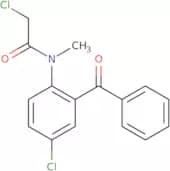
CAS:Controlled Product<p>Please enquire for more information about 2-(2,5-Dimethoxyphenyl)ethylformamide including the price, delivery time and more detailed product information at the technical inquiry form on this page</p>Formula:C11H15NO3Purity:Min. 95%Molecular weight:209.24 g/molN-(2-Benzoyl-4-chlorophenyl)-2-chloro-N-methylacetamide
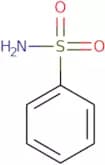
CAS:Please enquire for more information about N-(2-Benzoyl-4-chlorophenyl)-2-chloro-N-methylacetamide including the price, delivery time and more detailed product information at the technical inquiry form on this pageFormula:C16H13Cl2NO2Purity:Min. 95%Molecular weight:322.19 g/molBenzenesulphonamide
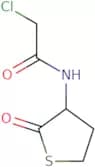
CAS:<p>Benzenesulphonamide is a biologically active compound that has been shown to bind to an integrin receptor, which mediates the attachment of leukocytes to the endothelium. It also binds to a basic protein found in human immunoglobulin. Benzenesulphonamide has been shown to have cytotoxic effects on synchronous fluorescence cells and can be used for the treatment of bowel disease. This drug has also been shown to be toxic in vitro and in vivo, with a moderate acute oral toxicity and low chronic oral toxicity. Benzenesulphonamide has been shown to act as a surfactant by binding with sodium dodecyl sulfate (SDS), which is commonly used in detergents, disinfectants, shampoos, soaps, and other household products. The biological properties of benzenesulphonamide are not well-known due to its low solubility in water.</p>Formula:C6H7NO2SPurity:Min. 95%Molecular weight:157.19 g/mol2-Chloro-N-(2-oxotetrahydro-3-thienyl)acetamide
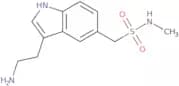
CAS:<p>2-Chloro-N-(2-oxotetrahydro-3-thienyl)acetamide is a chemical compound that is used as an intermediate in the synthesis of other organic compounds. The impurities are minimized by using organic solvents such as acetone, pyridine, and tetrahydrofuran. The product can be precipitated by adding sodium carbonate or potassium carbonate to the solution, or it can be crystallized from a mixture of methanol and water. 2-Chloro-N-(2-oxotetrahydro-3-thienyl)acetamide is also soluble in ethers such as erdosteine and acetonitrile, which can be used to remove the last traces of water.</p>Formula:C6H8ClNO2SPurity:Min. 95%Molecular weight:193.65 g/mol3-(2-Aminoethyl)-N-methyl-1H-indole-5-methanesulfonamide
CAS:<p>3-(2-Aminoethyl)-N-methyl-1H-indole-5-methanesulfonamide (AMIS) is an intermediate in the preparation of medicaments. It is a stable process and can be used as an intermediate for other compounds. AMIS is prepared by reacting methanesulfonic acid with methanol and ammonium carbonate, which produces methanesulfonamide, succinic acid and ammonium hydroxide. The reaction liquid is then heated to produce a crystalline solid. The crystals are then recrystallized to yield AMIS as a white solid.</p>Formula:C12H17N3O2SPurity:Min. 95%Color and Shape:Off-White To Beige To Light Brown SolidMolecular weight:267.35 g/molN-(1,2,3,4-Tetrahydro-7-methoxy-1-oxo-2-naphthalenyl)propanamide
CAS:Controlled Product<p>Please enquire for more information about N-(1,2,3,4-Tetrahydro-7-methoxy-1-oxo-2-naphthalenyl)propanamide including the price, delivery time and more detailed product information at the technical inquiry form on this page</p>Formula:C14H17NO3Purity:Min. 95%Molecular weight:247.29 g/molN-[(1S)-1-(Aminocarbonyl)propyl]-4-chlorobutanamide
CAS:<p>Please enquire for more information about N-[(1S)-1-(Aminocarbonyl)propyl]-4-chlorobutanamide including the price, delivery time and more detailed product information at the technical inquiry form on this page</p>Formula:C8H15ClN2O2Purity:Min. 95%Color and Shape:PowderMolecular weight:206.67 g/mol(D-Ala2)-GRF (1-29) amide (human)
CAS:<p>Please enquire for more information about (D-Ala2)-GRF (1-29) amide (human) including the price, delivery time and more detailed product information at the technical inquiry form on this page</p>Formula:C149H246N44O42SPurity:Min. 95%Molecular weight:3,357.88 g/molL-Glutamic acid alpha-amide
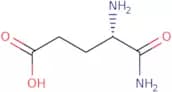
CAS:<p>L-Glutamic acid alpha-amide is an ester hydrochloride that is a tissue culture amide. It is a cyclic peptide analog and a hydroxyl group. L-glutamic acid alpha-amide has been shown to inhibit the inflammatory response in the bowel disease, Crohn's disease, by blocking the toll-like receptor 4 and 5. This drug also inhibits protein synthesis, which may be due to its ability to bind to fatty acids, thereby inhibiting the production of proteins vital for cell division.</p>Formula:C5H10N2O3Purity:Min. 95%Color and Shape:White PowderMolecular weight:146.14 g/molClopamide
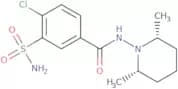
CAS:<p>Clopamide is a diuretic drug that belongs to the group of protein genes. It is used in the treatment of chronic heart failure, low-density lipoprotein cholesterol and infectious diseases. Clopamide has been shown to increase the glomerular filtration rate by inhibiting the sodium citrate enzyme, which is involved in the formation of urine from blood plasma. This drug also reduces blood pressure by blocking angiotensin II receptors on vascular smooth muscle cells. Clopamide does not have any significant interactions with other drugs, although caution should be exercised when using it with cardiac drugs due to its effects on blood pressure.</p>Formula:C14H20ClN3O3SPurity:Min. 98 Area-%Color and Shape:White PowderMolecular weight:345.85 g/molGastric Inhibitory Polypeptide (1-30) amide (porcine)
CAS:<p>Please enquire for more information about Gastric Inhibitory Polypeptide (1-30) amide (porcine) including the price, delivery time and more detailed product information at the technical inquiry form on this page</p>Formula:C162H245N41O47SPurity:Min. 95%Molecular weight:3,550.99 g/mol


![N-[(1S)-1-(Aminocarbonyl)propyl]-4-chlorobutanamide](/_next/image/?url=https%3A%2Fstatic.cymitquimica.com%2Fproducts%2F3D%2Fthumb-webp%2FFA171302.webp&w=3840&q=75)