Amides
Amides are a wide range of chemical compounds that contain at least one heterocyclic ring, which has atoms of at least two different elements in the ring structure, and at least one amide group (-CONH2). These compounds are crucial in the synthesis of pharmaceuticals, polymers, and agrochemicals. Amides exhibit unique properties and reactivity, making them valuable intermediates in organic synthesis. At CymitQuimica, we offer a comprehensive selection of high-quality amides to support your research and industrial needs.
Found 16399 products of "Amides"
Sort by
Purity (%)
0
100
|
0
|
50
|
90
|
95
|
100
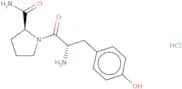
β-Casomorphin (1-2) amide
CAS:<p>Please enquire for more information about beta-Casomorphin (1-2) amide including the price, delivery time and more detailed product information at the technical inquiry form on this page</p>Formula:C14H19N3O3·HClPurity:Min. 95%Molecular weight:313.78 g/molMetorphamide (free acid)
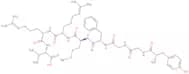
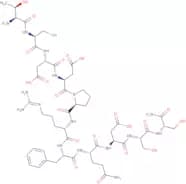
CAS:<p>Please enquire for more information about Metorphamide (free acid) including the price, delivery time and more detailed product information at the technical inquiry form on this page</p>Formula:C44H68N14O10SPurity:Min. 95%Molecular weight:985.17 g/mol(Nle 8·18,Tyr34)-pTH (3-34) amide (bovine)
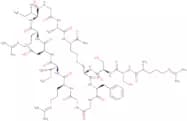
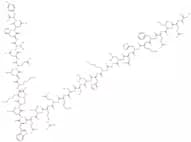
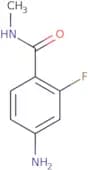
CAS:<p>Please enquire for more information about (Nle 8·18,Tyr34)-pTH (3-34) amide (bovine) including the price, delivery time and more detailed product information at the technical inquiry form on this page</p>Formula:C177H279N53O48Purity:Min. 95%Molecular weight:3,917.44 g/molN-Methyl-2-fluoro-4-aminobenzamide
CAS:<p>N-Methyl-2-fluoro-4-aminobenzamide is a toxic compound that is commonly used as a reagent in chemical synthesis and research. It has been studied for its potential use in medicine, particularly in the treatment of castration-resistant prostate cancer. N-Methyl-2-fluoro-4-aminobenzamide acts as a nucleophilic agent, participating in reactions that involve the addition of an acyl group to a target molecule. Its stable formyl group allows for efficient reaction yields and reliable results. However, due to its toxic nature, caution must be exercised when handling this compound.</p>Formula:C8H9FN2OPurity:Min. 95%Molecular weight:168.17 g/molPhenylacetyl-(D-Arg2·28,p-chloro-Phe6,Arg9, Abu 15, Nle 27, Homoarg 29)-GRF (1-29) amide (human)
CAS:<p>Please enquire for more information about Phenylacetyl-(D-Arg2·28,p-chloro-Phe6,Arg9, Abu 15, Nle 27, Homoarg 29)-GRF (1-29) amide (human) including the price, delivery time and more detailed product information at the technical inquiry form on this page</p>Formula:C170H280ClN53O41Purity:Min. 95%Molecular weight:3,757.83 g/mol(Pro3)-Dynorphin A (1-11) amide trifluoroacetate salt
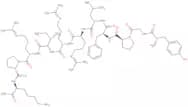
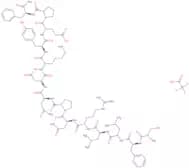
CAS:<p>Please enquire for more information about (Pro3)-Dynorphin A (1-11) amide trifluoroacetate salt including the price, delivery time and more detailed product information at the technical inquiry form on this page</p>Formula:C66H108N22O12Purity:Min. 95%Molecular weight:1,401.7 g/molpTH (1-31) amide (human)
CAS:<p>pTH (1-31) amide is a polymer conjugate that is used to treat osteoporosis. It has been shown to be effective in reducing the risk of fracture and increasing bone mineral density in animals. The compound binds to the extracellular domain of the estrogen receptor, altering its conformation and preventing it from interacting with other proteins in the nucleus. pTH (1-31) amide has also been shown to reduce blood pressure in animals by inhibiting angiotensin-converting enzyme. Clinical data on this drug are limited, but it has been well tolerated so far.</p>Formula:C162H270N50O46S2Purity:Min. 95%Molecular weight:3,718.32 g/molChorionic Gonadotropin-β (109-119) amide (human)
CAS:<p>Please enquire for more information about Chorionic Gonadotropin-beta (109-119) amide (human) including the price, delivery time and more detailed product information at the technical inquiry form on this page</p>Formula:C50H76N16O21SPurity:Min. 95%Molecular weight:1,269.3 g/mol(2R)-2-Aminopropanamide
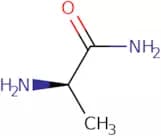
CAS:<p>(2R)-2-Aminopropanamide is a chemical compound that is classified as an amide. It has been shown to inhibit bacterial growth and induce apoptosis in mammalian cells, but not in bacteria. This drug has a number of hydrogen bonding interactions with the carbonyl group and amide functional groups and can bind to affinity ligands with hydrogen bonding interactions. (2R)-2-Aminopropanamide inhibits the activity of enzymes that are involved in the synthesis of d-alanine, which is a precursor for protein synthesis. It also inhibits the enzyme glutamine synthase, which plays a key role in building up nitrogen reserves in bacteria. The drug binds to DNA by forming hydrogen bonds with the phosphate backbone and intercalates into double-stranded DNA by forming van der Waals interactions with base pairs.</p>Formula:C3H8N2OPurity:Min. 95%Molecular weight:88.11 g/molpTH-Related Protein (1-34) amide (human, mouse, rat) trifluoroacetate salt
CAS:<p>Parathyroid hormone-related protein (PTHrP) is a peptide hormone produced by the parathyroid gland that functions as a phosphatase, inhibiting alkaline phosphatase. It also has an inhibitory effect on osteoclastic bone resorption and stimulates osteoblastic bone formation. PTHrP has been shown to be useful in treating osteoporosis and Paget's disease. It also has been used in conjunction with dexamethasone to treat patients with malignancies of the head and neck. PTHrP is an inhibitor of protein kinase A and phosphodiesterases, which are enzymes that regulate cellular processes such as proliferation and differentiation.</p>Formula:C180H288N58O47Purity:Min. 95%Molecular weight:4,016.58 g/mol(2S)-β-Alanyl-L-prolyl-2,4-diamino-N-(phenylmethyl)butanamideacetate
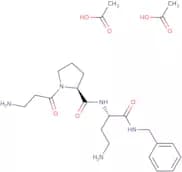
CAS:Controlled Product<p>(2S)-beta-Alanyl-L-prolyl-2,4-diamino-N-(phenylmethyl)butanamideacetate (BAP) is a skin care product that can be applied topically to the skin. BAP is an amino acid derivative that has been shown in clinical studies to hydrate the skin. It acts as a humectant and binds to water molecules, thus increasing the moisture content of the skin. This product also has antioxidant and anti-inflammatory properties, as well as anti-aging effects. BAP is often used in cosmetic products for its film forming properties and ability to form polymeric films on the surface of cells.</p>Formula:C21H33N5O5Purity:Min. 95%Molecular weight:435.52 g/molTRAP-14 amide trifluoroacetate salt
CAS:<p>Please enquire for more information about TRAP-14 amide trifluoroacetate salt including the price, delivery time and more detailed product information at the technical inquiry form on this page</p>Formula:C81H119N21O22Purity:Min. 95%Molecular weight:1,738.94 g/molOsteostatin amide trifluoroacetate
CAS:<p>Please enquire for more information about Osteostatin amide trifluoroacetate including the price, delivery time and more detailed product information at the technical inquiry form on this page</p>Formula:C142H229N43O57•(C2HF3O2)xPurity:Min. 95%Molecular weight:3,450.59 g/molPAR-3 (1-6) amide (human) trifluoroacetate salt
<p>Please enquire for more information about PAR-3 (1-6) amide (human) trifluoroacetate salt including the price, delivery time and more detailed product information at the technical inquiry form on this page</p>Formula:C29H46N10O7Purity:Min. 95%Molecular weight:646.74 g/molN-[4-(2-Bromoacetyl)phenyl]methanesulfonamide
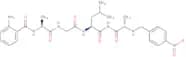
CAS:<p>N-[4-(2-Bromoacetyl)phenyl]methanesulfonamide is a chiral biocatalytic agent, which is synthesized by chemoenzymatic or enzymatic reactions. It has been used in enantioselective synthesis of 4-aminoacetophenone and as an antiarrhythmic agent. This compound is not active against bacterial infections.</p>Formula:C9H10BrNO3SPurity:Min. 95%Molecular weight:292.15 g/molAbz-Ala-Gly-Leu-Ala-p-nitrobenzylamide
CAS:<p>Benzamidine is a benzamidase inhibitor that competitively binds to bacterial enzymes such as metalloendopeptidases and matrix metalloproteinases. It inhibits the degradation of collagen, resulting in a higher concentration of soluble extract. This drug also has an effect on spermatozoa, which may be due to its ability to inhibit bacterial enzymes that are involved with uptake and preload. Benzamidine has been shown to have a pH optimum of 8-9 and is most active at this pH range.</p>Formula:C28H37N7O7Purity:Min. 95%Molecular weight:583.64 g/mol(Cys18)-Atrial Natriuretic Factor (4-18) amide (mouse, rabbit, rat) trifluoroacetate salt
CAS:<p>Please enquire for more information about (Cys18)-Atrial Natriuretic Factor (4-18) amide (mouse, rabbit, rat) trifluoroacetate salt including the price, delivery time and more detailed product information at the technical inquiry form on this page</p>Formula:C64H107N25O19S2Purity:Min. 95%Molecular weight:1,594.82 g/mol2,2-Dimethylpropionamide
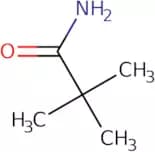
CAS:<p>2,2-Dimethylpropionamide is a synthetic chemical that has been shown to have cytotoxic and biochemical properties. It has been tested on leukemia cells (K562) and has been shown to inhibit the bcr-abl kinase. 2,2-Dimethylpropionamide has also been shown to inhibit the production of amide radicals in human serum under constant pressure. The structure of this compound was solved using X-ray diffraction data.</p>Formula:C5H11NOPurity:Min. 95%Molecular weight:101.15 g/molPAR-2 (6-1) amide (mouse, rat) trifluoroacetate salt
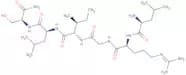
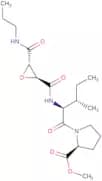
CAS:<p>PAR-2 (6-1) amide is a proteolytic enzyme that is activated by inflammatory stimuli. It has been shown to be a major contributor to the pathogenesis of inflammatory bowel disease, and is found in neurons, the bowel, and pancreatic acinar cells. PAR-2 (6-1) amide activates proteases such as trypsin and chymotrypsin and also functions as an antimicrobial peptide. Activation of PAR-2 (6-1) amide leads to the cleavage of proteins at specific sites on their amino acid chains. This cleavage can lead to changes in protein conformation or function. PAR-2 (6-1) amide has been shown to increase endothelial cell proliferation and inhibit bacterial growth, but does not have any effect on cultured normal human skin fibroblasts.</p>Formula:C29H56N10O7Purity:Min. 95%Molecular weight:656.82 g/molL-trans-Epoxysuccinyl-Ile-Pro-OMe propylamide
CAS:<p>L-trans-Epoxysuccinyl-Ile-Pro-OMe propylamide is a pharmacological agent that inhibits the toll-like receptor 4 signaling pathway. L-trans-Epoxysuccinyl-Ile-Pro-OMe propylamide has been shown to cause caspase independent cell death by inducing cathepsin and iron homeostasis. The drug also causes polymerase chain reaction inhibition and neuronal death in vivo.</p>Formula:C19H31N3O6Purity:Min. 95%Molecular weight:397.47 g/mol


![N-[4-(2-Bromoacetyl)phenyl]methanesulfonamide](/_next/image/?url=https%3A%2Fstatic.cymitquimica.com%2Fproducts%2F3D%2Fthumb-webp%2FFB19192.webp&w=3840&q=75)