Amides
Amides are a wide range of chemical compounds that contain at least one heterocyclic ring, which has atoms of at least two different elements in the ring structure, and at least one amide group (-CONH2). These compounds are crucial in the synthesis of pharmaceuticals, polymers, and agrochemicals. Amides exhibit unique properties and reactivity, making them valuable intermediates in organic synthesis. At CymitQuimica, we offer a comprehensive selection of high-quality amides to support your research and industrial needs.
Found 16393 products of "Amides"
Sort by
Purity (%)
0
100
|
0
|
50
|
90
|
95
|
100
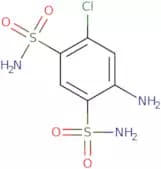
4-Amino-6-chloro-1,3-benzenedisulfonamide
CAS:<p>4-Amino-6-chloro-1,3-benzenedisulfonamide is a natural substance that has been used in Chinese medicine preparations for the treatment of cardiac problems. It belongs to the class of organic compounds called benzenedisulfonamides. 4-Amino-6-chloro-1,3-benzenedisulfonamide is produced by the bacterial enzyme aminase from amino acid and benzoic acid. The adsorption mechanism of 4-Amino-6-chloro-1,3-benzenedisulfonamide is not fully understood, but it is believed that the benzyl groups are key players in this process. The high affinity of 4-Amino-6-chloro1,3 benzenedisulfonamide to proteins may be due to its ability to form hydrogen bonds with protein side chains, such as serine or threonine residues. 4 Amino</p>Formula:C6H8ClN3O4S2Purity:Min. 95%Color and Shape:White To Light Brown SolidMolecular weight:285.73 g/mol(Nle 8·18,Tyr34)-pTH (7-34) amide (bovine)
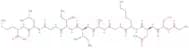
CAS:<p>Please enquire for more information about (Nle 8·18,Tyr34)-pTH (7-34) amide (bovine) including the price, delivery time and more detailed product information at the technical inquiry form on this page</p>Formula:C158H248N48O49Purity:Min. 95%Molecular weight:3,603.95 g/molSorbin (147-153) amide (porcine) trifluoroacetate salt
CAS:<p>Please enquire for more information about Sorbin (147-153) amide (porcine) trifluoroacetate salt including the price, delivery time and more detailed product information at the technical inquiry form on this page</p>Formula:C33H58N10O9Purity:Min. 95%Molecular weight:738.88 g/molGlycinamide hydrochloride
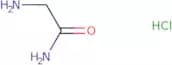
CAS:<p>Glycinamide hydrochloride is an inhibitor that binds to the glycine-binding site of the protein synthetase and inhibits the formation of glycinamide ribonucleotide. It has been shown to inhibit human glycinamide ribonucleotide synthetase in vitro. Glycinamide hydrochloride is also a glycinamide amide, which was synthesized by linking two molecules of glycine with an amide bond. This molecule is cross-linked with a macrogel, forming a hydrogel. The hydrogel can be used in biomedical applications, such as tissue engineering and drug delivery systems.</p>Formula:C2H7ClN2OColor and Shape:White PowderMolecular weight:110.54 g/molNazumamide A
CAS:<p>Nazumamide A is a cyclic peptide with inhibitory activity against serine proteases. It binds to the active site of thrombin and inhibits its action, thereby inhibiting the fibrinogen degradation in blood. Nazumamide A is also found to have neuroprotective properties, which may be due to its ability to inhibit nitric oxide production by binding to the enzyme nitric oxide synthase. It has been shown to have anti-inflammatory activities and can be used for the treatment of inflammation-associated diseases such as asthma and arthritis. Nazumamide A is a nonribosomal peptide that does not require any cofactors for synthesis.</p>Formula:C28H43N7O8Purity:Min. 95%Molecular weight:605.68 g/molAmyloid β-Protein (25-35) amide trifluoroacetate salt
CAS:<p>Please enquire for more information about Amyloid beta-Protein (25-35) amide trifluoroacetate salt including the price, delivery time and more detailed product information at the technical inquiry form on this page</p>Formula:C45H82N14O13SPurity:Min. 95%Molecular weight:1,059.29 g/molGRF (1-29) amide (rat)
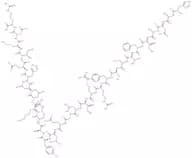
CAS:<p>Growth hormone-releasing factor (GRF) is a peptide fragment of amino acids 1–2 from GHRH (growth hormone-releasing hormone). This 1-29 region is the shortest fully functional fragment of GHRH. GRF is also known as sermorelin. Sermorelin binds to the growth hormone-releasing hormone receptor (GHRH-R), and acts as a surrogate for GHRH, causing growth hormone secretion.human: H-YADAIFTNSYRKVLGQLSARKLLQDIMSR-NH2rat: H-HADAIFTSSYRR I LGQLYARKLLHEIMNR-NH2</p>Formula:C155H251N49O40SPurity:Min. 95%Molecular weight:3,473.02 g/molGastric Inhibitory Polypeptide (6-30) amide (human) trifluoroacetate salt
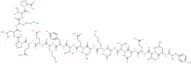
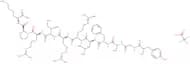
CAS:<p>Please enquire for more information about Gastric Inhibitory Polypeptide (6-30) amide (human) trifluoroacetate salt including the price, delivery time and more detailed product information at the technical inquiry form on this page</p>Formula:C139H209N35O38SPurity:Min. 95%Molecular weight:3,010.43 g/molN-Benzoyl-L-leucine-β-naphthylamide
CAS:<p>N-Benzoyl-L-leucine-beta-naphthylamide is a chromogenic substrate for transpeptidase. It is hydrolyzed to L-phenylalanine and 2-naphthylamine, which react with the chromogen to produce a color change. The reaction occurs in both spermatozoa and epithelial cells, but can be inhibited by aminopeptidase and peptidase. This substrate is used as a marker for spermatozoa in semen analysis.</p>Formula:C23H24N2O2Purity:Min. 95%Color and Shape:PowderMolecular weight:360.45 g/molpTH-Related Protein (67-86) amide (human, bovine, dog, mouse, ovine, rat) trifluoroacetate salt
CAS:<p>Please enquire for more information about pTH-Related Protein (67-86) amide (human, bovine, dog, mouse, ovine, rat) trifluoroacetate salt including the price, delivery time and more detailed product information at the technical inquiry form on this page</p>Formula:C108H173N27O35Purity:Min. 95%Molecular weight:2,409.69 g/molFITC-epsilonAhx-Antennapedia Homeobox (43-58) amide trifluoroacetate salt
CAS:<p>Please enquire for more information about FITC-epsilonAhx-Antennapedia Homeobox (43-58) amide trifluoroacetate salt including the price, delivery time and more detailed product information at the technical inquiry form on this page</p>Formula:C131H191N37O25S2Purity:Min. 95%Molecular weight:2,748.28 g/mol(D-Ala3)-Dynorphin A (1-11) amide trifluoroacetate salt
CAS:<p>Please enquire for more information about (D-Ala3)-Dynorphin A (1-11) amide trifluoroacetate salt including the price, delivery time and more detailed product information at the technical inquiry form on this page</p>Formula:C64H106N22O12Purity:Min. 95%Molecular weight:1,375.67 g/molSyndyphalin SD-33
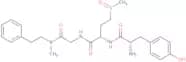
CAS:<p>Please enquire for more information about Syndyphalin SD-33 including the price, delivery time and more detailed product information at the technical inquiry form on this page</p>Formula:C25H34N4O5SPurity:Min. 95%Molecular weight:502.63 g/mol2-Aminoethanesulphonamide monohydrochloride
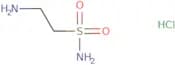
CAS:<p>2-Aminoethanesulphonamide monohydrochloride is a perovskite with a hexagonal shape. It has been shown to interact with the pharmacophore of the enzyme cytochrome P450, and it has been optimized for the reaction by altering its structure. This product is soluble in gaseous form, but can also be used as a solid. 2-Aminoethanesulphonamide monohydrochloride has an absorption maximum at 325 nm and emits fluorescence at 420 nm. It is used in devices that detect ionizing radiation.</p>Formula:C2H8N2O2S•HClPurity:Min. 95%Color and Shape:PowderMolecular weight:160.62 g/molPAR-3 (1-6) amide (human) trifluoroacetate salt
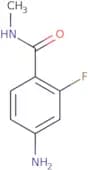
<p>Please enquire for more information about PAR-3 (1-6) amide (human) trifluoroacetate salt including the price, delivery time and more detailed product information at the technical inquiry form on this page</p>Formula:C29H46N10O7Purity:Min. 95%Molecular weight:646.74 g/molN-Methyl-2-fluoro-4-aminobenzamide
CAS:<p>N-Methyl-2-fluoro-4-aminobenzamide is a toxic compound that is commonly used as a reagent in chemical synthesis and research. It has been studied for its potential use in medicine, particularly in the treatment of castration-resistant prostate cancer. N-Methyl-2-fluoro-4-aminobenzamide acts as a nucleophilic agent, participating in reactions that involve the addition of an acyl group to a target molecule. Its stable formyl group allows for efficient reaction yields and reliable results. However, due to its toxic nature, caution must be exercised when handling this compound.</p>Formula:C8H9FN2OPurity:Min. 95%Molecular weight:168.17 g/molTRAP-5 amide trifluoroacetate salt
CAS:<p>Please enquire for more information about TRAP-5 amide trifluoroacetate salt including the price, delivery time and more detailed product information at the technical inquiry form on this page</p>Formula:C30H51N9O6Purity:Min. 95%Molecular weight:633.78 g/molN,N-Dimethylformamide dibenzyl acetal
CAS:<p>N,N-Dimethylformamide dibenzyl acetal is an organic solvent that has a low volatility and high solubility in water. It is used as a cosolvent for reactions involving carboxylic acids, formamides, and epoxides. N,N-Dimethylformamide dibenzyl acetal can be used to produce peroxide as a reagent for oxidation reactions. Hydrogen peroxide can be produced from this compound by treatment with thionyl chloride or alkanoic acid. This chemical is also derivatized by the mesoporous method to provide mesoporous silica nanoparticles with enhanced surface area.</p>Purity:Min. 95%Leu-Enkephalin amide acetate salt
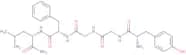
CAS:<p>Leu-Enkephalin amide acetate salt H-Tyr-Gly-Gly-Phe-Leu-NH2 acetate salt is a peptide that is used as an analgesic and antipyretic drug. It is a synthetic form of endogenous enkephalins, which are natural pain relievers. The chemical stability of Leu-Enkephalin amide acetate salt H-Tyr-Gly-Gly-Phe-Leu-NH2 acetate salt makes it an effective drug for chronic use, and it has been shown to have a low side effect profile. This compound also has been shown to block the synthesis of histamine in vivo, but its bioavailability in vivo is not high due to its rapid degradation by proteases.</p>Formula:C28H38N6O6Purity:Min. 95%Color and Shape:PowderMolecular weight:554.64 g/mol(2S)-β-Alanyl-L-prolyl-2,4-diamino-N-(phenylmethyl)butanamideacetate
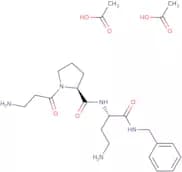
CAS:Controlled Product<p>(2S)-beta-Alanyl-L-prolyl-2,4-diamino-N-(phenylmethyl)butanamideacetate (BAP) is a skin care product that can be applied topically to the skin. BAP is an amino acid derivative that has been shown in clinical studies to hydrate the skin. It acts as a humectant and binds to water molecules, thus increasing the moisture content of the skin. This product also has antioxidant and anti-inflammatory properties, as well as anti-aging effects. BAP is often used in cosmetic products for its film forming properties and ability to form polymeric films on the surface of cells.</p>Formula:C21H33N5O5Purity:Min. 95%Molecular weight:435.52 g/mol