Amides
Amides are a wide range of chemical compounds that contain at least one heterocyclic ring, which has atoms of at least two different elements in the ring structure, and at least one amide group (-CONH2). These compounds are crucial in the synthesis of pharmaceuticals, polymers, and agrochemicals. Amides exhibit unique properties and reactivity, making them valuable intermediates in organic synthesis. At CymitQuimica, we offer a comprehensive selection of high-quality amides to support your research and industrial needs.
Found 16399 products of "Amides"
Sort by
Purity (%)
0
100
|
0
|
50
|
90
|
95
|
100
Antho-RPamide III·HCl Pyr-Val-Lys-Leu-Tyr-Arg-Pro-NH2·HCl
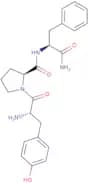
CAS:<p>Please enquire for more information about Antho-RPamide III·HCl Pyr-Val-Lys-Leu-Tyr-Arg-Pro-NH2·HCl including the price, delivery time and more detailed product information at the technical inquiry form on this page</p>Formula:C42H68N12O9·HClPurity:Min. 95%Molecular weight:921.53 g/mol(Phe4)-Dermorphin (1-4) amide
CAS:<p>Dermorphin is a peptide that is derived from the proenkephalin gene. It is an opioid analgesic and has been shown to be effective in the treatment of hernias. Dermorphin has also been shown to inhibit platelet aggregation and blood coagulation, making it an antithrombotic therapy. The structure of dermorphin has been determined using a hydroxy group as the reactive site for synthesis and molecular modelling techniques. Dermorphin has also been shown to have an active oxygen species selectivity index (a measure of antioxidant activity) higher than those of other drugs in its class, which makes it suitable for use as a sealant in abdominal surgery.</p>Formula:C30H35N5O5Purity:Min. 95%Molecular weight:545.63 g/molAcetyl-(Cys(Acm)33·42)-EGF (33-42) amide (mouse)
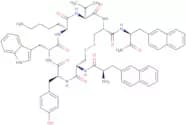
CAS:<p>Please enquire for more information about Acetyl-(Cys(Acm)33·42)-EGF (33-42) amide (mouse) including the price, delivery time and more detailed product information at the technical inquiry form on this page</p>Formula:C51H82N16O17S2Purity:Min. 95%Molecular weight:1,255.43 g/mol(D-2-Nal 5,Cys6·11,Tyr7,D-Trp8,Val10, 2-Nal 12)-Somatostatin-14 (5-12) amide trifluoroacetate salt
CAS:<p>Please enquire for more information about (D-2-Nal 5,Cys6·11,Tyr7,D-Trp8,Val10, 2-Nal 12)-Somatostatin-14 (5-12) amide trifluoroacetate salt including the price, delivery time and more detailed product information at the technical inquiry form on this page</p>Formula:C63H73N11O9S2Purity:Min. 95%Molecular weight:1,192.45 g/molβ-Casomorphin (1-3) amide acetate salt
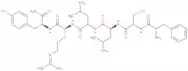
CAS:<p>Beta-casomorphin (1-3) amide acetate salt (BCMA) is a peptide that belongs to the class of opioid compounds. It is an amino acid and has been shown to be a potent agonist at opioid receptors. BCMA is used in vivo as a tritiated ligand for mapping the distribution of opioid receptors in rat brain. The affinity of BCMA for opioid receptors increases with dose, and its antinociceptive effects are dose-dependent. Beta-casomorphin (1-3) amide acetate salt has also been shown to have affinity for enkephalins, which are naturally occurring peptides that bind to opioid receptors.</p>Formula:C23H28N4O4Purity:Min. 95%Molecular weight:424.49 g/mol(Phe1,Ser2,Tyr6)-PAR-1 (1-6) amide (human) trifluoroacetate salt
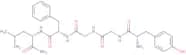
CAS:<p>Please enquire for more information about (Phe1,Ser2,Tyr6)-PAR-1 (1-6) amide (human) trifluoroacetate salt including the price, delivery time and more detailed product information at the technical inquiry form on this page</p>Formula:C39H60N10O8Purity:Min. 95%Molecular weight:796.96 g/molLeu-Enkephalin amide acetate salt
CAS:<p>Leu-Enkephalin amide acetate salt H-Tyr-Gly-Gly-Phe-Leu-NH2 acetate salt is a peptide that is used as an analgesic and antipyretic drug. It is a synthetic form of endogenous enkephalins, which are natural pain relievers. The chemical stability of Leu-Enkephalin amide acetate salt H-Tyr-Gly-Gly-Phe-Leu-NH2 acetate salt makes it an effective drug for chronic use, and it has been shown to have a low side effect profile. This compound also has been shown to block the synthesis of histamine in vivo, but its bioavailability in vivo is not high due to its rapid degradation by proteases.</p>Formula:C28H38N6O6Purity:Min. 95%Color and Shape:PowderMolecular weight:554.64 g/molC18-Ceramide
CAS:<p>Inducer of apoptosis; down-regulated in tumors</p>Formula:C36H71NO3Purity:Min. 95%Color and Shape:White/Off-White SolidMolecular weight:565.95 g/molGalanin Message Associated Peptide (16-41) amide
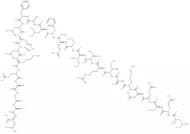
CAS:<p>Please enquire for more information about Galanin Message Associated Peptide (16-41) amide including the price, delivery time and more detailed product information at the technical inquiry form on this page</p>Formula:C134H219N35O37SPurity:Min. 95%Molecular weight:2,944.45 g/mol2,2-Dimethylpropionamide
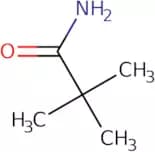
CAS:<p>2,2-Dimethylpropionamide is a synthetic chemical that has been shown to have cytotoxic and biochemical properties. It has been tested on leukemia cells (K562) and has been shown to inhibit the bcr-abl kinase. 2,2-Dimethylpropionamide has also been shown to inhibit the production of amide radicals in human serum under constant pressure. The structure of this compound was solved using X-ray diffraction data.</p>Formula:C5H11NOPurity:Min. 95%Molecular weight:101.15 g/molBis(N,N-dimethylacetamide) hydrogen dibromobromate
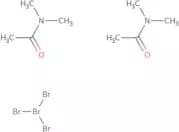
CAS:<p>Bis(N,N-dimethylacetamide) hydrogen dibromobromate (DMBB) is a chemical with a variety of uses in research and industrial chemistry. It is an intermediate for the synthesis of other chemicals and can be used as a reagent in organic synthesis. DMBB is also known to be useful as a building block for the synthesis of complex compounds. The CAS number for DMBB is 75381-80-5.</p>Formula:C4H9NO·HBr4Purity:Min. 95%Color and Shape:PowderMolecular weight:494.86 g/molpTH (1-34) amide (human) trifluoroacetate salt
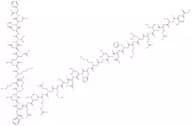
CAS:<p>Parathyroid hormone (PTH) is a peptide hormone that regulates calcium and phosphate balance in the body. PTH is secreted by the parathyroid glands, located near the thyroid gland in the neck. It is also known as parathormone or parathyrin. The active form of PTH, called pTH (1-34) amide, has been shown to stimulate bone resorption and to inhibit bone formation. The amino acid sequence of this hormone starts with arginine and ends with phenylalanine. The N-terminal amino acid residue is an aspartic acid or asparagine and histidine is the only basic residue in this molecule. This molecule has two acidic residues, glutamic acid and aspartic acid, which are found on the side chains of two amino acids: aspartic acid and glutamic acid. Valine is found at position 3 and phenylalanine at position 34.</p>Formula:C181H292N56O50S2Purity:Min. 95%Molecular weight:4,116.73 g/mol(2R)-2-Aminopropanamide
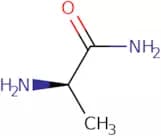
CAS:<p>(2R)-2-Aminopropanamide is a chemical compound that is classified as an amide. It has been shown to inhibit bacterial growth and induce apoptosis in mammalian cells, but not in bacteria. This drug has a number of hydrogen bonding interactions with the carbonyl group and amide functional groups and can bind to affinity ligands with hydrogen bonding interactions. (2R)-2-Aminopropanamide inhibits the activity of enzymes that are involved in the synthesis of d-alanine, which is a precursor for protein synthesis. It also inhibits the enzyme glutamine synthase, which plays a key role in building up nitrogen reserves in bacteria. The drug binds to DNA by forming hydrogen bonds with the phosphate backbone and intercalates into double-stranded DNA by forming van der Waals interactions with base pairs.</p>Formula:C3H8N2OPurity:Min. 95%Molecular weight:88.11 g/molAntho-RFamide Pyr-Gly-Arg-Phe-NH2
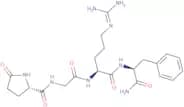
CAS:<p>Antho-RFamide Pyr-Gly-Arg-Phe-NH2 is an acidic amino acid. It has been shown to be a precursor of dopamine β-hydroxylase, which is a key enzyme in the synthesis of epinephrine and norepinephrine. This compound has a diameter of 0.8 nm, and it's been observed in cnidarians and multicellular animals. The biological function of Antho-RFamide Pyr-Gly-Arg-Phe-NH2 is not yet known, but it has been sequenced and identified as fatty acid with a sequence that is identical to serotonin. Analysis shows that this molecule contains an acidic environment with an alkaline pH.</p>Formula:C22H32N8O5Purity:Min. 95%Molecular weight:488.54 g/molNociceptin (1-13) amide trifluoroacetate salt
CAS:<p>Please enquire for more information about Nociceptin (1-13) amide trifluoroacetate salt including the price, delivery time and more detailed product information at the technical inquiry form on this page</p>Formula:C61H100N22O15Purity:Min. 95%Molecular weight:1,381.59 g/molN-Benzoyl-L-leucine-β-naphthylamide
CAS:<p>N-Benzoyl-L-leucine-beta-naphthylamide is a chromogenic substrate for transpeptidase. It is hydrolyzed to L-phenylalanine and 2-naphthylamine, which react with the chromogen to produce a color change. The reaction occurs in both spermatozoa and epithelial cells, but can be inhibited by aminopeptidase and peptidase. This substrate is used as a marker for spermatozoa in semen analysis.</p>Formula:C23H24N2O2Purity:Min. 95%Color and Shape:PowderMolecular weight:360.45 g/mol4-Chloro-7-methoxyquinoline-6-carboxamide
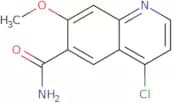
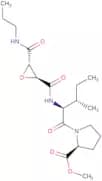
CAS:<p>Intermediate in the synthesis of lenvatinib</p>Formula:C11H9ClN2O2Purity:Min. 95%Molecular weight:236.65 g/molL-trans-Epoxysuccinyl-Ile-Pro-OMe propylamide
CAS:<p>L-trans-Epoxysuccinyl-Ile-Pro-OMe propylamide is a pharmacological agent that inhibits the toll-like receptor 4 signaling pathway. L-trans-Epoxysuccinyl-Ile-Pro-OMe propylamide has been shown to cause caspase independent cell death by inducing cathepsin and iron homeostasis. The drug also causes polymerase chain reaction inhibition and neuronal death in vivo.</p>Formula:C19H31N3O6Purity:Min. 95%Molecular weight:397.47 g/molClopamide
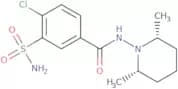
CAS:<p>Clopamide is a diuretic drug that belongs to the group of protein genes. It is used in the treatment of chronic heart failure, low-density lipoprotein cholesterol and infectious diseases. Clopamide has been shown to increase the glomerular filtration rate by inhibiting the sodium citrate enzyme, which is involved in the formation of urine from blood plasma. This drug also reduces blood pressure by blocking angiotensin II receptors on vascular smooth muscle cells. Clopamide does not have any significant interactions with other drugs, although caution should be exercised when using it with cardiac drugs due to its effects on blood pressure.</p>Formula:C14H20ClN3O3SPurity:Min. 98 Area-%Color and Shape:White PowderMolecular weight:345.85 g/molFmoc-rink amide resin
CAS:<p>Fmoc-rink amide resin is a synthetic, radionuclide, and constant polymer. It is used in chemical ligation to produce peptides from amines and growth factors. Fmoc-rink amide resin also has antimicrobial properties due to its ability to inhibit the growth of bacteria and fungi by binding to their cell membranes. This polymer can be conjugated with growth factor or antimicrobial peptides for use as a therapeutic agent or used in the production of antibodies against a particular protein. Fmoc-rink amide resin has been shown to increase epidermal growth factor (EGF) uptake into cells by targeting EGF receptors on the cell surface.</p>Purity:Min. 95%