Carboxylic Acids
Carboxylic acids are organic molecules characterized by having a carboxyl-type functional group (-COOH). These acids are fundamental in various chemical reactions, including esterification, amidation, and decarboxylation. Carboxylic acids are widely used in the production of pharmaceuticals, polymers, and agrochemicals. In this section, you can find a large number of carboxylic acids ready to be used. At CymitQuimica, we provide a broad range of high-quality carboxylic acids to support your research and industrial applications.
Found 12453 products of "Carboxylic Acids"
Sort by
Purity (%)
0
100
|
0
|
50
|
90
|
95
|
100
Glycodeoxycholic Acid monohydrate
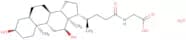
CAS:Controlled Product<p>Glycodeoxycholic acid is a bile acid that has been shown to inhibit bacterial translocation. It is used as an adjuvant therapy in the treatment of primary sclerosing cholangitis and other inflammatory conditions of the liver, such as pancreatitis, and it has also been studied for its effects on iron homeostasis. Glycodeoxycholic acid is produced by the human body and can be found in the serum. The biosynthesis of glycodeoxycholic acid is dependent on microbial metabolism, which may be inhibited by nonsteroidal anti-inflammatory drugs. This compound has been shown to inhibit cell signaling pathways and increase sodium ion uptake into cells through inhibition of sodium-potassium ATPase activity.</p>Purity:Min. 95%1-(4-Methoxyphenyl)-3-phenyl-1H-pyrazole-5-carboxylic acid
CAS:Controlled Product<p>Please enquire for more information about 1-(4-Methoxyphenyl)-3-phenyl-1H-pyrazole-5-carboxylic acid including the price, delivery time and more detailed product information at the technical inquiry form on this page</p>Formula:C17H14N2O3Purity:Min. 95%Color and Shape:PowderMolecular weight:294.3 g/mol2-(Chloromethyl)benzoic acid
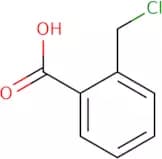
CAS:<p>2-(Chloromethyl)benzoic acid (CMBA) is a reactive chemical that can be used as an oxidant or a carbanion. CMBA is activated by sulfinyl, alicyclic, and sulfoxides, which are organic compounds with one or more sulfur atoms. These reactions may be either alkylation or condensation reactions. The activated CMBA can then react with chlorine to form chlorinated products. This reaction can be catalyzed by low energy sources, such as light or heat.</p>Formula:C8H7ClO2Purity:Min. 95%Color and Shape:PowderMolecular weight:170.59 g/mol3-(Fluorosulphonyl)Benzoic Acid
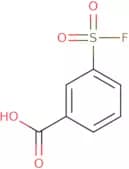
CAS:<p>3-(Fluorosulphonyl)benzoic acid is a potent anti-cancer drug that belongs to the class of natural products. It has been shown to exhibit anti-cancer activity against carcinoma cell lines. 3-(Fluorosulphonyl)benzoic acid inhibits DNA replication, RNA synthesis and protein synthesis by binding to the ribosome. This compound may also have chemopreventive effects on colorectal cancer through its ability to induce apoptosis in cancer cells. 3-(Fluorosulphonyl)benzoic acid is an analog of the natural product alkaloid cytisine, which is found in tobacco plants and has been used for centuries as a smoking cessation aid.</p>Formula:C7H5FO4SPurity:Min. 95%Molecular weight:204.18 g/mol2,5-Diphenyl-2H-pyrazole-3-carboxylic acid
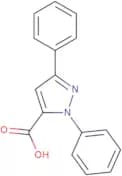
CAS:Controlled Product<p>Please enquire for more information about 2,5-Diphenyl-2H-pyrazole-3-carboxylic acid including the price, delivery time and more detailed product information at the technical inquiry form on this page</p>Formula:C16H12N2O2Purity:Min. 95%Molecular weight:264.28 g/molEthyl 5-chloro-1,3-dimethyl-1H-indole-2-carboxylate
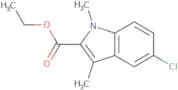
CAS:Controlled Product<p>Please enquire for more information about Ethyl 5-chloro-1,3-dimethyl-1H-indole-2-carboxylate including the price, delivery time and more detailed product information at the technical inquiry form on this page</p>Formula:C13H14ClNO2Purity:Min. 95%Molecular weight:251.71 g/molMesitylboronic acid
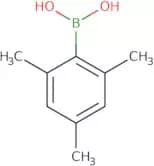
CAS:<p>Mesitylboronic acid is a divalent organoboron compound with the molecular formula CHB(O)OH. It is a white solid that is soluble in organic solvents, but not water. Mesitylboronic acid has been used for the palladium-catalyzed cross-coupling of aryl halides and vinylogous esters, yielding substituted pyridines. Mesitylboronic acid also catalyzes the Suzuki coupling reaction of aryl boronic acids and alkenes, producing substituted indoles. This compound has diagnostic applications due to its ability to form a fluorescent complex with certain metal ions. It also plays an important role in insulin resistance due to its ability to form cross-couplings with unsymmetrical boron compounds.</p>Formula:C9H13BO2Purity:Min. 95%Molecular weight:164.01 g/mol1,2,3,4-Tetrahydro-1-naphthoic acid
CAS:<p>Tetrahydro-1-naphthoic acid is a toxic chemical that is used in the synthesis of various organic compounds. It is an organic acid that has a pungent odor and can cause irritation of the nose and throat. When heated, it evolves toxic fumes of hydrogen chloride gas and phosgene. Tetrahydro-1-naphthoic acid reacts with metal hydroxides to form metal tetrahydro-1-naphthoates, which have useful properties as catalysts in organic reactions. Tetrahydro-1-naphthoic acid has been used as a growth regulator in plants and animals. It binds to DNA at the C–H site, preventing protein synthesis and cell division by inhibiting RNA synthesis.</p>Formula:C11H12O2Purity:Min. 95%Molecular weight:176.21 g/moltert-butyl (2S)-2-Methyl-4-oxopiperidine-1-carboxylate
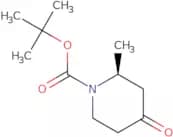
CAS:<p>Please enquire for more information about tert-butyl (2S)-2-Methyl-4-oxopiperidine-1-carboxylate including the price, delivery time and more detailed product information at the technical inquiry form on this page</p>Formula:C11H19NO3Purity:Min. 95%Molecular weight:213.27 g/mol4-{[1-(tert-Butoxycarbonyl)azetidin-3-yl]oxy}benzoic acid
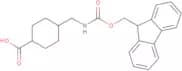
CAS:<p>Please enquire for more information about 4-{[1-(tert-Butoxycarbonyl)azetidin-3-yl]oxy}benzoic acid including the price, delivery time and more detailed product information at the technical inquiry form on this page</p>Formula:C15H19NO5Purity:Min. 95%Molecular weight:293.32 g/molFmoc-trans-4-(aminomethyl)cyclohexane-1-carboxylic acid
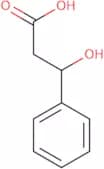
CAS:<p>Fmoc-trans-4-(aminomethyl)cyclohexane-1-carboxylic acid is a synthetic amino acid that has been shown in vitro to inhibit the growth of prostate cancer cells. It is an analog of butyric acid, a naturally occurring fatty acid. Fmoc-trans-4-(aminomethyl)cyclohexane-1-carboxylic acid has been synthesized by solid phase methods and labeled with radiotracers such as indium 111 or technetium 99m. The use of Fmoc-trans-4-(aminomethyl)cyclohexane-1-carboxylic acid in vivo is limited by its short circulating half life, rapid metabolism, and high toxicity.</p>Formula:C23H25NO4Purity:Min. 95%Color and Shape:White SolidMolecular weight:379.45 g/mol3-Hydroxy-3-phenylpropanoic acid
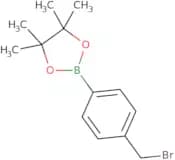
CAS:<p>3-Hydroxy-3-phenylpropanoic acid, or 3HPPA, is an intermediate in the synthesis of salicylic acid. It is also an endogenous metabolite found in urine samples and is a product of the metabolism of glucosinolates by hydrolysis. The hydroxyl group on 3HPPA reacts with a carbonyl group to form a Schiff base, which is then hydrolyzed by hydrochloric acid to form hippuric acid. The biosynthesis of 3HPPA occurs through the oxidation of fatty acids with the addition of a hydroxyl group from water.</p>Formula:C9H10O3Purity:Min. 95%Color and Shape:PowderMolecular weight:166.17 g/mol4-(Bromomethyl)benzeneboronic acid pinacol ester
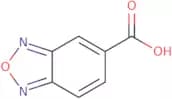
CAS:<p>4-(Bromomethyl)benzeneboronic acid pinacol ester (BBBA) is a hypochlorous acid derivative with a structural formula of C6H5BrOCH2. It is used as a fluorophore and has been shown to have anticancer activity. 4-Bromomethylbenzeneboronic acid pinacol ester reacts with hydrophobic molecules in the cell membrane, leading to disruption of the membrane and ultimately cell death. This compound can be used as an active oxygen source in biological assays, such as functional assays, because it generates reactive oxygen species and can act as a fluorescence probe for detection of biological samples.</p>Formula:C13H18BBrO2Purity:Min. 95 Area-%Color and Shape:White PowderMolecular weight:297 g/mol2,1,3-Benzoxadiazole-5-carboxylic acid
CAS:<p>2,1,3-Benzoxadiazole-5-carboxylic acid is a functional theory that is an agonist of the opioid receptors. It is also a quaternary ammonium salt that has been shown to cause respiratory depression and death in mice. This drug is used as an anion in pentobarbital sodium, which has been linked to overdoses. 2,1,3-Benzoxadiazole-5-carboxylic acid can be activated by membrane proteins and other agents to increase its energy efficiency. It can also enhance the effect of molecules such as coulombic forces and depression.</p>Formula:C7H4N2O3Purity:Min. 95%Molecular weight:164.12 g/molValeric acid hydrazide
CAS:<p>Valeric acid hydrazide (VAH) is a monoclonal antibody that binds to the receptor molecule. The binding of VAH to the receptor molecule leads to a change in the reaction mechanism and prevents the initiation of an immune response. This drug has been shown to have therapeutic properties in a number of autoimmune diseases, such as rheumatoid arthritis and multiple sclerosis, by blocking the production of TNF-α and other inflammatory cytokines. Valeric acid hydrazide also shows biological properties against cancerous cells. It inhibits the growth factor activity, which is believed to be responsible for tumor formation and growth. This agent may also inhibit angiogenesis by preventing endothelial cell proliferation and migration.</p>Formula:C5H12N2OPurity:Min. 95%Molecular weight:116.16 g/mol4-Piperazinylphenylboronic acid, pinacol ester
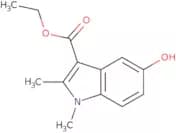
CAS:<p>Please enquire for more information about 4-Piperazinylphenylboronic acid, pinacol ester including the price, delivery time and more detailed product information at the technical inquiry form on this page</p>Formula:C16H25BN2O2Purity:Min. 95%Color and Shape:PowderMolecular weight:288.19 g/molEthyl 1,2-dimethyl-5-hydroxyindole-3-carboxylate
CAS:Controlled Product<p>Ethyl 1,2-dimethyl-5-hydroxyindole-3-carboxylate (EDMC) is an implantable drug that is used to treat hypertension. It is a diuretic that can be taken orally or injected. EDMC works by reducing the amount of urea nitrogen in the blood and increasing the amount of chlorine atom in the urine. This leads to an increase in active substances such as malonic acid and a decrease in arthropoda. EDMC has been shown to have antihypertensive activity due to its ability to lower diastolic and systolic pressure. The molecule also contains hydroxyl group and aldehyde groups that are analyzed by analytical chemistry.</p>Formula:C13H15NO3Purity:Min. 95%Molecular weight:233.26 g/mol5-[(3,5-Dimethyl-1H-pyrazol-1-yl)methyl]-2-furoic acid
CAS:<p>Please enquire for more information about 5-[(3,5-Dimethyl-1H-pyrazol-1-yl)methyl]-2-furoic acid including the price, delivery time and more detailed product information at the technical inquiry form on this page</p>Formula:C11H12N2O3Purity:Min. 95%Molecular weight:220.22 g/mol3-Amino-5-methoxybenzoic acid
CAS:<p>3-Amino-5-methoxybenzoic acid is a macrocyclist, which means that it can switch between two different forms. When the temperature is below 27 degrees Celsius, it exists as a mesomorphic phase and when the temperature increases above 27 degrees Celsius, it exists as an isotropic phase. 3-Amino-5-methoxybenzoic acid also has homologues that are also mesomorphic or isotropic depending on their temperatures. The chemoenzymatic parameters of the two phases are different and so are their lamellar morphologies. The fluorine atom in 3-amino-5-methoxybenzoic acid makes it act like a Lewis acid, decreasing its melting point and increasing its vapor pressure. There are two isomers of 3-amino-5-methoxybenzoic acid: dodecyl and octadecyl 3--amino--5--methoxyben</p>Formula:C8H9NO3Purity:Min. 95%Color and Shape:White To Yellow To Light Brown SolidMolecular weight:167.16 g/molAtrial natriuretic factor (1-28) (human) acetate
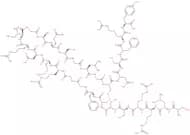
CAS:<p>Please enquire for more information about Atrial natriuretic factor (1-28) (human) acetate including the price, delivery time and more detailed product information at the technical inquiry form on this page</p>Formula:C127H203N45O39S3•C2H4O2Purity:Min. 95%Color and Shape:PowderMolecular weight:3,140.5 g/mol



![4-{[1-(tert-Butoxycarbonyl)azetidin-3-yl]oxy}benzoic acid](/_next/image/?url=https%3A%2Fstatic.cymitquimica.com%2Fproducts%2F3D%2Fthumb-webp%2FFB125449.webp&w=3840&q=75)


![5-[(3,5-Dimethyl-1H-pyrazol-1-yl)methyl]-2-furoic acid](/_next/image/?url=https%3A%2Fstatic.cymitquimica.com%2Fproducts%2F3D%2Fthumb-webp%2FFD115286.webp&w=3840&q=75)