Carboxylic Acids
Carboxylic acids are organic molecules characterized by having a carboxyl-type functional group (-COOH). These acids are fundamental in various chemical reactions, including esterification, amidation, and decarboxylation. Carboxylic acids are widely used in the production of pharmaceuticals, polymers, and agrochemicals. In this section, you can find a large number of carboxylic acids ready to be used. At CymitQuimica, we provide a broad range of high-quality carboxylic acids to support your research and industrial applications.
Found 12453 products of "Carboxylic Acids"
Sort by
Purity (%)
0
100
|
0
|
50
|
90
|
95
|
100
Indole-3-acetyl-L-glutamic acid
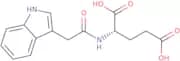
CAS:<p>Indole-3-acetyl-L-glutamic acid is an endogenous substance that is found in plants. It is the conjugated form of indole-3-acetaldehyde and L-glutamic acid. Indole-3-acetylglutamic acid has shown to have antioxidant potential and can be used to regulate plant growth, as well as protect against environmental stresses. Indole-3-acetylglutamic acid also has a role in regulating the production of other hormones, such as ethylene and auxin, which are involved in plant growth regulation.</p>Formula:C15H16N2O5Purity:Min. 98 Area-%Color and Shape:PowderMolecular weight:304.3 g/molEthyl 2-(2-Amino-4-thiazolyl)-2-(hydroxyimino)acetate
CAS:<p>Ethyl 2-(2-amino-4-thiazolyl)-2-(hydroxyimino)acetate is a phosphomolybdate antibiotic that is used in the treatment of respiratory tract infections. It binds to the bacterial enzyme, phosphomolybdate oxidase, and inhibits the formation of acid in the body. The reaction solution is recycled and activated with an acid catalyst to increase the yield of acetonitrile. The ion-pair formed by ethyl 2-(2-amino-4-thiazolyl)-2-(hydroxyimino)acetate and sodium carbonate is nucleophilic and reacts with nitrous to produce acetonitrile as a side product.</p>Formula:C7H9N3O3SPurity:Min. 95%Molecular weight:215.23 g/molL-a-Aminosuberic acid
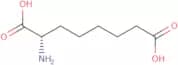
CAS:<p>L-a-aminosuberic acid is a synthetic amino acid that has been used as an analog of L-cysteine. It can be used to induce tumor cell death by inhibiting the uptake of fatty acids in prostate cancer cells. L-a-aminosuberic acid is also able to inhibit the expression of proteins that are involved in prostate cancer, such as monoclonal antibodies and sequences. This compound may be a potential biomarker for the diagnosis of prostate cancer. The low expression levels may be due to the lack of disulfide bond formation, which is necessary for protein activity.</p>Formula:C8H15NO4Purity:Min. 95%Molecular weight:189.21 g/molDiethyl 1-[2-(1H-indol-3-yl)ethyl]-2,5-dimethyl-1H-pyrrole-3,4-dicarboxylate
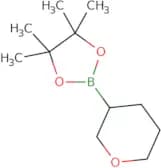
CAS:Controlled Product<p>Please enquire for more information about Diethyl 1-[2-(1H-indol-3-yl)ethyl]-2,5-dimethyl-1H-pyrrole-3,4-dicarboxylate including the price, delivery time and more detailed product information at the technical inquiry form on this page</p>Formula:C22H26N2O4Purity:Min. 95%Molecular weight:382.45 g/molTetrahydropyran-3-boronic acid pinacol ester
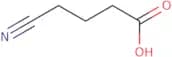
CAS:<p>Please enquire for more information about Tetrahydropyran-3-boronic acid pinacol ester including the price, delivery time and more detailed product information at the technical inquiry form on this page</p>Formula:C11H21BO3Purity:Min. 95%Molecular weight:212.09 g/mol4-Cyanobutanoic acid
CAS:<p>4-Cyanobutanoic acid is a colorless organic solvent that is not soluble in water or polar organic solvents. It can be used for the immobilization of proteins, as well as for the desymmetrization and chlorination of aromatic compounds. One of its most common uses is in biocatalysis, where it acts as a substrate binding agent to help catalyze reactions. 4-Cyanobutanoic acid has also been shown to inhibit the growth of bacteria by acting as an electron acceptor during metabolism. This compound can be degraded through hydrolysis with hydrochloric acid or biodegradation.</p>Formula:C5H7NO2Purity:Min. 95%Color and Shape:PowderMolecular weight:113.11 g/molγ-Aminobutyric acid
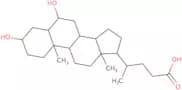
CAS:<p>Gamma-aminobutyric acid (GABA) is a neurotransmitter that inhibits the transmission of nerve impulses in the brain. GABA binds to specific receptors and blocks voltage-dependent calcium channels, which are ion channels that allow the passage of calcium ions into cells. GABA also has a number of other functions, including biochemical properties, its role in brain function and drug interactions. The GABA receptor is found on neurons and is subject to modulation by drugs that interact with GABA receptors. In addition, GABA can react with water vapor to produce hydrogen bonding interactions. This reaction is used in electrochemical impedance spectroscopy as an analytical tool for determining the concentration of free water in a sample.</p>Formula:C4H9NO2Purity:Min. 98.0%Color and Shape:White PowderMolecular weight:103.12 g/molMurideoxycholic acid
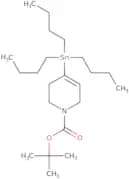
CAS:Controlled Product<p>Murideoxycholic acid is a bile acid that is used in combination with other antibiotics to treat infections caused by bacteria. Murideoxycholic acid inhibits the bacterial transport of bile acids, which are important for the digestion of fats and proteins. Murideoxycholic acid binds to the cytochrome P450 enzyme in humans and rats, inhibiting its activity. This binding prevents the production of bile acids from cholesterol in the liver, which prevents their normal excretion into the intestine and leads to an increased risk for gallstones. Murideoxycholic acid also has been shown to inhibit human CYP3A4 enzyme activity. The hydroxyl group on this molecule reacts with ferrous ions to produce hydroxyl radicals, which can lead to oxidative stress and lipid peroxidation.</p>Formula:C24H40O4Purity:Min. 95%Molecular weight:392.57 g/mol3,6-Dihydro-4-(tributylstannyl)-1(2H)-pyridinecarboxylic acid t-butyl ester
CAS:Controlled Product<p>Please enquire for more information about 3,6-Dihydro-4-(tributylstannyl)-1(2H)-pyridinecarboxylic acid t-butyl ester including the price, delivery time and more detailed product information at the technical inquiry form on this page</p>Formula:C22H43NO2SnPurity:Min. 95%Color and Shape:PowderMolecular weight:472.29 g/mol3-Hydroxymandelic acid
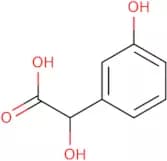
CAS:<p>3-Hydroxymandelic acid is a metabolite of mandelic acid and has been found to have cytostatic effects in human cells. The concentration–time curve for 3-hydroxymandelic acid displays a single-dose pharmacokinetics. It has been shown to inhibit the nuclear factor kappa-light-chain enhancer (NFκB) pathway, which is involved in the regulation of cell proliferation, differentiation, and apoptosis. 3-Hydroxymandelic acid also inhibits energy metabolism by reducing mitochondrial respiration. This compound binds to plasma proteins and is excreted through urine as well as being oxidized by hepatic cytochrome P450 enzymes.</p>Formula:C8H8O4Purity:Min. 95%Molecular weight:168.15 g/mol2-Methyl-4-chlorophenoxyacetic acid
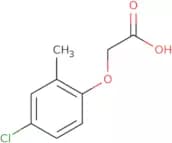
CAS:<p>2-Methyl-4-chlorophenoxyacetic acid is a sodium salt of 2-methyl-4-chlorophenoxyacetic acid. It is a herbicide that inhibits photosynthesis by disrupting the electron transport chain in chloroplasts. The hydroxyl group on the phenoxy ring is responsible for its herbicidal activity. 2-Methyl-4-chlorophenoxyacetic acid has been shown to cause significant cell death in tissue culture, which may be due to its ability to inhibit enzymes such as acetylcholinesterase, phosphodiesterase, and carboxypeptidase A2. This chemical also has carcinogenic potential, but no toxicological studies have been conducted in humans or animals.</p>Formula:C9H9ClO3Purity:Min. 95%Molecular weight:200.62 g/molBenzyl bromoacetate
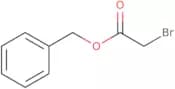
CAS:<p>Benzyl bromoacetate is a bicyclic heterocycle that is metabolized by the enzyme benzyl alcohol dehydrogenase. The resulting metabolites are then converted to methyl benzoate and benzyl alcohol. It has been shown to inhibit prostate cancer cells and basic fibroblasts, which may be due to its ability to inhibit enzymes involved in fatty acid synthesis. Benzyl bromoacetate also has therapeutic effects on autoimmune diseases such as bowel disease, which may be due to its ability to reduce inflammation and suppress the immune system.</p>Formula:C9H9BrO2Purity:Min. 95%Color and Shape:Clear Colourless To Light (Or Pale) Yellow LiquidMolecular weight:229.07 g/mol(3a,5b,12a)-3,12-Dihydroxy-7-oxocholan-24-oic acid methyl ester
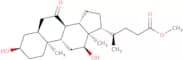
CAS:Controlled Product<p>(3a,5b,12a)-3,12-Dihydroxy-7-oxocholan-24-oic acid methyl ester is an organic compound that belongs to the family of bile acids. It is synthesized in the liver by a series of reactions involving the conversion of cholesterol. The synthesis of this compound has been studied by x-ray analysis on single crystals and by various electron diffraction methods. This study revealed that the molecule is electron deficient and binds well to chloroform. (3a,5b,12a)-3,12-Dihydroxy-7-oxocholan-24-oic acid methyl ester has also been shown to have a constant molecular weight with a molecular formula of C37H64O4.</p>Formula:C25H40O5Purity:Min. 95%Molecular weight:420.58 g/mol2-Bromopropionic acid
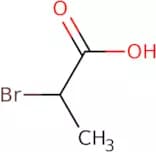
CAS:<p>2-Bromopropionic acid is a tetroxide used in organic synthesis. It is an intermediate in the synthesis of 2,4-dibromopropionamide and 2,4-dibromo-3-methylpentanoic acid. The reaction mechanism of this process starts with the formation of a bromine atom from bromine monoxide and hydrogen peroxide. This bromine atom reacts with the carbon to form an alkyl radical that reacts with another molecule of bromine monoxide to form an alkyl radical that is stabilized by two atoms of hydrogen (i.e., CBr). The alkyl radical then undergoes a nucleophilic attack on iodobenzene to form an iodoalkane intermediate. This intermediate reacts with acetic acid to form the desired product, acetyl chloride. This reaction also produces iodoacetic acid as a byproduct.</p>Formula:C3H5BrO2Purity:Min. 95%Molecular weight:152.97 g/molBoc-(2R,5S)-5-phenylpyrrolidine-2-carboxylic acid
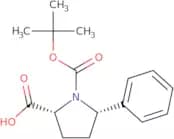
CAS:<p>Please enquire for more information about Boc-(2R,5S)-5-phenylpyrrolidine-2-carboxylic acid including the price, delivery time and more detailed product information at the technical inquiry form on this page</p>Formula:C16H21NO4Purity:Min. 95%Molecular weight:291.34 g/molACTH (2-24) (human, bovine, rat) trifluoroacetate salt
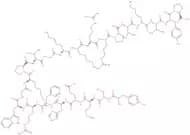
CAS:<p>Please enquire for more information about ACTH (2-24) (human, bovine, rat) trifluoroacetate salt including the price, delivery time and more detailed product information at the technical inquiry form on this page</p>Formula:C133H205N39O29SPurity:Min. 95%Molecular weight:2,846.36 g/molHydroxymethanesulfinic acid monosodium salt dihydrate
CAS:<p>Hydroxymethanesulfinic acid monosodium salt dihydrate (HMSD) is a chemical that can be used to remove sulfoxylate and formaldehyde in wastewater. It can also be used as a polymerization catalyst, an activator for epoxy resins, and as a stabilizer of glycol ethers. HMSD is formed by the reaction of methyl ethyl sulfoxide with copper chloride. This chemical has been shown to have thermal expansion properties and high chemical stability, making it useful for industrial processes involving polymerization or glycol esters.</p>Formula:CH3NaO3S·2H2OPurity:Min. 95%Color and Shape:White/Off-White SolidMolecular weight:154.12 g/moltert-Butyl diazoacetate
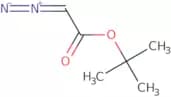
CAS:<p>Tert-Butyl diazoacetate is an ethyl diazoacetate that undergoes a copper-catalyzed alkylation with 4-acetamidobenzene sulfonyl azide. The reaction rate is dependent on the concentration of chloride, which is the only byproduct. This compound has been used in asymmetric synthesis of 4-formylbenzenesulfonyl azide and has shown to be a useful tool for organic chemists due to its size-exclusion chromatography properties. Tert-Butyl diazoacetate also reacts with styrene to produce unsaturated ketones such as salicylaldehyde, which can be further modified. Tert-Butyl diazoacetate is also an important bioactive molecule because it can be isolated from natural sources like horseradish or soybean sprouts.</p>Formula:C6H10N2O2Purity:Min. 95%Molecular weight:142.16 g/molDecanoic acid
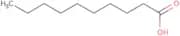
CAS:<p>Decanoic acid is a saturated fatty acid that has been used as a pharmaceutical agent for the treatment of congestive heart failure. Decanoic acid is also used in the production of glycol ethers and as an intermediate in organic synthesis. The melting point of decanoic acid is between 30 and 35 degrees Celsius, which is lower than the melting points of caproic acid (40 degress) or lauric acid (45 degrees Celsius). Decanoic acid has been shown to reduce blood glucose levels in diabetic mice and rats and has also been shown to have antimicrobial activity against c. glabrata, S. aureus, and E. coli. Decanoic acid may be effective as an adjuvant therapy for melanoma by inducing apoptosis through mitochondrial membrane potential disruption.</p>Formula:C10H20O2Purity:Min. 95%Color and Shape:PowderMolecular weight:172.26 g/mol(D-His1)-Exenatide trifluoroacetate salt
CAS:<p>Please enquire for more information about (D-His1)-Exenatide trifluoroacetate salt including the price, delivery time and more detailed product information at the technical inquiry form on this page</p>Formula:C184H282N50O60SPurity:Min. 95%Molecular weight:4,186.57 g/mol


![Diethyl 1-[2-(1H-indol-3-yl)ethyl]-2,5-dimethyl-1H-pyrrole-3,4-dicarboxylate](/_next/image/?url=https%3A%2Fstatic.cymitquimica.com%2Fproducts%2F3D%2Fthumb-webp%2FFD121816.webp&w=3840&q=75)