Carboxylic Acids
Carboxylic acids are organic molecules characterized by having a carboxyl-type functional group (-COOH). These acids are fundamental in various chemical reactions, including esterification, amidation, and decarboxylation. Carboxylic acids are widely used in the production of pharmaceuticals, polymers, and agrochemicals. In this section, you can find a large number of carboxylic acids ready to be used. At CymitQuimica, we provide a broad range of high-quality carboxylic acids to support your research and industrial applications.
Found 12453 products of "Carboxylic Acids"
Sort by
Purity (%)
0
100
|
0
|
50
|
90
|
95
|
100
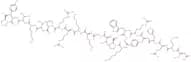
Acetyl-ACTH (3-24) (human, bovine, rat) trifluoroacetate salt
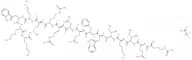
CAS:<p>Please enquire for more information about Acetyl-ACTH (3-24) (human, bovine, rat) trifluoroacetate salt including the price, delivery time and more detailed product information at the technical inquiry form on this page</p>Formula:C126H198N38O28SPurity:Min. 95%Molecular weight:2,725.23 g/molPenetratin trifluoroacetate
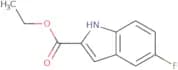
CAS:<p>Cell-penetrating peptide derived from the third helix of the Antennapedia protein homeodomain. Penetratin also shows antimicrobial and antifungal activity.</p>Formula:C104H169N35O19S•(C2HF3O2)xPurity:Min. 95%Molecular weight:2,245.75 g/molEthyl 5-fluoroindole-2-carboxylate
CAS:<p>Ethyl 5-fluoroindole-2-carboxylate is a cytotoxic compound that belongs to the class of organic compounds called aryl rings. It has been shown to inhibit tumor growth in vitro and in vivo through the inhibition of protein synthesis. The molecular docking studies have shown that this compound binds to the enzyme SMMC-7721 cell, which is involved in DNA transcription and replication. It also inhibits activity of other enzymes, such as kinases and phosphatases, which are involved in cellular processes such as proliferation and differentiation. Ethyl 5-fluoroindole-2-carboxylate may be used for the treatment of blood cancer or monosugar diseases, such as diabetes mellitus or hyperlipidemia.</p>Formula:C11H10FNO2Purity:Min. 95%Molecular weight:207.2 g/molEthyl 2-ethylacetoacetate
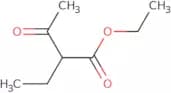
CAS:<p>Ethyl 2-ethylacetoacetate is a carbonyl compound that belongs to the supramolecular class of chromenones. The molecule has an x-ray diffraction pattern that is characteristic of a ring structure. It can be synthesized by an efficient method involving the reaction of ethyl benzoylacetate with a halide in the presence of acid catalyst. The reactants are isolated in high yield and structural analysis shows the presence of a methylene group and an ethyl group on opposite sides of the ring, which are bonded to each other through an acetoacetate group. This chromenone also displays photochemical properties and can be used as a substrate for functional theory studies.</p>Formula:C8H14O3Purity:Min. 95%Molecular weight:158.19 g/molChloroacetic Acid-13C2
CAS:<p>Please enquire for more information about Chloroacetic Acid-13C2 including the price, delivery time and more detailed product information at the technical inquiry form on this page</p>Purity:Min. 95%tert-Butyl 4-(2-bromophenyl)piperazine-1-carboxylate
CAS:Controlled Product<p>Please enquire for more information about tert-Butyl 4-(2-bromophenyl)piperazine-1-carboxylate including the price, delivery time and more detailed product information at the technical inquiry form on this page</p>Purity:Min. 95%Boc-(S)-3-amino-3-(2-methoxyphenyl)propionic acid
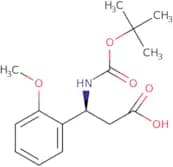
CAS:<p>Please enquire for more information about Boc-(S)-3-amino-3-(2-methoxyphenyl)propionic acid including the price, delivery time and more detailed product information at the technical inquiry form on this page</p>Formula:C15H21NO5Purity:Min. 95%Color and Shape:PowderMolecular weight:295.33 g/mol3,3-Difluoro-1-methylcyclobutanecarboxylic acid
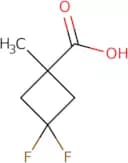
CAS:<p>Please enquire for more information about 3,3-Difluoro-1-methylcyclobutanecarboxylic acid including the price, delivery time and more detailed product information at the technical inquiry form on this page</p>Formula:C6H8F2O2Purity:Min. 95%Molecular weight:150.12 g/molCyclopiazonic acid
CAS:<p>Cyclopiazonic acid is a sesquiterpene lactone that inhibits the transcription activator-binding site in the promoter region of c-myc and c-jun. Cyclopiazonic acid also inhibits protein synthesis by preventing phosphorylation of dinucleotide phosphate, which leads to an increase in intracellular calcium levels. This compound also has a cytotoxic effect on HL60 cells, which may be due to its ability to inhibit the production of secretases. Cyclopiazonic acid's effects on pluripotent cells have not been well studied, but it is known to have pharmacological properties that are similar to other compounds that are being studied for their potential anti-cancer effects.</p>Formula:C20H20N2O3Purity:Min. 95%Color and Shape:PowderMolecular weight:336.39 g/mol5-Chloro-2-(ethylsulfonyl)pyrimidine-4-carboxylic acid
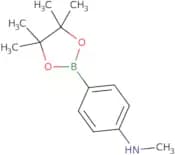
CAS:<p>Please enquire for more information about 5-Chloro-2-(ethylsulfonyl)pyrimidine-4-carboxylic acid including the price, delivery time and more detailed product information at the technical inquiry form on this page</p>Formula:C7H7ClN2O4SPurity:Min. 95%Molecular weight:250.66 g/mol4-(N-Methylamino)phenylboronic acid pinacol ester
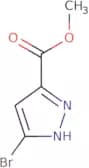
CAS:<p>Please enquire for more information about 4-(N-Methylamino)phenylboronic acid pinacol ester including the price, delivery time and more detailed product information at the technical inquiry form on this page</p>Formula:C13H20BNO2Purity:Min. 95%Molecular weight:233.11 g/molMethyl 5-bromo-1H-pyrazole-3-carboxylate
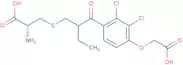
CAS:<p>Please enquire for more information about Methyl 5-bromo-1H-pyrazole-3-carboxylate including the price, delivery time and more detailed product information at the technical inquiry form on this page</p>Formula:C5H5BrN2O2Purity:Min. 95%Molecular weight:205.01 g/molEthacrynic acid L-cysteine adduct
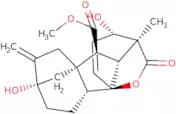
CAS:<p>Ethacrynic acid L-cysteine adduct (EAC) is a non-competitive inhibitor of phosphatases. It is a β-unsaturated ketone that has been shown to inhibit the phosphatase activity of pepsin and other enzymes. EAC binds to glutathione, forming an inactive covalent bond. The glutathione conjugate is inactivated by incubation with aminopyrine and pepsin, which degrades the glutathione moiety. This leads to the formation of a phosphatase inhibitor that is catalytic and competitive in nature. EAC can be used as a reagent for cell culture media or tissue sections, where it inhibits the activity of phosphatases that might interfere with certain enzymatic reactions.</p>Formula:C16H19Cl2NO6SPurity:Min. 95%Molecular weight:424.3 g/molGibberellic acid methyl ester
CAS:<p>Gibberellic acid methyl ester is a specialized plant growth regulator, which is synthetically derived from the naturally occurring gibberellins found in plants. These gibberellins are vital phytohormones that regulate various aspects of growth and development in higher plants. Gibberellic acid methyl ester functions by mimicking these natural gibberellins, interacting with plant cellular processes to stimulate and enhance growth. Its mode of action involves promoting cell elongation, division, and differentiation, thereby accelerating plant growth and influencing the lifecycle.</p>Formula:C20H24O6Purity:Min. 95%Molecular weight:360.4 g/molTaraxeryl acetate
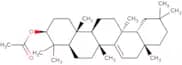
CAS:Controlled Product<p>Taraxeryl acetate is a fatty acid that is found in the extract of Curcuma aromatica (turmeric). It has been shown to inhibit cervical cancer cells in tissue culture. Taraxeryl acetate inhibits the growth of Streptococcus faecalis by binding to its ribosomal RNA and inhibiting protein synthesis. Toxicological studies on rats have shown that this compound does not have any harmful effects on physiological functions. This molecule has also been shown to be an inhibitor for protocatechuic acid, which is a chemical structure involved in the cycle analysis of curcuminoids. In addition, taraxeryl acetate has been used as an active ingredient in Chinese medicine preparations for the treatment of symptoms related to herpes simplex virus infections.</p>Purity:Min. 95%tert-Butyl 4-azidopiperidine-1-carboxylate
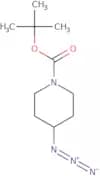
CAS:<p>Please enquire for more information about tert-Butyl 4-azidopiperidine-1-carboxylate including the price, delivery time and more detailed product information at the technical inquiry form on this page</p>Formula:C10H18N4O2Purity:Min. 95%Molecular weight:226.28 g/mol1,1'-Bicyclo[1,1,1]pentane-1,3-dicarboxylic acid monomethyl ester
CAS:<p>1,1'-Bicyclo[1,1,1]pentane-1,3-dicarboxylic acid monomethyl ester is a chemical compound used in research and as a building block for complex compounds. It is a high quality and versatile compound that has a wide range of uses in the production of fine chemicals. This compound is an intermediate for the synthesis of 1,4-benzodioxan. CAS No. 83249-10-9</p>Formula:C8H10O4Purity:Min. 95%Color and Shape:White PowderMolecular weight:170.16 g/molBoc-L-aspartic acid 4-tert-butyl ester
CAS:<p>Boc-L-aspartic acid 4-tert-butyl ester is a synthetic aminoacylase that is used in the synthesis of ergosterol. It is an efficient and economical reagent for the preparation of esters of aspartic acid, which are used in fungal antifungal agents. Boc-L-aspartic acid 4-tert-butyl ester has been shown to have various physiological functions, including the ability to inhibit ergosterol synthesis by inhibiting the enzyme polymeric ergosterol synthase in fungi. This compound can also be used to synthesize n-substituted aspartates.</p>Formula:C13H23NO6Purity:Min. 95 Area-%Color and Shape:PowderMolecular weight:289.32 g/mol7-(Difluoromethyl)-5-methyl[1,2,4]triazolo[1,5-a]pyrimidine-2-carboxylic acid
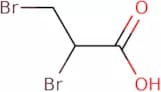
CAS:<p>Please enquire for more information about 7-(Difluoromethyl)-5-methyl[1,2,4]triazolo[1,5-a]pyrimidine-2-carboxylic acid including the price, delivery time and more detailed product information at the technical inquiry form on this page</p>Formula:C8H6F2N4O2Purity:Min. 95%Molecular weight:228.16 g/mol2,3-Dibromopropanoic acid
CAS:<p>2,3-Dibromopropanoic acid is a carcinogenic chemical that has been shown to cause liver tumors in rats. It is a nucleophile that reacts with amide groups to form an amide bond. The analytical method for 2,3-dibromopropanoic acid is gas chromatography with flame ionization detection. Its structural formula is CHBrCHBrCOH. It has a carbonyl group and acidic properties, as well as a chloride ion present on the molecule. 2,3-Dibromopropanoic acid is an anxiolytic drug that has been shown to have health effects such as drowsiness and headache.</p>Formula:C3H4Br2O2Purity:Min. 95%Color and Shape:PowderMolecular weight:231.87 g/mol




![1,1'-Bicyclo[1,1,1]pentane-1,3-dicarboxylic acid monomethyl ester](/_next/image/?url=https%3A%2Fstatic.cymitquimica.com%2Fproducts%2F3D%2Fthumb-webp%2FFB33677.webp&w=3840&q=75)

![7-(Difluoromethyl)-5-methyl[1,2,4]triazolo[1,5-a]pyrimidine-2-carboxylic acid](/_next/image/?url=https%3A%2Fstatic.cymitquimica.com%2Fproducts%2F3D%2Fthumb-webp%2FFD119953.webp&w=3840&q=75)