Carboxylic Acids
Found 12457 products of "Carboxylic Acids"
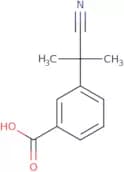
3-(2-Cyanopropan-2-yl)benzoic acid
CAS:Please enquire for more information about 3-(2-Cyanopropan-2-yl)benzoic acid including the price, delivery time and more detailed product information at the technical inquiry form on this page
Formula:C11H11NO2Purity:Min. 95%Molecular weight:189.21 g/molCART (62-76) (human, rat) trifluoroacetate salt
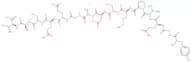
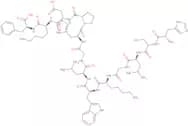
CAS:Please enquire for more information about CART (62-76) (human, rat) trifluoroacetate salt including the price, delivery time and more detailed product information at the technical inquiry form on this pageFormula:C64H99N17O23S3Purity:Min. 95%Molecular weight:1,570.77 g/molNeuropeptide W-30 (human) trifluoroacetate salt
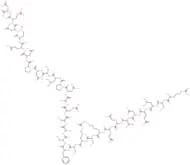
CAS:Please enquire for more information about Neuropeptide W-30 (human) trifluoroacetate salt including the price, delivery time and more detailed product information at the technical inquiry form on this pageFormula:C165H249N49O37SPurity:Min. 95%Molecular weight:3,543.12 g/molAngiotensin (1-12) (mouse, rat) trifluoroacetate salt
CAS:Please enquire for more information about Angiotensin (1-12) (mouse, rat) trifluoroacetate salt including the price, delivery time and more detailed product information at the technical inquiry form on this pageFormula:C77H109N19O17Purity:Min. 95%Molecular weight:1,572.81 g/molBeta-Bag Cell Peptide (Aplysia californica) trifluoroacetate salt
CAS:Aplysia californica is a species of sea slug that produces a peptide, beta-Bag Cell Peptide (BACP), which has been shown to have depolarizing effects on neurons. BACP can be synthesized from the amino acid sequence of the Aplysia californica cell membrane protein, and this synthetic peptide has been shown to have maximal depolarizing effects at high concentrations. The depolarizing effect of BACP can be seen in populations of neurons as well as individual neurons. This peptide also desensitizes autoreceptors for acetylcholine and serotonin, which may play a role in its electrophysiological effects.Formula:C33H53N13O6Purity:Min. 95%Molecular weight:727.86 g/mol5-Formyl-2,4-dimethyl-1H-pyrrole-3-carboxylic acid
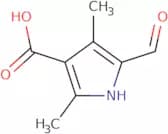
CAS:5-Formyl-2,4-dimethyl-1H-pyrrole-3-carboxylic acid is a chemical compound that is used in the formylation of amines to produce formamides. It has been optimized for industrial production by optimizing reaction time, formylation conditions, and solvents. It has also been shown that 5-formyl-2,4-dimethyl-1H-pyrrole-3-carboxylic acid produces good yields and high product purity.
Formula:C8H9NO3Purity:Min. 95%Molecular weight:167.16 g/molBoc-trans-4-aminocyclohexane acetic acid
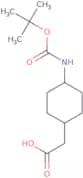
CAS:Please enquire for more information about Boc-trans-4-aminocyclohexane acetic acid including the price, delivery time and more detailed product information at the technical inquiry form on this pageFormula:C13H23NO4Molecular weight:257.33 g/mol(D-Tyr5,D-Trp6)-LHRH trifluoroacetate salt
CAS:Please enquire for more information about (D-Tyr5,D-Trp6)-LHRH trifluoroacetate salt including the price, delivery time and more detailed product information at the technical inquiry form on this pageFormula:C64H82N18O13Purity:Min. 95%Molecular weight:1,311.45 g/molPeptide YY (3-36) trifluoroacetate salt
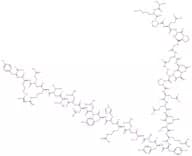
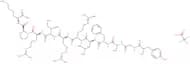
CAS:Peptide YY (PYY) is a 36-amino acid peptide. It is cleaved from the larger protein, pancreatic polypeptide, by the enzyme dipeptidyl peptidase IV and circulates in plasma as PYY(3-36). The postprandial plasma levels of PYY are dose-dependent and increase with increasing doses of injected PYY. This response reflects the physiological effects of this hormone. A linear regression analysis revealed that PYY(3-36) has a significant effect on body weight loss and body mass index in humans. The effective dose for weight loss is yet to be determined, but it may be higher than 10 μg/kg/day.Formula:C176H272N52O54Purity:Min. 95%Molecular weight:3,980.36 g/molMyelin Proteolipid Protein (139-151) (depalmitoylated) (human, bovine, dog, mouse, rat) trifluoroacetate salt
CAS:MPLP(139-151) is a peptide that is derived from the myelin proteolipid protein (PLP). MPLP(139-151) has been shown to inhibit macrophage inflammatory in vitro and brain inflammation in vivo. The inhibition of macrophages was mediated by the induction of apoptosis and inhibition of NF-κB. MPLP(139-151) also induced regression of experimental autoimmune encephalomyelitis in mice, which suggests that it might be useful as a therapeutic agent for multiple sclerosis or other inflammatory diseases.Formula:C72H104N20O16SPurity:Min. 95%Molecular weight:1,537.79 g/mol4-[5-(4-Pentyloxyphenyl)isoxazol-3-yl]benzoic acid
CAS:Please enquire for more information about 4-[5-(4-Pentyloxyphenyl)isoxazol-3-yl]benzoic acid including the price, delivery time and more detailed product information at the technical inquiry form on this pageFormula:C21H21NO4Purity:Min. 95%Molecular weight:351.4 g/molGRPP (human) trifluoroacetate salt
CAS:Please enquire for more information about GRPP (human) trifluoroacetate salt including the price, delivery time and more detailed product information at the technical inquiry form on this pageFormula:C136H215N41O58SPurity:Min. 95%Molecular weight:3,384.47 g/mol(D-Ala3)-Dynorphin A (1-11) amide trifluoroacetate salt
CAS:Please enquire for more information about (D-Ala3)-Dynorphin A (1-11) amide trifluoroacetate salt including the price, delivery time and more detailed product information at the technical inquiry form on this page
Formula:C64H106N22O12Purity:Min. 95%Molecular weight:1,375.67 g/mol(His(3-Me)2)-TRH trifluoroacetate salt
CAS:Please enquire for more information about (His(3-Me)2)-TRH trifluoroacetate salt including the price, delivery time and more detailed product information at the technical inquiry form on this pageFormula:C17H24N6O4Purity:Min. 95%Molecular weight:376.41 g/molDSP
CAS:DSP is a widely used disulfide crosslinker in ADC synthesis. It forms reversible conjugates via intracellular reduction, enabling payload release.Formula:C14H16N2O8S2Purity:Min. 95%Color and Shape:SolidMolecular weight:404.42 g/molBiotinyl-Substance P trifluoroacetate salt
CAS:Biotinyl-Substance P trifluoroacetate salt Biotinyl-Arg-Pro-Lys-Pro-Gln-Gln-Phe-Phe-Gly-Leu-Met-NH2 trifluoroacetate salt is a biotin conjugated Substance P analog. It is designed to bind to the amino acid sequences in the brain that are responsible for controlling and regulating pain. The drug's amino acid sequence was designed by accessing databases of amino acid sequences from all known organisms. The drug is administered as a sequence of cassettes, each containing an acid molecule that can be transferred to cells through nucleotide transfer.Formula:C73H112N20O15S2Purity:Min. 95%Molecular weight:1,573.93 g/molHIV-1 gag Protein p24 (65-73) (isolates MAL/U455) trifluoroacetate salt
CAS:Please enquire for more information about HIV-1 gag Protein p24 (65-73) (isolates MAL/U455) trifluoroacetate salt including the price, delivery time and more detailed product information at the technical inquiry form on this pageFormula:C44H79N11O14S2Purity:Min. 95%Molecular weight:1,050.3 g/mol2-[(5-Chloropyridin-2-yl)amino]-2-oxoacetic acid ethyl ester monohydrochloride
CAS:Intermediate in the synthesis of edoxabanFormula:C9H9ClN2O3·HClPurity:Min. 95%Molecular weight:265.09 g/molH-Lys-Cys-Thr-Cys-Cys-Ala-OH trifluoroacetate salt
CAS:H-Lys-Cys-Thr-Cys-Cys-Ala-OH trifluoroacetate salt (KCTA) is a peptide that belongs to the group of thioneins and is characterized by a high content of lysine, cysteine and histidine residues. This peptide has been shown to be effective in treating subcutaneous tumors in mice. KCTA binds to metallothionein and gamma amino butyric acid (GABA), which are proteins that regulate energy metabolism in cells. KCTA has also been shown to have antimicrobial effects against human serum, which may be due to its ability to bind with thionein.
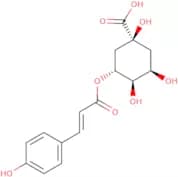
Formula:C22H41N7O8S3Purity:Min. 95%Molecular weight:627.8 g/mol3-p-Coumaroylquinic acid
CAS:3-p-Coumaroylquinic acid is a natural compound found in plants. It has been shown to have antibacterial properties and can be used as an alternative to antibiotics for the treatment of opportunistic fungal infections. 3-p-Coumaroylquinic acid exhibits hypoglycemic activity, which may be due to its ability to inhibit glucose absorption by the gut. This compound can also be analyzed using a surface methodology that involves analyzing the surface of an object with a chemical reagent.Formula:C16H18O8Purity:Min. 95%Color and Shape:PowderMolecular weight:338.31 g/mol


![4-[5-(4-Pentyloxyphenyl)isoxazol-3-yl]benzoic acid](/_next/image/?url=https%3A%2Fstatic.cymitquimica.com%2Fproducts%2F3D%2Fthumb-webp%2FFP61482.webp&w=3840&q=75)



![2-[(5-Chloropyridin-2-yl)amino]-2-oxoacetic acid ethyl ester monohydrochloride](/_next/image/?url=https%3A%2Fstatic.cymitquimica.com%2Fproducts%2F3D%2Fthumb-webp%2FFC63138.webp&w=3840&q=75)