Carboxylic Acids
Carboxylic acids are organic molecules characterized by having a carboxyl-type functional group (-COOH). These acids are fundamental in various chemical reactions, including esterification, amidation, and decarboxylation. Carboxylic acids are widely used in the production of pharmaceuticals, polymers, and agrochemicals. In this section, you can find a large number of carboxylic acids ready to be used. At CymitQuimica, we provide a broad range of high-quality carboxylic acids to support your research and industrial applications.
Found 12454 products of "Carboxylic Acids"
Sort by
Purity (%)
0
100
|
0
|
50
|
90
|
95
|
100
Enterostatin (human, mouse, rat) acetate salt
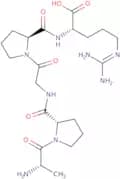
CAS:Enterostatin is a peptide hormone that inhibits the release of insulin, gastric acid and pancreatic juices. Enterostatin has been shown to have a number of biological properties, including an anti-obesity effect in humans. In mice, enterostatin has been shown to decrease food intake, increase energy expenditure and weight loss. Enterostatin also decreases the levels of serum cholesterol and triglycerides in rats. This drug has a number of pharmacological activities including inhibition of platelet aggregation and vasodilation. Enterostatin is related to peptide hormones such as ghrelin, which stimulates appetite, and cholecystokinin (CCK), which reduces appetite. It may be used as an alternative treatment for obesity or metabolic disorders like diabetes mellitus type 2 or hyperlipidaemia.Formula:C21H36N8O6Purity:Min. 95%Molecular weight:496.56 g/molNeurotensin acetate salt Pyr-Leu-Tyr-Glu-Asn-Lys-Pro-Arg-Arg-Pro-Tyr-Ile-Leu-OH acetate salt
CAS:Neurotensin is a peptide hormone that regulates the release of other hormones and neurotransmitters, such as dopamine. It has been shown to be able to regulate appetite and bowel disease in animal models. Neurotensin acetate salt Pyr-Leu-Tyr-Glu-Asn-Lys-Pro-Arg-Arg-Pro-Tyr-Ile-Leu-OH acetate salt is a neurotensin molecule with an acetate group attached to it. This molecule is completely soluble in water and has been shown to have no effect on energy metabolism or polymerase chain reactions.Formula:C78H121N21O20Purity:Min. 95%Molecular weight:1,672.92 g/mol4-(Piperidin-4-yl)benzoic acid hydrochloride
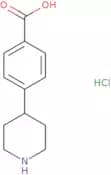
CAS:<p>Please enquire for more information about 4-(Piperidin-4-yl)benzoic acid hydrochloride including the price, delivery time and more detailed product information at the technical inquiry form on this page</p>Formula:C12H16ClNO2Purity:Min. 95%Molecular weight:241.71 g/molSalusin-alpha (human) trifluoroacetate salt
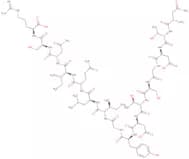
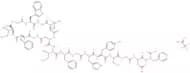
CAS:<p>Please enquire for more information about Salusin-alpha (human) trifluoroacetate salt including the price, delivery time and more detailed product information at the technical inquiry form on this page</p>Formula:C114H192N40O30Purity:Min. 95%Molecular weight:2,603 g/molPamoic acid disodium salt monohydrate
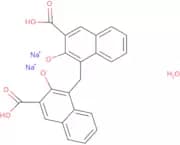
CAS:Pamoic acid is a disodium salt of p-aminobenzoic acid. It is an excipient that is considered safe for use in food and pharmaceuticals. Pamoic acid has been used as a preservative and an antioxidant. It prevents the oxidation of fats, oils, and other lipids by reacting with them to form stable compounds. The most common use of pamoic acid is as an anti-spasmodic drug to manage colitis, although it also has been used to treat seizures and spasticity in people with nervous system diseases. Pamoic acid can be used in combination with benzalkonium chloride as a preservative for injectable drugs such as antibiotics or chemotherapy agents. When combined with benzalkonium chloride, pamoic acid acts as a sweetener and particle size modifier.Formula:C23H14O6·2Na·H2OPurity:Min. 95%Color and Shape:SolidMolecular weight:450.35 g/molNeuronostatin-19 (human, canine, porcine) trifluoroacetate salt
<p>Please enquire for more information about Neuronostatin-19 (human, canine, porcine) trifluoroacetate salt including the price, delivery time and more detailed product information at the technical inquiry form on this page</p>Formula:C90H151N29O25Purity:Min. 95%Molecular weight:2,039.34 g/molRhodanine-N-acetic acid
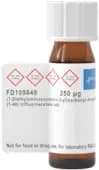
CAS:Rhodanine-N-acetic acid is a model system for antimicrobial agents. It is an acidic molecule with low light absorption and can be used as a chemotherapeutic agent. Rhodanine-N-acetic acid has been shown to have high resistance to bacteria in vitro, making it effective against malonic acid, which is the main cause of infection. Rhodanine-N-acetic acid has been shown to have biological properties, such as photophysical and redox potentials that make it suitable for use in vivo. Rhodanine-N-acetic acid also has photocurrent and electrochemical impedance spectroscopy characteristics that may be used to measure its activity in vivo.Formula:C5H5NO3S2Purity:Min. 95%Molecular weight:191.23 g/mol(7-Diethylaminocoumarin-3-yl)carbonyl-Amyloid b-Protein (1-40) trifluoroacetate salt
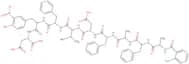
CAS:<p>Please enquire for more information about (7-Diethylaminocoumarin-3-yl)carbonyl-Amyloid b-Protein (1-40) trifluoroacetate salt including the price, delivery time and more detailed product information at the technical inquiry form on this page</p>Formula:C208H308N54O61SPurity:Min. 95%Molecular weight:4,573.06 g/molAbz-Ala-Phe-Ala-Phe-Asp-Val-Phe-3-nitro-Tyr-Asp-OH trifluoroacetate salt
CAS:<p>Please enquire for more information about Abz-Ala-Phe-Ala-Phe-Asp-Val-Phe-3-nitro-Tyr-Asp-OH trifluoroacetate salt including the price, delivery time and more detailed product information at the technical inquiry form on this page</p>Formula:C62H71N11O18Purity:Min. 95%Molecular weight:1,258.29 g/mol6-Maleimidocaproic acid N-hydroxysuccinimide ester
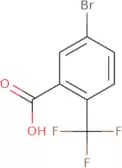
CAS:<p>6-Maleimidocaproic acid N-hydroxysuccinimide ester (6MCA-NHS) is a fluorescent probe that reacts with the hydroxyl group of fatty acids in human serum and other biological samples. 6MCA-NHS binds to the carboxylic acid group at the end of a fatty acid molecule, forming a covalent bond. This process generates light emission that can be detected by a fluorescence probe to measure changes in pH or other chemical properties within the solution. 6MCA-NHS has been used as a tumor treatment, where laser ablation is used to break up tumor cells and release 6MCA-NHS into the cytoplasm. The drug can then bind to DNA molecules and inhibit protein synthesis, which results in cell death.</p>Formula:C14H16N2O6Purity:Min. 95%Color and Shape:White Off-White PowderMolecular weight:308.29 g/mol5-bromo-2-(trifluoromethyl)benzoic Acid
CAS:Please enquire for more information about 5-bromo-2-(trifluoromethyl)benzoic Acid including the price, delivery time and more detailed product information at the technical inquiry form on this pageFormula:C8H4BrF3O2Purity:Min. 95%Molecular weight:269.02 g/molEthyl 4-amino-2-mercaptopyrimidine-5-carboxylate
CAS:<p>Please enquire for more information about Ethyl 4-amino-2-mercaptopyrimidine-5-carboxylate including the price, delivery time and more detailed product information at the technical inquiry form on this page</p>Formula:C7H9N3O2SPurity:Min. 95%Molecular weight:199.23 g/mol(D-Arg2, Sar 4)-Dermorphin (1-4) trifluoroacetate salt
CAS:Please enquire for more information about (D-Arg2, Sar 4)-Dermorphin (1-4) trifluoroacetate salt including the price, delivery time and more detailed product information at the technical inquiry form on this pagePurity:Min. 95%Molecular weight:555.633-(Trifluoromethyl)phenylacetic acid
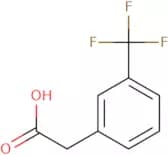
CAS:3-(Trifluoromethyl)phenylacetic acid is an isoquinoline alkaloid that has been found to have anti-inflammatory properties. It was shown to inhibit TNF-α production in mice with colitis, reducing the severity of the disease. 3-(Trifluoromethyl)phenylacetic acid can be administered orally, and it is metabolized reductively by dihydroisoquinoline reductase enzymes. The drug's pharmacokinetics are not well understood, but it is thought to be a substrate for CYP3A4 and P-glycoprotein. 3-(Trifluoromethyl)phenylacetic acid has been studied as a potential antiviral agent and systemic inflammatory response inhibitor.Formula:C9H7F3O2Purity:Min. 95%Molecular weight:204.15 g/molOleic acid
CAS:<p>Oleic acid is a naturally occurring monounsaturated fatty acid (C18:1, cis-9-octadecenoic acid) widely used as an excipient in pharmaceutical formulations. Due to its amphiphilic and lipophilic properties, oleic acid is an important drug excipient primarily used to enhance the solubility and bioavailability of poorly water-soluble drugs. As a fatty acid, it is widely used in cosmeceuticals as it acts as a solubilizer in lipid-based systems, an emulsifier in creams and ointments, and a penetration enhancer in transdermal patches, aiding drug absorption through the skin.</p>Formula:C18H34O2Color and Shape:Colorless Clear Liquid PowderMolecular weight:282.46 g/molH-DL-Val-Leu-Arg-pNA acetate salt
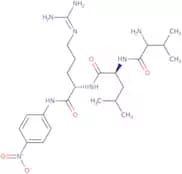
CAS:<p>H-DL-Val-Leu-Arg-pNA acetate salt is a natriuretic that is used to treat chronic kidney failure. It has an inhibitory effect on serine protease and epidermal growth factor, which are enzymes involved in the production of atrial natriuretic peptide (ANP). The drug also reduces blood pressure by inhibiting the activity of angiotensin II, which is a potent vasoconstrictor. H-DL-Val-Leu-Arg-pNA acetate salt has been shown to increase urea nitrogen levels by inhibiting the activity of alkaline phosphatase, which breaks down ammonia in the liver.</p>Formula:C23H38N8O5Purity:Min. 95%Molecular weight:506.6 g/molLys-(Des-Arg9)-Bradykinin trifluoroacetate salt
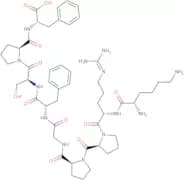
CAS:Lys-(Des-Arg9)-Bradykinin trifluoroacetate salt H-Lys-Arg-Pro-Pro-Gly-Phe-Ser-Pro-Phe-OH trifluoroacetate salt (KBP) is a peptide that increases blood pressure by binding to the b2 receptor. This drug has been shown to be a potent pressor in animals and humans, with a concentration response curve similar to that of epinephrine. KBP binds to the extracellular domain of the b2 receptor, which activates this receptor and promotes the release of growth factors, such as epidermal growth factor (EGF). The high affinity of KBP for the b2 receptor is thought to be due to its ability to sequester EGF.Formula:C50H73N13O11Purity:Min. 95%Molecular weight:1,032.2 g/molLysozyme C (46-61) (chicken) trifluoroacetate salt
CAS:Lysozyme C (46-61) (chicken) trifluoroacetate salt is a conjugated synthetic peptide that binds to the antigen. It is a reactive molecule with solubilized properties that has been shown to bind to the peptide in binding experiments. This synthetic peptide has been found to be efficacious in transfected murine bone cells and antigen-presenting cells. The binding of Lysozyme C (46-61) (chicken) trifluoroacetate salt to phospholipid membranes may be due to its reactivity with the membrane's hydrophobic surface.Formula:C72H116N22O29Purity:Min. 95%Molecular weight:1,753.82 g/molAnantin (linear sequence) trifluoroacetate salt
CAS:<p>Please enquire for more information about Anantin (linear sequence) trifluoroacetate salt including the price, delivery time and more detailed product information at the technical inquiry form on this page</p>Formula:C90H113N21O25Purity:Min. 95%Molecular weight:1,888.99 g/molEthyl 2-fluoroacetoacetate
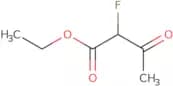
CAS:<p>Ethyl 2-fluoroacetoacetate is a phosphorus oxychloride synthon that can be used to synthesize fluorinated compounds. It has been shown to react with a carbonyl group, like tyrosine, in the presence of an organocatalyst to form a tetrafluoroborate ester. The reaction mechanism of this compound is intramolecular hydrogen transfer from the phosphite oxygen atom to the electrophilic carbon atom. Ethyl 2-fluoroacetoacetate has been shown to react with alkyl halides and hydroxyl groups in the presence of base, forming enantiomeric alcohols. This compound has also been shown to have optical properties that are stable at room temperature and pressure, including infrared absorption maxima at 1740 cm-1 and 1775 cm-1 as well as ultraviolet absorption maxima at 225 nm and 254 nm.</p>Formula:C6H9FO3Purity:Min. 95%Molecular weight:148.13 g/mol