Carboxylic Acids
Carboxylic acids are organic molecules characterized by having a carboxyl-type functional group (-COOH). These acids are fundamental in various chemical reactions, including esterification, amidation, and decarboxylation. Carboxylic acids are widely used in the production of pharmaceuticals, polymers, and agrochemicals. In this section, you can find a large number of carboxylic acids ready to be used. At CymitQuimica, we provide a broad range of high-quality carboxylic acids to support your research and industrial applications.
Found 12454 products of "Carboxylic Acids"
Sort by
Purity (%)
0
100
|
0
|
50
|
90
|
95
|
100
(Pyr 3)-Amyloid b-Protein (3-40) trifluoroacetate salt
CAS:<p>Please enquire for more information about (Pyr 3)-Amyloid b-Protein (3-40) trifluoroacetate salt including the price, delivery time and more detailed product information at the technical inquiry form on this page</p>Formula:C187H283N51O53SPurity:Min. 95%Molecular weight:4,125.63 g/molH-Arg-Leu-OH acetate salt
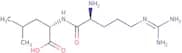
CAS:<p>H-Arg-Leu-OH acetate salt is a synthetic version of the natural amino acid Arginine. It has been shown to have anti-inflammatory effects and to inhibit the growth of cancer cells in cell culture. H-Arg-Leu-OH acetate salt also inhibits the production of messenger RNA that leads to the synthesis of inflammatory proteins and growth factors, as well as light emission, which may be due to its effect on response elements in cells.</p>Formula:C12H25N5O3Purity:Min. 95%Molecular weight:287.36 g/mol3-Amino-4-fluorobenzoic acid
CAS:<p>3-Amino-4-fluorobenzoic acid is a hydrocarbon that is used as an analgesic. It has been shown to be nontoxic and has analgesic effects in the intestinal tract. 3-Amino-4-fluorobenzoic acid also has radiopaque properties, which makes it useful for diagnosis and treatment of certain types of cancer and other tumors. The analgesic effect of 3-amino-4-fluorobenzoic acid may be due to its ability to act as a competitive antagonist at the N -methyl--aspartate (NMDA) receptor, which is important in pain perception.</p>Formula:C7H6FNO2Purity:Min. 95%Molecular weight:155.13 g/mol(Pen 5)-Urotensin II (4-11) (human) trifluoroacetate salt
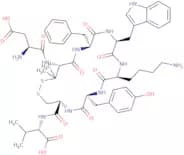
CAS:<p>Please enquire for more information about (Pen 5)-Urotensin II (4-11) (human) trifluoroacetate salt including the price, delivery time and more detailed product information at the technical inquiry form on this page</p>Formula:C52H68N10O12S2Purity:Min. 95%Molecular weight:1,089.29 g/molDynorphin A (1-13) amide trifluoroacetate salt
CAS:<p>Please enquire for more information about Dynorphin A (1-13) amide trifluoroacetate salt including the price, delivery time and more detailed product information at the technical inquiry form on this page</p>Formula:C75H127N25O14Purity:Min. 95%Molecular weight:1,602.97 g/mol4-Methoxycarbonylphenylboronic acid
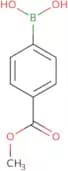
CAS:<p>4-Methoxycarbonylphenylboronic acid is an organic compound that can be synthesized from biphenyl. It is a diazonium salt with a bidentate ligand and a carbonyl group, which allows it to form an intermolecular hydrogen bond. The phenyl group of 4-methoxycarbonylphenylboronic acid can be oxidized to the corresponding carboxylic acid or reduced to the corresponding alcohol.<br>4-Methoxycarbonylphenylboronic acid is also soluble in halides, iodinations, and mercaptoacetic acid. This compound has been used as an acceptor in the oxidation of aluminium with diborane as a catalyst. 4-Methoxycarbonylphenylboronic acid has also been used to synthesize other compounds such as metronidazole (a drug) and erythromycin (an antibiotic).</p>Formula:C8H9BO4Purity:Min. 95%Color and Shape:White PowderMolecular weight:179.97 g/molH-Pro-Phe-Lys-OH acetate salt
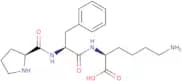
CAS:<p>Please enquire for more information about H-Pro-Phe-Lys-OH acetate salt including the price, delivery time and more detailed product information at the technical inquiry form on this page</p>Formula:C20H30N4O4Purity:Min. 95%Molecular weight:390.48 g/molAc-Gly-Asp-Tyr-Ser-His-Cys-Ser-Pro-Leu-Arg-Tyr-Tyr-Pro-Trp-Trp-Lys-Cys-Thr-Tyr-Pro-Asp-Pro-Glu-Gly-Gly-Gly-NH2 trifluoroacetate salt (Disulfide bond)
CAS:<p>Please enquire for more information about Ac-Gly-Asp-Tyr-Ser-His-Cys-Ser-Pro-Leu-Arg-Tyr-Tyr-Pro-Trp-Trp-Lys-Cys-Thr-Tyr-Pro-Asp-Pro-Glu-Gly-Gly-Gly-NH2 trifluoroacetate salt (Disulfide bond) including the price, delivery time and more detailed product information at the technical inquiry form on this page</p>Formula:C141H185N35O40S2Purity:Min. 95%Molecular weight:3,074.32 g/mol6-Chloro-2-methylbenzoic acid
CAS:<p>6-Chloro-2-methylbenzoic acid is a methyl ester that is used in the synthesis of 2-chloro-6-fluorobenzaldehyde. This chemical reacts with hydrogen peroxide to produce chloride and 2,6-dichlorobenzoic acid. The compound can also be synthesized from 2,6-dichlorobenzaldehyde and methoxyethanol. 6CMB has been shown to react with anions such as Cl-, Br-, NO2-, SO3H, and PO3H2 to form organic carboxylates or sulfoxides. It has also been shown to be a byproduct of the reaction between chloral hydrate and potassium permanganate.</p>Formula:C8H7ClO2Purity:90%Color and Shape:PowderMolecular weight:170.59 g/molDnp-Pro-TNF-alpha (71-82) amide (human) trifluoroacetate salt
CAS:<p>Please enquire for more information about Dnp-Pro-TNF-alpha (71-82) amide (human) trifluoroacetate salt including the price, delivery time and more detailed product information at the technical inquiry form on this page</p>Formula:C57H94N22O21Purity:Min. 95%Molecular weight:1,423.49 g/mol4-(4-Phenylbutoxy)benzoic acid
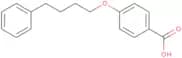
CAS:<p>4-(4-Phenylbutoxy)benzoic acid is an organic compound that is produced by the reaction of 4-hydroxybenzoic acid with a Grignard reagent. The 4-hydroxybenzoic acid reacts with magnesium to form magnesium chloride and p-hydroxybenzoic acid, which then reacts with a Grignard reagent to form the desired product. This compound has been used in wastewater treatment and as an intermediate in the synthesis of dyes, perfumes, and pharmaceuticals. 4-(4-Phenylbutoxy)benzoic acid has also been used as a starting material for synthesizing other compounds such as chlorobenzene and p-hydroxybenzoic acid.</p>Formula:C17H18O3Purity:Min. 95%Molecular weight:270.32 g/molTetrahydro-3-furoic acid
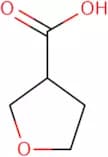
CAS:<p>Tetrahydro-3-furoic acid is an organic acid that can be found in the form of its tautomers, alpha-methylene-gamma-butyrolactone and 3-hydroxy-2,4-pentadienoic acid. It is a proapoptotic compound that induces cell death in cancer cells by inhibiting protein synthesis. Tetrahydro-3-furoic acid has been shown to have low expression levels in most tissues, with high levels found in the liver. The mechanism behind this inhibition is not yet known but may be due to the formation of a Schiff base between the amine and the carbonyl group of tetrahydro-3-furoic acid. This reaction mechanism has been proposed as a possible explanation for why tetrahydro-3-furoic acid is more toxic than other furoates such as ethyl-, propyl-, butyl-, and amyl-. Tet</p>Formula:C5H8O3Purity:Min. 95%Molecular weight:116.12 g/molLIP2 (human) trifluoroacetate salt
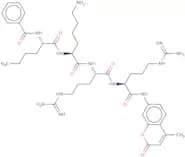
<p>Please enquire for more information about LIP2 (human) trifluoroacetate salt including the price, delivery time and more detailed product information at the technical inquiry form on this page</p>Formula:C184H288N58O58Purity:Min. 95%Molecular weight:4,240.61 g/molBz-Nle-Lys-Arg-Arg-AMC trifluoroacetate salt
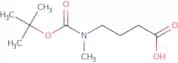
CAS:<p>Please enquire for more information about Bz-Nle-Lys-Arg-Arg-AMC trifluoroacetate salt including the price, delivery time and more detailed product information at the technical inquiry form on this page</p>Formula:C41H60N12O7·C2HF3O2Purity:Min. 95%Color and Shape:White PowderMolecular weight:832.99 g/molBoc-N-Methyl-gaMMa-aMinobutyric acid
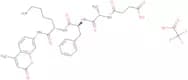
CAS:<p>Please enquire for more information about Boc-N-Methyl-gaMMa-aMinobutyric acid including the price, delivery time and more detailed product information at the technical inquiry form on this page</p>Formula:C10H19NO4Purity:Min. 95%Molecular weight:217.26 g/molSuc-Ala-Phe-Lys-AMC trifluoroacetate salt
CAS:<p>Please enquire for more information about Suc-Ala-Phe-Lys-AMC trifluoroacetate salt including the price, delivery time and more detailed product information at the technical inquiry form on this page</p>Formula:C32H39N5O8·C2HF3O2Purity:Min. 95%Molecular weight:735.7 g/mol12-Doxyl stearic acid
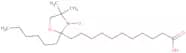
CAS:<p>12-Doxyl stearic acid is a fatty acid that inhibits the vasoactive intestinal peptide (VIP). The inhibitory effect of 12-Doxyl stearic acid on VIP was demonstrated by incubating the cells with this fatty acid and measuring the change in mitochondrial Ca2+ concentration. This inhibition was shown to be due to the inhibition of fatty acids and not an effect on Ca2+ ion channels. Fatty acids are important for normal cellular function, such as maintaining membrane fluidity and aiding in signal transduction. 12-Doxyl stearic acid has been shown to inhibit the production of cardiac fatty acids and may be useful in treating cardiac disorders. 12-Doxyl stearic acid also has a fluorescence probe that can be used to study how cells react to different conditions, such as changes in water vapor or pH levels.</p>Formula:C22H42NO4Purity:Min. 95%Color and Shape:Yellow Clear LiquidMolecular weight:384.57 g/molCyclo(-Arg-Ala-Asp-D-Phe-Lys) trifluoroacetate salt
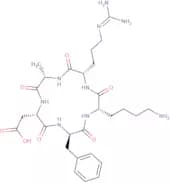
CAS:<p>Cyclo(-Arg-Ala-Asp-D-Phe-Lys) trifluoroacetate salt is a peptidomimetic that inhibits the growth of tumor cells by inhibiting angiogenesis, which is the formation of new blood vessels. It has been shown to effectively inhibit the proliferation of endothelial cells and decrease tumor vasculature in human ovarian carcinoma. Cyclo(-Arg-Ala-Asp-D-Phe-Lys) trifluoroacetate salt binds to cyclic peptides in the body and prevents them from being broken down by peptidases. This increases their uptake into cancer cells and inhibits angiogenesis, leading to a decrease in tumor size and number.</p>Formula:C28H43N9O7Purity:Min. 95%Molecular weight:617.7 g/mol4-Chloro-Nicotinic acid ethyl ester hydrochloride
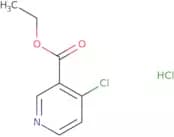
CAS:<p>4-Chloro-Niacin is a lead compound for the treatment of diabetes. The drug is an agonist of the G protein coupled receptor, which is involved in glucose homeostasis and insulin secretion. 4-Chloro-Niacin has been shown to decrease blood glucose levels in diabetic rats by activating the G protein coupled receptor, thereby increasing the release of insulin from pancreatic beta cells. This compound also has an affinity for pyridine nucleotide receptors, suggesting that it may be useful for treating metabolic syndromes.</p>Formula:C8H8ClNO2·HClPurity:Min. 95%Molecular weight:222.07 g/mol(D-Lys(nicotinoyl)1,b-(3-pyridyl)-Ala3,3,4-dichloro-D-Phe5,Asn6,D-Trp7·9, Nle 11)-Substance P trifluoroacetate salt
CAS:<p>Substance P is a tachykinin neuropeptide that belongs to the tachykinin family. It is found in the central and peripheral nervous system and has been shown to have an important role in locomotor activity, protein synthesis, receptor activity, and neurotransmitter release. Substance P is also associated with a number of diseases such as infectious diseases, sciatic nerve pain, and vasoactive intestinal peptide (VIP) production. This substance has been used for the diagnosis of neurogenic bladder dysfunction by measuring its effects on urinary bladder contractility.</p>Formula:C86H104Cl2N18O13Purity:Min. 95%Molecular weight:1,668.76 g/mol