Carboxylic Acids
Carboxylic acids are organic molecules characterized by having a carboxyl-type functional group (-COOH). These acids are fundamental in various chemical reactions, including esterification, amidation, and decarboxylation. Carboxylic acids are widely used in the production of pharmaceuticals, polymers, and agrochemicals. In this section, you can find a large number of carboxylic acids ready to be used. At CymitQuimica, we provide a broad range of high-quality carboxylic acids to support your research and industrial applications.
Found 12453 products of "Carboxylic Acids"
Sort by
Purity (%)
0
100
|
0
|
50
|
90
|
95
|
100
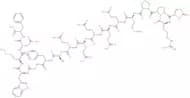
5(6)-TAMRA-HIV-1 tat Protein (47-57) trifluoroacetate salt
CAS:<p>Please enquire for more information about 5(6)-TAMRA-HIV-1 tat Protein (47-57) trifluoroacetate salt including the price, delivery time and more detailed product information at the technical inquiry form on this page</p>Formula:C89H138N34O18Purity:Min. 95%Molecular weight:1,972.27 g/molBradykinin (1-7) acetate salt
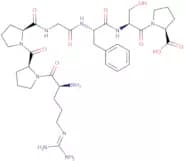
CAS:<p>Bradykinin (1-7) acetate salt H-Arg-Pro-Pro-Gly-Phe-Ser-Pro-OH acetate salt is a synthetic peptide that was designed to simulate the activity of bradykinin. It has been shown to be effective in the treatment of angina pectoris and as an analgesic. This peptide can also be used in the analysis of carboxypeptidase activity, by adding it to homogenates and measuring the reaction products. Bradykinin (1-7) acetate salt H-Arg-Pro-Pro-Gly-Phe-Ser-Pro-OH acetate salt can also be used to analyze salivary glands, activated erythrocytes, and silicon wafers. It is particularly useful for examining morphology and nanowires.</p>Formula:C35H52N10O9Purity:Min. 95%Molecular weight:756.85 g/molNeuromedin U-8 (porcine) trifluoroacetate salt
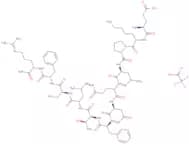
CAS:<p>Neuromedin U-8 (porcine) trifluoroacetate salt H-Tyr-Phe-Leu-Phe-Arg-Pro-Arg-Asn-NH2 trifluoroacetate salt is a molecule that inhibits the action of vasoactive intestinal peptide. It is a peptide hormone that has been shown to be involved in the regulation of bowel function and blood pressure. Neuromedin U-8 (porcine) trifluoroacetate salt H-Tyr-Phe-Leu-Phe-Arg-Pro-Arg-Asn NH2 trifluoroacetate salt has also been shown to inhibit cell proliferation, cancer, and inflammatory bowel disease. Neuromedin U 8 (porcine) trifluoroacetate salt H Tyr Phe Leu Phe Arg Pro Arg Asn NH2 trifluoroacetate salt binds to the receptor for</p>Formula:C54H78N16O10Purity:Min. 95%Molecular weight:1,111.3 g/molAmyloid P Component (27-38) amide trifluoroacetate salt
CAS:<p>Please enquire for more information about Amyloid P Component (27-38) amide trifluoroacetate salt including the price, delivery time and more detailed product information at the technical inquiry form on this page</p>Formula:C68H107N19O17SPurity:Min. 95%Molecular weight:1,494.76 g/molFulvic acid
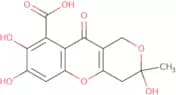
CAS:<p>Fulvic acid is a natural organic compound that has been used in clinical and biological properties. It is a fluorescent molecule with a high quantum yield, which makes it an ideal candidate for use as a fluorescence probe. Fulvic acid has been shown to form stable complexes with malonic acid, which may be due to the strong hydrogen bonding interactions between these two molecules. The fluorescence emission spectrum of fulvic acid is sensitive to the pH of the reaction solution, and it can be used as a thermodynamic data indicator. Fulvic acid also has low toxicity, which makes it suitable for use in laboratory studies.</p>Formula:C14H12O8Purity:Min. 90%Color and Shape:PowderMolecular weight:308.24 g/molKisspeptin-13 (human) trifluoroacetate salt
CAS:<p>Please enquire for more information about Kisspeptin-13 (human) trifluoroacetate salt including the price, delivery time and more detailed product information at the technical inquiry form on this page</p>Formula:C78H107N21O18Purity:Min. 95%Molecular weight:1,626.81 g/mol16-Mercaptohexadecanoic acid
CAS:<p>16-Mercaptohexadecanoic acid (16MHDA) is a fatty acid that has been shown to be an effective inhibitor of the enzyme fatty acid synthase. This enzyme is responsible for the synthesis of long-chain polyunsaturated fatty acids and their derivatives, which are key components of cell membranes and also act as signaling molecules. 16MHDA can be used in the treatment of diseases such as psoriasis, rheumatoid arthritis, and cancer. 16MHDA has been shown to have a high detection sensitivity and activity index when used in electrochemical impedance spectroscopy experiments. The x-ray diffraction data show that 16MHDA forms an acid complex with its substrate, which is thought to be the reaction mechanism. Colloidal gold has been used to study the interaction between 16MHDA and DNA duplexes. This compound was also found to have monoclonal antibody binding properties in human serum samples.</p>Formula:C16H32O2SPurity:Min. 95%Color and Shape:PowderMolecular weight:288.49 g/molH-Leu-Trp-Met-Arg-Phe-OH acetate salt
CAS:<p>H-Leu-Trp-Met-Arg-Phe-OH acetate salt is a molecule that transports amino acids across the cell membrane of bacteria, preventing bacterial growth. It is produced by proctolin and functional groups in dental plaque. This compound has been shown to inhibit the growth of bacteria in vitro by binding to hypochlorous acid, which is part of the antimicrobial activity of human neutrophils. H-Leu-Trp-Met-Arg-Phe-OH acetate salt has been used as a tracer for studying amino acid transport in E. coli cells and its uptake into extracellular vesicles. The product can also be used as an antiplaque agent due to its ability to inhibit the acid transport system and uptake of amino acids from the environment.</p>Formula:C37H53N9O6SPurity:Min. 95%Molecular weight:751.94 g/molVIP (6-28) (human, mouse, rat) trifluoroacetate salt
CAS:<p>VIP (6-28) (human, mouse, rat) trifluoroacetate salt H-Phe-Thr-Asp-Asn-Tyr-Thr-Arg-Leu-Arg-Lys-Gln-Met-Ala-Val-Lys -Lys-Tyr-Leu is a prophylactic agent that is used to prevent the development of intestinal peptide induced myocardial fibrosis. It has been shown to reduce the incidence and severity of cardiovascular diseases. VIP (6/28) has a vasoactive effect on the intestines and may also have an effect on the cardiovascular system.</p>Formula:C126H207N37O34SPurity:Min. 95%Molecular weight:2,816.29 g/molIndole-3-acetic-L-alanine
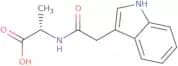
CAS:<p>Indole-3-acetic-L-alanine is a plant hormone that regulates root formation and transport. It is found in all plants, but the concentration varies depending on the plant, tissue type, and growth conditions. It has been shown to regulate root formation in triticum aestivum by inhibiting auxin transport to the roots. Indole-3-acetic acid also inhibits auxin transport to the shoot apex, leading to increased branching in triticum aestivum. This compound is hydrolyzed by root cell enzymes into indole-3-acetate and L-alanine. Genetic mechanisms underlying this phenomenon are not well understood at this time.</p>Formula:C13H14N2O3Purity:Min. 95%Color and Shape:PowderMolecular weight:246.26 g/molAcetyl-Exenatide trifluoroacetate salt
CAS:<p>Please enquire for more information about Acetyl-Exenatide trifluoroacetate salt including the price, delivery time and more detailed product information at the technical inquiry form on this page</p>Formula:C186H284N50O61SPurity:Min. 95%Molecular weight:4,228.61 g/molGastrin I (rat) trifluoroacetate salt
CAS:<p>Trifluoroacetate salt</p>Formula:C94H128N22O31S2Purity:Min. 95%Molecular weight:2,126.28 g/molBiotinyl-Obestatin (human) trifluoroacetate salt
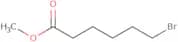
CAS:<p>Please enquire for more information about Biotinyl-Obestatin (human) trifluoroacetate salt including the price, delivery time and more detailed product information at the technical inquiry form on this page</p>Formula:C126H190N34O35SPurity:Min. 95%Molecular weight:2,773.13 g/mol6-Bromohexanoic acid methyl ester
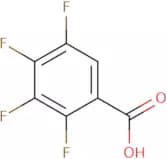
CAS:<p>6-Bromohexanoic acid methyl ester is a linker that can be used in the synthesis of amides. This compound is synthesized by reaction between 2-bromobutyric acid and malonic acid, followed by hydrolysis with sodium hydroxide. 6-Bromohexanoic acid methyl ester is an efficient method for the preparation of amides. It is biologically active and has been shown to have anti-inflammatory properties in biological studies.</p>Formula:C7H13BrO2Purity:Min. 95%Color and Shape:Clear LiquidMolecular weight:209.08 g/mol2,3,4,5-Tetrafluorobenzoic acid
CAS:<p>Tetrafluorobenzoic acid is a synthetic chemical that is used in the synthesis of antimicrobial agents. Tetrafluorobenzoic acid has been shown to bind to the hydroxyl group of 2,3,4,5-tetrafluorobenzoyl chloride and form a covalent bond. The reaction solution was analyzed using crystallography and showed that there are no intermolecular hydrogen bonds between tetrafluorobenzoic acid molecules. The crystal structure was determined by X-ray diffraction analysis and found that the intramolecular hydrogen bonding may be responsible for the anti-microbial activity of this substance.</p>Formula:C7H2F4O2Molecular weight:194.08 g/molLIP2 (human) trifluoroacetate salt
<p>Please enquire for more information about LIP2 (human) trifluoroacetate salt including the price, delivery time and more detailed product information at the technical inquiry form on this page</p>Formula:C184H288N58O58Purity:Min. 95%Molecular weight:4,240.61 g/molNeuromedin U-23 (rat) trifluoroacetate salt
CAS:<p>Neuromedin U-23 (rat) is a peptide that belongs to the family of tachykinins, which are small neuropeptides that act as neurotransmitters in the central nervous system. It is a potent stimulator of intestinal motility and has been shown to have protective effects against oxidative stress in cells. Neuromedin U-23 (rat) shares sequence similarity with human neuromedin N-19 and binds to the same receptors in the brain, suggesting it may have similar physiological effects. This peptide has been shown to inhibit tumor cell growth by inducing apoptosis, but it does not appear to have any effect on healthy cells.</p>Formula:C124H180N34O31Purity:Min. 95%Molecular weight:2,642.97 g/moltert-Butyl cis-4-hydroxycyclohexylcarbamate
CAS:<p>Tert-butyl cis-4-hydroxycyclohexylcarbamate is a pharmacological agent that has been shown to have anticonvulsant activity. It is a phenytoin amide that has neurotoxic effects and can cause convulsions. Tert-butyl cis-4-hydroxycyclohexylcarbamate binds to the sulfonamide site on the enzyme GABA transaminase, which converts GABA into succinic semialdehyde, thereby inhibiting the synthesis of GABA. This drug also inhibits the production of acetaldehyde from ethanol by preventing oxidation of NADH and NADPH. The tert-butyl cis-4-hydroxycyclohexylcarbamate was found to have an anticonvulsant effect in animals when given intravenously and orally. It also showed a protective effect against electroshock seizures in rats, suggesting an anticonvulsant activity.</p>Formula:C11H21NO3Purity:Min. 95%Color and Shape:White PowderMolecular weight:215.29 g/mol4-(4-Phenylbutoxy)benzoic acid
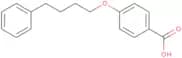
CAS:<p>4-(4-Phenylbutoxy)benzoic acid is an organic compound that is produced by the reaction of 4-hydroxybenzoic acid with a Grignard reagent. The 4-hydroxybenzoic acid reacts with magnesium to form magnesium chloride and p-hydroxybenzoic acid, which then reacts with a Grignard reagent to form the desired product. This compound has been used in wastewater treatment and as an intermediate in the synthesis of dyes, perfumes, and pharmaceuticals. 4-(4-Phenylbutoxy)benzoic acid has also been used as a starting material for synthesizing other compounds such as chlorobenzene and p-hydroxybenzoic acid.</p>Formula:C17H18O3Purity:Min. 95%Molecular weight:270.32 g/molFmoc-L-α-aminobutyric acid
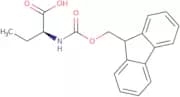
CAS:<p>Fmoc-L-alpha-aminobutyric acid is a synthetic amino acid that is used as a linker in solid-phase peptide synthesis. It is also used to synthesize analogs of the serine protease NS3, which are postulated to inhibit hepatitis C virus replication by preventing the release of viral RNA from infected cells. Fmoc-L-alpha-aminobutyric acid has been shown to have anti-viral activity against the influenza virus and HIV.</p>Formula:C19H19NO4Purity:Min. 98 Area-%Color and Shape:PowderMolecular weight:325.36 g/mol