Carboxylic Acids
Carboxylic acids are organic molecules characterized by having a carboxyl-type functional group (-COOH). These acids are fundamental in various chemical reactions, including esterification, amidation, and decarboxylation. Carboxylic acids are widely used in the production of pharmaceuticals, polymers, and agrochemicals. In this section, you can find a large number of carboxylic acids ready to be used. At CymitQuimica, we provide a broad range of high-quality carboxylic acids to support your research and industrial applications.
Found 12453 products of "Carboxylic Acids"
Sort by
Purity (%)
0
100
|
0
|
50
|
90
|
95
|
100
Angiotensin A (1-7) trifluoroacetate
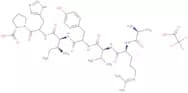
CAS:<p>Endogenous heptapetide which causes vasodilation and has anti-hypertensive properties.</p>Formula:C40H62N12O9•(C2HF3O2)xPurity:Min. 95%Color and Shape:PowderMolecular weight:855 g/molAmylin (free acid) (human) trifluoroacetate salt
CAS:<p>Please enquire for more information about Amylin (free acid) (human) trifluoroacetate salt including the price, delivery time and more detailed product information at the technical inquiry form on this page</p>Formula:C165H260N50O56S2Purity:Min. 95%Molecular weight:3,904.27 g/moltert-Butyl (2R,3S)-(-)-6-oxo-2,3-diphenyl-4-morpholinecarboxylate
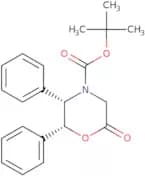
CAS:<p>tert-Butyl (2R,3S)-(-)-6-oxo-2,3-diphenyl-4-morpholinecarboxylate is a chiral compound that contains two stereogenic centers. It is a racemate of enantiomers. The enantiomeric purity can be determined by the preparative method. This compound is soluble in water and is stable in neutral or acidic conditions. It has been shown to act as an α-amino acid and to inhibit glycine uptake by neurons.</p>Formula:C21H23NO4Purity:Min. 95%Color and Shape:SolidMolecular weight:353.41 g/mol4-[2-[[(1S)-1-(2-Aminophenyl)-3-methylbutyl]amino]-2-oxoethyl]-2-ethoxybenzoic acid
CAS:<p>Bosentan is a potent inhibitor of the uptake of organic anions. It is used in the treatment of pulmonary arterial hypertension and has been shown to be effective against pravastatin-resistant HIV protease inhibitors, such as saquinavir, quinidine, and rosuvastatin. Bosentan inhibits uptake by binding to the transporter protein at a site that does not overlap with the binding site for organic anion substrates. This leads to a change in kinetic parameters for substrates, such as pravastatin and saquinavir. The binding site on bosentan may also be elucidated through monolayer experiments with efflux transporters.</p>Formula:C22H28N2O4Purity:Min. 95%Molecular weight:384.47 g/molIsopropyl 2-amino-4-hydroxy-5,8-dihydropyrido[3,4-d]pyrimidine-7(6H)-carboxylate
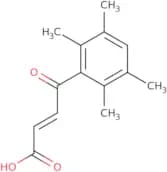
CAS:<p>Please enquire for more information about Isopropyl 2-amino-4-hydroxy-5,8-dihydropyrido[3,4-d]pyrimidine-7(6H)-carboxylate including the price, delivery time and more detailed product information at the technical inquiry form on this page</p>Formula:C11H16N4O3Purity:Min. 95%Molecular weight:252.27 g/mol3-(2,3,5,6-Tetramethylbenzoyl)-acrylic acid
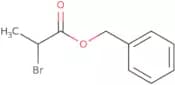
CAS:<p>3-(2,3,5,6-Tetramethylbenzoyl)-acrylic acid is a versatile building block for the synthesis of complex compounds. It is used as a reagent to make other chemicals and has been used in the synthesis of research chemicals. 3-(2,3,5,6-Tetramethylbenzoyl)-acrylic acid is also useful as an intermediate or scaffold compound in organic chemistry. This product has high purity and quality.</p>Formula:C14H16O3Purity:Min. 95%Molecular weight:232.28 g/mol2-Bromopropionic acid benzyl ester
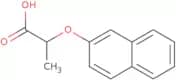
CAS:<p>2-Bromopropionic acid benzyl ester is a synthetic compound with a molecular weight of 220.24 g/mol. It is soluble in organic solvents and has a hydroxyl group at its alpha position. 2-Bromopropionic acid benzyl ester is used in the synthesis of beta-cyclodextrin, which is an important biomaterial for drug delivery as well as other applications. 2-Bromopropionic acid benzyl ester also has antioxidant properties and can be used to treat leukemia cells by inhibiting the production of reactive oxygen species (ROS).</p>Formula:C10H11BrO2Purity:Min. 95%Molecular weight:243.1 g/mol2-(2-Naphthyloxy)propanoic acid
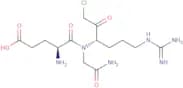
CAS:<p>2-(2-Naphthyloxy)propanoic acid is a naphthalene derivative that is found in the plant species Carthamus tinctorius. It has been shown to have potent antagonist activity against the NMDA receptor, as well as antinociceptive and analgesic properties in vivo. 2-(2-Naphthyloxy)propanoic acid also shows potent anti-inflammatory and cardioprotective effects in vitro and in vivo. 2-(2-Naphthyloxy)propanoic acid can be used for the treatment of bone cancer, congestive heart failure, diabetic neuropathy, or other disorders of the peripheral nervous system.</p>Formula:C13H12O3Purity:Min. 95%Molecular weight:216.23 g/molH-Glu-Gly-Arg-chloromethylketone trifluoroacetate salt
CAS:<p>H-Glu-Gly-Arg-chloromethylketone trifluoroacetate salt is an anticoagulant drug that prevents the formation of blood clots by inhibiting the enzyme thrombin. This drug is effective in enhancing blood flow and oxygen supply to the heart and other organs. H-Glu-Gly-Arg-chloromethylketone trifluoroacetate salt has been shown to have a positive effect on patients with congestive heart failure. It has also been used as an adjuvant therapy in bypassing procedures, where clotting occurs at the site of an artificial conduit placed in the body to allow blood flow between two points. In vitro studies have demonstrated that this drug inhibits protease activity, which may be due to its ability to inhibit fibrinogen and serine protease activity.</p>Formula:C14H25ClN6O5Purity:Min. 95%Molecular weight:392.84 g/molN,N-Bis(carboxymethyl)-L-glutamic acid
CAS:<p>N,N-bis(Carboxymethyl)-L-glutamic acid is a synthetic compound that functions as a disinfectant. It has been shown to be effective against bacteria and fungi in vitro, with an efficacy of over 90%. N,N-bis(Carboxymethyl)-L-glutamic acid is used as a treatment for tumors due to its ability to penetrate the tumor cells and inhibit fatty acid uptake. This compound also prevents the formation of new blood vessels by inhibiting the synthesis of DNA and RNA. N,N-bis(Carboxymethyl)-L-glutamic acid can be used in coatings for metals or metal surfaces that are exposed to water or air because it is biodegradable and noncorrosive.</p>Formula:C9H13NO8Purity:Min. 95%Color and Shape:Clear LiquidMolecular weight:263.2 g/mol1-Adamantylphosphonic acid
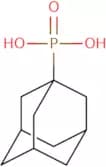
CAS:<p>1-Adamantylphosphonic acid (1APA) is a trifluoroacetic acid derivative that is used as an organic solvent. It is also a catalyst in organic chemistry. 1APA can be used to catalyze the carbonylation of olefins with phosphines, which are ligands that bind to metal compounds and facilitate chemical reactions. Ferrocene, adamantyl, and metallocene are all examples of ligands. 1APA is also used as a reagent in the synthesis of phosphine ligands, which are used in catalytic reactions.</p>Formula:C10H17O3PPurity:Min. 95%Molecular weight:216.21 g/mol2,4-Dihydroxybenzenesulfonic acid
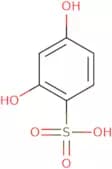
CAS:<p>2,4-Dihydroxybenzenesulfonic acid is a chemical compound that is used as a polymerization catalyst. It is most commonly used in the production of polyoxyethylene and copolymers. The catalytic activity of 2,4-dihydroxybenzenesulfonic acid is due to its acid group and hydroxy groups. This chemical can also be prepared by the reaction of resorcinol and hydrogen peroxide. The fluidity of this compound can be increased by adding an appropriate fluidizing agent such as peroxide or ammonium persulfate.</p>Formula:C6H6O5SPurity:Min. 95%Molecular weight:190.17 g/molN,N'-Bis(2,6-diisopropylphenyl)-3,4,9,10-perylenetetracarboxylic diimide
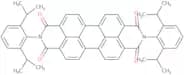
CAS:<p>N,N'-Bis(2,6-diisopropylphenyl)-3,4,9,10-perylenetetracarboxylic diimide is a molecule that has an optimum concentration of 0.5 M. It has a hydrogen bond donor and acceptor and is optically active. This molecule displays fluorescence properties and is inorganic with a chloride acceptor group. N,N'-Bis(2,6-diisopropylphenyl)-3,4,9,10-perylenetetracarboxylic diimide has been shown to have high photostability and to be enhanced by light emission from a diode. This molecule also has carbonyl groups that are electron donors for the fluorescence process.</p>Formula:C49H50N6O4Purity:Min. 95 Area-%Color and Shape:PowderMolecular weight:786.96 g/molDecanoyl-Arg-Arg-Leu-Leu-chloromethylketone trifluoroacetate salt
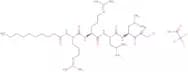
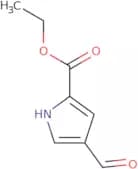
CAS:<p>Decanoyl-arginine-arginine-leucine-chloromethylketone trifluoroacetate salt is a prohormone that is biosynthesized from the amino acid decanoic acid. It has been shown to inhibit fatty acid synthesis and mineralization in tissue samples, as well as drug target enzymes such as human pathogens. Decanoyl-arginine-arginine-leucine-chloromethylketone trifluoroacetate salt has also been shown to have insulin resistance properties and may be used for the treatment of metabolic disorders.</p>Formula:C35H67ClN10O5Purity:Min. 95%Molecular weight:743.42 g/molEthyl 4-formylpyrrole-2-carboxylate
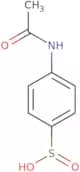
CAS:<p>Ethyl 4-formylpyrrole-2-carboxylate is a chemical compound that is used as an intermediate in organic synthesis. The compound has been reported to have spectra at m/z (M+1) of 168, 156 and 140. It also has been reported to have yields of about 98% when synthesized from ethyl azidoacetate and ethyl bromoacetate. The mass spectra show the molecular ion peak at m/z of 168, 156 and 140 corresponding to the structure of ethyl 4-formylpyrrole-2-carboxylate. Furan, n-substituted furan, thiophene, acetamide and cyclization are other possible structures for this molecule.</p>Formula:C8H9NO3Purity:Min. 95%Molecular weight:167.16 g/mol4-Acetamidobenzenesulfonic acid
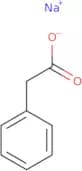
CAS:<p>4-Acetamidobenzenesulfonic acid (4ABS) is an organic compound that is used as a sulfa drug. It is found in the filtrate of the chemical reaction between inulin and sulfamic acid. 4ABS acts as an amine catalyst for acyl transfer reactions. 4ABS also reacts with chloroethanol to form a primary amino group on a colloidal particle surface. This reaction has been shown to be reversible, where hydrochloric acid can react with 4ABS to form the corresponding sulfamic acid.</p>Formula:C8H9NO3SPurity:Min. 95%Molecular weight:199.23 g/molSodium phenylacetate
CAS:Controlled Product<p>Sodium phenylacetate is a chemical compound that is used as an antifungal agent in vitro. It has also been shown to have anti-proliferative and cytotoxic effects on neuroblastoma cells. The physiological function of sodium phenylacetate is not well understood, but it may act as a neurotransmitter by inhibiting the release of acetylcholine or by regulating cell signaling pathways. Sodium phenylacetate may also inhibit angiogenesis, which would limit the growth of cancerous tumors.</p>Formula:C8H7NaO2Purity:Min. 95%Color and Shape:PowderMolecular weight:158.13 g/mol2-[(2,3-Dimethylphenyl)amino]nicotinic acid
CAS:<p>2-[(2,3-Dimethylphenyl)amino]nicotinic acid is an arylpropionic acid that has been designed for the treatment of cancer. It is a neutral compound that can be crystallized or sterilized and then injected or implanted into tissues. The compound can be used as a diagnostic tool to target specific tissues in the body by using iontophoresis or organic solvents. 2-[(2,3-Dimethylphenyl)amino]nicotinic acid interacts with chlorine ions to form a chloride derivative, which is then transported through the tissue. This process can be reversed by adding an acid solution to the tissue, which will cause the chloride ions to break down into hydrogen and chloride ions.</p>Formula:C14H14N2O2Purity:Min. 95%Molecular weight:242.27 g/molCromoglicic acid D5
CAS:<p>Please enquire for more information about Cromoglicic acid D5 including the price, delivery time and more detailed product information at the technical inquiry form on this page</p>Formula:C6D5BrPurity:Min. 95%Color and Shape:PowderMolecular weight:473.40 g/molLinolenic acid - 85%
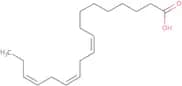
CAS:<p>Linolenic acid is a polyunsaturated fatty acid that is found in plants, animals, and human cells. Linolenic acid has been shown to suppress the growth of cancer cells by inhibiting the production of linoleic acid, which can stimulate the growth of cancer cells. Linolenic acid has also been shown to cause skin reactions such as erythema and pruritus when applied topically or taken orally. Linolenic acid may be used for the treatment of ovarian follicles. In addition, linolenic acid has been shown to have an allergic response in humans when it is injected into the vein. It is important to note that linolenic acid can inhibit T-cell proliferation and cytokine production in a dose-dependent manner. Furthermore, linolenic acid inhibits lipopolysaccharide-induced acute lung injury in mice by reducing inflammatory cell infiltration and neutrophil activation.</p>Formula:C18H30O2Purity:Min. 95%Molecular weight:278.43 g/mol

![4-[2-[[(1S)-1-(2-Aminophenyl)-3-methylbutyl]amino]-2-oxoethyl]-2-ethoxybenzoic acid](/_next/image/?url=https%3A%2Fstatic.cymitquimica.com%2Fproducts%2F3D%2Fthumb-webp%2FFD21379.webp&w=3840&q=75)
![Isopropyl 2-amino-4-hydroxy-5,8-dihydropyrido[3,4-d]pyrimidine-7(6H)-carboxylate](/_next/image/?url=https%3A%2Fstatic.cymitquimica.com%2Fproducts%2F3D%2Fthumb-webp%2FFI135088.webp&w=3840&q=75)

![2-[(2,3-Dimethylphenyl)amino]nicotinic acid](/_next/image/?url=https%3A%2Fstatic.cymitquimica.com%2Fproducts%2F3D%2Fthumb-webp%2FFD136106.webp&w=3840&q=75)