Carboxylic Acids
Carboxylic acids are organic molecules characterized by having a carboxyl-type functional group (-COOH). These acids are fundamental in various chemical reactions, including esterification, amidation, and decarboxylation. Carboxylic acids are widely used in the production of pharmaceuticals, polymers, and agrochemicals. In this section, you can find a large number of carboxylic acids ready to be used. At CymitQuimica, we provide a broad range of high-quality carboxylic acids to support your research and industrial applications.
Found 12454 products of "Carboxylic Acids"
Sort by
Purity (%)
0
100
|
0
|
50
|
90
|
95
|
100
Oxalic acid
CAS:<p>Oxalic acid (Ethanedioic acid) is a strong dicarboxylic acid occurring in many plants and vegetables, produced in the body by metabolism of glyoxylic acid.</p>Formula:C2H2O4Purity:98.51% - 99.39%Color and Shape:White Solid CrystallineMolecular weight:90.03D(-)-2-Aminobutyric acid
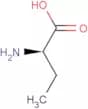
CAS:<p>D(-)-2-Aminobutyric acid is the substrate of D-amino acid oxidase.</p>Formula:C4H9NO2Purity:99.89%Color and Shape:SolidMolecular weight:103.12rosmarinate acid
CAS:Rosmarinate acid(Rosemary acid) inhibits MAO-A, MAO-B and COMT enzymes with IC50s of 50.1, 184.6 and 26.7 μM, respectivelyFormula:C18H16O8Purity:99.69%Color and Shape:SolidMolecular weight:360.31Creatine
CAS:<p>Creatine, an amino acid in vertebrates, forms phosphocreatine in muscle, aids energy transfer, is made in the liver, and mainly stored in muscles.</p>Formula:C4H9N3O2Purity:99.63% - 99.83%Color and Shape:Colourless To Light Yellow SolidMolecular weight:131.132,3-Diaminopropanoic acid hydrochloride
CAS:2,3-Diaminopropanoic acid hydrochloride (3-Amino-DL-alanine monohydrochloride) is used as a substrate for studying the action of aminopeptidase enzyme.Formula:C3H9ClN2O2Purity:99.63% - 99.84%Color and Shape:White To Slightly Beige Fine Crystalline PowderMolecular weight:140.571-Aminocyclopropane-1-carboxylic acid
CAS:1-Aminocyclopropane-1-carboxylic acid (ACC) is an intermediate in the synthesis of ethylene and protects against neuron cell death in vivo models of ischemia.Formula:C4H7NO2Purity:97.91% - 99.76%Color and Shape:CrystallineMolecular weight:101.1N-Acetyl-L-phenylalanine
CAS:<p>N-Acetyl-L-phenylalanine is essential for medical use, found in phenylketonuria patients' urine, and made by phenylalanine N-acetyltransferase.</p>Formula:C11H13NO3Purity:99.74%Color and Shape:SolidMolecular weight:207.23Malonic acid
CAS:Malonic acid inhibits succinate dehydrogenase; linked to malonyl-CoA decarboxylase deficiency.Formula:C3H4O4Purity:99.53%Color and Shape:SoildMolecular weight:104.06DL-Pyroglutamic acid
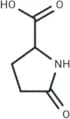
CAS:DL-Pyroglutamic acid exhibited a strong inactivating effect on hepatitis B surface antigen.Formula:C5H7NO3Purity:99.88%Color and Shape:White PowderMolecular weight:129.11β-N-methylamino-L-alanine hydrochloride
CAS:<p>β-N-methylamino-L-alanine hydrochloride (L-BMAA hydrochloride) is a neurotoxin produced by cyanobacteria, could cause ALS and other neurodegenerative diseases.</p>Formula:C4H11ClN2O2Purity:95.00% - 99.67%Color and Shape:SolidMolecular weight:154.6Glycylglycine
CAS:Glycylglycine (Diglycine) is a dipeptide used in biochemical research. It is the simplest and is used as a starting template for more complex peptides.Formula:C4H8N2O3Purity:≥95%Color and Shape:SolidMolecular weight:132.12Methylmalonic acid
CAS:<p>Methylmalonic acid (Isosuccinic acid) is a dicarboxylic acid that can be derived from methylmalonyl-coenzyme A.</p>Formula:C4H6O4Purity:98%Color and Shape:SolidMolecular weight:118.09Phosphoric Acid Ammonium Salt (1:1)
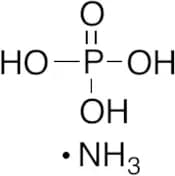
CAS:<p>Applications Phosphoric acid, ammonium salt (1:1) is a useful reagent for organic synthesis.<br></p>Formula:H3N·H3O4PColor and Shape:NeatMolecular weight:115.026Sebacic Acid
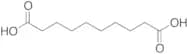
CAS:<p>Applications Sebacic Acid is a urinary metabolite that has been identified as an anti-fatigue biomarker.<br>References Ma, C. et. al.: J. Pharmaceut. Biomed. Anal. 105, 84 (2015)<br></p>Formula:C10H18O4Color and Shape:WhiteMolecular weight:202.25Acetylpyruvic Acid
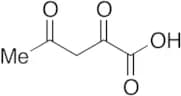
CAS:<p>Applications Acetylpyruvic acid is a derivative of pyruvic acid (P998900) which is an intermediate in sugar metabolism and in enzymatic carbohydrate degradation (alcoholic fermentation) where it is converted to acetaldehyde and CO2 by carboxylase. In muscle, Pyruvic acid (derived from glycogen) is reduced to lactic acid during exertion, which is reoxidized and partially retransformed to glycogen during rest. The liver can convert Pyruvic acid to alanine by amination. A diagnostic agent for Parkinson disease.<br>References Wenzel, A., et al.: J. Neurosci., 21, 53 (2001), Martinez., et al.: Development, 6, 851 (2002), Nakayama, K., et al.: J. Biochem., 146, 757 (2009), Tanaka, T., et al.: J. Pharmacol. Sci., 109, 24 (2009),<br></p>Formula:C5H6O4Color and Shape:NeatMolecular weight:130.1Hydrazine Acetate
CAS:Controlled Product<p>Applications Hydrazine acetate (cas# 7335-65-1) is a useful research chemical.<br></p>Formula:C2H8N2O2Color and Shape:NeatMolecular weight:92.12-Butoxyacetic Acid
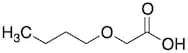
CAS:<p>Applications 2-butoxyacetic acid (cas# 2516-93-0) is a useful research chemical.<br></p>Formula:C6H12O3Color and Shape:NeatMolecular weight:132.162,6-Diaminopimelic Acid
CAS:Controlled Product<p>Applications 2,6-Diaminopimelic Acid is useful in biological studies involving amino acids and amino sugars as molecular indicators of the origins of organic matter in buried tephra soils.<br>References Hobara, S., et al.: Geoderma, 373, 114449 (2020)<br></p>Formula:C7H14N2O4Color and Shape:NeatMolecular weight:190.202-(4-Diethylamino-2-hydroxybenzoyl)benzoic Acid
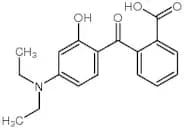
CAS:Controlled Product<p>Applications 2-(4-Diethylamino-2-hydroxybenzoyl)benzoic Acid<br></p>Formula:C18H19NO4Color and Shape:NeatMolecular weight:313.352,2-dimethyl-4-oxo-4-(propan-2-yloxy)butanoic acid
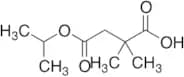
CAS:Controlled Product<p>Applications 2,2-dimethyl-4-oxo-4-(propan-2-yloxy)butanoic acid (cas# 1803601-41-3) is a useful research chemical.<br></p>Formula:C9H16O4Color and Shape:NeatMolecular weight:188.22Phenylglyoxylic Acid
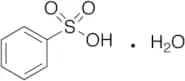
CAS:<p>Applications Phenylglyoxylic Acid (cas# 611-73-4) is a compound useful in organic synthesis.<br></p>Formula:C8H6O3Color and Shape:NeatMolecular weight:150.131Benzenesulfonic Acid Monohydrate
CAS:<p>Applications Benzensulfonic Acid Monohydrate is used in the synthesis of HER2/EFGR dual inhibitors in the treatment of cancers and displaying potency towards anti-tumor activity.<br>References Kawakita, Y. et al.: Bioorg. Med. Chem. Lett., 20, 6171 (2012);<br></p>Formula:C6H8O4SColor and Shape:NeatMolecular weight:176.19Ethyl Nitroacetate
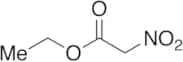
CAS:Controlled Product<p>Applications Ethyl Nitroacetate is an ester of nitrocarboxylic acid used as an intermediate in the preparation of unsubstituted amino acids.<br>References Sidorin, G.I.: Gig. Aspe. Okhr. Zdor. Nasel., 144 (1977);<br></p>Formula:C4H7NO4Color and Shape:NeatMolecular weight:133.14-(Methylsulfonyl)phenylacetic Acid
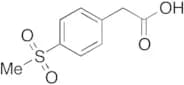
CAS:Controlled Product<p>Applications 4-(Methylsulfonyl)phenylacetic Acid is an intermediate used to prepare heterocyclic diaryl compounds as selective COX-2 inhibitors. It is also used to synthesize hydroxyfuranones as antioxidants and antiinflammatory agents.<br>References Eren, G., et al.: Bioorg. Med. Chem., 18, 6467 (2010); Weber, V., et al.: Bioorg. Med. Chem., 13, 4552 (2005)<br></p>Formula:C9H10O4SColor and Shape:NeatMolecular weight:214.24DL-3-phenyllactic acid
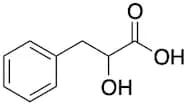
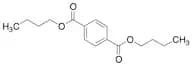
CAS:Controlled Product<p>Applications DL-3-phenyllactic acid had been identified as a urinary food intake biomarker for milk, cheese and soy-based drinks.<br>References Munger, L.H.; et al.: J. Proteome Res., 16, 3321 (2017)<br></p>Formula:C9H10O3Color and Shape:NeatMolecular weight:166.171,4-Dibutyl Benzene-1,4-dicarboxylate
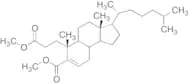
CAS:<p>Applications 1,4-dibutyl benzene-1,4-dicarboxylate (cas# 1962-75-0) is a useful research chemical.<br></p>Formula:C16H22O4Color and Shape:NeatMolecular weight:278.343,4-Secocholest-5-ene-3,4-dioic Acid Dimethyl Ester
CAS:Controlled Product<p>Applications 3,4-Secocholest-5-ene-3,4-dioic Acid Dimethyl Ester is an intermediate used in the synthesis of 3,4-Seco-solanidine-3,4-dioic Acid (S682410), which is a derivative of Solanidine (S682410).<br></p>Formula:C29H48O4Color and Shape:NeatMolecular weight:460.692-[(Phenylsulfanyl)methyl]benzenecarboxylic Acid
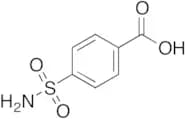
CAS:<p>Applications 2-[(phenylsulfanyl)methyl]benzenecarboxylic acid (cas# 1699-03-2) is a useful research chemical.<br></p>Formula:C14H12O2SColor and Shape:NeatMolecular weight:244.314-Sulfamoylbenzoic Acid
CAS:Controlled Product<p>Applications 4-Sulfamoylbenzoic Acid is used as a reagent in the synthesis of carbonic anhydrase inhibitors anticonvulsant agents.<br>References Singh, S. et al.: J. Enz. Inhib. Med. Chem., 31, 417 (2016);<br></p>Formula:C7H7NO4SColor and Shape:NeatMolecular weight:201.2Hexanedioic Acid Mono(4-hydroxybutyl) Ester
CAS:Controlled Product<p>Applications Hexanedioic Acid Mono(4-hydroxybutyl) Ester is an intermediate in the synthesis of aliphatic polyesters.<br>References McCabe, R. W., et al.: Tetrahedron., 60, 765 (2004);<br></p>Formula:C10H18O5Color and Shape:NeatMolecular weight:218.247(2E,6E)-3,7,11-Trimethyldodeca-2,6,10-trien-1-yl Acetate
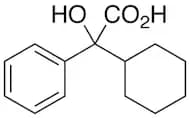
CAS:Controlled Product<p>Applications (2E,6E)-3,7,11-Trimethyldodeca-2,6,10-trien-1-yl Acetate is an intermediate in the synthesis of JHSB3 (J211030). JHSB3 is an acyclic sesquiterpenoid that regulates many aspects of insect physiology. Juvenile Hormone regulate development, reproduction, diapause, and polyphenisms.<br>References Kotaki, T., et al.: Org. Let., 11, 5234 (2009); Riddiford, L.: Adv. Insect Physiol., 24, 213 (1994); Wyatt, G., Davey, K.: Adv. Insect Physiol., 26, 1 (1996); Nijhout, H.: Insect Hormones (Princeton Univ. Press, Princeton) (1994)<br></p>Formula:C17H28O2Color and Shape:NeatMolecular weight:264.42-Cyclohexyl-2-hydroxy-phenylacetic Acid
CAS:Controlled Product<p>Impurity Oxybutynin USP Related Compound A<br>Applications An intermediate in the synthesis of oxybutynin (O868525). Oxybutynin USP Related Compound A.<br></p>Formula:C14H18O3Color and Shape:WhiteMolecular weight:234.293-Hydroxysuberic Acid
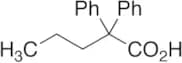
CAS:Controlled Product<p>Applications 3-Hydroxysuberic Acid is a derivative of sebacic acid (S211410) a urinary metabolite that has been identified as an anti-fatigue biomarker.<br>References Ma, C. et. al.: J. Pharmaceut. Biomed. Anal. 105, 84 (2015)<br></p>Formula:C8H14O5Color and Shape:NeatMolecular weight:190.192,2-Diphenylpentanoic Acid
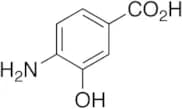
CAS:Controlled Product<p>Applications 2,2-Diphenylpentanoic Acid (cas# 841-32-7) is a compound useful in organic synthesis.<br></p>Formula:C17H18O2Color and Shape:NeatMolecular weight:254.324-Amino-3-hydroxybenzoic Acid
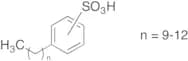
CAS:Controlled Product<p>Applications 4-Amino-3-hydroxybenzoic Acid is disubsituted benzoic acid used in the preparation of various pharmaceutical compounds such as sphingosine kinase inhibitors.<br>References Kono, K. et al.: J. Antibiot., 53, 759 (2000);<br></p>Formula:C7H7NO3Color and Shape:NeatMolecular weight:153.14Dodecylbenzenesulfonic Acid (mixture of isomers) (Technical Grade)
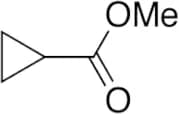
CAS:Controlled Product<p>Applications 4-Dodecylbenzenesulfonic acid<br> Not a dangerous good if item is equal to or less than 1g/ml and there is less than 100g/ml in the package<br></p>Formula:C18H30O3SColor and Shape:NeatMolecular weight:326.49Methyl Cyclopropane Carboxylate
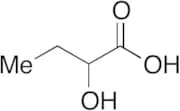
CAS:Controlled Product<p>Applications Methyl cyclopropane carboxylate is used as a reagent in the synthesis of N’-thiazole and N-pyrazole based inhibitors of MAP kinase p38α.<br>References Getlik, M. et al.: Eur. J. Med. Chem., 48, 1 (2012);<br></p>Formula:C5H8O2Color and Shape:NeatMolecular weight:100.1162-Hydroxybutanoic Acid
CAS:Controlled Product<p>Applications 2-Hydroxybutanoic Acid is an analyte used in the diagnoses of colorectal cancer as well as Type II diabetes. It is also used in the purification of the major Vibrio autoinducer and the study of its role in virulence factor production for cholera.<br>References Qiu, Y. et al.: J. Proteome Res., 8, 4844 (2009); Salek, R.. et al.: Phys. Genom., 29, 99, (2007); Higgins, D. et al.: Nature, 450, 883 (2007);<br></p>Formula:C4H8O3Color and Shape:NeatMolecular weight:104.1Ethyl 2-Chloracetoacetate
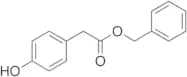
CAS:<p>Applications Ethyl 2-Chloracetoacetate is used in the preparation of oxazoles and thiazoles as agonists for peroxisome proliferator-activated receptor δ. It is also used to synthesize dimethylimidazothiadiazolecarbohydrazides with anticancer activities.<br> Not a dangerous good if item is equal to or less than 1g/ml and there is less than 100g/ml in the package<br>References Sznaidman, M., et al.: Bioorg. Med. chem. Lett., 13, 1517 (2003); Terzioglu, N., et al.: Eur. J. Med. Chem., 38, 781 (2003)<br></p>Formula:C6H9ClO3Color and Shape:NeatMolecular weight:164.59Benzyl (4-Hydroxyphenyl)acetate
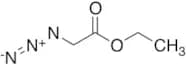
CAS:Controlled Product<p>Applications Intermediate in the preparation of Camostat metabolites.<br>References Bodor, N., et al.: Pharm. Res., 3, 120 (1984), Han, L., et al.: Biochem., 46, 1432 (2007),<br></p>Formula:C15H14O3Color and Shape:NeatMolecular weight:242.27Ethyl 2-Azidoacetate
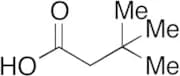
CAS:Controlled Product<p>Applications ethyl 2-azidoacetate (cas# 637-81-0) is a useful research chemical.<br></p>Formula:C4H7N3O2Color and Shape:NeatMolecular weight:129.123,3-Dimethylbutyric Acid
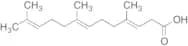
CAS:Controlled Product<p>Applications 3,3-Dimethylbutyric Acid is used in the synthesis of imidazo[4,5-c]pyridine derivatives as anitmicrobial agents.<br> Not a dangerous good if item is equal to or less than 1g/ml and there is less than 100g/ml in the package<br>References Jose. G., et. al.: Eur. J. Med. Chem., 77, 288 (2014)<br></p>Formula:C6H12O2Color and Shape:Clear Colourless To Light YellowMolecular weight:116.16(3E,7E)-4,8,12-Trimethyl-3,7,11-tridecatrienoic Acid
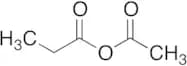
CAS:Controlled Product<p>Applications (3E,7E)-4,8,12-Trimethyl-3,7,11-tridecatrienoic Acid is a compound involved in a study on ligand-controlled regiodivergent Ni-catalyzed reductive carboxylation of allyl esters with CO2.<br>References Moragas, T., et al.: J. Am. Chem. Soc., 136, 17702-17705 (2014)<br></p>Formula:C16H26O2Color and Shape:NeatMolecular weight:250.38Acetyl Propionate
CAS:Controlled Product<p>Applications Acetic propionic anhydride<br></p>Formula:C5H8O3Color and Shape:NeatMolecular weight:116.1152(Z)-11-Tetradecenyl Acetate
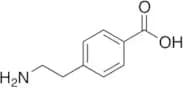
CAS:<p>Applications (Z)-11-Tetradecenyl Acetate is a sex pheremone component that can be found in various insect specie, such as O. nubilalis and Asian and European corn borers.<br>References Leary, G.P., et al.: Proc. Natl. Acad. Sci. U.S.A., 109, 14081 (2012);<br></p>Formula:C16H30O2Color and Shape:NeatMolecular weight:254.414-(2-Amino-ethyl)benzoic Acid
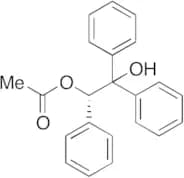
CAS:Controlled Product<p>Applications 4-(2-Amino-ethyl)-benzoic Acid is a useful reagent for the preparation of amino acid derivatives with anticancer activity.<br>References Kim, S., et al.: PCT Int. Appl. (2020), WO 2020204548 A1<br></p>Formula:C9H11NO2Color and Shape:White To Off-WhiteMolecular weight:165.18(S)-2-Hydroxy-1,2,2-triphenylethyl Acetate
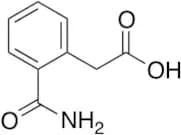
CAS:Controlled ProductFormula:C22H20O3Color and Shape:NeatMolecular weight:332.3922-(2-Carbamoylphenyl)acetic Acid
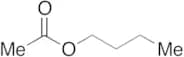
CAS:Controlled Product<p>Applications 2-(2-carbamoylphenyl)acetic acid (cas# 23362-56-3) is a useful research chemical.<br></p>Formula:C9H9NO3Color and Shape:BeigeMolecular weight:179.173Butyl Acetate
CAS:Controlled Product<p>Applications Butyl Acetate, can be used as a synthetic fruit flavoring in foods such as candy, ice cream, cheeses, and baked goods.<br> Not a dangerous good if item is equal to or less than 1g/ml and there is less than 100g/ml in the package<br>References Ullman's encyclopedia of industrial chemistry, 6th Ed., 1, 170 (2003);<br></p>Formula:C6H12O2Color and Shape:NeatMolecular weight:116.16











![2-[(Phenylsulfanyl)methyl]benzenecarboxylic Acid](/_next/image/?url=https%3A%2Fstatic.cymitquimica.com%2Fproducts%2FTR%2Fthumb-webp%2FB481480.webp&w=3840&q=75)