Carboxylic Acids
Carboxylic acids are organic molecules characterized by having a carboxyl-type functional group (-COOH). These acids are fundamental in various chemical reactions, including esterification, amidation, and decarboxylation. Carboxylic acids are widely used in the production of pharmaceuticals, polymers, and agrochemicals. In this section, you can find a large number of carboxylic acids ready to be used. At CymitQuimica, we provide a broad range of high-quality carboxylic acids to support your research and industrial applications.
Found 12453 products of "Carboxylic Acids"
Sort by
Purity (%)
0
100
|
0
|
50
|
90
|
95
|
100
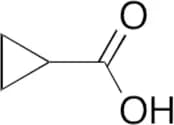
Cyclopropanecarboxylic Acid
CAS:<p>Applications Cyclopropanecarboxylic Acid is used as a reagent in the synthesis of substituted 4-(thiophen-2-ylmethyl)-2H-phthalazin-1-ones as potent PARP-1 inhibitors. Also used as a reagent in the synthesis of 2-alkyloxazoles as potent and selective PI4KIIIβ inhibitors demonstrating inhibition of HCV replication.<br> Not a dangerous good if item is equal to or less than 1g/ml and there is less than 100g/ml in the package<br>References Wang, L., et al.: Bioorg. Med. Chem. Lett., 24, 3739 (2014); Keaney, E.P., et al.: Bioorg. Med. Chem. Lett., 24, 3714 (2014)<br></p>Formula:C4H6O2Color and Shape:NeatMolecular weight:86.09Cyanuric Acid
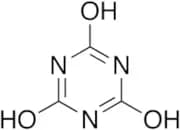
CAS:Controlled Product<p>Applications Diagnostic determination of Melamine and related compounds in kidney tissue.<br>References Mast, R., et al.: Food Chem. Toxicol., 21, 807 (1983), Yokley, R., et al.: J. Agric. Food Chem., 48, 3352 (2000), Ehling, S., et al.: Food Addit. Contam., 24, 1319 (2007), Vail, T., et al.: J. Anal. Toxicol., 31, 304 (2007),<br></p>Formula:C3H3N3O3Color and Shape:WhiteMolecular weight:129.07Maleic Acid
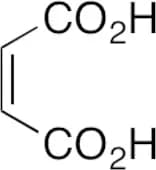
CAS:Controlled Product<p>Applications Maleic Acid is used in the synthesis of pyridoindolones as potent inhibitors of Aurora kinases. Also is a reagent in the preparation of TiO2/carbon nanotube composites.<br>References Le, L. et al.: ChemMedChem., 8, 289 (2013); Yao, Y. et al.: Env. Sci. Tech., 42, 4952 (2008)l<br></p>Formula:C4H4O4Color and Shape:WhiteMolecular weight:116.07Morpholin-4-yl Acetic Acid
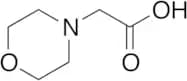
CAS:Controlled Product<p>Applications Morpholin-4-yl Acetic Acid was used in preparation of pyrrolidine-fused fullerene multicarboxylates by photoreaction.<br>References Gan, L., et al.: J. Org. Chem., 63, 4240 (1998).<br></p>Formula:C6H11NO3Color and Shape:NeatMolecular weight:145.16Difluoroacetic acid
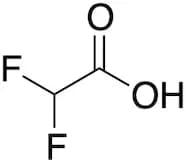
CAS:<p>Applications Difluoroacetic acid<br> Not a dangerous good if item is equal to or less than 1g/ml and there is less than 100g/ml in the package<br></p>Formula:C2H2F2O2Color and Shape:Light YellowMolecular weight:96.03N,N'-bis(2,6-Diisopropylphenyl)-1,6,7,12-tetraphenoxy-3,4,9,10-perylenetetracarboxylic Diimide
CAS:Controlled Product<p>Applications N,N'-Bis(2,6-diisopropylphenyl)-1,6,7,12-tetraphenoxy-3,4,9,10-perylenetetracarboxylic Diimide has applications in the photosensors and optical detectors.<br>References Wang, Shaojun, et al.: ACS Photonics, 5(6), 2478-2485 (2018);Wang, Hanlin, et al.: Adv. Mat., 29(32), n/a. (2017)<br></p>Formula:C72H58N2O8Color and Shape:NeatMolecular weight:1079.2392-Cyclopentyl-2-hydroxy-2-phenylacetic Acid
CAS:<p>Applications 2-Cyclopentyl-2-hydroxy-2-phenylacetic Acid is an impurity of Glycopyrrolate (G657000), a novel pharmaceutical compound based on PDE IV inhibitors; used in the treatment of respiratory complaints. It is used in the synthesis of muscarinic M3 receptor antagonists.<br>References Gomez, et al.: Br. J. Anaesth., 74, 549 (1995); Kumar, N. et al.: Bioorg. Med. Chem. Lett., 17, 5256 (2007);<br></p>Formula:C13H16O3Color and Shape:Off White To Light BrownMolecular weight:220.26Butyl Carbamate
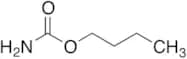
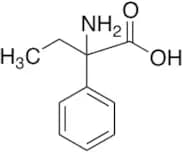
CAS:Controlled Product<p>Applications butyl carbamate (cas# 592-35-8) is a useful research chemical.<br></p>Formula:C5H11NO2Color and Shape:NeatMolecular weight:117.152-Amino-2-phenylbutyric Acid
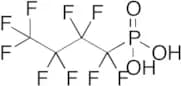
CAS:Controlled Product<p>Applications 2-Amino-2-phenylbutyric acid 96% (cas# 5438-07-3) is a useful research chemical.<br></p>Formula:C10H13NO2Color and Shape:NeatMolecular weight:179.22Perfluorobutylphosphonic Acid
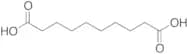
CAS:Controlled Product<p>Stability Hygroscopic<br>Applications Perfluorobutylphosphonic Acid, is a surfactant or antifoaming agent.<br></p>Formula:C4H2F9O3PColor and Shape:BrownMolecular weight:300.02Sebacic Acid
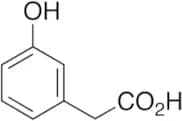
CAS:<p>Applications Sebacic Acid is a urinary metabolite that has been identified as an anti-fatigue biomarker.<br>References Ma, C. et. al.: J. Pharmaceut. Biomed. Anal. 105, 84 (2015)<br></p>Formula:C10H18O4Color and Shape:WhiteMolecular weight:202.253-Hydroxyphenylacetic Acid
CAS:<p>Applications 3-Hydroxyphenylacetic Acid (cas# 621-37-4) is a compound useful in organic synthesis.<br></p>Formula:C8H8O3Color and Shape:NeatMolecular weight:152.15Ethyl Diazoacetate (>90%)
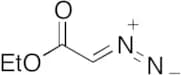
CAS:<p>Applications Ethyl Diazoacetate is used in the synthesis of Arteludovicinolide A as well as pyrimidoazepine analogs as seritonin 5-HT2A/C receptor ligands for treatment of obesity. This compound contains solvent for added stability.<br> E0<br>References Yang, H. et al.: Eur. J. Med. Chem., 63, 558 (2013); Kreuzer, A. et al.: Org. Lett., 15, 3420 (2013);<br></p>Formula:C4H6N2O2Purity:>90%Color and Shape:NeatMolecular weight:114.1[p-Terphenyl]-4,4''-dicarboxylic Acid
CAS:Controlled Product<p>Applications Used in the synthesis of substituted terphenyls.<br>References Strukelj, M., et al.: Science, 267, 1969 (1995), Burroughes, J., et al.: Nature, 347, 589 (1990),<br></p>Formula:C20H14O4Color and Shape:NeatMolecular weight:318.323-Hydroxyhexanedioic Acid
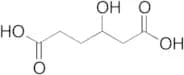
CAS:Controlled Product<p>Applications 3-Hydroxyhexanedioic Acid gets excreted in increased amounts in the human urine under conditions of medium-chain triglyceride (MCT) feeding, abnormal fatty acid oxidation (FAO) and fasting.<br>References Duran, M., et al.: Eur. J. Pediatr., 150, 190 (1991); Svendsen, J. S., et al.: J. Chromatogr. B., 337, 9 (1985); Tserng, K. Y., et al.: Metabolism, 40, 676 (1991); Tserng, K. Y., et al.: Metabolism, 445, 162 (1996)<br></p>Formula:C6H10O5Color and Shape:White SolidMolecular weight:162.14Dimethylammonium Dimethylcarbamate
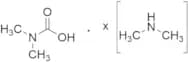
CAS:<p>Applications Dimethylammonium Dimethylcarbamate is a reactant used in the synthesis of vanadium complex implantation on silica surfaces and may be studied for its use in phrmaceutical synthesis.<br>References Bresciani, G. et al.: Eur. J. Inorg. Chem., 10, 1176 (2018);<br></p>Formula:C3H7NO2·xC2H7NColor and Shape:NeatMolecular weight:89.09 + x(45.08)3-Amino-4-(carboxymethyl)benzoic Acid
CAS:Controlled Product<p>Applications 3-Amino-4-(carboxymethyl)benzoic acid<br></p>Formula:C9H9NO4Color and Shape:NeatMolecular weight:195.172Citric Acid Monohydrate
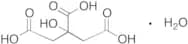
CAS:Controlled Product<p>Applications Citric Acid Monohydrate is a useful buffer component for antigen and epitope unmasking.<br></p>Formula:C6H8O7·H2OColor and Shape:White To Off-WhiteMolecular weight:210.143-(methylamino)-3-oxopropanoic acid
CAS:Controlled Product<p>Applications 3-(methylamino)-3-oxopropanoic acid (cas# 42105-98-6) is a useful research chemical.<br></p>Formula:C4H7NO3Color and Shape:NeatMolecular weight:117.16-[(6-Aminohexyl)amino]-6-oxo-hexanoic Acid
CAS:<p>Applications 6-[(6-Aminohexyl)amino]-6-oxo-hexanoic acid is a nylon oligomer with flame retardant properties.<br>References Zahn, Helmut et al.: Chemische Berichte, 92, 1381 (1959)<br></p>Formula:C12H24N2O3Color and Shape:NeatMolecular weight:244.331,11-Undecanedicarboxylic Acid
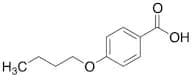
CAS:<p>Applications 1,11-Undecanedicarboxylic Acid is used in the synthesis of two Bis(tetrahydroisoquinoline) which were highly cytotoxic for cancer-cell cultures and less toxic to healthy cells and exhibited noticeable antimicrobial activity against Gram-positive and Gram-negative bacteria and fungal strain Candida albicans.<br>References Terent’eva, E. O., et al.: Chem. Nat. Compd., 53, 328-332 (2017)<br></p>Formula:C13H24O4Color and Shape:NeatMolecular weight:244.334-n-Butoxybenzoic Acid
CAS:Controlled Product<p>Applications 4-n-Butoxybenzoic acid<br></p>Formula:C11H14O3Color and Shape:NeatMolecular weight:194.23(S)-2-Amino-4-[(3-aminopropyl)amino]-butanoic Acid
CAS:Controlled Product<p>Applications (S)-2-Amino-4-[(3-aminopropyl)amino]-butanoic Acid is used in the reaction of carboxynorspermidine decarboxylase of Vibrio alginolyticus.<br>References Nakao, H., et al.: J. Gen. Microbiol. 136, 1699-704 (1990)<br></p>Formula:C7H17N3O2Purity:>90%Color and Shape:NeatMolecular weight:175.229N-(4-Amino-5-oxoheptyl)guanidine Trifluoroacetate Salt
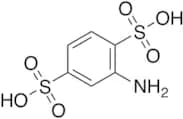
CAS:Controlled Product<p>Stability Hygroscopic<br>Applications N-(4-Amino-5-oxoheptyl)guanidine is a biosynthetic intermediate in the study of saxitoxin gene cluster in cyanobacteria.<br>References Kellmann, R., et al.: Appl. Environ. Microbiol., 74, 4044 (2008)<br></p>Formula:C8H18N4Ox(C2HF3O2)Color and Shape:NeatMolecular weight:186.25 + x(114.02)2-Aminobenzene-1,4-disulfonic Acid (>90%)
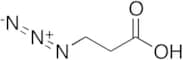
CAS:Controlled Product<p>Applications 2-aminobenzene-1,4-disulfonic acid (cas# 98-44-2) is a useful research chemical.<br></p>Formula:C6H7NO6S2Purity:>90%Color and Shape:White To Off-WhiteMolecular weight:253.243-Azidopropionic Acid
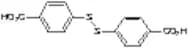
CAS:Controlled Product<p>Applications 3-Azidopropionic Acid is a mutagenic substance.<br>References LaVelle, J. M., et al.: Mutat. Res., 177, 27 (1987); Carlsson, L., et al.: J. Chem. Inf. Model., 49, 2551 (2009)<br></p>Formula:C3H5N3O2Color and Shape:NeatMolecular weight:115.0914,4'-Dithiobisbenzoic Acid, Technical Grade
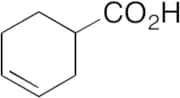
CAS:Controlled Product<p>Applications 4,4'-Dithiobisbenzoic Acid, Technical Grade (cas# 1155-51-7) is a compound useful in organic synthesis.<br></p>Formula:C14H10O4S2Color and Shape:Light YellowMolecular weight:306.363-Cyclohexenylcarboxylic Acid
CAS:Controlled Product<p>Applications 3-Cyclohexenylcarboxylic Acid has been found to be an oxidizable, nongrowth substrate and induces the metabolism of cyclohexanecarboxylic acid and benzoic acid in a strain of Pseudomonas putida. 3-Cyclohexenylcarboxylic Acid has been used as food for cultures of Streptomyces sp. KCTC 11604BP fkbO deletion mutant to make 32-dehydroxy-FK506, a FK506 analogue containing a non-natural starter unit.<br> Not a dangerous good if item is equal to or less than 1g/ml and there is less than 100g/ml in the package<br>References Blakley, E.R., Papish, B.: Can. J. Microbiol., 28, 1324 (1982); Ban, Y.H., et. al.: Mol. bioSystems, 9, 944 (2013)<br></p>Formula:C7H10O2Color and Shape:NeatMolecular weight:126.15Perfluorohexanoic Acid (>90%)
CAS:<p>Applications Perfluorohexanoic Acid is a perfluorinated compound (FPC) that can cause acute toxicity to humans and the environment. Perfluorohexanoic Acid is also used as a reagent in the synthesis of 3,3,4,4,5,5,6,6,7,7,7-Undecafluoro-2-heptanol (U787500).<br> Not a dangerous good if item is equal to or less than 1g/ml and there is less than 100g/ml in the package<br>References Latala, A., et al.: Environ. Toxicol. Phar., 28, 167 (2009); Mulkiewicz, E., et al.: Environ. Toxicol. Phar., 23, 279 (2007)<br></p>Formula:C6HF11O2Purity:>90%Color and Shape:ColourlessMolecular weight:314.054-(Ethoxycarbonyl)benzoic Acid
CAS:Controlled Product<p>Applications 4-(ETHOXYCARBONYL)BENZOIC ACID (cas# 713-57-5) is a useful research chemical.<br></p>Formula:C10H10O4Color and Shape:NeatMolecular weight:194.18Glutaconic Acid
CAS:Controlled Product<p>Applications Glutaconic Acid is used in the synthesis of dialkyltin derivatives of dicarboxylic acids which display antitumor properties. Also used in the synthesis of novel tetracyclic compounds as peripheral benzodiazepine receptor ligands with potential use for CNS illness treatments.<br>References Gielen, M. et al.: Hetero. Chem., 3, 449 (1992); Okubo, T. et al.: Bioorg. Med. Chem. Lett., 12, 3569 (2004);<br></p>Formula:C5H6O4Color and Shape:NeatMolecular weight:130.1(±)-2-Hydroxydodecanoic Acid
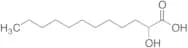
CAS:Controlled Product<p>Applications (8Z,11Z,14Z)-8,11,14-Heptadecatrienoic Acid, is a naturally occurring hydroxylated fatty acid that is found in Acinetobacter species. It acts as a partial agonist of free fatty acid receptor 1 (FFAR1/GPR40) and GPR84 receptors in vitro. It also inhibits bovine hepatic ligase (Ki = 4.4 μM) and mouse kidney mitochondrial medium-chain acyl-CoA synthetase by 48% at a concentration of 40 μM.<br>References Moss, C.W., et al.: J. Clin. Microbiol. 26(3), 484-492 (1988).; Kaspersen, M.H., et al.: Med. Chem. Commun. 8(6), 1360-1365 (2017).<br></p>Formula:C12H24O3Color and Shape:NeatMolecular weight:216.32Difluoromethylenediphosphonic Acid
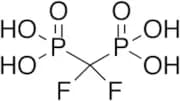
CAS:Controlled Product<p>Stability Hygroscopic<br>Applications A phosphonic acid derivative for development of biologically active compounds.<br> Not a dangerous good if item is equal to or less than 1g/ml and there is less than 100g/ml in the package<br>References Ma, Q.F., et al.: Biochemistry, 29, 1412 (1990), Soti, C., et al.: Eur. J. Biochem., 270, 2421 (2003), Barabas, O., et al.: J. Biol. Chem., 279, 42907 (2004),<br></p>Formula:CH4F2O6P2Color and Shape:NeatMolecular weight:211.98Tiglic Acid
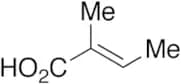
CAS:<p>Applications Tiglic acid is the stable isomer of angelic acid. Tiglic acid was found as glyceride in croton oil, as butyl ester in the oil of the Roman camomile, and as geranyl tiglate in oil of geranium. Tiglic acid is formed during the charcoaling of maple wood.<br> Not a dangerous good if item is equal to or less than 1g/ml and there is less than 100g/ml in the package<br>References Bueding, et al.: J. Biol. Chem., 202, 505 (1953),<br></p>Formula:C5H8O2Color and Shape:NeatMolecular weight:100.12(R)-(-)-Mandelic Acid
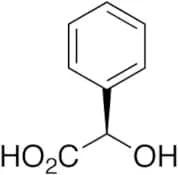
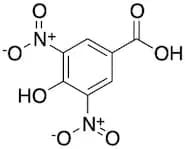
CAS:Controlled Product<p>Impurity Sertraline EP Impurity E<br>Applications (R)-(-)-Mandelic Acid (Sertraline EP Impurity E) is an antiseptic (urinary).<br>References Pessela, B., et al.: Enzyme Microb. Technol., 40, 310 (2007), Carrasco-Lopez, C., et al.: J. Biol. Chem., 284, 4365 (2009),<br></p>Formula:C8H8O3Color and Shape:White To Off-WhiteMolecular weight:152.153,5-Dinitro-4-hydroxybenzoic Acid
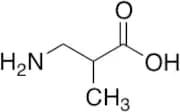
CAS:Controlled Product<p>Applications 3,5-DINITRO-4-HYDROXYBENZOIC ACID (cas# 1019-52-9) is a useful research chemical.<br></p>Formula:C7H4N2O7Color and Shape:NeatMolecular weight:228.116DL-3-Aminoisobutyric Acid
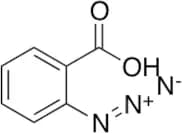
CAS:Controlled Product<p>Applications DL-3-Aminoisobutyric acid (cas# 144-90-1) is a useful research chemical.<br></p>Formula:C4H9NO2Color and Shape:NeatMolecular weight:103.122-Azidobenzoic Acid
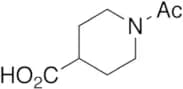
CAS:Controlled Product<p>Applications 2-Azidobenzoic Acid (cas# 31162-13-7) is a useful research chemical.<br></p>Formula:C7H5N3O2Color and Shape:NeatMolecular weight:163.131-Acetylisonipecotic Acid
CAS:Controlled Product<p>Applications Metabolite fingerprinting in transgenic Nicotiana tabacum altered by the Escherichia coli glutamate dehydrogenase gene. A synthetic intermediate in the preparation of CNS depressants.<br>References Mungur, R., et al.: J. Biomed. Biotechnol., 2, 198 (2005), Young, J., et al.: Bioorg. Med. Chem. Lett., 17, 5310 (2007),<br></p>Formula:C8H13NO3Color and Shape:NeatMolecular weight:171.19Tetradecanedioic Acid
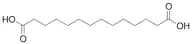
CAS:<p>Applications Tetradecanedioic acid (cas# 821-38-5) is a useful research chemical.<br></p>Formula:C14H26O4Color and Shape:NeatMolecular weight:258.35p-Toluic Acid
CAS:<p>Applications p-Toluic Acid is used as a reagent in the synthesis of several organic compounds including that of 2-aryl-1,3,4-oxadiazole derivatives which are potential antibacterial agents. Also used in the synthesis of 4-(bromomethyl) benzoic acid.<br>References Karimi, F., et al.: J. Chem. Pharm. Res., 7, 1028 (2015); Zheng, F., et al.: Guangdong Huagong, 42, 27 (2015);<br></p>Formula:C8H8O2Color and Shape:NeatMolecular weight:136.15rac 3-Hydroxydecanoic Acid
CAS:Controlled Product<p>Applications rac 3-Hydroxydecanoic Acid (cas# 5561-87-5) is a compound useful in organic synthesis.<br></p>Formula:C10H20O3Color and Shape:NeatMolecular weight:188.26Phenylboronic Acid (95%)
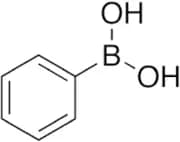
CAS:Controlled Product<p>Applications Phenylboronic Acid is a compound used in organic synthesis of various pharmaceutical goods.<br>References Ainley, A.D., et al.: J. Chem. Soc., 2171 (1930);<br></p>Formula:C6H7BO2Purity:95%Color and Shape:NeatMolecular weight:121.93Phosphoric Acid Diammonium Salt
CAS:Controlled Product<p>Applications Diammonium salt of Phosphoric Acid, used in various chemical processes as a phosphorylating compound. Also used in the preparation of prosthetics and collagen nanocomposites due to the bone-like properties.<br>References Ezhova, Z. et al.: Russ. J. Inorg. Chem., 58, 1177 (2013); Wu, Y. et al.: Asian J. Chem., 25, 5881 (2013);<br></p>Formula:H3N·H3O4PColor and Shape:NeatMolecular weight:132.063-Sulfanylhexyl Acetate
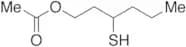
CAS:Controlled Product<p>Stability Hygroscopic<br>Applications 3-Sulfanylhexyl Acetate is a precursor of 3-mercaptohexan-1-ol (M225270) found in grape juice.<br>References Harsch, M.J., et al.: J. Agri. Food. Chem., 61, 3703 (2013); Makhotkina, O., et al.: Food. Chem., 135, 486 (2012);<br></p>Formula:C8H16O2SColor and Shape:NeatMolecular weight:176.282,4-Diaminopteridine-6-carboxylicAcid
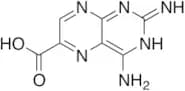
CAS:Controlled Product<p>Applications 2,4-DIAMINOPTERIDINE-6-CARBOXYLIC ACID (cas# 716-74-5) is a useful research chemical.<br></p>Formula:C7H6N6O2Color and Shape:Off-WhiteMolecular weight:206.1622,2-Dimethylcyclopropylcarboxylic acid
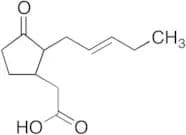
CAS:Controlled Product<p>Stability Stench<br>Applications 2,2-Dimethylcyclopropylcarboxylic acid<br></p>Formula:C6H10O2Color and Shape:NeatMolecular weight:114.14(±)-Jasmonic Acid
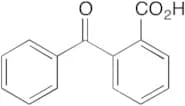
CAS:<p>Applications (±)-Jasmonic Acid can be used as reactant/reagent for synthetic preparation of fluorescent-labeled jasmonate and application to fluorescent imaging in cabbage seedlings.<br>References Liu, S., et al.: Tetrahedron Lett., 53, 4235-4239 (2012)<br></p>Formula:C12H18O3Color and Shape:NeatMolecular weight:210.272-Benzoylbenzoic Acid
CAS:<p>Applications 2-Benzoylbenzoic Acid is a reagent that is used in the synthesis of BzATP Triethylammonium Salt, which is a selective P2X purinergic agonist. It is more potent than ATP at homodimeric P2X7 receptors.<br>References Abou-Seri, S. M., et al.: Eur. J. Med. Chem., 107, 165 (2016);<br></p>Formula:C14H10O3Color and Shape:NeatMolecular weight:226.23(2E)-3-Phenyl-2-propenoic Acid
CAS:<p>Applications (2E)-3-Phenyl-2-propenoic Acid is used in the synthesis of amides and esters through coupling reactions involving carboxylic acids and amines. Also used in the N-methylation of amides and O-methylation of carboxylic acids.<br>References Kunishima, M. et al.: Tetrahedron, 55, 13159 (1999); Xia, Q. et al.: Org. Lett., 15, 3326 (2013);<br></p>Formula:C9H8O2Color and Shape:NeatMolecular weight:148.16



![[p-Terphenyl]-4,4''-dicarboxylic Acid](/_next/image/?url=https%3A%2Fstatic.cymitquimica.com%2Fproducts%2FTR%2Fthumb-webp%2FT116700.webp&w=3840&q=75)


![6-[(6-Aminohexyl)amino]-6-oxo-hexanoic Acid](/_next/image/?url=https%3A%2Fstatic.cymitquimica.com%2Fproducts%2FTR%2Fthumb-webp%2FA610100.webp&w=3840&q=75)

![(S)-2-Amino-4-[(3-aminopropyl)amino]-butanoic Acid](/_next/image/?url=https%3A%2Fstatic.cymitquimica.com%2Fproducts%2FTR%2Fthumb-webp%2FA609335.webp&w=3840&q=75)