Carboxylic Acids
Carboxylic acids are organic molecules characterized by having a carboxyl-type functional group (-COOH). These acids are fundamental in various chemical reactions, including esterification, amidation, and decarboxylation. Carboxylic acids are widely used in the production of pharmaceuticals, polymers, and agrochemicals. In this section, you can find a large number of carboxylic acids ready to be used. At CymitQuimica, we provide a broad range of high-quality carboxylic acids to support your research and industrial applications.
Found 12453 products of "Carboxylic Acids"
Sort by
Purity (%)
0
100
|
0
|
50
|
90
|
95
|
100
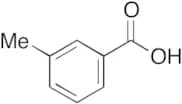
m-Toluic Acid
CAS:<p>Applications m-Toluic acid is used as a reagent in the preparation of hybrid molecules containing oxadiazole and thiadiazole bearing Schiff base moiety as it has antitumor activities.<br>References Zhang, K., et al.; Bioorg. Med. Chem. Lett., 24, 5154 (2014);<br></p>Formula:C8H8O2Color and Shape:NeatMolecular weight:136.154-carbamoylfuran-2-carboxylic acid
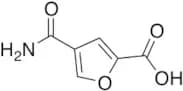
CAS:Controlled Product<p>Applications 4-carbamoylfuran-2-carboxylic acid (cas# 1315367-95-3) is a useful research chemical.<br></p>Formula:C6H5NO4Color and Shape:NeatMolecular weight:155.11Phosphoric Acid
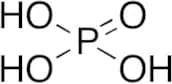
CAS:<p>Applications Phosphoric Acid is used in various chemical processes as a phosphorylating compound. It is involved in the hydrolysis via phosphorylation of nanocrystals to obtain high-aspect-ratio cellulose nanocrystals. Also used in the synthesis of lithium-ion cells.<br> Not a dangerous good if item is equal to or less than 1g/ml and there is less than 100g/ml in the package<br>References Camarero E. et al.: Biomacromol., 14, 1223 (2013); Meligrana, G. et al.: J. Power. Sources., 160, 516 (2006);<br></p>Formula:H3O4PColor and Shape:NeatMolecular weight:98.00(4R,6R)-6-Hydroxymethyl-2,2-dimethyl-1,3-dioxane-4-acetic Acid 1,1-Dimethylethyl Ester
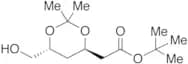
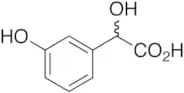
CAS:Controlled ProductFormula:C13H24O5Color and Shape:NeatMolecular weight:260.3273-Hydroxymandelic Acid
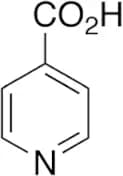
CAS:Controlled Product<p>Applications 3-Hydroxymandelic Acid (cas# 17119-15-2) is a compound useful in organic synthesis.<br></p>Formula:C8H8O4Color and Shape:NeatMolecular weight:168.15Isonicotinic Acid
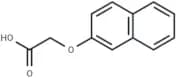
CAS:<p>Applications Used in the biological study of differentiation induced by nicotinic acid, nicotinamide and isonicotinic acid in human leukemia cell lines.<br>References Zeilinger, S., et al.: J. Biol. Chem., 271, 25624 (1996), Panagiotou, G., et al.: J. Biotechnol., 118, 304 (2005),<br></p>Formula:C6H5NO2Color and Shape:Light BrownMolecular weight:123.112-Naphthoxyacetic acid
CAS:<p>2-Naphthoxyacetic acid is an endogenous metabolite that is an inhibitor of firefly luciferase (Potency=40 μm).</p>Formula:C12H10O3Purity:99.74%Color and Shape:SolidMolecular weight:202.216-Chlorohexanoic Acid
CAS:Controlled Product<p>Applications 6-Chlorohexanoic Acid is used as the starting material in the synthesis of 2,6-Dichloro-N-(2,6-dimethylphenyl)hexanamide (D434225); an impurity of the local anesthetic Levobupivacaine (B689546). 6-Chlorohexanoic Acid is also used as a reagent in the synthesis of novel types of polyester glycodendrimers as potential inhibitors of urinary tract infections.<br> Not a dangerous good if item is equal to or less than 1g/ml and there is less than 100g/ml in the package<br>References Tullar, B., et al.: J. Med. Chem., 14, 891 (1971); Schmidt, A., et al.: Pharm. Res., 22, 2121 (2005); Twibanire, J.K., et al.: New J. Chem., 39, 4115 (2015)<br></p>Formula:C6H11ClO2Color and Shape:NeatMolecular weight:150.64-Ethoxycarbonyl-3-ethoxyphenylacetic Acid
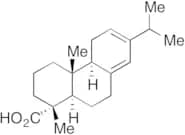
CAS:Controlled Product<p>Applications Repaglinide intermediate.<br>References Wolfenbuttel, B., et al.: Eur. J. Clin. Pharmacol., 45, 113 (1993), Grell, W., et al.: J. Med. Chem., 41, 5219 (1998), Anon., et al.: Drugs Future, 24, 815 (1999),<br></p>Formula:C13H16O5Color and Shape:NeatMolecular weight:252.26Levopimaric Acid
CAS:Controlled Product<p>Stability Air Sensitive<br>Applications Levopimaric Acid is a major component of pine oleoresin. It is an abietane-type of diterpene resin acid and has antibacterial, cardiovascular, and antioxidant properties.<br>References Kersten, P. J., et al.: J. Chem. Ecol., 32(12), 2679-85 (2006)<br></p>Formula:C20H30O2Color and Shape:White To Off-WhiteMolecular weight:302.45Ethyl Diazoacetate (>90%)
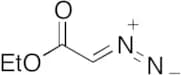
CAS:<p>Applications Ethyl Diazoacetate is used in the synthesis of Arteludovicinolide A as well as pyrimidoazepine analogs as seritonin 5-HT2A/C receptor ligands for treatment of obesity. This compound contains solvent for added stability.<br> E0<br>References Yang, H. et al.: Eur. J. Med. Chem., 63, 558 (2013); Kreuzer, A. et al.: Org. Lett., 15, 3420 (2013);<br></p>Formula:C4H6N2O2Purity:>90%Color and Shape:NeatMolecular weight:114.1Ethyl Trifluoroacetate
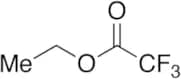
CAS:Controlled Product<p>Stability Moisture Sensitive<br>Applications Ethyl Trifluoroacetate is an intermediate used in the synthesis of various pharmaceutically active molecules and agricultural products. Ethyl Trifluoroacetate is also useful for the preparation of trifluoroacylated compounds.<br> Not a dangerous good if item is equal to or less than 1g/ml and there is less than 100g/ml in the package<br>References HugenBerg, V., J. Fluorine. Chem., 131, 942 (2010); Belyakova, Z.V., et al.: Russ. J. Gen. Chem., 79, 2634 (2009); Wu, J.L., et al.: Jingxi. Huagong. Zhongjianti., 40, 64 (2010);<br></p>Formula:C4H5F3O2Color and Shape:ColourlessMolecular weight:142.08Octadecylphosphonic Acid
CAS:<p>Applications Octadecylphosphonic acid (cas# 4724-47-4) is a useful research chemical.<br></p>Formula:C18H39O3PColor and Shape:NeatMolecular weight:334.472-(2-Butoxyethoxy)acetic Acid
CAS:<p>Applications 2-(2-butoxyethoxy)acetic acid (cas# 82941-26-2) is a useful research chemical.<br></p>Formula:C8H16O4Color and Shape:NeatMolecular weight:176.212-(4-((1-(Methoxycarbonyl)-2-oxocyclopentyl)methyl)phenyl)propanoic Acid
CAS:Controlled Product<p>Applications 2-(4-((1-(Methoxycarbonyl)-2-oxocyclopentyl)methyl)phenyl)propanoic Acid is a reagent used in the preparation of Loxoprofen Sodium<br>References Liu, Q., et al.: Faming Zhuanli Shenqing (2016), CN 105218351 A 20160106<br></p>Formula:C17H20O5Color and Shape:NeatMolecular weight:304.34n-Nonanoic Acid
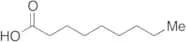
CAS:Controlled Product<p>Applications n-Nonanoic Acid is commonly used in conjunction with glyphosate, a non-selective herbicide, for a quick burn-down effect in the control of weeds in turfgrass. It is also used in the preparation of plasticizers and lacquers.<br>References Pline, W., et al.: Weed Technol., 14, 667 (2000); Frade, J., et al.: Anal. Bioanal. Chem., 395, 2167 (2009);<br></p>Formula:C9H18O2Color and Shape:ColourlessMolecular weight:158.24(S)-2-Acetamido-5-ureidopentanoic Acid
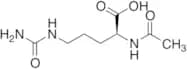
CAS:Controlled Product<p>Applications (S)-2-Acetamido-5-ureidopentanoic Acid (cas# 33965-42-3) is a useful research chemical.<br></p>Formula:C8H15N3O4Color and Shape:NeatMolecular weight:217.22Trifluoroacetic Acid-d
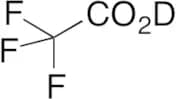
CAS:Controlled Product<p>Applications Isotope labelled Trifluoroacetic Acid used as a solvent in a variety of organic synthesis and chemical processes. Used in the synthesis of anticancer agents as well as phospholipase D inhibitors.<br> E0<br>References Scott, S. et al.: Nat. Chem. Biol., 5, 108 (2009); Minko, T. et al.: Cancer. Chemother. Pharmacol., 50, 143 (2002);<br></p>Formula:C2DF3O2Color and Shape:ColourlessMolecular weight:115.0295Crotonic Acid
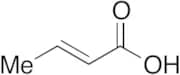
CAS:<p>Applications Crotonic Acid is found in water extracts from carrot seeds (Daucus carota L.) and is shown to have strong herbicidal properties.<br> Not a dangerous good if item is equal to or less than 1g/ml and there is less than 100g/ml in the package<br>References Jasicka-Misiak, I., et al.: Phytochemistry, 66, 1485 (2005)<br></p>Formula:C4H6O2Color and Shape:WhiteMolecular weight:86.09Parabanic Acid
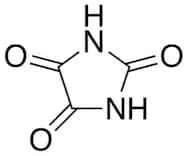
CAS:Controlled Product<p>Applications Parabanic acid appears to be an important marker of free radical reactions in vivo and may be used to monitor free radical activity and to evaluate pharmacological therapy with radical scavengers.<br>References Koumoto, Y., et al.: J. Biol. Chem., 276, 29688 (2001), Gibon, Y., et al.: Plant Cell, 16, 3304 (2004), Kaplan, F., et al.: Plant J., 44, 730 (2005), Ishii, N., et al.: Science, 316, 593 (2007),<br></p>Formula:C3H2N2O3Color and Shape:NeatMolecular weight:114.063,5-Dinitro-4-hydroxybenzoic Acid
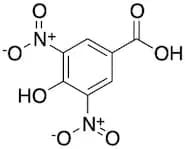
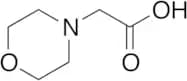
CAS:Controlled Product<p>Applications 3,5-DINITRO-4-HYDROXYBENZOIC ACID (cas# 1019-52-9) is a useful research chemical.<br></p>Formula:C7H4N2O7Color and Shape:NeatMolecular weight:228.116Morpholin-4-yl Acetic Acid
CAS:Controlled Product<p>Applications Morpholin-4-yl Acetic Acid was used in preparation of pyrrolidine-fused fullerene multicarboxylates by photoreaction.<br>References Gan, L., et al.: J. Org. Chem., 63, 4240 (1998).<br></p>Formula:C6H11NO3Color and Shape:NeatMolecular weight:145.16Boric Acid
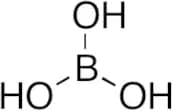
CAS:<p>Applications Boric Acid is a common chemical component in insecticides, specifically for flea erradication. Also has the properties of an effective flame retardant.<br>References Hinkle, N. et al.: J. Med. Entomol., 32, 424 (1995); Dogan, M. et al.: Polym. Degrad. Stab., 99, 12 (2014);<br></p>Formula:BH3O3Color and Shape:WhiteMolecular weight:61.834-Hydroxy-isophthalic Acid Dimethyl Ester
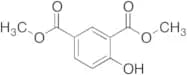
CAS:Controlled Product<p>Impurity Methyl Salicylate USP Related Compound A<br>Applications 4-Hydroxy-isophthalic Acid Dimethyl Ester (cas# 5985-24-0) is a compound useful in organic synthesis.<br></p>Formula:C10H10O5Color and Shape:White To Off-WhiteMolecular weight:210.182-Azidobenzoic Acid
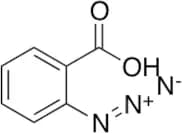
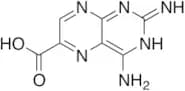
CAS:Controlled Product<p>Applications 2-Azidobenzoic Acid (cas# 31162-13-7) is a useful research chemical.<br></p>Formula:C7H5N3O2Color and Shape:NeatMolecular weight:163.132,4-Diaminopteridine-6-carboxylicAcid
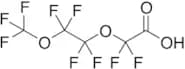
CAS:Controlled Product<p>Applications 2,4-DIAMINOPTERIDINE-6-CARBOXYLIC ACID (cas# 716-74-5) is a useful research chemical.<br></p>Formula:C7H6N6O2Color and Shape:Off-WhiteMolecular weight:206.162Perfluoro-3,6-dioxaheptanoic Acid
CAS:Controlled Product<p>Applications PERFLUORO-3,6-DIOXAHEPTANOIC ACID (cas# 151772-58-6) is a useful research chemical.<br> Not a dangerous good if item is equal to or less than 1g/ml and there is less than 100g/ml in the package<br></p>Formula:C5HF9O4Color and Shape:ColourlessMolecular weight:296.0447β-Formylpropionic Acid
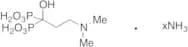
CAS:Controlled Product<p>Applications β-Formylpropionic Acid is used in the synthesis of potent and orally available nonpeptide antagonist of human gonadotropin-releasing hormone receptor. It is also a reagent in the synthesis of human melanocortin-4 receptor antagonists with a pyrrolidinone moiety.<br>References Chen, C. et al.: J. Med. Chem., 51, 7478 (2008); Jiang, W. et al.: Bioorg. Med. Med. Chem. Lett., 17, 5610 (2007);<br></p>Formula:C4H6O3Color and Shape:NeatMolecular weight:102.09Olpadronic Acid Ammonium
CAS:<p>Applications Used for the preparation of bisphosphonic acid derivatives as anti-osteoporosis agents.<br>References Amin, D., et al.: Drug Res., 46, 759 (1996), Martin, M., et al.: J. Med. Chem., 45, 2904 (2002),<br></p>Formula:C5H15NO7P2·x(NH3)Color and Shape:NeatMolecular weight:263.121703Decanoic Acid
CAS:Controlled Product<p>Applications Decanoic acid is used in manufacturing of esters for artificial fruit flavors and perfumes.<br>References Oro, L., et al.: Acta Pharmacol. Toxicol., 18, 141 (1961),<br></p>Formula:C10H20O2Color and Shape:White To YellowMolecular weight:172.26N,N'-bis(2,6-Diisopropylphenyl)-1,6,7,12-tetraphenoxy-3,4,9,10-perylenetetracarboxylic Diimide
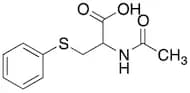
CAS:Controlled Product<p>Applications N,N'-Bis(2,6-diisopropylphenyl)-1,6,7,12-tetraphenoxy-3,4,9,10-perylenetetracarboxylic Diimide has applications in the photosensors and optical detectors.<br>References Wang, Shaojun, et al.: ACS Photonics, 5(6), 2478-2485 (2018);Wang, Hanlin, et al.: Adv. Mat., 29(32), n/a. (2017)<br></p>Formula:C72H58N2O8Color and Shape:NeatMolecular weight:1079.2392-(Acetylamino)-3-(phenylthio)propanoic Acid
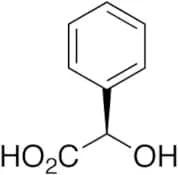
CAS:Controlled Product<p>Applications 2-(Acetylamino)-3-(phenylthio)propanoic acid is a useful chemical in research.<br></p>Formula:C11H13NO3SColor and Shape:NeatMolecular weight:239.29(R)-(-)-Mandelic Acid
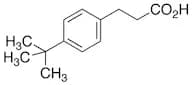
CAS:Controlled Product<p>Impurity Sertraline EP Impurity E<br>Applications (R)-(-)-Mandelic Acid (Sertraline EP Impurity E) is an antiseptic (urinary).<br>References Pessela, B., et al.: Enzyme Microb. Technol., 40, 310 (2007), Carrasco-Lopez, C., et al.: J. Biol. Chem., 284, 4365 (2009),<br></p>Formula:C8H8O3Color and Shape:White To Off-WhiteMolecular weight:152.153-(4-tert-Butylbenzene)propionic Acid
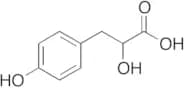
CAS:Controlled Product<p>Applications 3-(4-tert-Butylbenzene)propionic Acid (cas# 1208-64-6) is a compound useful in organic synthesis.<br></p>Formula:C13H18O2Color and Shape:NeatMolecular weight:206.28DL-p-Hydroxyphenyllactic Acid
CAS:Controlled Product<p>Applications DL-p-Hydroxyphenyllactic Acid is used as a reagent in the synthesis of 2-O-(4-coumaroyl)-3-(4-hydroxyphenyl)lactic acid, an important intermediate of rosmarinic acid biosynthesis.<br>References Matsuno, M., et al.: Chem. Pharm. Bull., 49, 1644 (2001)<br></p>Formula:C9H10O4Color and Shape:Off-WhiteMolecular weight:182.17tert-Butyl [(1R,2S,5S)-2-Amino-5-[(dimethylamino)carbonyl]cyclohexyl]carbamate Oxalate
CAS:Controlled Product<p>Applications tert-Butyl [(1R,2S,5S)-2-Amino-5-[(dimethylamino)carbonyl]cyclohexyl]carbamate Oxalate is a starting material and useful building block of various pharmaceuticals.<br></p>Formula:C14H27N3O3•C2H2O4Color and Shape:NeatMolecular weight:375.41p-Toluic Acid
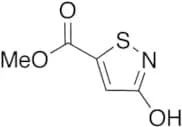
CAS:<p>Applications p-Toluic Acid is used as a reagent in the synthesis of several organic compounds including that of 2-aryl-1,3,4-oxadiazole derivatives which are potential antibacterial agents. Also used in the synthesis of 4-(bromomethyl) benzoic acid.<br>References Karimi, F., et al.: J. Chem. Pharm. Res., 7, 1028 (2015); Zheng, F., et al.: Guangdong Huagong, 42, 27 (2015);<br></p>Formula:C8H8O2Color and Shape:NeatMolecular weight:136.15Methyl-3-hydroxyisothiazole-5-carboxylate
CAS:Controlled Product<p>Applications Methyl-3-hydroxyisothiazole-5-carboxylate (cas# 100241-89-2) is a compound useful in organic synthesis.<br></p>Formula:C5H5NO3SColor and Shape:Off White To YellowMolecular weight:159.16rac 3-Hydroxydecanoic Acid
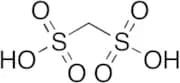
CAS:Controlled Product<p>Applications rac 3-Hydroxydecanoic Acid (cas# 5561-87-5) is a compound useful in organic synthesis.<br></p>Formula:C10H20O3Color and Shape:NeatMolecular weight:188.26Methane Disulfonic Acid
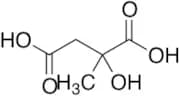
CAS:Controlled Product<p>Stability Hygroscopic<br>Applications Methane disulfonic acid is used in esterification.<br></p>Formula:CH4O6S2Color and Shape:White To Off-WhiteMolecular weight:176.17DL-Citramalic Acid
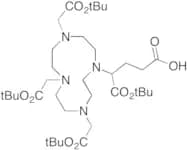
CAS:Controlled Product<p>Applications DL-CITRAMALIC ACID (cas# 2306-22-1) is a useful research chemical.<br></p>Formula:C5H8O5Color and Shape:NeatMolecular weight:148.115-(tert-Butoxy)-5-oxo-4-(4,7,10-tris(2-(tert-butoxy)-2-oxoethyl)-1,4,7,10-tetraazacyclododecan-1-yl)pentanoic Acid (>85%)
CAS:Controlled Product<p>Applications 5-(tert-butoxy)-5-oxo-4-(4,7,10-tris(2-(tert-butoxy)-2-oxoethyl)-1,4,7,10-tetraazacyclododecan-1-yl)pentanoic Acid has been used in synthesis of; GdDOTAGA(C18)2: an efficient amphiphilic Gd(III) chelate for the preparation of self-assembled high relaxivity MRI nanoprobes; bifunctional prochelators for coupling to bioactive peptides for radiometal labeling; DOTAGA-anhydride, building block for prepn. of DOTA-like chelating agents.<br>References Filippi M., et al., ChemComm., 51, 17455-17458 (2015); Eisenwiener K. P., et al., Bioorg. Med. Chem. Lett., 10, 2133-2135 (2000); Bernhard C., et al., Chem. Eur. J., 18, 7834-7841 (2012)<br></p>Formula:C35H64N4O10Purity:>85%Color and Shape:Off-WhiteMolecular weight:700.904β-Chlorolactic Acid
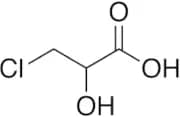
CAS:<p>Applications β-Chlorolactic Acid (cas# 1713-85-5) is a compound useful in organic synthesis.<br></p>Formula:C3H5ClO3Color and Shape:NeatMolecular weight:124.5233-Mercaptopropionic Acid
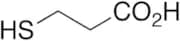
CAS:Controlled Product<p>Applications 3-Mercaptopropionic Acid (cas# 107-96-0) is a compound useful in organic synthesis.<br> Not a dangerous good if item is equal to or less than 1g/ml and there is less than 100g/ml in the package<br></p>Formula:C3H6O2SColor and Shape:NeatMolecular weight:106.147-Benzothiazolecarboxylic Acid
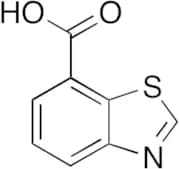
CAS:<p>Applications 7-Benzothiazolecarboxylic Acid is an intermediate used in the synthesis of pyrazole inhibitors of coactivator associated arginine methyltransferase 1 (CARM1). It is also used to prepare aminofuro-pyridine derivatives as inhibitors of TAK1.<br>References Huynh, T., et al.: Bioorg. Med. Chem. Lett., 19, 2924 (2009); Horneberger, K., et al.: Bioorg. Med. Chem. Lett., 23, 4517 (2013)<br></p>Formula:C8H5NO2SColor and Shape:NeatMolecular weight:179.196Methyl quinuclidine-3-carboxylate hydrochloride
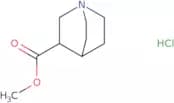
CAS:<p>Methyl quinuclidine-3-carboxylate hydrochloride is a versatile building block that can be used to synthesize a variety of compounds. It is an intermediate in the production of high quality research chemicals and reagents. This compound has been shown to be useful as a scaffold for reactions that produce complex compounds with interesting biological activity. Methyl quinuclidine-3-carboxylate hydrochloride is a fine chemical that can be used as a reaction component or for other purposes.</p>Formula:C9H15NO2·HClPurity:Min. 95%Molecular weight:205.68 g/molGonadorelin acetate
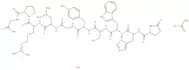
CAS:<p>Gonadorelin acetate is a synthetic peptide agonist, which is an analog of the naturally occurring gonadotropin-releasing hormone (GnRH). It is derived from a synthetic process designed to mimic the structure and function of endogenous GnRH. Gonadorelin acetate functions by stimulating the anterior pituitary gland to release two critical hormones: luteinizing hormone (LH) and follicle-stimulating hormone (FSH). These hormones play a pivotal role in regulating reproductive processes, including ovulation and spermatogenesis.</p>Formula:C55H75N17O13·xC2H4O2Purity:Min. 98 Area-%Color and Shape:White PowderMolecular weight:1182.29Asperulosidic acid
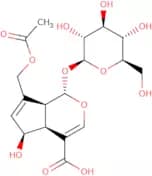
CAS:<p>Asperulosidic acid is a glycoside derivative that belongs to the natural compounds. It has been shown to be an enzyme inducer in bacteria, yeast and plants. Asperulosidic acid can be found in the leaves of asperula odorata, a plant commonly known as sweet woodruff. It is also found in fructus asperuli, which is made from the fruit of asperula odorata. Asperulosidic acid has been shown to increase the activity of enzymes such as β-glucuronidase and esterase in bacteria, which may have an effect on their metabolism. This compound also increases the activity of proteases and other enzymes in plants and yeast. The matrix effect can be used to determine the concentration of this compound by measuring its effects on enzyme activity. Matrix effects can be measured using a plate test or by plasma mass spectrometry. Asperulosidic acid has been shown to have growth</p>Formula:C18H24O12Purity:Min. 95%Color and Shape:SolidMolecular weight:432.38 g/molLithium 3,5-diiodosalicylic acid
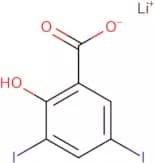
CAS:<p>Lithium 3,5-diiodosalicylic acid (Li3,5I2SA) is a cross-linking agent that has been shown to inhibit phosphatase activity and receptor binding in vitro. It also inhibits sugar transport, which is important for the functioning of human cells. Li3,5I2SA has been used to study the action of drugs on cancer cells and spermatozoa. This compound has also been tested as an inhibitor of membrane lipid peroxidation. Li3,5I2SA attaches to red blood cell membranes by binding to sites with high concentrations of monoclonal antibodies. The sequences of this compound have not yet been fully elucidated.</p>Formula:C7H4I2O3•LiPurity:Min. 98 Area-%Color and Shape:PowderMolecular weight:396.85 g/mol









![tert-Butyl [(1R,2S,5S)-2-Amino-5-[(dimethylamino)carbonyl]cyclohexyl]carbamate Oxalate](/_next/image/?url=https%3A%2Fstatic.cymitquimica.com%2Fproducts%2FTR%2Fthumb-webp%2FB809515.webp&w=3840&q=75)