Carboxylic Acids
Carboxylic acids are organic molecules characterized by having a carboxyl-type functional group (-COOH). These acids are fundamental in various chemical reactions, including esterification, amidation, and decarboxylation. Carboxylic acids are widely used in the production of pharmaceuticals, polymers, and agrochemicals. In this section, you can find a large number of carboxylic acids ready to be used. At CymitQuimica, we provide a broad range of high-quality carboxylic acids to support your research and industrial applications.
Found 12453 products of "Carboxylic Acids"
Sort by
Purity (%)
0
100
|
0
|
50
|
90
|
95
|
100
Mca-Pro-Leu-Gly-Leu-Dap (Dnp)-Ala-Arg-NH2 trifluoroacetate salt
CAS:<p>Please enquire for more information about Mca-Pro-Leu-Gly-Leu-Dap (Dnp)-Ala-Arg-NH2 trifluoroacetate salt including the price, delivery time and more detailed product information at the technical inquiry form on this page</p>Formula:C49H68N14O15Purity:Min. 95%Molecular weight:1,093.15 g/molUrotensin II-Related Peptide (human, mouse, rat) trifluoroacetate salt
CAS:<p>Urotensin II is a peptide that is expressed in the brain and has hypotensive effects. It is an endogenous ligand for the urotensin II receptor, which is found in various tissues including the heart, vascular system, and lungs. Urotensin II-Related Peptide (URP) was identified from cDNA sequences of human, mouse, and rat tissues. The URP consists of a sequence of amino acids with a molecular weight of 1219. This peptide has been shown to have diagnostic use in tissues and animals as well as being immunoreactive in monoclonal antibodies. The gene encoding URP has been cloned and its protein product has been characterized by mass spectroscopy.</p>Formula:C49H64N10O10S2Purity:Min. 95%Molecular weight:1,017.23 g/molModafinil carboxylate
CAS:<p>Modafinil is a drug that belongs to the class of wakefulness-promoting agents. It has been shown to have a long half-life and low toxicity in humans, which may be due to its effects on cytochrome P450 isoenzymes. Modafinil has been studied in clinical trials for its tolerability, with no significant side effects reported. The drug has also been shown to have anticonvulsant properties and can be used as an adjunctive treatment for patients with partial seizures. Modafinil binds to the GABA receptor in the brain and increases GABAergic neurotransmission. The compound's mechanism of action is not fully understood, but it is believed that it acts by inhibiting cyclic AMP degradation and increasing cAMP levels in the brain. This increase in cAMP levels may lead to increased protein kinase activity, decreased phosphorylation of glutamate receptors, increased release of dopamine, and decreased release of histamine from mast cells.</p>Formula:C15H14O3SPurity:Min. 95%Color and Shape:PowderMolecular weight:274.34 g/molCyclohexylacetic acid
CAS:<p>Cyclohexylacetic acid is a cyclic fatty acid that has been shown to inhibit the production of gamma-aminobutyric acid in hl-60 cells. This inhibition leads to an increase in epidermal growth factor and a decrease in malonic acid. Cyclohexylacetic acid also inhibits microbial metabolism by preventing the conversion of nitrogen atoms into ammonia, which can cause cardiac arrest or sublethal doses. The effects of cyclohexylacetic acid on coronary heart disease have not been determined because it is not commercially available for purchase.</p>Formula:C8H14O2Purity:Min. 95%Molecular weight:142.2 g/molH-D-Val-Leu-Lys-AMC acetate salt
CAS:<p>Please enquire for more information about H-D-Val-Leu-Lys-AMC acetate salt including the price, delivery time and more detailed product information at the technical inquiry form on this page</p>Formula:C27H41N5O5Purity:Min. 95%Molecular weight:515.65 g/molD-Isoascorbic acid
CAS:<p>D-Isoascorbic acid is a sodium salt of ascorbic acid. It is used for the prevention and treatment of scurvy, which is caused by vitamin C deficiency. D-Isoascorbic acid functions as an electron donor in biochemical reactions and has been shown to have physiological effects. Ascorbic acid (vitamin C) is a water-soluble antioxidant that can react with hydrogen fluoride in vitro to form free radicals that may cause damage to cells. In addition, D-Isoascorbic acid can be used as a model system for the study of ascorbic acid and p-hydroxybenzoic acid. The analytical method for determining these compounds involves electrochemical impedance spectroscopy.</p>Formula:C6H8O6Purity:Min. 95%Color and Shape:White PowderMolecular weight:170 g/molNFAT Inhibitor trifluoroacetate salt
CAS:<p>NFAT Inhibitor trifluoroacetate salt H-Met-Ala-Gly-Pro-His-Pro-Val-Ile-Val-Ile-Thr-Gly-Pro-His-Glu-Glu (NFAT) is an inhibitor drug that has been shown to inhibit the nuclear factor of activated T cells (NFAT). NFAT is a transcriptional regulator that controls the expression of inflammatory genes in macrophages and other cell types. NFAT inhibitors have been shown to be effective for treating bowel diseases, such as ulcerative colitis and Crohn's disease, by inhibiting the activation of macrophages. NFAT inhibitors are also used in vitro as a tool for studying cellular signaling pathways. The most common type of NFAT inhibitor is fluconazole, which blocks calcineurin activity and prevents the activation of NFAT. However, other types of inhibitors are being developed, including mmp9 activity or</p>Formula:C75H118N20O22SPurity:Min. 95%Molecular weight:1,683.93 g/molCytochrome C (88-104) (domestic pigeon) trifluoroacetate salt
CAS:<p>Please enquire for more information about Cytochrome C (88-104) (domestic pigeon) trifluoroacetate salt including the price, delivery time and more detailed product information at the technical inquiry form on this page</p>Formula:C84H144N24O25Purity:Min. 95%Molecular weight:1,890.19 g/molFibrinopeptide B (human) trifluoroacetate salt
CAS:<p>Fibrinopeptide B is a fibrinogen-derived peptide that has shown to inhibit the growth of HL-60 cells. It may be active as a receptor antagonist for thrombin and caproic acid. Fibrinopeptide B also inhibits angiogenesis by inhibiting the binding of acidic, basic proteins to the vascular endothelium in atherosclerotic lesions. The biological sample can be obtained from human serum or plasma.</p>Formula:C66H93N19O25Purity:Min. 95%Molecular weight:1,552.56 g/mol4-Chlorophenylboronic acid
CAS:<p>4-Chlorophenylboronic acid is a chemical compound that is used in the industrial preparation of biphenyl. It is produced by the Friedel-Crafts reaction between chlorine and 4-methoxyphenylboronic acid. This reaction can be carried out using a variety of solvents, such as chloroform or carbon tetrachloride. The optimal reaction conditions are acidic pH values, which are achieved by adding sodium carbonate to the solution. The product can be purified by distillation or crystallization. 4-Chlorophenylboronic acid can also be used for the synthesis of organic compounds through cross-coupling reactions with organometallic reagents, such as palladium chloride and triphenylphosphine, or through asymmetric synthesis with chiral ligands like (S)-proline and 2-(diphenylphosphino)ferrocene.</p>Formula:C6H6BClO2Purity:Min. 95%Color and Shape:PowderMolecular weight:156.37 g/mol5-Bromo-2-fluorobenzoic acid
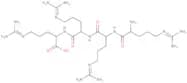
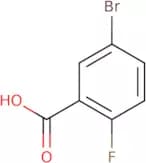
CAS:<p>5-Bromo-2-fluorobenzoic acid is a potential drug that can be used to treat diseases such as malaria. It is also used in the synthesis of fluorine compounds, such as fluoroarenes. 5-Bromo-2-fluorobenzoic acid is activated by deprotonation with butyllithium and reacts with chlorine to give the product of 5-bromo-2-chlorobenzoic acid. The reagent chlorotrimethylsilane may also be used for this reaction. Substitution of fluorine for chlorine at the 2 position yields the desired product, 5-bromo-2-(trifluoromethyl)benzoic acid. This compound is a useful intermediate for making other drugs, including those that are important for treating cancer and viral infections.</p>Formula:C7H4BrFO2Purity:Min. 95%Color and Shape:PowderMolecular weight:219.01 g/molH-Arg-Arg-Arg-Arg-Arg-Arg-Arg-OH trifluoroacetate salt
CAS:<p>The Arg-Arg-Arg-Arg-Arg-Arg-Arg-Arg-OH trifluoroacetate salt is a biologically active form of arginine. It has been shown to inhibit the activity of both NS3 protease and NS4A protease from the hepatitis C virus (HCV). It also inhibits tumor cell growth in vitro, which may be due to its ability to upregulate epidermal growth factor receptor (EGFR) expression on tumor cells. The Arg-Arg-Arg-Arg-Arg-Arg-Arghydrogen trifluoroacetate salt is an inhibitor of estrogen receptor modulators that are used as therapeutic agents for breast cancer.</p>Formula:C42H86N28O8Purity:Min. 95%Molecular weight:1,111.32 g/molGLP-1 (1-37) (human, bovine, guinea pig, mouse, rat) trifluoroacetate salt
CAS:<p>GLP-1 (1-37) (human, bovine, guinea pig, mouse, rat) trifluoroacetate salt is a posttranslational modification of the endogenous human hormone GLP-1. It is a synthetic form of this hormone that has been modified to allow for improved stability and solubility. This peptide is found in the pancreatic alpha cells and intestinal L cells and stimulates the release of insulin from pancreatic beta cells. GLP-1 (1-37) (human, bovine, guinea pig, mouse, rat) trifluoroacetate salt has also been shown to increase glucose uptake by muscle tissue as well as stimulate the release of incretin hormones such as glucagon-like peptide 1 and gastric inhibitory polypeptide. GLP-1 (1-37) (human, bovine, guinea pig, mouse, rat) trifluoroacetate salt</p>Formula:C186H275N51O59Purity:Min. 95%Molecular weight:4,169.48 g/molNeuropeptide Y (2-36) (human, rat) trifluoroacetate salt
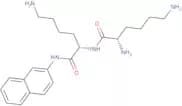
CAS:<p>Please enquire for more information about Neuropeptide Y (2-36) (human, rat) trifluoroacetate salt including the price, delivery time and more detailed product information at the technical inquiry form on this page</p>Formula:C180H276N54O55SPurity:Min. 95%Molecular weight:4,108.51 g/molH-Lys-Lys-bNA acetate salt
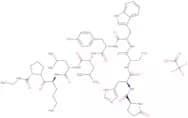
CAS:<p>Please enquire for more information about H-Lys-Lys-bNA acetate salt including the price, delivery time and more detailed product information at the technical inquiry form on this page</p>Formula:C22H33N5O2Purity:Min. 95%Molecular weight:399.53 g/mol(Des-Gly10,D-Leu6, Orn 8,Pro-NHEt 9)-LHRH trifluoroacetate salt
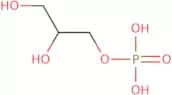
CAS:<p>Please enquire for more information about (Des-Gly10,D-Leu6, Orn 8,Pro-NHEt 9)-LHRH trifluoroacetate salt including the price, delivery time and more detailed product information at the technical inquiry form on this page</p>Formula:C58H82N14O12Purity:Min. 95%Molecular weight:1,167.36 g/molGlycerophosphoric acid - 35% aqueous solution, mixture of isomers
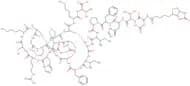
CAS:<p>Mixture of 1, 2 and cyclic phosphates.<br>Glycerophosphoric acid is a fatty acid that is naturally found in the body. It has been shown to have an effect on the production of enzymes and proteins in cells, which may be related to its metabolic rate.</p>Formula:C3H9O6PPurity:Min. 35%Color and Shape:Colorless Clear LiquidMolecular weight:172.07 g/mol([13C6]Leu6)-Endothelin-1 (human, bovine, dog, mouse, porcine, rat) acetate salt
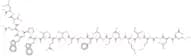
<p>Please enquire for more information about ([13C6]Leu6)-Endothelin-1 (human, bovine, dog, mouse, porcine, rat) acetate salt including the price, delivery time and more detailed product information at the technical inquiry form on this page</p>Purity:Min. 95%(D-Tyr6,betaPhe11,Phe13, Nle 14)-Bombesin (6-14) (free acid) trifluoroacetate salt
CAS:<p>Please enquire for more information about (D-Tyr6,betaPhe11,Phe13, Nle 14)-Bombesin (6-14) (free acid) trifluoroacetate salt including the price, delivery time and more detailed product information at the technical inquiry form on this page</p>Formula:C63H79N13O12Purity:Min. 95%Molecular weight:1,210.38 g/molAmylin (mouse, rat) trifluoroacetate salt
CAS:<p>Trifluoroacetate salt</p>Formula:C167H272N52O53S2Purity:Min. 95%Molecular weight:3,920.4 g/molNeuropeptide Y (13-36) (porcine) trifluoroacetate salt
CAS:<p>Please enquire for more information about Neuropeptide Y (13-36) (porcine) trifluoroacetate salt including the price, delivery time and more detailed product information at the technical inquiry form on this page</p>Formula:C135H209N41O36Purity:Min. 95%Molecular weight:2,982.36 g/mol2,4,6-Trifluorobenzoic acid
CAS:<p>2,4,6-Trifluorobenzoic acid is a chemical compound that is an intermediate in the synthesis of stilbazole. It is prepared by chlorinating the 2,4,6-trichlorobenzoic acid with hydrogen peroxide and hydrochloric acid. The 2,4,6-trifluorobenzoic acid is then reduced to the desired product with sodium borohydride. This chemical has been detected in nature as a racemic mixture and can be used as a precursor in analytical methods for detecting other compounds. It is also used in dechlorination reactions to remove chlorine from organic molecules. This process can be monitored using UV detectors.</p>Formula:C7H3F3O2Purity:Min. 95%Molecular weight:176.09 g/mol(Phe7)-Dynorphin A (1-7) acetate salt
CAS:<p>Dynorphin A (1-7) acetate salt is a potent analgesic that has been used to treat pain. It has been shown to be effective in the treatment of laryngitis and other laryngological disorders. Dynorphin A (1-7) acetate salt is a prodrug that is hydrolyzed in vivo to dynorphin A (1-7) by esterases, which can then bind to opioid receptors. This drug has been validated for use as a diagnostic agent in coatings and in algorithms for analysis of polygonal images from laryngoscopy. The dehydrogenase enzymes are added to the coating or algorithm for diagnosis of the presence of vocal cord pathology. Dynorphin A (1-7) acetate salt also shows promising results for analyzing waveforms from laryngoscopy, with the goal of classifying vocal cord pathology.</p>Formula:C43H58N10O9Purity:Min. 95%Molecular weight:858.98 g/molSpexin trifluoroacetate salt
CAS:<p>Please enquire for more information about Spexin trifluoroacetate salt including the price, delivery time and more detailed product information at the technical inquiry form on this page</p>Formula:C74H114N20O19SPurity:Min. 95%Molecular weight:1,619.89 g/molAcetyl-Heme-Binding Protein 1 (1-21) (human) trifluoroacetate salt
CAS:<p>Please enquire for more information about Acetyl-Heme-Binding Protein 1 (1-21) (human) trifluoroacetate salt including the price, delivery time and more detailed product information at the technical inquiry form on this page</p>Formula:C116H176N26O30S2Purity:Min. 95%Molecular weight:2,478.93 g/molPrion Protein (118-135) (human) trifluoroacetate salt
CAS:<p>Please enquire for more information about Prion Protein (118-135) (human) trifluoroacetate salt including the price, delivery time and more detailed product information at the technical inquiry form on this page</p>Formula:C68H112N18O22S2Purity:Min. 95%Molecular weight:1,597.86 g/mol(Nle 35)-Amyloid b-Protein (25-35) trifluoroacetate salt
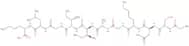
CAS:<p>Please enquire for more information about (Nle 35)-Amyloid b-Protein (25-35) trifluoroacetate salt including the price, delivery time and more detailed product information at the technical inquiry form on this page</p>Formula:C46H83N13O14Purity:Min. 95%Molecular weight:1,042.23 g/molAminocaproic acid
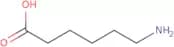
CAS:<p>Aminocaproic acid is a non-specific lysing agent that is used in the treatment of acute blood clots. Aminocaproic acid has minimal toxicity and low-dose effects, and can be used for the treatment of thrombotic disorders. It also has biological properties that are different from those of aminocaproate, which can lead to a more rapid dissolution of the clot. Aminocaproic acid is an organic compound that belongs to the class of dicarboxylic acids. It is synthesized from two molecules of aminoacetic acid by the enzyme aminocaproic acid synthetase. The synthesis occurs in a two-step process: first, caprylic acid reacts with ATP to form aminopropyl-adenylate (APA), followed by hydrolysis by APA lyase to form aminocaproic acid.</p>Formula:C6H13NO2Color and Shape:PowderMolecular weight:131.17 g/molNociceptin trifluoroacetate salt
CAS:<p>Nociceptin trifluoroacetate salt is an opioid with low potency that is used in the treatment of pain. It has been shown to bind to the protein and inhibit protease, which has been proposed as a possible mechanism for its analgesic effects. Nociceptin trifluoroacetate salt may also have indirect effects on brain functions by regulating levels of nociceptin, a neuropeptide that interacts with nociceptive neurons in the brain. This drug has been shown to have nootropic effects in mice, including increased locomotor activity and improved memory retention. Nociceptin trifluoroacetate salt inhibits kappa-opioid receptors and is therefore used as a pharmacological tool for research into opioid receptor function.</p>Formula:C79H129N27O22Purity:Min. 95%Molecular weight:1,809.04 g/molH-Lys-Lys-Lys-Trp-Lys-Lys-Lys-OH acetate salt
CAS:Controlled Product<p>Please enquire for more information about H-Lys-Lys-Lys-Trp-Lys-Lys-Lys-OH acetate salt including the price, delivery time and more detailed product information at the technical inquiry form on this page</p>Formula:C47H84N18O8Purity:Min. 95%Molecular weight:1,029.29 g/molOctreotide trifluoroacetate salt (Dimer, Antiparallel) (
<p>Please enquire for more information about Octreotide trifluoroacetate salt (Dimer, Antiparallel) ( including the price, delivery time and more detailed product information at the technical inquiry form on this page</p>Formula:C98H132N20O20S4Purity:Min. 95%Molecular weight:2,038.48 g/molPACAP-38 (31-38) (human, chicken, mouse, ovine, porcine, rat) trifluoroacetate salt
CAS:<p>Please enquire for more information about PACAP-38 (31-38) (human, chicken, mouse, ovine, porcine, rat) trifluoroacetate salt including the price, delivery time and more detailed product information at the technical inquiry form on this page</p>Formula:C47H83N17O11Purity:Min. 95%Molecular weight:1,062.27 g/mol(Leu31,Pro34)-Peptide YY (human) trifluoroacetate salt
CAS:<p>Please enquire for more information about (Leu31,Pro34)-Peptide YY (human) trifluoroacetate salt including the price, delivery time and more detailed product information at the technical inquiry form on this page</p>Formula:C195H296N54O56Purity:Min. 95%Molecular weight:4,292.77 g/molBiotinyl-Hepcidin-25 (human) trifluoroacetate salt
CAS:<p>Please enquire for more information about Biotinyl-Hepcidin-25 (human) trifluoroacetate salt including the price, delivery time and more detailed product information at the technical inquiry form on this page</p>Formula:C123H184N36O33S10Purity:Min. 95%Molecular weight:3,015.66 g/molH-Arg-Arg-Arg-Arg-OH trifluoroacetate salt
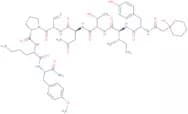
CAS:<p>Trifluoroacetate salt</p>Formula:C24H50N16O5Purity:Min. 95%Molecular weight:642.76 g/mol(d(CH2)51,Tyr(Me)2,Thr4, Orn 8,Tyr-NH29)-Vasotocin trifluoroacetate salt
CAS:<p>Vasotocin is a peptide that belongs to the family of arginine vasotocin and oxytocin receptor antagonists. It is synthesized in the rat kidney, where it is stored in vesicles. Vasotocin has been shown to bind to the oxytocin receptor, which regulates many physiological processes such as muscle contraction, ejaculation, and milk letdown. Vasotocin also modulates the activity of antigen-presenting cells and can be used for pharmaceutical formulations. This drug has been shown to be effective against congestive heart failure and may be used as a diluent for other drugs.br>br><br>Vasotocin trifluoroacetate salt (VT) is an oxime derivative that can be isolated from vasotocin. The synthesis of VT involves converting vasotocin into its trifluoroacetate salt by adding trifluoroacetic acid, followed by reacting with hydroxylam</p>Formula:C54H79N11O13S2Purity:Min. 95%Molecular weight:1,154.4 g/mol2-Hydroxy-3-mercapto-1-propanesulfonic acid sodium salt
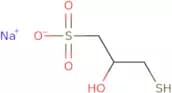
CAS:<p>2-Hydroxy-3-mercapto-1-propanesulfonic acid sodium salt (2HMP) is a diagnostic agent that can be used for the detection of bacterial infections. The conformational properties of 2HMP are similar to those of ATP, which allows it to bind to the polymerase chain reaction enzyme and initiate an enzymatic reaction. This leads to the production of a signal that can be detected by spectrophotometry or fluorometry. 2HMP has also been shown to have chemokine activity in vitro, but this has not been tested in vivo. 2HMP is a competitive inhibitor of human protein serine proteases, such as trypsin and chymotrypsin, with an IC50 value of approximately 1 μM.</p>Formula:C3H7NaO4S2Purity:Min. 95%Molecular weight:194.2 g/mol3,4-Dibromobenzoic acid ethyl ester
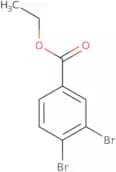
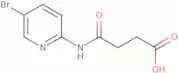
CAS:<p>3,4-Dibromobenzoic acid ethyl ester is a high quality reagent that can be used as an intermediate for the synthesis of complex compounds. It is also useful as a building block for the synthesis of speciality chemicals and research chemicals. 3,4-Dibromobenzoic acid ethyl ester can be used in reactions such as Friedel-Crafts reactions, reducing reactions, and condensations. This chemical is a versatile building block that can be used to construct organic molecules with diverse structures. 3,4-Dibromobenzoic acid ethyl ester is a fine chemical with CAS number 60469-88-7.</p>Formula:C9H8Br2O2Purity:Min. 95%Molecular weight:307.97 g/mol4-((5-Bromopyridin-2-yl)amino)-4-oxobutanoic acid
CAS:<p>4-((5-Bromopyridin-2-yl)amino)-4-oxobutanoic acid (BABA) is a potent photosynthetic inhibitor that inhibits light-driven electron transport in chloroplasts. This inhibition of electron transport leads to the accumulation of reactive oxygen species and cellular dysfunction. BABA is used to induce dormancy in plants and is also used as a chemical inhibitor for arabidopsis thaliana, a type of plant commonly used in molecular biology research. Studies have shown that BABA inhibits the growth of fat cells, which may be due to its ability to inhibit protein synthesis, leading to decreased fat deposition. In addition, this drug has been shown to reduce eye disorders such as retinal degeneration and cataracts by inhibiting the production of reactive oxygen species, which causes oxidative stress.</p>Formula:C9H9BrN2O3Purity:(Elemental Analysis) Min. 97%Color and Shape:PowderMolecular weight:273.08 g/molAbz-Amyloid β/A4 Protein Precursor770 (669-674)-EDDnp trifluoroacetate salt
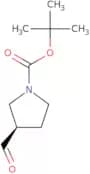
CAS:<p>Please enquire for more information about Abz-Amyloid beta/A4 Protein Precursor770 (669-674)-EDDnp trifluoroacetate salt including the price, delivery time and more detailed product information at the technical inquiry form on this page</p>Formula:C43H62N12O15SPurity:Min. 95%Molecular weight:1,019.09 g/mol(R)-tert-Butyl 3-formylpyrrolidine-1-carboxylate
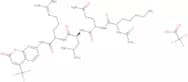
CAS:<p>Please enquire for more information about (R)-tert-Butyl 3-formylpyrrolidine-1-carboxylate including the price, delivery time and more detailed product information at the technical inquiry form on this page</p>Formula:C10H17NO3Purity:Min. 95%Color and Shape:Clear LiquidMolecular weight:199.25 g/molAc-Lys-Gln-Leu-Arg-AFC trifluoroacetate salt
CAS:<p>Please enquire for more information about Ac-Lys-Gln-Leu-Arg-AFC trifluoroacetate salt including the price, delivery time and more detailed product information at the technical inquiry form on this page</p>Formula:C35H51F3N10O8Purity:Min. 95%Molecular weight:796.84 g/molNeuromedin U-8 (porcine) trifluoroacetate salt
CAS:<p>Neuromedin U-8 (porcine) trifluoroacetate salt H-Tyr-Phe-Leu-Phe-Arg-Pro-Arg-Asn-NH2 trifluoroacetate salt is a molecule that inhibits the action of vasoactive intestinal peptide. It is a peptide hormone that has been shown to be involved in the regulation of bowel function and blood pressure. Neuromedin U-8 (porcine) trifluoroacetate salt H-Tyr-Phe-Leu-Phe-Arg-Pro-Arg-Asn NH2 trifluoroacetate salt has also been shown to inhibit cell proliferation, cancer, and inflammatory bowel disease. Neuromedin U 8 (porcine) trifluoroacetate salt H Tyr Phe Leu Phe Arg Pro Arg Asn NH2 trifluoroacetate salt binds to the receptor for</p>Formula:C54H78N16O10Purity:Min. 95%Molecular weight:1,111.3 g/mol16-Mercaptohexadecanoic acid
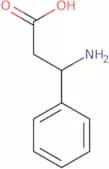
CAS:<p>16-Mercaptohexadecanoic acid (16MHDA) is a fatty acid that has been shown to be an effective inhibitor of the enzyme fatty acid synthase. This enzyme is responsible for the synthesis of long-chain polyunsaturated fatty acids and their derivatives, which are key components of cell membranes and also act as signaling molecules. 16MHDA can be used in the treatment of diseases such as psoriasis, rheumatoid arthritis, and cancer. 16MHDA has been shown to have a high detection sensitivity and activity index when used in electrochemical impedance spectroscopy experiments. The x-ray diffraction data show that 16MHDA forms an acid complex with its substrate, which is thought to be the reaction mechanism. Colloidal gold has been used to study the interaction between 16MHDA and DNA duplexes. This compound was also found to have monoclonal antibody binding properties in human serum samples.</p>Formula:C16H32O2SPurity:Min. 95%Color and Shape:PowderMolecular weight:288.49 g/molDL-3-Amino-3-phenylpropionic acid
CAS:<p>DL-3-Amino-3-phenylpropionic acid is an amino acid that is synthesized by the reaction of malonic acid and ethyl ester. This compound is a competitive inhibitor of the enzyme pyruvate carboxylase and inhibits this enzyme in the conversion of pyruvic acid to acetyl CoA, which plays a key role in metabolism. DL-3-Amino-3-phenylpropionic acid has been shown to inhibit the growth of bacteria such as Escherichia coli, Salmonella typhimurium and Staphylococcus aureus. The inhibition of pyruvate carboxylase by DL-3-Amino-3-phenylpropionic acid prevents the production of acetaldehyde from pyruvate, which is toxic to cells.</p>Formula:C9H11NO2Purity:Min. 95%Molecular weight:165.19 g/molHomoterephalic acid
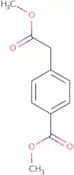
CAS:<p>Homoterephalic acid is a polycarboxylic acid. It has been shown to be effective in the treatment of tumors, and in clinical studies, it has been shown to have anti-cancer activity. Homoterephalic acid inhibits the growth of tumor cells by inhibiting the synthesis of l-glutamic acid. This compound also exhibits anti-inflammatory properties by inhibiting tumor necrosis factor alpha (TNFα) production. Homoterephalic acid is also an inhibitor of human lung diastereomer 1210 cells, as well as erythrocytes infected with L1210 leukemia cells. Homoterephalic acid is a substrate for glycinamide ribonucleotide synthetase and can be used for the biosynthesis of thymidylate. It can be used for the synthesis of polycarboxylic acids that are important for cell metabolism and protein synthesis.</p>Formula:C11H12O4Purity:Min. 95%Molecular weight:208.21 g/molAcetyl-Amyloid b-Protein (15-20) amide trifluoroacetate salt
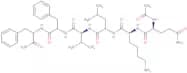
CAS:<p>Please enquire for more information about Acetyl-Amyloid b-Protein (15-20) amide trifluoroacetate salt including the price, delivery time and more detailed product information at the technical inquiry form on this page</p>Formula:C42H63N9O8Purity:Min. 95%Molecular weight:822.01 g/mol(Glu17·21·24)-Osteocalcin (1-49) (human) trifluoroacetate salt
<p>Please enquire for more information about (Glu17·21·24)-Osteocalcin (1-49) (human) trifluoroacetate salt including the price, delivery time and more detailed product information at the technical inquiry form on this page</p>Formula:C266H381N67O76S2Purity:Min. 95%Molecular weight:5,797.41 g/molBiotinyl-Amyloid b-Protein (1-40) trifluoroacetate salt
CAS:<p>Please enquire for more information about Biotinyl-Amyloid b-Protein (1-40) trifluoroacetate salt including the price, delivery time and more detailed product information at the technical inquiry form on this page</p>Formula:C204H309N55O60S2Purity:Min. 95%Molecular weight:4,556.1 g/molTumor Targeted Pro-Apoptotic Peptide trifluoroacetate salt
<p>Please enquire for more information about Tumor Targeted Pro-Apoptotic Peptide trifluoroacetate salt including the price, delivery time and more detailed product information at the technical inquiry form on this page</p>Formula:C94H174N32O22S2Purity:Min. 95%Molecular weight:2,168.72 g/mol






![([13C6]Leu6)-Endothelin-1 (human, bovine, dog, mouse, porcine, rat) acetate salt](/_next/image/?url=https%3A%2Fstatic.cymitquimica.com%2Fproducts%2F3D%2Fthumb-webp%2FFL110023.webp&w=3840&q=75)