Carboxylic Acids
Carboxylic acids are organic molecules characterized by having a carboxyl-type functional group (-COOH). These acids are fundamental in various chemical reactions, including esterification, amidation, and decarboxylation. Carboxylic acids are widely used in the production of pharmaceuticals, polymers, and agrochemicals. In this section, you can find a large number of carboxylic acids ready to be used. At CymitQuimica, we provide a broad range of high-quality carboxylic acids to support your research and industrial applications.
Found 12453 products of "Carboxylic Acids"
Sort by
Purity (%)
0
100
|
0
|
50
|
90
|
95
|
100
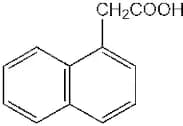
1-Naphthylacetic acid, 95%, may cont. up to 5% 2-isomer
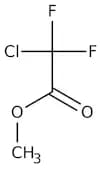
CAS:<p>1-Naphthylacetic acid is used as a plant growth regulator and for plant tissue culture. It is used for the vegetative propagation of plants from stem and leaf cutting, abscission promoter and substrate for auxin inducers of specific plant enzymes. Further, it stimulates root formation in cuttings of</p>Formula:C12H10O2Purity:95%Color and Shape:White to cream to yellow or pale brown, Crystalline powder or powderMolecular weight:186.21Methyl chlorodifluoroacetate, 98%
CAS:<p>This Thermo Scientific Chemicals brand product was originally part of the Alfa Aesar product portfolio. Some documentation and label information may refer to the legacy brand. The original Alfa Aesar product / item code or SKU reference has not changed as a part of the brand transition to Thermo Sci</p>Formula:C3H3ClF2O2Purity:98%Color and Shape:Clear colorless, LiquidMolecular weight:144.50Ethyl tert-butylacetate, 98%
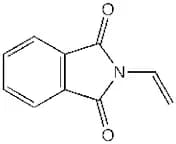
CAS:<p>This Thermo Scientific Chemicals brand product was originally part of the Alfa Aesar product portfolio. Some documentation and label information may refer to the legacy brand. The original Alfa Aesar product / item code or SKU reference has not changed as a part of the brand transition to Thermo Sci</p>Formula:C8H16O2Purity:98%Color and Shape:Clear colorless, LiquidMolecular weight:144.21N-Vinylphthalimide, 99%
CAS:<p>This Thermo Scientific Chemicals brand product was originally part of the Alfa Aesar product portfolio. Some documentation and label information may refer to the legacy brand. The original Alfa Aesar product / item code or SKU reference has not changed as a part of the brand transition to Thermo Sci</p>Formula:C10H7NO2Purity:99%Color and Shape:White to cream to pale yellow, Crystals or powder or crystalline powderMolecular weight:173.17Strontium oxalate, 95%
CAS:<p>This Thermo Scientific Chemicals brand product was originally part of the Alfa Aesar product portfolio. Some documentation and label information may refer to the legacy brand. The original Alfa Aesar product / item code or SKU reference has not changed as a part of the brand transition to Thermo Sci</p>Formula:C2O4SrPurity:95%Color and Shape:White, Powder or lumpMolecular weight:175.64o-Cresolphthalein complexone, indicator grade
CAS:<p>Indicator for complexometric titration of Mg, Ca, Sr and Ba. It is used as an alkaline earth metal ion indicator. Suggested to be colorless at pH 11, but turns pink in the presence of alkaline earth metals. Also utilized in an auto analyzer to determine serum calcium. This Thermo Scientific Chemical</p>Formula:C32H32N2O12Color and Shape:White to cream, PowderMolecular weight:636.61tert-Butyl cyanoacetate, 98%
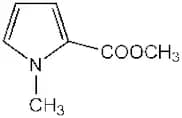
CAS:<p>tert-Butyl cyanoacetate is used in the synthesis of vinylogous urea. It is also used as a new additive for the sugar nucleoside base coupling step en route to DAPD with improved -selectivity. This Thermo Scientific Chemicals brand product was originally part of the Alfa Aesar product portfolio. Some</p>Formula:NCCH2CO2C(CH3)3Purity:98%Color and Shape:Liquid or viscous liquid, Clear colorless to white to yellowMolecular weight:141.17Methyl 1-methylpyrrole-2-carboxylate, 99%
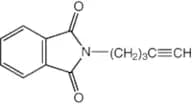
CAS:<p>Methyl 1-methylpyrrole-2-carboxylate is used as chemical and organic Intermediates. This Thermo Scientific Chemicals brand product was originally part of the Alfa Aesar product portfolio. Some documentation and label information may refer to the legacy brand. The original Alfa Aesar product / item c</p>Formula:C7H9NO2Purity:99%Color and Shape:Clear colorless to yellow to orange, LiquidMolecular weight:139.15N-(4-Pentynyl)phthalimide, 97%
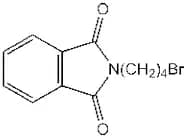
CAS:<p>N-(4-Pentynyl)phthalimide is used as pharmaceutical intermediate. This Thermo Scientific Chemicals brand product was originally part of the Alfa Aesar product portfolio. Some documentation and label information may refer to the legacy brand. The original Alfa Aesar product / item code or SKU referen</p>Formula:C13H11NO2Purity:97%Color and Shape:White to yellow to pale brown, PowderMolecular weight:213.24N-(4-Bromobutyl)phthalimide, 96%
CAS:<p>N-(4-Bromobutyl)phthalimide is used in organic synthesis and the production of pharmaceutical. It can react with 1-phenyl-piperazine to get N-[4-(4-phenyl-piperazin-1-yl)-butyl]-phthalimide. It is a useful synthesis reagent used to synthesize B-cyclodextrin derivatives. This Thermo Scientific Chemic</p>Formula:C12H12BrNO2Purity:96%Color and Shape:White to cream, PowderMolecular weight:282.14Tungsten hydroxide oxide phosphate
CAS:Formula:H146O78P2W24Purity:85%Color and Shape:SolidMolecular weight:5869.22Ref: IN-DA003TRD
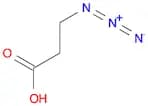
Discontinued productPropanoic acid, 3-azido-
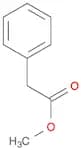
CAS:Formula:C3H5N3O2Purity:97%Color and Shape:LiquidMolecular weight:115.0907Benzeneacetic acid, methyl ester
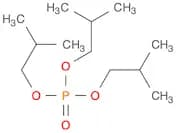
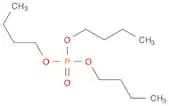
CAS:Formula:C9H10O2Purity:98%Color and Shape:LiquidMolecular weight:150.1745Phosphoric acid, tris(2-methylpropyl) ester
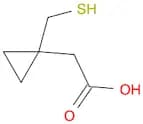
CAS:Formula:C12H27O4PPurity:98%Color and Shape:LiquidMolecular weight:266.3141Cyclopropaneacetic acid, 1-(mercaptomethyl)-
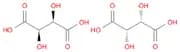
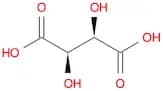
CAS:Formula:C6H10O2SPurity:95%Color and Shape:SolidMolecular weight:146.2074Butanedioic acid, 2,3-dihydroxy-, (2R,3R)-rel-
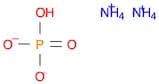
CAS:Formula:C8H12O12Purity:95%Color and Shape:LiquidMolecular weight:300.1737Diammonium hydrogenphosphate
CAS:Formula:H9N2O4PPurity:99%Color and Shape:SolidMolecular weight:132.056221Ref: IN-DA0057DU
Discontinued productRef: IN-DA00IEB2
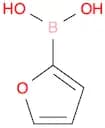
Discontinued productBoronic acid, B-2-furanyl-
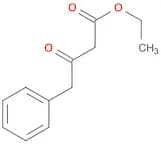
CAS:Formula:C4H5BO3Purity:97%Color and Shape:SolidMolecular weight:111.89173-OXO-4-PHENYL-BUTYRIC ACID ETHYL ESTER
CAS:Formula:C12H14O3Purity:95%Color and Shape:LiquidMolecular weight:206.2378Ref: IN-DA003NMZ
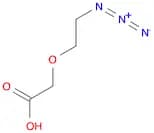
Discontinued product2-(2-Azidoethoxy)acetic acid
CAS:Formula:C4H7N3O3Purity:98%Color and Shape:LiquidMolecular weight:145.1167Ref: IN-DA00ID24
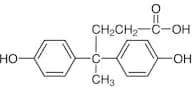
Discontinued productDiphenolic Acid
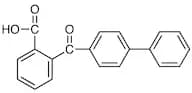
CAS:Formula:C17H18O4Purity:>98.0%(GC)(T)Color and Shape:White to Light yellow powder to crystalMolecular weight:286.332-(4-Biphenylylcarbonyl)benzoic Acid
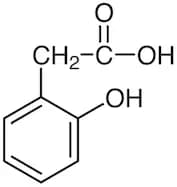
CAS:Formula:C20H14O3Purity:>97.0%(GC)(T)Color and Shape:White to Almost white powder to crystalMolecular weight:302.332-Hydroxyphenylacetic Acid
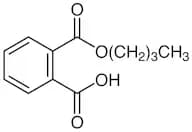
CAS:Formula:C8H8O3Purity:>98.0%(GC)(T)Color and Shape:Light yellow to Yellow to Orange powder to crystalMolecular weight:152.15Monobutyl Phthalate
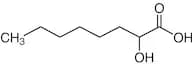
CAS:Formula:C12H14O4Purity:>95.0%(GC)(T)Color and Shape:White to Almost white powder to crystalMolecular weight:222.242-Hydroxy-n-octanoic Acid
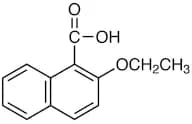
CAS:Formula:C8H16O3Purity:>98.0%(T)Color and Shape:White to Almost white powder to crystalMolecular weight:160.212-Ethoxy-1-naphthoic Acid
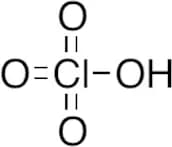
CAS:Formula:C13H12O3Purity:>99.0%(T)(HPLC)Color and Shape:White to Almost white powder to crystalMolecular weight:216.24Perchloric Acid (60%)
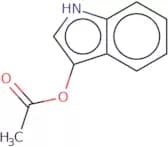
CAS:<p>Applications Perchloric Acid is a useful chemical reagent in the preparation of perchlorate salts. It is also known to be a strong oxidizer.<br> E0<br></p>Formula:ClHO4Purity:60%Color and Shape:NeatMolecular weight:100.45853-Indoxylacetate
CAS:<p>Please enquire for more information about 3-Indoxylacetate including the price, delivery time and more detailed product information at the technical inquiry form on this page</p>Formula:C10H9NO2Color and Shape:White PowderMolecular weight:175.18 g/molRef: 3D-FI10731
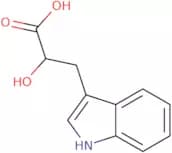
Discontinued productDL-Indole-3-lactic acid
CAS:<p>Indole-3-lactic acid is a plant hormone that is produced in the leaves of the plant when they are under stress. It has been shown to have activity against bowel diseases and metabolic disorders. Indole-3-lactic acid has been isolated from plants like Caproicum album, which is used in vitro to measure its effect on caproic acid production. This compound has also been detected in human serum and wastewater treatment. Indole-3-lactic acid inhibits tryptophan degradation by competing with indolecarboxylase for substrate. The effect of indole-3-lactic acid on dextran sulfate and glomerular filtration rate was studied using a rat model, where it was found that it had no significant effects.</p>Formula:C11H11NO3Purity:Min. 95%Color and Shape:PowderMolecular weight:205.21 g/molBis(2,2,2-trichloroethyl)azodicarboxylate
CAS:<p>Bis(2,2,2-trichloroethyl)azodicarboxylate is a nucleophile that can be used as an alkylating agent in the industrial process. It is also used to prepare chiral amines by adding an amine to the enantiomerically pure bis(2,2,2-trichloroethyl)azodicarboxylate. The anticancer activity of Bis(2,2,2-trichloroethyl)azodicarboxylate is due to its ability to inhibit tumor cell proliferation. Bis(2,2,2-trichloroethyl)azodicarboxylate is not effective against cancerous cells that do not have functional groups such as amino acids.</p>Formula:C6H4Cl6N2O4Purity:Min. 95%Color and Shape:Yellow SolidMolecular weight:380.82 g/molRef: 3D-FB01254
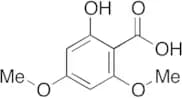
Discontinued product2-Hydroxy-4,6-dimethoxybenzoic Acid
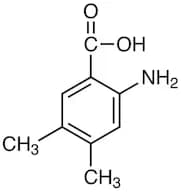
CAS:Controlled Product<p>Applications 2-Hydroxy-4,6-dimethoxybenzoic acid is a reagent used in the synthesis of rac Zearalenone-d6 (Z270502). rac Zearalenone-d6 s an estrogenic mycotoxin produced by Fusarium fungi commonly found in grains. One of a group of compounds known as resorcylic acid lactones.<br>References Tanaka, T., et al.: J. Agric. Food Chem., 36, 979 (1988), Hamilton, S., et al.: Anticancer Res., 16, 3597 (1996), Hecht, S., et al.: Cancer Lett., 150, 49 (2000), Hussein, H., et al.: Toxicology, 167, 101 (2001), Lim, H., et al.: J. Immunol., 175, 4180 (2005),<br></p>Formula:C9H10O5Color and Shape:Light Orange Colour To Light BrownMolecular weight:198.052-Amino-4,5-dimethylbenzoic Acid
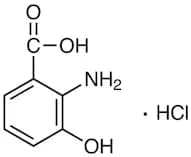
CAS:Formula:C9H11NO2Purity:>97.0%(T)(HPLC)Color and Shape:White to Yellow powder to crystalMolecular weight:165.192-Amino-3-hydroxybenzoic Acid Hydrochloride
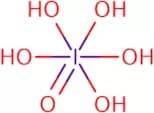
CAS:Formula:C7H7NO3·HClPurity:>98.0%(T)(HPLC)Color and Shape:White to Light yellow to Purple powder to crystalMolecular weight:189.60Periodic acid
CAS:<p>Periodic acid is a natural product that has been used as an antimicrobial agent for more than 100 years. It has been shown to have pro-apoptotic properties in a number of cell systems, including monocyte-like cells, hepatocyte-like cells, and epidermal growth factor receptor-transfected cells. Periodic acid is also effective against inflammatory bowel disease in infants. This drug also has anti-inflammatory effects and may be useful for the treatment of autoimmune diseases. Periodic acid inhibits the metabolic rate in cell cultures by blocking oxidative phosphorylation at complex I and II, leading to increased levels of reactive oxygen species (ROS). This ROS production induces apoptosis through a caspase cascade.</p>Formula:H5IO6Purity:Min. 95%Color and Shape:White Clear LiquidMolecular weight:227.94 g/molRef: 3D-FP16075
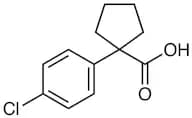
Discontinued product1-(4-Chlorophenyl)-1-cyclopentanecarboxylic Acid
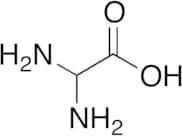
CAS:Formula:C12H13ClO2Purity:>98.0%(GC)(T)Color and Shape:White to Almost white powder to crystalMolecular weight:224.682,2-Diaminoacetic Acid
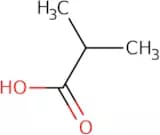
CAS:Controlled ProductFormula:C2H6N2O2Color and Shape:NeatMolecular weight:90.081Isobutyric acid
CAS:<p>Isobutyric acid is a short-chain carboxylic acid that has been shown to be a potent inhibitor of congestive heart failure. Isobutyric acid binds to the dinucleotide phosphate and is then hydrolyzed by glycol ethers to release isobutyric acid, which can induce vasodilation. The surface methodology used in this study revealed that Isobutyric acid inhibits the polymerase chain reaction activity of human DNA. This inhibition may be due to its structural similarity with mycobacterial sesquiterpene lactones, which have been shown to inhibit protein synthesis in human cells. Isobutyric acid also has antibacterial properties, and has been shown to have an activity index of 0.5 against methicillin-resistant Staphylococcus aureus (MRSA) isolates and erythromycin-resistant Mycobacterium avium complex isolates.</p>Formula:C4H8O2Purity:Min. 95%Color and Shape:Colorless Clear LiquidMolecular weight:88.11 g/molRef: 3D-FI46255
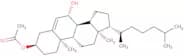
Discontinued product7b-Hydroxy cholesterol 3b-acetate
CAS:Controlled Product<p>7b-Hydroxy cholesterol 3b-acetate is an allylic compound that is catalyzed by molybdenum, which eliminates the acetyl group at position 7 to form a double bond with the 3-position. The reaction temperature of 7b-hydroxy cholesterol 3b-acetate can be increased to high temperatures (i.e., >100°C) for the elimination process, and allylic acetates are obtained as products. The reaction starts with the addition of hexacarbonyl, which leads to a diene intermediate. This is then eliminated by adding acetamide in presence of high concentration of acetic acid and catalytic amounts of molybdenum. The low yield and efficiency, however, are major drawbacks of this process.</p>Formula:C29H48O3Purity:Min. 95%Molecular weight:444.69 g/molRef: 3D-FH23948
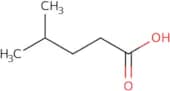
Discontinued product4-Methylpentanoic acid
CAS:<p>4-Methylpentanoic acid is a fatty acid that is the product of anaerobic fermentation in the colon and can be found as an end product in the body. It can be used as a substrate in film tests for detecting bacteria, such as Escherichia coli, which are associated with bowel diseases. 4-Methylpentanoic acid has been shown to have inhibitory effects against nuclear dna replication, mitochondrial membrane potential, and energy metabolism. 4-Methylpentanoic acid also has antiinflammatory properties and has been shown to decrease body mass index. The 6-Fluoro-3-indoxyl-beta-D-galactopyranoside is an antituberculosis drug that belongs to the class of rifamycins. It is the most active of the rifamycins for the treatment of tuberculosis. Rifapentine inhibits bacterial growth by binding to DNA-dependent RNA polymerase, thereby preventing transcription</p>Formula:C6H12O2Purity:Min. 95%Molecular weight:116.16 g/molRef: 3D-FM35595
Discontinued productValeric acid
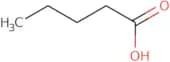
CAS:<p>Valeric acid is a fatty acid that is used in the manufacture of polymers. Valeric acid can be synthesized from caproic acid, which is found in palm oil and coconut oil. Valeric acid has been shown to inhibit the activity of nicotinic acetylcholine receptors at low concentrations and to have an inhibitory effect on the ryanodine receptor at high concentrations. Valeric acid also has a matrix effect on analytical methods such as gas-liquid chromatography, which has been modeled using polymer compositions.</p>Formula:C5H10O2Purity:Min. 95%Molecular weight:102.13 g/molRef: 3D-FV34914
Discontinued productDideuterosulfuric acid
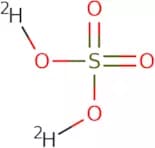
CAS:Controlled Product<p>Dideuterosulfuric acid is a protonated molecule that is found in the tropone class of organic compounds. It has been shown to have optical properties similar to those of ferrocene, which is why it is often used as a replacement for this compound. Dideuterosulfuric acid has been studied extensively using a kinetic method with the goal of determining its mechanism and rate constants. Hydroxyl groups are found on the molecule's trifluoroacetic acid side chains, which may contribute to its reactivity with chloride ions and nitrogen atoms. Electrophotographic measurements show that hydrogen bonding occurs between molecules in dilute solutions.</p>Formula:D2SO4Purity:Min. 95%Molecular weight:100.09 g/molRef: 3D-FD167508
Discontinued productRuthenium(III) nitrosyl nitrate, soluble in 10% dilute nitric acid
CAS:<p>Please enquire for more information about Ruthenium(III) nitrosyl nitrate, soluble in 10% dilute nitric acid including the price, delivery time and more detailed product information at the technical inquiry form on this page</p>Formula:RuN4O10Purity:Min. 95%Color and Shape:Clear LiquidMolecular weight:317.09 g/molDichloroisocyanuric acid sodium dihydrate
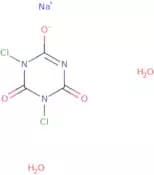
CAS:<p>Dichloroisocyanduric acid sodium salt (DCD) is a disinfectant that is used to control bacteria, fungi, and algae in wastewater treatment plants. DCD has been shown to be an effective antimicrobial agent against bacterial spores and the fungal plant pathogen "Botrytis cinerea" when used at concentrations of 0.1-0.3%. DCD also has a low toxicity for mammals, with LD50 values of 3.5g/kg for rats and 2g/kg for mice. The chemical stability of DCD can be increased by adding sodium carbonate or other alkaline substances in a neutral pH environment.</p>Formula:C3HCl2N3O3•(H2O)2•NaPurity:Min. 95%Color and Shape:PowderMolecular weight:256.98 g/molButyric acid
CAS:<p>Butyric acid is a short-chain fatty acid that is produced by the fermentation of carbohydrates in the colon and it is an important energy source for cells in the colon. It can be found in sodium salts, such as sodium butyrate, or as a free acid. Butyric acid has been shown to have physiological effects on the bowel disease, including improving symptoms of diarrhea and constipation. It also helps to maintain a healthy gut by preventing the growth of unwanted bacteria. Butyric acid inhibits certain enzymes, such as glutamine synthetase, which is important for energy metabolism. The chemical pesticide DDT has been shown to inhibit butyric acid production in cells.</p>Formula:C4H8O2Purity:Min. 95%Color and Shape:Clear Colourless LiquidMolecular weight:88.11 g/molRef: 3D-FB159569
Discontinued productPeptide YY (3-36) (human) trifluoroacetate salt
CAS:<p>Peptide YY (3-36) (human) trifluoroacetate salt H-Ile-Lys-Pro-Glu-Ala-Pro-Gly-Glu-Asp-Ala-Ser-Pro-Glu-Glu-Leu-Asn -Arg -Tyr -Tyr -Ala -Ser -Leu -Arg <br>Peptide YY (3.36) is a peptide hormone that is secreted by L cells in the small intestine and colon. It has been shown to be an effective treatment for obesity, type 2 diabetes, and other metabolic disorders. Peptide YY (3.36) has been shown to increase insulin sensitivity, reduce food intake and body weight, increase metabolic rate, and improve glucose homeostasis in animal studies. In humans, it has been found to have similar effects on postprandial plasma levels of peptide YY (3.</p>Formula:C180H279N53O54Purity:Min. 95%Molecular weight:4,049.47 g/molRef: 3D-FP110326
Discontinued product