Carboxylic Acids
Carboxylic acids are organic molecules characterized by having a carboxyl-type functional group (-COOH). These acids are fundamental in various chemical reactions, including esterification, amidation, and decarboxylation. Carboxylic acids are widely used in the production of pharmaceuticals, polymers, and agrochemicals. In this section, you can find a large number of carboxylic acids ready to be used. At CymitQuimica, we provide a broad range of high-quality carboxylic acids to support your research and industrial applications.
Found 12453 products of "Carboxylic Acids"
Sort by
Purity (%)
0
100
|
0
|
50
|
90
|
95
|
100
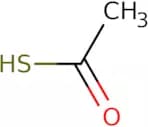
Thioacetic acid
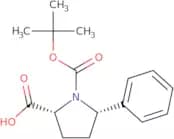
CAS:<p>Thioacetic acid is a monoethyl ether of thioacetic acid. It is used in the synthesis of fatty acids and other organic compounds. Thioacetic acid can be used in the treatment of infectious diseases, such as malaria and cholera, by inhibiting the growth of pathogenic microorganisms. The reactive nature of thioacetic acid makes it ideal for wastewater treatment, where it reacts with ammonia to form ammonium sulfate, which can be easily removed from water.</p>Formula:C2H4OSPurity:Min. 95%Color and Shape:Colorless Clear LiquidMolecular weight:76.12 g/molBoc-(2R,5S)-5-phenylpyrrolidine-2-carboxylic acid
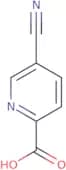
CAS:<p>Please enquire for more information about Boc-(2R,5S)-5-phenylpyrrolidine-2-carboxylic acid including the price, delivery time and more detailed product information at the technical inquiry form on this page</p>Formula:C16H21NO4Purity:Min. 95%Molecular weight:291.34 g/mol5-Cyanopyridine-2-carboxylic acid
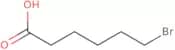
CAS:<p>5-Cyanopyridine-2-carboxylic acid is a small molecule that has been found to have significant biological activity in a number of different areas, including neurotherapeutics. It is the result of a scalable synthesis and is soluble in water. The molecule has two chiral centers and can exist as four different stereoisomers (enantiomers). In vitro studies show that 5-cyanopyridine-2-carboxylic acid inhibits fatty acid uptake by blocking the proton pump, which transports lipids into cells. This compound also binds to the cytosolic protein pyrazine 2-carboxylic acid receptor 1 (PYZR1), which may provide an explanation for its effects on fatty acid uptake.</p>Formula:C7H4N2O2Purity:Min. 95%Molecular weight:148.12 g/mol6-Bromohexanoic acid
CAS:<p>6-Bromohexanoic acid is a fatty acid that has been shown to be an effective agent for the treatment of cancer. It is used in gene therapy to inhibit the growth of cancer cells by binding to and then activating transcription factors. 6-Bromohexanoic acid can also be used as a chemotherapeutic agent and has been shown to cause apoptosis in monoclonal antibody-treated cells. 6-Bromohexanoic acid has pharmacokinetic properties that are similar to those of other fatty acids. The reaction solution was found to have high chemical stability, which may be due to the presence of nitrogen atoms. This reaction solution was found to adsorb onto the surface of monoclonal antibodies and cell culture, altering their properties.</p>Formula:C6H11BrO2Purity:Min. 97.0%Color and Shape:PowderMolecular weight:195.05 g/mol1-[2-(5-Methyl-1H-indol-3-yl)ethyl]-5-oxopyrrolidine-3-carboxylic acid
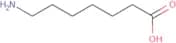
CAS:Controlled Product<p>Please enquire for more information about 1-[2-(5-Methyl-1H-indol-3-yl)ethyl]-5-oxopyrrolidine-3-carboxylic acid including the price, delivery time and more detailed product information at the technical inquiry form on this page</p>Formula:C16H18N2O3Purity:Min. 95%Molecular weight:286.33 g/mol7-Aminoheptanoic acid
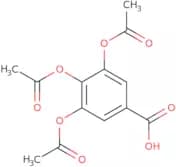
CAS:<p>7-Aminoheptanoic acid is a fatty acid that contains a hydroxyl group on the seventh carbon of its chain. This compound has been shown to bind to and activate the receptor GPR120. It is also used in the synthesis of pharmaceuticals, such as anti-inflammatory agents, and in analytical methods for detecting peptides. 7-Aminoheptanoic acid can be synthesized by reacting hydrochloric acid with an amine or amide, followed by reaction with an ester hydrochloride. The compound can be purified using preparative high performance liquid chromatography (HPLC).</p>Formula:C7H15NO2Purity:Min. 95%Molecular weight:145.2 g/mol3,4,5-Triacetoxybenzoic acid
CAS:<p>Trifluoroacetic acid is an organic acid that is used in the synthesis of esters, ethers, and amides. It can be used to produce 3,4,5-triacetoxybenzoic acid (TABA), which inhibits the proliferation of leukemia cells. TABA binds to the active site of the protein runx2, which is involved in development and differentiation. It also inhibits vibrational spectra and chemical profiles that are related to cancer cell growth. TABA has been shown to induce autophagy through activation of AMPK signaling pathways in leukemia cells. TABA also inhibits lipid accumulation by inhibiting the expression of genes such as SREBP1c and ACC2.</p>Formula:C13H12O8Purity:Min. 97 Area-%Color and Shape:PowderMolecular weight:296.23 g/mol3,4-Dihydroisoquinolin-2(1H)-ylacetic acid
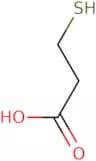
CAS:<p>3,4-Dihydroisoquinolin-2(1H)-ylacetic acid is a chemical compound with the molecular formula of C8H11NO2. It is a useful scaffold for the synthesis of complex compounds and research chemicals. 3,4-Dihydroisoquinolin-2(1H)-ylacetic acid is also a versatile building block for the preparation of fine chemicals. It is used as a reaction component in many organic reactions and can be used as a speciality chemical or reagent due to its high quality.</p>Formula:C11H13NO2Purity:Min. 95%Color and Shape:PowderMolecular weight:191.23 g/mol3-Mercaptopropionic acid
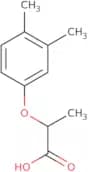
CAS:<p>3-Mercaptopropionic acid is a byproduct of the metabolic process where glutamate, a major excitatory neurotransmitter in the brain, is broken down into 3-mercaptopropionic acid and pyruvic acid. It is known to have synergic effects with other compounds such as fluorescence probes. 3-Mercaptopropionic acid also reacts with glycol ethers to form stable 3-mercaptopropionate esters. This reaction is catalyzed by enzymes such as alcohol dehydrogenase and acetyltransferases. The enzyme activity can be measured using an electrochemical detector. 3-Mercaptopropionic acid can be found in human serum, wastewater treatment plants, and chlorophyll A. It has been shown to inhibit the production of glutathione reductase in human erythrocytes when exposed to light. This inhibition may be due to its ability to induce oxidative stress or damage cell membranes through its protonation properties.</p>Formula:C3H6O2SPurity:Min. 98 Area-%Color and Shape:Clear LiquidMolecular weight:106.14 g/mol2-(3,4-Dimethylphenoxy)propanoic acid
CAS:<p>Please enquire for more information about 2-(3,4-Dimethylphenoxy)propanoic acid including the price, delivery time and more detailed product information at the technical inquiry form on this page</p>Formula:C11H14O3Purity:Min. 95%Molecular weight:194.23 g/molOxazepam acetate
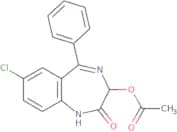
CAS:Controlled Product<p>Oxazepam acetate is a chiral drug that has enantiomeric forms. Oxazepam acetate is converted to the corresponding lorazepam by hydrolysis of the acetate ester group. This drug is an analytical method for determining the concentration of oxazepam in human serum and rat liver microsomes. It also has a stereoselective effect on nucleophilic attack, which means it only reacts with one of two possible sites in the molecule. Oxazepam acetate can be used to treat insomnia, anxiety, and seizure disorders.</p>Formula:C17H13ClN2O3Purity:Min. 95%Molecular weight:328.75 g/molPyrimidine-5-carboxylic acid
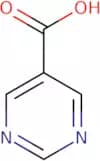
CAS:<p>Pyrimidine-5-carboxylic acid is a synthetic, nucleophilic pyrimidine compound that is used in the laboratory for the synthesis of other compounds. It has been shown to inhibit the growth of Leishmania and Staphylococcus bacteria. Pyrimidine-5-carboxylic acid binds to the malonic acid moiety of phosphoenolpyruvate carboxykinase and inhibits its activity, leading to a reduction in cellular respiration. This drug also has clinical development potential as an analgesic with modulating properties.</p>Formula:C5H4N2O2Purity:Min. 95%Molecular weight:124.1 g/mol(S)-tert-Butyl 3-(methylamino)pyrrolidine-1-carboxylate
CAS:<p>(S)-tert-Butyl 3-(methylamino)pyrrolidine-1-carboxylate is a research chemical that can be used as a versatile building block for the synthesis of complex compounds. It is also a reaction component in the synthesis of speciality chemicals and useful scaffolds. It has been shown to have high quality, reagent grade and purity.</p>Formula:C10H20N2O2Purity:Min. 95%Color and Shape:PowderMolecular weight:200.28 g/mol3-[2-(Ethoxycarbonyl)-1-methyl-1H-indol-3-yl]propanoic acid
CAS:Controlled Product<p>Please enquire for more information about 3-[2-(Ethoxycarbonyl)-1-methyl-1H-indol-3-yl]propanoic acid including the price, delivery time and more detailed product information at the technical inquiry form on this page</p>Formula:C15H17NO4Purity:Min. 95%Molecular weight:275.3 g/mol7-(Difluoromethyl)-5-methyl[1,2,4]triazolo[1,5-a]pyrimidine-2-carboxylic acid
CAS:<p>Please enquire for more information about 7-(Difluoromethyl)-5-methyl[1,2,4]triazolo[1,5-a]pyrimidine-2-carboxylic acid including the price, delivery time and more detailed product information at the technical inquiry form on this page</p>Formula:C8H6F2N4O2Purity:Min. 95%Molecular weight:228.16 g/molTaraxeryl acetate
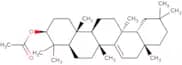
CAS:Controlled Product<p>Taraxeryl acetate is a fatty acid that is found in the extract of Curcuma aromatica (turmeric). It has been shown to inhibit cervical cancer cells in tissue culture. Taraxeryl acetate inhibits the growth of Streptococcus faecalis by binding to its ribosomal RNA and inhibiting protein synthesis. Toxicological studies on rats have shown that this compound does not have any harmful effects on physiological functions. This molecule has also been shown to be an inhibitor for protocatechuic acid, which is a chemical structure involved in the cycle analysis of curcuminoids. In addition, taraxeryl acetate has been used as an active ingredient in Chinese medicine preparations for the treatment of symptoms related to herpes simplex virus infections.</p>Purity:Min. 95%(4R-cis)-6-Chloromethyl-2,2-dimethyl-1,3-dioxane-4-acetic acid tert-butyl ester
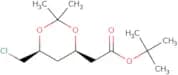
CAS:<p>Please enquire for more information about (4R-cis)-6-Chloromethyl-2,2-dimethyl-1,3-dioxane-4-acetic acid tert-butyl ester including the price, delivery time and more detailed product information at the technical inquiry form on this page</p>Formula:C13H23ClO4Purity:Min. 95%Molecular weight:278.77 g/mol1-tert-Butyl 2-methyl 4-oxopiperidine-1,2-dicarboxylate
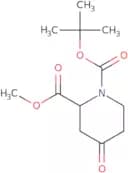
CAS:<p>Please enquire for more information about 1-tert-Butyl 2-methyl 4-oxopiperidine-1,2-dicarboxylate including the price, delivery time and more detailed product information at the technical inquiry form on this page</p>Purity:Min. 95%3-(4-Oxopiperidine-1-carbonyl)phenylboronic acid
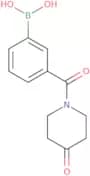
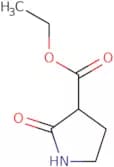
CAS:Controlled Product<p>Please enquire for more information about 3-(4-Oxopiperidine-1-carbonyl)phenylboronic acid including the price, delivery time and more detailed product information at the technical inquiry form on this page</p>Formula:C12H14BNO4Purity:Min. 95%Molecular weight:247.05 g/mol2-Oxopyrrolidine-3-carboxylic acid ethyl ester
CAS:<p>Please enquire for more information about 2-Oxopyrrolidine-3-carboxylic acid ethyl ester including the price, delivery time and more detailed product information at the technical inquiry form on this page</p>Formula:C7H11NO3Purity:Min. 95%Molecular weight:157.17 g/mol

![1-[2-(5-Methyl-1H-indol-3-yl)ethyl]-5-oxopyrrolidine-3-carboxylic acid](/_next/image/?url=https%3A%2Fstatic.cymitquimica.com%2Fproducts%2F3D%2Fthumb-webp%2FFM119447.webp&w=3840&q=75)


![3-[2-(Ethoxycarbonyl)-1-methyl-1H-indol-3-yl]propanoic acid](/_next/image/?url=https%3A%2Fstatic.cymitquimica.com%2Fproducts%2F3D%2Fthumb-webp%2FFE127998.webp&w=3840&q=75)
![7-(Difluoromethyl)-5-methyl[1,2,4]triazolo[1,5-a]pyrimidine-2-carboxylic acid](/_next/image/?url=https%3A%2Fstatic.cymitquimica.com%2Fproducts%2F3D%2Fthumb-webp%2FFD119953.webp&w=3840&q=75)