Carboxylic Acids
Carboxylic acids are organic molecules characterized by having a carboxyl-type functional group (-COOH). These acids are fundamental in various chemical reactions, including esterification, amidation, and decarboxylation. Carboxylic acids are widely used in the production of pharmaceuticals, polymers, and agrochemicals. In this section, you can find a large number of carboxylic acids ready to be used. At CymitQuimica, we provide a broad range of high-quality carboxylic acids to support your research and industrial applications.
Found 12453 products of "Carboxylic Acids"
Sort by
Purity (%)
0
100
|
0
|
50
|
90
|
95
|
100
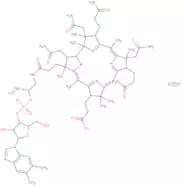
Vitamin B12 e-Monocarboxylic Acid
CAS:Controlled Product<p>Please enquire for more information about Vitamin B12 e-Monocarboxylic Acid including the price, delivery time and more detailed product information at the technical inquiry form on this page</p>Formula:C63H87CoN13O15PPurity:Area-% Min. 95 Area-%Color and Shape:PowderMolecular weight:1,356.35 g/mol4-Acetamido-4'-isothiocyanatostilbene-2,2'-disulfonic acid, sodium salt
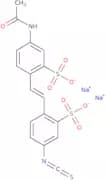
CAS:<p>4-Acetamido-4'-isothiocyanatostilbene-2,2'-disulfonic acid, sodium salt (AITC-S) is a stilbene derivative with inhibitory properties. It has been shown to inhibit the uptake of camp in rat ventricular myocytes and caco-2 cells as well as the release of camp from rat renal proximal tubules. AITC-S also inhibits the transport of camp into the cells. The mechanism by which AITC-S inhibits uptake is not yet known, but it may be due to competition for a common carrier or an effect on intracellular metabolism. This compound has also been shown to have an acute ischemic protective effect on rats when administered before reperfusion following coronary artery occlusion.</p>Formula:C17H12N2Na2O7S3Purity:Min. 95%Molecular weight:498.46 g/mol3,6-Dichlorobenzo[b]thiophene-2-carboxylic acid
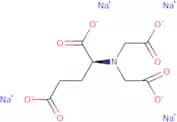
CAS:<p>3,6-Dichlorobenzo[b]thiophene-2-carboxylic acid is an extracellular metabolite that is involved in the metabolism of muscle. It is produced as a byproduct of the reaction catalyzed by dehydrogenase, which converts 3,6-dichlorobenzo[b]thiophene to 2-carboxybenzothiophene. This compound has been shown to inhibit the enzyme histidine carboxylate synthetase, which is involved in branched-chain amino acid synthesis. The enzyme can be inhibited by either a wild type or an analog of 3,6-dichlorobenzo[b]thiophene-2-carboxylic acid.</p>Formula:C9H4Cl2O2SPurity:Min. 95%Molecular weight:247.1 g/molN, N-Bis(Carboxymethyl)-L -glutamic acid tetrasodium salt - ca. 40% in water
CAS:<p>N,N-Bis(carboxymethyl)-L-glutamic acid tetrasodium salt is a cationic surfactant that has been used in the production of personal care products and industrial cleaners. This compound is soluble in water and can be used as a post-treatment to reduce the redox potential of hydrochloric acid. It also has antibacterial efficacy against both Gram-positive and Gram-negative bacteria. N,N-Bis(carboxymethyl)-L-glutamic acid tetrasodium salt has been shown to be effective against tumor cells.</p>Formula:C9H9NO8·4NaPurity:Min. 95%Color and Shape:PowderMolecular weight:351.13 g/mol3-Nitropropionic acid
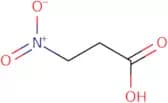
CAS:<p>3-Nitropropionic acid (3NPA) is a mitochondrial toxin that causes neuronal death by inhibiting complex enzyme activities and inducing reactive oxygen species production. 3NPA also alters mitochondrial membrane potential and induces pro-apoptotic protein expression, leading to neuronal cell death. 3NPA has been shown to be effective in the treatment of experimental models of infectious diseases, such as rat sepsis and human HIV infection, by reducing the number of activated T cells and CD4+ T cells. 3NPA also exhibits anti-inflammatory properties by inhibiting the inflammatory responses of monocytes/macrophages and neutrophils.</p>Formula:C3H5NO4Purity:Min. 95%Color and Shape:PowderMolecular weight:119.08 g/mol3-Keto-4-etiocholenic acid methylester
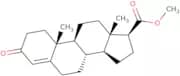
CAS:Controlled Product<p>3-Keto-4-etiocholenic acid methylester is a chemical that has been shown to have insecticidal properties. 3-Keto-4-etiocholenic acid methylester binds to odorant receptors on the antennae of insects and causes an excitatory response. It can be used as a potential environmental pollutant, as well as an insecticide or repellent. 3-Keto-4-etiocholenic acid methylester binds with high affinity to olfactory receptors in the antennae of insects and has been shown to cause excitation when it comes into contact with these receptors. This compound can be used for screening for new materials with similar odorant binding properties, for research purposes, and also as a biosensor for pollution detection. 3-Keto-4-etiocholenic acid methylester has been shown to react with various substances such as oxygen, nitric oxide, nitrous oxide, sulfur dioxide and</p>Formula:C21H30O3Purity:Min. 95%Molecular weight:330.46 g/molMethyl 3-formyl-4,6-dimethoxy-1-methyl-1H-indole-2-carboxylate
CAS:Controlled Product<p>Please enquire for more information about Methyl 3-formyl-4,6-dimethoxy-1-methyl-1H-indole-2-carboxylate including the price, delivery time and more detailed product information at the technical inquiry form on this page</p>Formula:C14H15NO5Purity:Min. 95%Molecular weight:277.27 g/molMethyl 1,5-diphenyl-1H-pyrazole-3-carboxylate
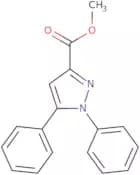
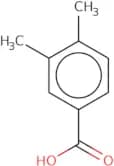
CAS:Controlled Product<p>Please enquire for more information about Methyl 1,5-diphenyl-1H-pyrazole-3-carboxylate including the price, delivery time and more detailed product information at the technical inquiry form on this page</p>Formula:C17H14N2O2Purity:Min. 95%Molecular weight:278.31 g/mol3,4-Dimethylbenzoic acid
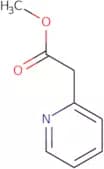
CAS:<p>3,4-Dimethylbenzoic acid is a benzoate compound that is produced by bacteria. It has been shown to have a viscosity of 0.05 cP at 25°C and a melting point of 181°C. It also has the molecular formula C9H11O2, which consists of two carbons, 11 hydrogens, and one oxygen atom. 3,4-Dimethylbenzoic acid is found in urine samples as a metabolite of p-hydroxybenzoic acid (p-OHBA). This compound also has photochemical properties and can be used for analytical determination of urinary p-OHBA levels. 3,4-Dimethylbenzoic acid is not active against bacterial pathogens such as Staphylococcus aureus or Salmonella enterica serovar Typhimurium. However, it does show some activity against Pseudomonas aeruginosa and Escherichia coli.</p>Formula:C9H10O2Purity:Min. 98 Area-%Color and Shape:PowderMolecular weight:150.17 g/molMethyl 2-pyridylacetate
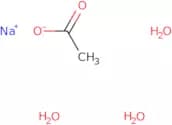
CAS:<p>Methyl 2-pyridylacetate is a reactive compound that can be used as a reagent for trifluoromethylthiolation of terminal alkynes. This compound has been shown to react with anilines and form isomers, including the acid form. The reaction rate of the methyl 2-pyridylacetate with pyridine compounds is slow, but it reacts quickly with thionyl chloride and hydrochloric acid. Methyl 2-pyridylacetate also reacts with nucleophiles such as methyl anthranilate to form the corresponding quinolizine derivatives.</p>Formula:C8H9NO2Purity:Min. 95%Molecular weight:151.16 g/molSodium acetate trihydrate
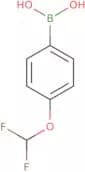
CAS:<p>Sodium acetate trihydrate is a salt that is used in the production of sodium salts and surface methodology, as well as in analytical methods. It is also used to prepare anhydrous sodium. Sodium acetate trihydrate can be used as a cell lysis agent for water vapor.</p>Formula:CH3COONa·3H2OPurity:Min. 95%Color and Shape:White/Off-White SolidMolecular weight:136.08 g/mol4-(Difluoromethoxy)phenylboronic acid
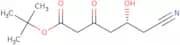
CAS:<p>Please enquire for more information about 4-(Difluoromethoxy)phenylboronic acid including the price, delivery time and more detailed product information at the technical inquiry form on this page</p>Formula:C7H7BF2O3Purity:Min. 95%Molecular weight:187.94 g/mol(5R)-6-Cyano-5-hydroxy-3-oxo-hexanoic acid tert-butyl ester
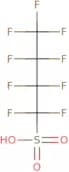
CAS:<p>Please enquire for more information about (5R)-6-Cyano-5-hydroxy-3-oxo-hexanoic acid tert-butyl ester including the price, delivery time and more detailed product information at the technical inquiry form on this page</p>Formula:C11H17NO4Purity:Min. 95%Molecular weight:227.26 g/molNonafluoro-1-butanesulfonic Acid
CAS:<p>Nonafluoro-1-butanesulfonic acid (NBS) is a sulfonic acid that is used in the synthesis of sodium salts. NBS has been shown to be toxic to cultured human immunoglobulin cells, with an IC50 of 0.5 mM. It also inhibits the growth of 3T3-L1 preadipocytes and can cause weight gain in animal models. However, NBS has been found to be non-toxic to mice, rats and monkeys after 28 days of continuous dosing with up to 1 g/kg/day. This compound also has been found to have no significant interactions with drugs or other chemicals at concentrations up to 10 times higher than therapeutic doses. A validated analytical method for determining the concentration of NBS in water samples has been developed using liquid chromatography coupled with tandem mass spectrometry (LC/MS/MS).</p>Formula:C4HF9O3SPurity:Min. 95%Color and Shape:Colourless To Pale Yellow LiquidMolecular weight:300.1 g/mol2-(Phenylmethoxy)-acetic acid hydrazide
CAS:<p>2-(Phenylmethoxy)-acetic acid hydrazide is a synthetic depressant that belongs to the group of phthalimides. It is an orally active drug with a triazolo structure and has been used in the treatment of psychoneurosis and anxiety, but it has also been found to be effective in treating reflexes and diazepine-induced psychosomatic disorders. 2-(Phenylmethoxy)-acetic acid hydrazide may also act as a prodrug for other agents, such as azides or phenylureas.</p>Formula:C9H12N2O2Purity:Min. 95%Molecular weight:180.2 g/molN-α-Trityl-Nβ-Fmoc-L-2,3-diaminopropionic acid
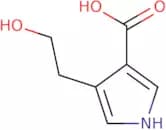
CAS:<p>Please enquire for more information about N-alpha-Trityl-Nbeta-Fmoc-L-2,3-diaminopropionic acid including the price, delivery time and more detailed product information at the technical inquiry form on this page</p>Formula:C37H32N2O4Purity:Min. 95%Molecular weight:568.66 g/mol4-(2-Hydroxyethyl)-1H-pyrrole-3-carboxylic acid
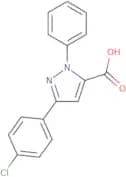
CAS:<p>Please enquire for more information about 4-(2-Hydroxyethyl)-1H-pyrrole-3-carboxylic acid including the price, delivery time and more detailed product information at the technical inquiry form on this page</p>Formula:C7H9NO3Purity:Min. 95 Area-%Color and Shape:PowderMolecular weight:155.15 g/mol3-(4-Chlorophenyl)-1-phenyl-1H-pyrazole-5-carboxylic acid
CAS:Controlled Product<p>Please enquire for more information about 3-(4-Chlorophenyl)-1-phenyl-1H-pyrazole-5-carboxylic acid including the price, delivery time and more detailed product information at the technical inquiry form on this page</p>Formula:C16H11ClN2O2Purity:Min. 95%Molecular weight:298.72 g/mol5-Bromo-1H-indole-2-carboxylic acid methyl ester
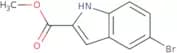
CAS:<p>5-Bromo-1H-indole-2-carboxylic acid methyl ester is a drug that belongs to the class of carboxylates. It has been shown to inhibit the growth of tumor cells in vitro and in vivo. The antitumor activity of this compound may be due to its ability to stabilize planar indole moieties, which are cytotoxic. 5-Bromo-1H-indole-2-carboxylic acid methyl ester interacts with other molecules through intermolecular interactions and can form an indole ring system that has a trifluoromethyl group and a carboxylate group in its structure.</p>Formula:C10H8BrNO2Purity:Min. 95%Molecular weight:254.08 g/molBetamethasone 21-acetate
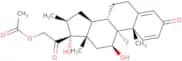
CAS:<p>Betamethasone 21-acetate is a potent corticosteroid that is effective in the treatment of inflammatory conditions, such as asthma and arthritis. It also helps to reduce the symptoms of inflammatory skin diseases, including atopic dermatitis, contact dermatitis, and psoriasis. Betamethasone 21-acetate is used to treat perinatal complications such as preterm labor and neonatal respiratory distress syndrome. This drug has been shown to have a low cardiac effect when administered at a low dose (1 mg/kg). The stability of betamethasone 21-acetate in blood samples is increased by adding benzalkonium chloride or trifluoroacetic acid. Betamethasone 21-acetate has been shown to be absorbed rapidly from the gastrointestinal tract and distributed widely throughout the body. It binds to plasma proteins and has a short elimination half-life of 1.5 hours.</p>Formula:C24H31FO6Purity:Min. 95%Color and Shape:PowderMolecular weight:434.5 g/mol

![3,6-Dichlorobenzo[b]thiophene-2-carboxylic acid](/_next/image/?url=https%3A%2Fstatic.cymitquimica.com%2Fproducts%2F3D%2Fthumb-webp%2FFD57151.webp&w=3840&q=75)