Carboxylic Acids
Carboxylic acids are organic molecules characterized by having a carboxyl-type functional group (-COOH). These acids are fundamental in various chemical reactions, including esterification, amidation, and decarboxylation. Carboxylic acids are widely used in the production of pharmaceuticals, polymers, and agrochemicals. In this section, you can find a large number of carboxylic acids ready to be used. At CymitQuimica, we provide a broad range of high-quality carboxylic acids to support your research and industrial applications.
Found 12453 products of "Carboxylic Acids"
Sort by
Purity (%)
0
100
|
0
|
50
|
90
|
95
|
100
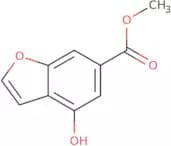
Methyl 4-hydroxy-1-benzofuran-6-carboxylate
CAS:<p>Please enquire for more information about Methyl 4-hydroxy-1-benzofuran-6-carboxylate including the price, delivery time and more detailed product information at the technical inquiry form on this page</p>Formula:C10H8O4Purity:Min. 95%Molecular weight:192.17 g/mol1-(4-Fluorophenyl)-3-phenyl-1H-pyrazole-5-carboxylic acid
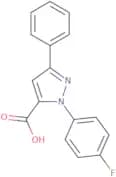
CAS:Controlled Product<p>Please enquire for more information about 1-(4-Fluorophenyl)-3-phenyl-1H-pyrazole-5-carboxylic acid including the price, delivery time and more detailed product information at the technical inquiry form on this page</p>Formula:C16H11FN2O2Purity:Min. 95%Color and Shape:PowderMolecular weight:282.27 g/mol5-Aminoorotic acid
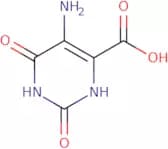
CAS:<p>5-Aminoorotic acid is an antimicrobial agent that has been shown to have anticancer activity. It has a nitrogen atom and two oxygen atoms in the molecule. The chemical structure of 5-aminoorotic acid can be determined using NMR spectroscopy and its biological properties are dependent on hydrogen bonding interactions with other molecules. 5-Aminoorotic acid is a chelate ring, which means it can bind to metal ions such as lanthanum (La3+). 5-Aminoorotic acid has been shown to inhibit the glycol oxidation reaction and may also be able to inhibit other enzymatic reactions. This drug is stable for use in model systems and may also be used for cancer treatment.</p>Formula:C5H5N3O4Purity:Min. 95%Molecular weight:171.11 g/mol4-(Bromomethyl)benzeneboronic acid pinacol ester
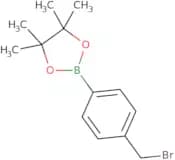
CAS:<p>4-(Bromomethyl)benzeneboronic acid pinacol ester (BBBA) is a hypochlorous acid derivative with a structural formula of C6H5BrOCH2. It is used as a fluorophore and has been shown to have anticancer activity. 4-Bromomethylbenzeneboronic acid pinacol ester reacts with hydrophobic molecules in the cell membrane, leading to disruption of the membrane and ultimately cell death. This compound can be used as an active oxygen source in biological assays, such as functional assays, because it generates reactive oxygen species and can act as a fluorescence probe for detection of biological samples.</p>Formula:C13H18BBrO2Purity:Min. 95 Area-%Color and Shape:White PowderMolecular weight:297 g/molBoc-trans-1,2-aminocyclohex-4-ene carboxylic acid
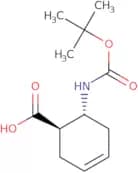
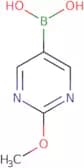
CAS:<p>Please enquire for more information about Boc-trans-1,2-aminocyclohex-4-ene carboxylic acid including the price, delivery time and more detailed product information at the technical inquiry form on this page</p>Formula:C12H19NO4Purity:Min. 95%Molecular weight:241.28 g/mol2-Methoxypyrimidine-5-boronic acid
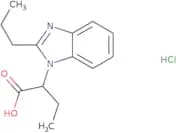
CAS:<p>Please enquire for more information about 2-Methoxypyrimidine-5-boronic acid including the price, delivery time and more detailed product information at the technical inquiry form on this page</p>Formula:C5H7BN2O3Purity:Min. 95%Molecular weight:153.93 g/mol2-(2-Propyl-1H-benzimidazol-1-yl)butanoic acid hydrochloride
CAS:Controlled Product<p>Please enquire for more information about 2-(2-Propyl-1H-benzimidazol-1-yl)butanoic acid hydrochloride including the price, delivery time and more detailed product information at the technical inquiry form on this page</p>Formula:C14H18N2O2Purity:Min. 95%Molecular weight:246.31 g/mol5-[(3,5-Dimethyl-1H-pyrazol-1-yl)methyl]-2-furoic acid
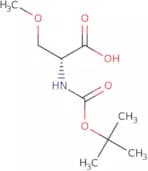
CAS:<p>Please enquire for more information about 5-[(3,5-Dimethyl-1H-pyrazol-1-yl)methyl]-2-furoic acid including the price, delivery time and more detailed product information at the technical inquiry form on this page</p>Formula:C11H12N2O3Purity:Min. 95%Molecular weight:220.22 g/mol(R)-2-((tert-Butoxycarbonyl)amino)-3-methoxypropanoic acid
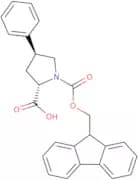
CAS:<p>(R)-2-((tert-Butoxycarbonyl)amino)-3-methoxypropanoic acid (BAAM) is a potent, orally bioavailable, and pharmacokinetically well-characterized inhibitor of blood coagulation that has been shown to be effective in animal models. BAAM inhibits the activity of tissue factor (TF), an enzyme that initiates the blood coagulation cascade. TF is important for hemostasis because it is activated by contact with blood and tissue factors such as collagen or thrombin. BAAM has shown some promise as a potential treatment for thrombosis, which can lead to heart attacks and strokes.</p>Formula:C9H17NO5Purity:Min. 95%Molecular weight:219.24 g/molFmoc-(2S,4S)-4-phenylpyrrolidine-2-carboxylic acid
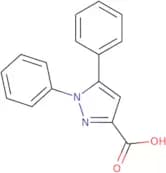
CAS:<p>Please enquire for more information about Fmoc-(2S,4S)-4-phenylpyrrolidine-2-carboxylic acid including the price, delivery time and more detailed product information at the technical inquiry form on this page</p>Formula:C26H23NO4Purity:Min. 95%Molecular weight:413.47 g/mol1,5-Diphenyl-1H-pyrazole-3-carboxylic acid
CAS:Controlled Product<p>1,5-Diphenyl-1H-pyrazole-3-carboxylic acid is a herbicide that belongs to the family of alkyloxycarbonyl amides. It is used in weed control and has shown good activity against many broadleaf weeds. 1,5-Diphenyl-1H-pyrazole-3-carboxylic acid inhibits the growth of plants by interfering with photosynthesis and the production of chlorophyll. The compound binds to the thylakoid membrane in chloroplasts, preventing electron transport and blocking the synthesis of carbohydrates from carbon dioxide and water. This leads to cell death as a result of oxygen depletion. 1,5-Diphenyl-1H-pyrazole-3-carboxylic acid also inhibits acetolactate synthase in plants, which produces amides that are important for protein synthesis.</p>Formula:C16H12N2O2Purity:Min. 95%Molecular weight:264.28 g/mol4-(2-Chlorophenyl)-9-methyl-6H-thieno[3,2-f][1,2,4]triazolo[4,3-a][1,4]diazepine-2-propanoic acid methyl ester
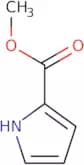
CAS:Controlled Product<p>Please enquire for more information about 4-(2-Chlorophenyl)-9-methyl-6H-thieno[3,2-f][1,2,4]triazolo[4,3-a][1,4]diazepine-2-propanoic acid methyl ester including the price, delivery time and more detailed product information at the technical inquiry form on this page</p>Formula:C19H17ClN4O2SPurity:Min. 95%Molecular weight:400.88 g/mol1H-Pyrrole-2-carboxylic acid, methyl ester
CAS:<p>1H-Pyrrole-2-carboxylic acid, methyl ester is a catalytic asymmetric reagent that can be used to produce chiral derivatives from simple substrates. It has been shown to be effective in the Friedel-Crafts reaction and Wolff-Kishner reduction. The catalyst forms a bond with the carbonyl group of the reactant, which is then cleaved by chloride ions. The reaction time depends on the type of metal halide and solvent used. 1H-Pyrrole-2-carboxylic acid, methyl ester also reacts with acetyl or alkyl groups at low temperatures to form acetate or alkylate products.</p>Formula:C6H7NO2Purity:Min. 95%Molecular weight:125.13 g/mol3-Bromo-2-methylbenzoic acid methyl ester
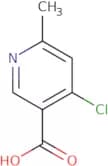
CAS:<p>3-Bromo-2-methylbenzoic acid methyl ester is a serotonin transporter and reuptake inhibitor. It has selectivities for serotonin, dopamine and norepinephrine transporters. 3-Bromo-2-methylbenzoic acid methyl ester acts as a linker molecule in the synthesis of complex molecules like neurotransmitters. It is also a bifunctional molecule that can act as an antidepressant or anti-anxiety drug by increasing serotonin levels in the brain. 3-Bromo-2-methylbenzoic acid methyl ester’s function as a ligand is to bind to receptors on cells, which may be linked with its effects on depression and anxiety.</p>Formula:C9H9BrO2Purity:Min. 95%Molecular weight:229.07 g/mol4-Chloro-6-methylnicotinic acid
CAS:<p>4-Chloro-6-methylnicotinic acid (4C6MNA) is a chemical substance that is used in the study of plant leaves and their permeability. This substance has been found to be an excellent indicator of chlorophyll content, as it stains leaf cells with a green color. 4C6MNA is taken up by healthy plant cells and mitochondria, where it binds to the chromophore molecule in the mitochondria. The binding of 4C6MNA to the chromophore molecule leads to the production of fluorescence, which can be detected via microscopy. This substance has been used for laser microbeam studies on natural leaves and tobacco plants.</p>Formula:C7H6CINO2Purity:Min. 95%Molecular weight:275.04 g/mol4-Chlorobutyric acid
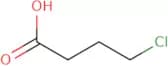
CAS:<p>4-Chlorobutyric acid is a fatty acid with the chemical formula CH3ClC(O)CH2CO2H. It can be found in animal fats, vegetable oils, and butter. 4-Chlorobutyric acid has been shown to inhibit the growth of PC12 cells by hydrogen bonding to the cell membrane. This inhibition results in an increase in sodium hydroxide solution activity, which leads to increased production of gamma-aminobutyric acid. The butyrolactone that is produced inhibits nerve function and has been shown to have biological treatment potential for hydrochloric acid and cell culture models.</p>Formula:C4H7ClO2Purity:Min. 95%Color and Shape:Clear LiquidMolecular weight:122.55 g/moltert-Butyl 4-{[(methylsulfonyl)oxy]methyl}piperidine-1-carboxylate
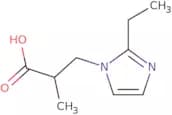
CAS:<p>Please enquire for more information about tert-Butyl 4-{[(methylsulfonyl)oxy]methyl}piperidine-1-carboxylate including the price, delivery time and more detailed product information at the technical inquiry form on this page</p>Formula:C12H23NO5SPurity:Min. 95%Molecular weight:293.38 g/mol3-(2-Ethyl-1H-imidazol-1-yl)-2-methylpropanoic acid
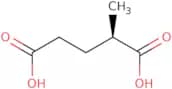
CAS:Controlled Product<p>Please enquire for more information about 3-(2-Ethyl-1H-imidazol-1-yl)-2-methylpropanoic acid including the price, delivery time and more detailed product information at the technical inquiry form on this page</p>Formula:C9H14N2O2Purity:Min. 95%Molecular weight:182.22 g/mol(R)-(-)-2-Methylglutaric Acid
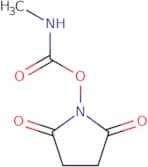
CAS:<p>Please enquire for more information about (R)-(-)-2-Methylglutaric Acid including the price, delivery time and more detailed product information at the technical inquiry form on this page</p>Formula:C6H10O4Purity:Min. 95%Molecular weight:146.14 g/molN-Succinimdyl-N-methylcarbamate
CAS:<p>N-Succinimdyl-N-methylcarbamate is a reactive, antimicrobial agent that inhibits the activity of an enzyme in the cycle of cellular respiration. It binds to the active site of the enzyme, preventing it from functioning. N-Succinimdyl-N-methylcarbamate has been shown to inhibit hepatitis by inducing apoptosis. The drug has a phase transition temperature of approximately -6°C and is stable at higher temperatures. N-Succinimdyl-N-methylcarbamate has been shown to have an inhibitory effect on cyclic peptides, including those found in bacteria such as Helicobacter pylori and Chlamydia trachomatis.</p>Formula:C6H8N2O4Purity:Min. 95%Molecular weight:172.14 g/mol

![5-[(3,5-Dimethyl-1H-pyrazol-1-yl)methyl]-2-furoic acid](/_next/image/?url=https%3A%2Fstatic.cymitquimica.com%2Fproducts%2F3D%2Fthumb-webp%2FFD115286.webp&w=3840&q=75)
![4-(2-Chlorophenyl)-9-methyl-6H-thieno[3,2-f][1,2,4]triazolo[4,3-a][1,4]diazepine-2-propanoic acid …](/_next/image/?url=https%3A%2Fstatic.cymitquimica.com%2Fproducts%2F3D%2Fthumb-webp%2FFC20337.webp&w=3840&q=75)

![tert-Butyl 4-{[(methylsulfonyl)oxy]methyl}piperidine-1-carboxylate](/_next/image/?url=https%3A%2Fstatic.cymitquimica.com%2Fproducts%2F3D%2Fthumb-webp%2FFB122853.webp&w=3840&q=75)