Carboxylic Acids
Found 12456 products of "Carboxylic Acids"
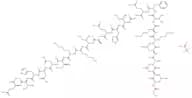
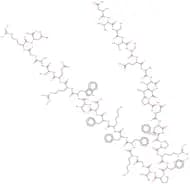
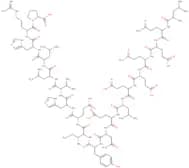
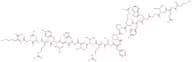
Gastric Inhibitory Polypeptide (porcine) trifluoroacetate salt
CAS:Please enquire for more information about Gastric Inhibitory Polypeptide (porcine) trifluoroacetate salt including the price, delivery time and more detailed product information at the technical inquiry form on this pageFormula:C225H342N60O66SPurity:Min. 95%Molecular weight:4,975.55 g/molH-Arg-Pro-pNA trifluoroacetate salt
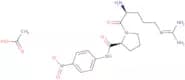
CAS:Controlled ProductPlease enquire for more information about H-Arg-Pro-pNA trifluoroacetate salt including the price, delivery time and more detailed product information at the technical inquiry form on this pageFormula:C17H25N7O4Purity:Min. 95%Molecular weight:391.43 g/mol4-Pyridinylboronic acid
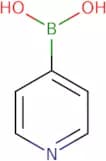
CAS:4-Pyridinylboronic acid is a boron compound that contains two nitrogen atoms. It is an important reagent in organic synthesis and crystallography. 4-Pyridinylboronic acid has been shown to have biological properties, such as hydrogen bonding interactions. It is also used in the suzuki coupling reaction and the photochemical properties of the reaction solution are dependent on its coordination geometry. 4-pyridinylboronic acid has a high pH value, so it must be prepared in anhydrous sodium carbonate before use. The hydrogen bond between 4-pyridinylboronic acid and an azide is shown below: Nnowiki>/nowiki>Hnowiki>/nowiki>nowiki>/nowiki>Nnowiki>/nowiki>nowiki>/nowiki>HFormula:C5H6BNO2Color and Shape:PowderMolecular weight:122.92 g/molCyclopenten-1-ylboronic acid
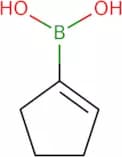
CAS:Cyclopenten-1-ylboronic acid is a chemical compound that is used in the synthesis of pharmaceuticals. It has been shown to be effective against some viruses, including Hepatitis C virus, and also against some infectious diseases such as malaria. Cyclopenten-1-ylboronic acid binds to cannabinoid receptors and may have therapeutic potential for metabolic disorders such as obesity and diabetes. The diastereomer of this chemical compound may be used as an ophthalmic drug because it has been shown to be a potent vasoconstrictor. The ring structure is similar to other drugs that are used for the treatment of Parkinson's disease, Alzheimer's disease, and epilepsy. Cyclopenten-1-ylboronic acid has two enantiomers, which means that they are mirror images of each other. One enantiomer is more potent than the other one and is more likely to bind with cannabinoid receptors and inhibit viral replication.
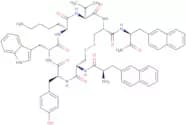
Formula:C5H9BO2Purity:Min. 95%Molecular weight:111.93 g/mol(D-2-Nal 5,Cys6·11,Tyr7,D-Trp8,Val10, 2-Nal 12)-Somatostatin-14 (5-12) amide trifluoroacetate salt
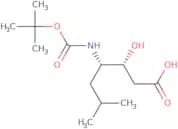
CAS:Please enquire for more information about (D-2-Nal 5,Cys6·11,Tyr7,D-Trp8,Val10, 2-Nal 12)-Somatostatin-14 (5-12) amide trifluoroacetate salt including the price, delivery time and more detailed product information at the technical inquiry form on this pageFormula:C63H73N11O9S2Purity:Min. 95%Molecular weight:1,192.45 g/molBoc-epi-statine (3R,4S)-4-(Boc-amino)-3-hydroxy-6-methyl-heptanoic acid
CAS:Please enquire for more information about Boc-epi-statine (3R,4S)-4-(Boc-amino)-3-hydroxy-6-methyl-heptanoic acid including the price, delivery time and more detailed product information at the technical inquiry form on this pageFormula:C13H25NO5Purity:Min. 95%Molecular weight:275.34 g/molAcetyl-(D-Phe2,Lys15,Arg16,Leu27)-VIP (1-7)-GRF (8-27) trifluoroacetate salt
CAS:Please enquire for more information about Acetyl-(D-Phe2,Lys15,Arg16,Leu27)-VIP (1-7)-GRF (8-27) trifluoroacetate salt including the price, delivery time and more detailed product information at the technical inquiry form on this pageFormula:C150H246N44O38Purity:Min. 95%Molecular weight:3,273.83 g/mol(Lys18)-Pseudin-2 trifluoroacetate salt
CAS:Please enquire for more information about (Lys18)-Pseudin-2 trifluoroacetate salt including the price, delivery time and more detailed product information at the technical inquiry form on this pageFormula:C122H203N37O32Purity:Min. 95%Molecular weight:2,700.15 g/molGRP (14-27) (human, porcine, canine) trifluoroacetate salt
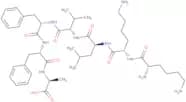
CAS:GRP (14-27) is a synthetic peptide that has an inhibitory effect on the growth of pancreatic cancer cells. It also inhibits the development of primary tumors in hamsters and inhibits tumor metastasis. GRP (14-27) binds to the cell surface receptor on T cells, which is responsible for mediating immune responses against tumors. GRP (14-27) has been shown to suppress tumor growth through immunoreactivity and has been found to be effective against a variety of cancers when used as an adjuvant therapy.Formula:C75H110N24O16S2Purity:Min. 95%Molecular weight:1,667.96 g/mol(Lys15)-Amyloid b-Protein (15-21) trifluoroacetate salt
CAS:Please enquire for more information about (Lys15)-Amyloid b-Protein (15-21) trifluoroacetate salt including the price, delivery time and more detailed product information at the technical inquiry form on this pageFormula:C44H69N9O8Purity:Min. 95%Molecular weight:852.07 g/molPreptin (rat) trifluoroacetate salt
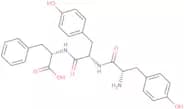
CAS:Please enquire for more information about Preptin (rat) trifluoroacetate salt including the price, delivery time and more detailed product information at the technical inquiry form on this pageFormula:C181H268N48O51Purity:Min. 95%Molecular weight:3,932.36 g/molH-Tyr-Tyr-Phe-OH acetate salt
CAS:H-Tyr-Tyr-Phe-OH acetate salt is a reaction product of the matrix-assisted laser desorption ionization (MALDI) technique. It is an analog of tyrosine, with a hydroxyl group substituted for the amino group. The protonation state of this molecule has been determined by the hydration constant and the centroid to be a neutral pH. Using hydrogen bonding, H-Tyr-Tyr-Phe-OH acetate salt binds to the mitochondria in cells, which may lead to a higher rate of reaction.
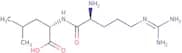
Formula:C27H29N3O6Purity:Min. 95%Molecular weight:491.54 g/molH-Arg-Leu-OH acetate salt
CAS:H-Arg-Leu-OH acetate salt is a synthetic version of the natural amino acid Arginine. It has been shown to have anti-inflammatory effects and to inhibit the growth of cancer cells in cell culture. H-Arg-Leu-OH acetate salt also inhibits the production of messenger RNA that leads to the synthesis of inflammatory proteins and growth factors, as well as light emission, which may be due to its effect on response elements in cells.Formula:C12H25N5O3Purity:Min. 95%Molecular weight:287.36 g/molH-Gly-Pro-Pro-OH trifluoroacetate salt
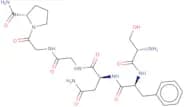
CAS:H-Gly-Pro-Pro-OH trifluoroacetate salt is an amide with a high specificity and low energy. This compound is activated by sequences of collagen, which may be due to its ability to hydrate intracellular calcium concentrations. H-Gly-Pro-Pro-OH trifluoroacetate salt has been shown to have polymerase chain activation activity in the presence of lysine residues, and it can bind to regulatory sites on DNA. H-Gly-Pro-Pro-OH trifluoroacetate salt has also been shown to have hydroxyproline hydroxylase activity, which leads to a helical structure.Formula:C12H19N3O4Purity:Min. 95%Molecular weight:269.3 g/molPAR-3 (1-6) amide (mouse) trifluoroacetate salt
CAS:Please enquire for more information about PAR-3 (1-6) amide (mouse) trifluoroacetate salt including the price, delivery time and more detailed product information at the technical inquiry form on this pageFormula:C25H36N8O8Purity:Min. 95%Molecular weight:576.6 g/molH-Ile-Arg-OH acetate salt
CAS:H-Ile-Arg-OH acetate salt is an antioxidant that belongs to the group of amino acids. It has been shown to have antioxidative activity in vitro, as well as interaction with radicals and free radicals. Cryo-electron microscopy was used to show this compound's radical scavenging activity. H-Ile-Arg-OH acetate salt has also been found to have antioxidative properties in eukaryotes. This compound is composed of two isomers: H-Ile and Arg. The hydroxyl group on the H-Ile isomer gives this compound its antioxidative properties, while the Arg isomer possesses hydrolytic properties. The subunits are linked together by a peptide bond between the carboxyl group on Arg and the amine group on H-Ile. In addition, H-Ile has an -OH hydroxyl group that can be scavenged by hydroxyl radicals, which provides antioxidative activity.
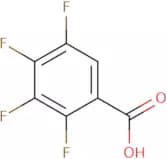
Formula:C12H25N5O3Purity:Min. 95%Molecular weight:287.36 g/mol2,3,4,5-Tetrafluorobenzoic acid
CAS:Tetrafluorobenzoic acid is a synthetic chemical that is used in the synthesis of antimicrobial agents. Tetrafluorobenzoic acid has been shown to bind to the hydroxyl group of 2,3,4,5-tetrafluorobenzoyl chloride and form a covalent bond. The reaction solution was analyzed using crystallography and showed that there are no intermolecular hydrogen bonds between tetrafluorobenzoic acid molecules. The crystal structure was determined by X-ray diffraction analysis and found that the intramolecular hydrogen bonding may be responsible for the anti-microbial activity of this substance.
Formula:C7H2F4O2Molecular weight:194.08 g/molLQEQ-19 (mouse, rat) trifluoroacetate salt
CAS:Please enquire for more information about LQEQ-19 (mouse, rat) trifluoroacetate salt including the price, delivery time and more detailed product information at the technical inquiry form on this pageFormula:C106H165N29O34Purity:Min. 95%Molecular weight:2,389.62 g/molMyelin Oligodendrocyte Glycoprotein (35-55) (human) trifluoroacetate salt
CAS:Please enquire for more information about Myelin Oligodendrocyte Glycoprotein (35-55) (human) trifluoroacetate salt including the price, delivery time and more detailed product information at the technical inquiry form on this pageFormula:C120H179N35O28SPurity:Min. 95%Molecular weight:2,591.99 g/molRhodanine-N-acetic acid
CAS:Rhodanine-N-acetic acid is a model system for antimicrobial agents. It is an acidic molecule with low light absorption and can be used as a chemotherapeutic agent. Rhodanine-N-acetic acid has been shown to have high resistance to bacteria in vitro, making it effective against malonic acid, which is the main cause of infection. Rhodanine-N-acetic acid has been shown to have biological properties, such as photophysical and redox potentials that make it suitable for use in vivo. Rhodanine-N-acetic acid also has photocurrent and electrochemical impedance spectroscopy characteristics that may be used to measure its activity in vivo.Formula:C5H5NO3S2Purity:Min. 95%Molecular weight:191.23 g/mol