Carboxylic Acids
Carboxylic acids are organic molecules characterized by having a carboxyl-type functional group (-COOH). These acids are fundamental in various chemical reactions, including esterification, amidation, and decarboxylation. Carboxylic acids are widely used in the production of pharmaceuticals, polymers, and agrochemicals. In this section, you can find a large number of carboxylic acids ready to be used. At CymitQuimica, we provide a broad range of high-quality carboxylic acids to support your research and industrial applications.
Found 12454 products of "Carboxylic Acids"
Sort by
Purity (%)
0
100
|
0
|
50
|
90
|
95
|
100
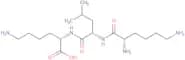
H-Lys-Leu-Lys-OH triacetate salt
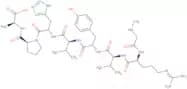
CAS:Please enquire for more information about H-Lys-Leu-Lys-OH triacetate salt including the price, delivery time and more detailed product information at the technical inquiry form on this pageFormula:C18H37N5O4•3C2H4O2Purity:Min. 95%Molecular weight:567.67 g/mol(Sar 1,Val5,Ala8)-Angiotensin II trifluoroacetate salt
CAS:<p>Angiotensin II is a peptide hormone that is also known as angiotensin II trifluoroacetate salt. It has been shown to have cardioprotective effects in vivo and in vitro models. Angiotensin II has been shown to induce follicular growth, inhibit atherosclerotic lesion formation, and improve cardiac function. Angiotensin II can be used to treat patients with congestive heart failure or cardiovascular disease due to its ability to increase blood pressure and the rate of cardiac contractions. The drug also reduces systolic pressure by acting on receptors in the kidneys and vasculature, which are involved in the renin-angiotensin system.</p>Formula:C42H65N13O10•C2HF3O2Purity:Min. 95%Color and Shape:PowderMolecular weight:1,026.07 g/mol1-(Mercaptomethyl)cyclopropaneacetic acid
CAS:1-(Mercaptomethyl)cyclopropaneacetic acid is a reaction product of hydrolysis, transfer, and industrialization. It is used in the synthesis of organic compounds such as quinolinediols and thioureas. 1-(Mercaptomethyl)cyclopropaneacetic acid is typically prepared by the reaction of an alkylsulfonyl chloride with an inorganic base such as lithium or sodium carbonate in an organic solvent such as acetonitrile. The compound is also used to produce other organosulfur compounds, including imino sulfides and disulfides.Formula:C6H10O2SPurity:Min. 95%Color and Shape:PowderMolecular weight:146.21 g/mol2-Hydroxy-3-mercapto-1-propanesulfonic acid sodium salt
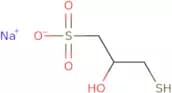
CAS:2-Hydroxy-3-mercapto-1-propanesulfonic acid sodium salt (2HMP) is a diagnostic agent that can be used for the detection of bacterial infections. The conformational properties of 2HMP are similar to those of ATP, which allows it to bind to the polymerase chain reaction enzyme and initiate an enzymatic reaction. This leads to the production of a signal that can be detected by spectrophotometry or fluorometry. 2HMP has also been shown to have chemokine activity in vitro, but this has not been tested in vivo. 2HMP is a competitive inhibitor of human protein serine proteases, such as trypsin and chymotrypsin, with an IC50 value of approximately 1 μM.Formula:C3H7NaO4S2Purity:Min. 95%Molecular weight:194.2 g/molCyclohexylacetic acid
CAS:<p>Cyclohexylacetic acid is a cyclic fatty acid that has been shown to inhibit the production of gamma-aminobutyric acid in hl-60 cells. This inhibition leads to an increase in epidermal growth factor and a decrease in malonic acid. Cyclohexylacetic acid also inhibits microbial metabolism by preventing the conversion of nitrogen atoms into ammonia, which can cause cardiac arrest or sublethal doses. The effects of cyclohexylacetic acid on coronary heart disease have not been determined because it is not commercially available for purchase.</p>Formula:C8H14O2Purity:Min. 95%Molecular weight:142.2 g/molBombesin trifluoroacetate salt
CAS:<p>Trifluoroacetate salt</p>Formula:C71H110N24O18SPurity:Min. 95%Molecular weight:1,619.85 g/mol2-Chloropyridine-4-boronic acid
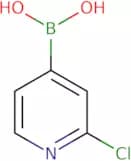
CAS:<p>2-Chloropyridine-4-boronic acid is a nicotinic acetylcholine receptor antagonist that has been shown to be effective against trypanosomiasis. It blocks the binding of acetylcholine to its receptor, which prevents the propagation of an action potential in the postsynaptic cell. 2-Chloropyridine-4-boronic acid inhibits the enzymes cyclooxygenase and prostaglandin synthase, which are involved in inflammation. 2-Chloropyridine-4-boronic acid is potent and selective for nicotinic acetylcholine receptors, but it also binds to other sites on the enzyme. The molecular modeling studies have shown that this compound has a pharmacophore that can be used as a guide for drug design.</p>Formula:C5H5BClNO2Purity:Min. 95%Molecular weight:157.36 g/molMca-Amyloid beta/A4 Protein Precursor770 (667-676)-Lys(Dnp)-Arg-Arg amide trifluoroacetate salt
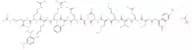
CAS:<p>Please enquire for more information about Mca-Amyloid beta/A4 Protein Precursor770 (667-676)-Lys(Dnp)-Arg-Arg amide trifluoroacetate salt including the price, delivery time and more detailed product information at the technical inquiry form on this page</p>Formula:C87H129N27O28SPurity:Min. 95%Molecular weight:2,033.19 g/mol(2-Methylindol-1-yl)acetic acid·DCHA
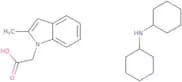
CAS:Controlled Product<p>Please enquire for more information about (2-Methylindol-1-yl)acetic acid·DCHA including the price, delivery time and more detailed product information at the technical inquiry form on this page</p>Formula:C11H11NO2·C12H23NPurity:Min. 95%Molecular weight:370.53 g/molα-Conotoxin MI trifluoroacetate salt
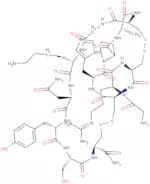
CAS:Controlled ProductA component of Conus venom; antagonist of nicotinic acetylcholine receptorsFormula:C58H88N22O17S4Purity:Min. 95%Molecular weight:1,493.72 g/molNorbornane-2exo,3exo-dicarboxylic acid-anhydride
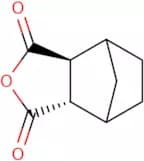
CAS:<p>Norbornane-2exo,3exo-dicarboxylic acid-anhydride is a versatile building block that can be used as a reagent and speciality chemical. It also has the potential to be a useful intermediate for the synthesis of complex compounds and research chemicals. Norbornane-2exo,3exo-dicarboxylic acid-anhydride is a high quality compound with a CAS number of 14166-28-0.</p>Formula:C9H10O3Purity:Min. 95%Color and Shape:White PowderMolecular weight:166.17 g/molH-Arg-Val-OH acetate salt
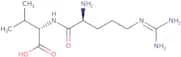
CAS:<p>H-Arg-Val-OH acetate salt is a recombinant humanized monoclonal antibody that binds to the serine protease, which is an enzyme that cleaves proteins at specific sites. The antibody inhibits the activity of this enzyme and prevents the release of proteins from cells. It has been shown to be clinically relevant in treating heart failure, chronic pulmonary disease, and congenital heart disease. In addition, H-Arg-Val-OH acetate salt inhibits the release of inflammatory molecules like interleukin 6 (IL6) and tumor necrosis factor alpha (TNFα), which are involved in a variety of diseases.</p>Formula:C11H23N5O3Purity:Min. 95%Molecular weight:273.33 g/molH-Arg-Met-OH acetate salt
CAS:<p>H-Arg-Met-OH acetate salt is a reactive chemical that is used in the treatment of hepatitis. It has been shown to be effective against virus and heart disease, as well as being active in the prevention of insulin resistance. H-Arg-Met-OH acetate salt is also used to determine if a person has had an allergic reaction by testing for elevated serum levels of this chemical. H-Arg-Met-OH acetate salt can be found in the blood, urine, and liver cells. This chemical is also present in mouse spleen cells and has been shown to react with specific antibodies.</p>Formula:C11H23N5O3SPurity:Min. 95%Molecular weight:305.4 g/mol3-[(2-Aminoethyl)dithio]propionic acid
CAS:<p>Dithiobis(3-mercaptopropionate) is an analog of 3-[(2-Aminoethyl)dithio]propionic acid (DTA). It has been used as a cross-linking agent for the synthesis of polymers with acidic pH. Dithiobis(3-mercaptopropionate) is also used for the synthesis of conjugates and bifunctional molecules. Dithiobis(3-mercaptopropionate) can be synthesized by reacting bis(sulfanylmethyl)amine with sodium azide in an acidic solution. The cross-linking reaction will produce a disulfide bond, which is a covalent linkage between two cysteine residues in two different polypeptides or proteins. This crosslink is irreversible, so it cannot be broken down by chemical processes, but can be broken down by enzymatic digestion.</p>Formula:C5H11NO2S2Purity:(%) Min. 95%Color and Shape:PowderMolecular weight:181.28 g/molAPL1b27 trifluoroacetate salt
CAS:<p>Please enquire for more information about APL1b27 trifluoroacetate salt including the price, delivery time and more detailed product information at the technical inquiry form on this page</p>Formula:C103H174N30O38SPurity:Min. 95%Molecular weight:2,472.73 g/molAc-Val-Met-[(2S,4S,5S)-5-amino-4-hydroxy-2-isopropyl-7-methyl-octanoyl]-Ala-Glu-Phe-OH trifluoroacetate salt
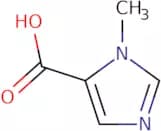
CAS:<p>Please enquire for more information about Ac-Val-Met-[(2S,4S,5S)-5-amino-4-hydroxy-2-isopropyl-7-methyl-octanoyl]-Ala-Glu-Phe-OH trifluoroacetate salt including the price, delivery time and more detailed product information at the technical inquiry form on this page</p>Formula:C41H66N6O11SPurity:Min. 95%Molecular weight:851.06 g/mol1-Methyl-1H-imidazole-5-carboxylic acid
CAS:<p>1-Methyl-1H-imidazole-5-carboxylic acid is an amide that is used as a hardener in medicines. It can be synthesized by the reaction of ethyl formate with thionyl chloride and imidazoles. The yield of this product is high, and it can be produced in different stereoisomeric forms. 1-Methyl-1H-imidazole-5-carboxylic acid is used to produce other medicines, such as painkillers, tranquilizers, diuretics, and antibiotics. This product has been shown to have a number of health benefits, including reducing cholesterol levels and blood pressure.</p>Formula:C5H6N2O2Purity:Min. 95%Molecular weight:126.11 g/mol5(6)-TAMRA-HIV-1 tat Protein (47-57) trifluoroacetate salt
CAS:<p>Please enquire for more information about 5(6)-TAMRA-HIV-1 tat Protein (47-57) trifluoroacetate salt including the price, delivery time and more detailed product information at the technical inquiry form on this page</p>Formula:C89H138N34O18Purity:Min. 95%Molecular weight:1,972.27 g/molAc-Gly-Asp-Tyr-Ser-His-Cys-Ser-Pro-Leu-Arg-Tyr-Tyr-Pro-Trp-Trp-Lys-Cys-Thr-Tyr-Pro-Asp-Pro-Glu-Gly-Gly-Gly-NH2 trifluoroacetate salt (Disulfide bond)
CAS:<p>Please enquire for more information about Ac-Gly-Asp-Tyr-Ser-His-Cys-Ser-Pro-Leu-Arg-Tyr-Tyr-Pro-Trp-Trp-Lys-Cys-Thr-Tyr-Pro-Asp-Pro-Glu-Gly-Gly-Gly-NH2 trifluoroacetate salt (Disulfide bond) including the price, delivery time and more detailed product information at the technical inquiry form on this page</p>Formula:C141H185N35O40S2Purity:Min. 95%Molecular weight:3,074.32 g/molEtiroxate carboxylic acid
CAS:<p>Please enquire for more information about Etiroxate carboxylic acid including the price, delivery time and more detailed product information at the technical inquiry form on this page</p>Formula:C16H13I4NO4Purity:Min. 95%Molecular weight:790.9 g/mol





![3-[(2-Aminoethyl)dithio]propionic acid](/_next/image/?url=https%3A%2Fstatic.cymitquimica.com%2Fproducts%2F3D%2Fthumb-webp%2FFA17745.webp&w=3840&q=75)

![Ac-Val-Met-[(2S,4S,5S)-5-amino-4-hydroxy-2-isopropyl-7-methyl-octanoyl]-Ala-Glu-Phe-OH trifluoroac…](/_next/image/?url=https%3A%2Fstatic.cymitquimica.com%2Fproducts%2F3D%2Fthumb-webp%2FFA111093.webp&w=3840&q=75)