Carboxylic Acids
Carboxylic acids are organic molecules characterized by having a carboxyl-type functional group (-COOH). These acids are fundamental in various chemical reactions, including esterification, amidation, and decarboxylation. Carboxylic acids are widely used in the production of pharmaceuticals, polymers, and agrochemicals. In this section, you can find a large number of carboxylic acids ready to be used. At CymitQuimica, we provide a broad range of high-quality carboxylic acids to support your research and industrial applications.
Found 12453 products of "Carboxylic Acids"
Sort by
Purity (%)
0
100
|
0
|
50
|
90
|
95
|
100
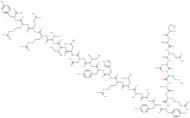
Oxyntomodulin (bovine, dog, porcine) trifluoroacetate salt
CAS:<p>Please enquire for more information about Oxyntomodulin (bovine, dog, porcine) trifluoroacetate salt including the price, delivery time and more detailed product information at the technical inquiry form on this page</p>Formula:C192H295N59O60SPurity:Min. 95%Molecular weight:4,421.82 g/mol(2S)-2-Amino-4-methyl-1-[(2R)-2-methyloxiranyl]-1-pentanone trifluoroacetate
CAS:Controlled Product<p>Please enquire for more information about (2S)-2-Amino-4-methyl-1-[(2R)-2-methyloxiranyl]-1-pentanone trifluoroacetate including the price, delivery time and more detailed product information at the technical inquiry form on this page</p>Formula:C9H17NO2•C2HF3O2Purity:Min. 95%Color and Shape:PowderMolecular weight:285.26 g/molL-Lysine acetate
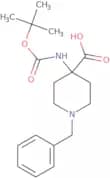
CAS:Controlled Product<p>L-Lysine acetate is a precursor of L-lysine and is used in the treatment of cancers. It has been shown to promote the growth of pluripotent cells, which can differentiate into any tissue type. L-Lysine acetate promotes cellular transformation by increasing the expression of growth factor-β1 in cells. This compound also enhances cellular physiology, energy metabolism, and protein degradation. L-Lysine acetate inhibits the ubiquitin ligases that are involved in protein degradation, leading to an increase in cell proliferation. The use of L-Lysine acetate has shown promising results for the treatment of infectious diseases such as HIV/AIDS and tuberculosis. L-Lysine acetate blocks the replication of human immunodeficiency virus (HIV) by inhibiting reverse transcriptase activity and blocking its DNA chain elongation process.</p>Formula:C8H18N2O4Purity:Min. 95%Color and Shape:PowderMolecular weight:206.24 g/mol1-Benzyl-4-((tert-butoxycarbonyl)amino)piperidine-4-carboxylic acid
CAS:<p>Please enquire for more information about 1-Benzyl-4-((tert-butoxycarbonyl)amino)piperidine-4-carboxylic acid including the price, delivery time and more detailed product information at the technical inquiry form on this page</p>Formula:C18H26N2O4Purity:Min. 95%Molecular weight:334.41 g/mol5-Acenaphthenecarboxylic acid
CAS:<p>5-Acenaphthenecarboxylic acid is a xylene derivative that has been characterized as an organometallic compound. The cyclopentane ring is the central feature of this molecule and it can be used in the synthesis of other organic compounds. 5-Acenaphthenecarboxylic acid is toxic to humans and animals and has been shown to induce liver tumors in rats. It also has been shown to inhibit the growth of some bacteria, including Mycobacterium tuberculosis, which causes tuberculosis. 5-Acenaphthenecarboxylic acid inhibits protein synthesis by binding to ribosomes and interfering with the biosynthesis of proteins. This binding prevents formation of a complex with the enzyme cell wall synthesis that is required for cell wall biosynthesis, inhibiting protein synthesis and cell division.</p>Formula:C13H10O2Purity:Min. 95%Color and Shape:PowderMolecular weight:198.22 g/mol(Gln22)-Amyloid b-Protein (1-40) trifluoroacetate salt
CAS:Controlled Product<p>Please enquire for more information about (Gln22)-Amyloid b-Protein (1-40) trifluoroacetate salt including the price, delivery time and more detailed product information at the technical inquiry form on this page</p>Formula:C194H296N54O57SPurity:Min. 95%Molecular weight:4,328.82 g/mol(Trp11,D-Phe15·16)-SDF-1 (7-16) (Dimer) (human, cat, mouse) trifluoroacetate salt
<p>Please enquire for more information about (Trp11,D-Phe15·16)-SDF-1 (7-16) (Dimer) (human, cat, mouse) trifluoroacetate salt including the price, delivery time and more detailed product information at the technical inquiry form on this page</p>Formula:C134H180N34O26S2Purity:Min. 95%Molecular weight:2,747.21 g/mol4-(Trimethylsilyl)pheNylboroNic acid
CAS:<p>4-(Trimethylsilyl)phenylboronic acid is a molecule that can be used as an acceptor in fluorescence. It has been shown to have acceptor properties, which means it is able to absorb light energy and transfer it to other molecules. This chemical can be used in microscopy and cross-coupling reactions. 4-(Trimethylsilyl)phenylboronic acid has been shown to undergo thermally activated transport properties and to be isomeric. The molecule also has cross-coupling reactions with anilines, which are important for the production of pharmaceuticals and other organic compounds. 4-(Trimethylsilyl)phenylboronic acid has a high affinity for chloride ions, making it a good candidate for use in solar cells.</p>Formula:C9H15BO2SiPurity:Min. 95%Molecular weight:194.11 g/mol2-(4-Bromobenzo[d][1,3]dioxole-5-carboxamido)acetic acid
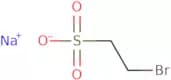
CAS:<p>2-(4-Bromobenzo[d][1,3]dioxole-5-carboxamido)acetic acid is a fine chemical that is used in research and as a reagent. It is also used as a building block for more complex compounds and as a versatile scaffold in organic synthesis. 2-(4-Bromobenzo[d][1,3]dioxole-5-carboxamido)acetic acid can be reacted with other chemicals to create new compounds. This chemical has been shown to have antihistamine properties and may also function as an antipsychotic drug.</p>Formula:C9H6BrNO5Purity:Min. 95%Molecular weight:288.05 g/mol2-Bromoethanesulfonic acid sodium
CAS:<p>2-Bromoethanesulfonic acid sodium (2BESA) is a chemical inhibitor that is used to control methanogenic activity. It has been shown to be effective in the treatment of wastewater, although it is not very soluble in water. 2BESA inhibits methanogenesis by binding to the enzyme methane monooxygenase, which blocks electron transfer from methane to oxygen. This prevents the formation of hydrogen and carbon dioxide, which are products of fermentation. 2BESA also has electrochemical properties that make it a good candidate for use as an electrode material in fuel cells. In vitro assays have demonstrated that 2BESA inhibits bacterial growth by inhibiting DNA synthesis and protein synthesis.</p>Formula:C2H4BrNaO3SPurity:Min. 95%Molecular weight:211.01 g/molNeuromedin B trifluoroacetate salt
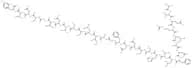
CAS:<p>Neuromedin B is a peptide hormone that is produced by the hypothalamus and regulates many physiological processes such as energy metabolism, appetite, and sleep. Neuromedin B is a member of the family of guanine nucleotide-binding proteins (G proteins) that bind to G protein-coupled receptors on the surface of cells. It has been shown to stimulate calcium release from intracellular stores in response to an increase in cytosolic Ca2+. Neuromedin B has been shown to have anti-inflammatory effects on infectious diseases such as meningitis, sepsis, and tuberculosis, which may be due to its ability to inhibit neutrophil migration. Neuromedin B also stimulates hippocampal formation activity in rats during the rotarod test, which may be due to its effects on dopamine release.</p>Formula:C52H73N15O12SPurity:Min. 95%Molecular weight:1,132.3 g/moluPAR (84-95) (human) trifluoroacetate salt
CAS:<p>Please enquire for more information about uPAR (84-95) (human) trifluoroacetate salt including the price, delivery time and more detailed product information at the technical inquiry form on this page</p>Formula:C62H98N18O20SPurity:Min. 95%Molecular weight:1,447.62 g/molPseudin-2 trifluoroacetate salt
CAS:<p>Please enquire for more information about Pseudin-2 trifluoroacetate salt including the price, delivery time and more detailed product information at the technical inquiry form on this page</p>Formula:C122H202N36O32Purity:Min. 95%Molecular weight:2,685.13 g/molAmylin (8-37) (human) trifluoroacetate salt
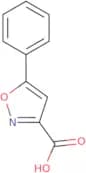
CAS:<p>Please enquire for more information about Amylin (8-37) (human) trifluoroacetate salt including the price, delivery time and more detailed product information at the technical inquiry form on this page</p>Formula:C138H216N42O45Purity:Min. 95%Molecular weight:3,183.45 g/mol5-Phenylisoxazole-3-carboxylic acid
CAS:<p>5-Phenylisoxazole-3-carboxylic acid is a phenoxy compound that has been shown to inhibit the growth of tuberculosis bacteria. This drug binds to the postsynaptic potential in the cell membrane and inhibits the effector proteins from interacting with the receptor, preventing neurotransmitter release. The molecular modeling study showed that 5-Phenylisoxazole-3-carboxylic acid interacts with ethyl esters and rifampin, which inhibits xanthine oxidase. Xanthine oxidase inhibitors are used as a treatment for gout and hyperuricemia. 5-Phenylisoxazole-3-carboxylic acid also has fluorimetric properties, which can be used to measure its concentration in biological samples such as urine or plasma. Nitro groups in this drug make it susceptible to oxidation by nitric oxide, which can be monitored using nmr spectra.</p>Formula:C10H7NO3Purity:Min. 95%Molecular weight:189.17 g/mol(Ser8)-GLP-1 (7-36) amide (human, bovine, guinea pig, mouse, rat) trifluoroacetate salt
CAS:<p>Please enquire for more information about (Ser8)-GLP-1 (7-36) amide (human, bovine, guinea pig, mouse, rat) trifluoroacetate salt including the price, delivery time and more detailed product information at the technical inquiry form on this page</p>Formula:C149H226N40O46Purity:Min. 95%Molecular weight:3,313.63 g/molNeuropeptide Y (13-36) (human, rat) trifluoroacetate salt
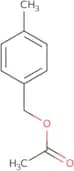
CAS:<p>Trifluoroacetate salt</p>Formula:C134H207N41O36SPurity:Min. 95%Molecular weight:3,000.4 g/mol4-Methylbenzyl acetate
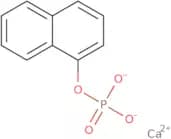
CAS:<p>4-Methylbenzyl acetate is a monocarboxylic acid that is an oxidation product of benzyl esters. It has been found to be a suitable catalyst for the oxidation of wastewater containing monocarboxylic acids, including acetic acid, propionic acid and butyric acid. The catalytic mechanism of 4-methylbenzyl acetate was found to be an acylation reaction in which the carboxyl group of 4-methylbenzyl acetate acts as an acylating agent with the hydrogen atom of the substrate. The reaction mechanism for this process is similar to that for other types of carboxylic acids, such as propionate and butyrate. 4-Methylbenzyl acetate also has functional groups that allow it to act as both a base and a nucleophile in addition to its ability to act as an acylating agent.</p>Formula:C10H12O2Purity:Min. 95%Molecular weight:164.2 g/mol1-Naphthylphosphoric acid calcium
CAS:<p>1-Naphthylphosphoric acid calcium salt (1NPAC) is a fine chemical that has been used as a building block in the synthesis of complex organic compounds. 1NPAC has been shown to be useful in the production of research chemicals and speciality chemicals. It is also employed as an intermediate for the production of high quality reagents. 1NPAC has versatile uses, as it can be used to synthesize other compounds, such as pharmaceuticals and agrochemicals.</p>Formula:C20H18O8P2•CaPurity:Min. 95%Color and Shape:PowderMolecular weight:488.38 g/molLQEQ-19 (human) trifluoroacetate salt
<p>Please enquire for more information about LQEQ-19 (human) trifluoroacetate salt including the price, delivery time and more detailed product information at the technical inquiry form on this page</p>Formula:C106H170N30O34Purity:Min. 95%Molecular weight:2,408.67 g/mol


![(2S)-2-Amino-4-methyl-1-[(2R)-2-methyloxiranyl]-1-pentanone trifluoroacetate](/_next/image/?url=https%3A%2Fstatic.cymitquimica.com%2Fproducts%2F3D%2Fthumb-webp%2FFA100028.webp&w=3840&q=75)



![2-(4-Bromobenzo[d][1,3]dioxole-5-carboxamido)acetic acid](/_next/image/?url=https%3A%2Fstatic.cymitquimica.com%2Fproducts%2F3D%2Fthumb-webp%2FFB66447.webp&w=3840&q=75)