Carboxylic Acids
Carboxylic acids are organic molecules characterized by having a carboxyl-type functional group (-COOH). These acids are fundamental in various chemical reactions, including esterification, amidation, and decarboxylation. Carboxylic acids are widely used in the production of pharmaceuticals, polymers, and agrochemicals. In this section, you can find a large number of carboxylic acids ready to be used. At CymitQuimica, we provide a broad range of high-quality carboxylic acids to support your research and industrial applications.
Found 12453 products of "Carboxylic Acids"
Sort by
Purity (%)
0
100
|
0
|
50
|
90
|
95
|
100
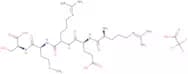
Amyloid β/A4 Protein Precursor770 (403-407) trifluoroacetate salt
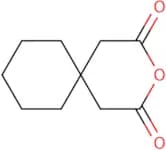
CAS:<p>Please enquire for more information about Amyloid beta/A4 Protein Precursor770 (403-407) trifluoroacetate salt including the price, delivery time and more detailed product information at the technical inquiry form on this page</p>Formula:C25H47N11O9SPurity:Min. 95%Molecular weight:677.78 g/mol1,1-Cyclohexanediacetic acid anhydride
CAS:<p>1,1-Cyclohexanediacetic acid anhydride is a synthetic polymer that is soluble in water. It is used in wastewater treatment to remove organic contaminants. 1,1-Cyclohexanediacetic acid anhydride reacts with gabapentin to form amide and monoamide derivatives. This reaction is catalyzed by acylation agents such as hydrochloric acid and organic solvents such as benzene. The resulting products are virulent, allowing them to be used in the treatment of epilepsy.</p>Formula:C10H14O3Purity:Min. 95%Molecular weight:182.22 g/molCRAMP-18 (mouse) trifluoroacetate salt
CAS:<p>Please enquire for more information about CRAMP-18 (mouse) trifluoroacetate salt including the price, delivery time and more detailed product information at the technical inquiry form on this page</p>Formula:C101H171N27O24Purity:Min. 95%Molecular weight:2,147.61 g/molCaloxin 2A1 trifluoroacetate salt
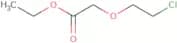
CAS:<p>Please enquire for more information about Caloxin 2A1 trifluoroacetate salt including the price, delivery time and more detailed product information at the technical inquiry form on this page</p>Formula:C64H91N19O22Purity:Min. 95%Molecular weight:1,478.52 g/molEthyl 2-(2-chloroethoxy)acetate
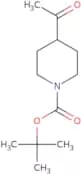
CAS:<p>Please enquire for more information about Ethyl 2-(2-chloroethoxy)acetate including the price, delivery time and more detailed product information at the technical inquiry form on this page</p>Formula:C6H11ClO3Purity:Min. 95%Molecular weight:166.6 g/mol4-Acetyl-piperidine-1-carboxylic acid tert-butyl ester
CAS:<p>4-Acetylpiperidine-1-carboxylic acid tert-butyl ester is a tert-butyl ester of 4-acetylpiperidine. It can be prepared by the reaction of sodium azide with chloroform and tert-butyl alcohol. The resulting product is a white solid that can be used as an intermediate in organic synthesis.</p>Formula:C12H21NO3Purity:Min. 95%Molecular weight:227.3 g/molDABCYL-TNF-α-EDANS (-4 to +6) (human) trifluoroacetate salt
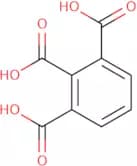
CAS:<p>DABCYL-TNF-alpha-EDANS (-4 to +6) (human) trifluoroacetate salt is a fine chemical that has been shown to be useful in research. It is a versatile building block for the synthesis of complex compounds and can be used as a reaction component for the synthesis of speciality chemicals. The compound is a high quality reagent, which can be used as an intermediate for the synthesis of other chemical compounds.</p>Formula:C70H104N22O18S·C2HF3O2Purity:Min. 95%Color and Shape:Red SolidMolecular weight:1,687.8 g/molHemimellitic acid
CAS:<p>Hemimellitic acid is a carboxylate that has an intramolecular hydrogen and a reactive hydroxyl group. It can be used as a precursor to the production of polymers and plastics. Hemimellitic acid is an inorganic acid that contains nitrogen atoms. It can exist as particles with a size range between 1 and 100 nanometers. The chemical structure of hemimellitic acid is related to the malonic acid; it is the methyl ethyl ester of malonic acid. Hemimellitic acid has thermodynamic data, including a standard enthalpy change of -3,079 kJ/mol (-8,726 cal/mol) and Gibbs free energy change of -2,837 kJ/mol (-6,927 cal/mol).</p>Formula:C9H6O6Purity:Min. 95%Color and Shape:White To Off-White SolidMolecular weight:210.14 g/molBig Endothelin-1 (1-31) (human, bovine) trifluoroacetate salt )
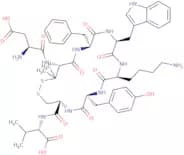
CAS:<p>Please enquire for more information about Big Endothelin-1 (1-31) (human, bovine) trifluoroacetate salt ) including the price, delivery time and more detailed product information at the technical inquiry form on this page</p>Formula:C162H236N38O47S5Purity:Min. 95%Molecular weight:3,628.17 g/mol(Pen 5)-Urotensin II (4-11) (human) trifluoroacetate salt
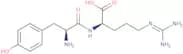
CAS:<p>Please enquire for more information about (Pen 5)-Urotensin II (4-11) (human) trifluoroacetate salt including the price, delivery time and more detailed product information at the technical inquiry form on this page</p>Formula:C52H68N10O12S2Purity:Min. 95%Molecular weight:1,089.29 g/mol(D-Arg2)-Kyotorphin acetate salt
CAS:<p>(D-Arg2)-Kyotorphin acetate salt H-Tyr-D-Arg-OH acetate salt is a peptide that contains two amino acid residues, D-arginine and L-tyrosine. It has been shown to have analgesic properties in animal models of pain, and is also thought to be involved with bowel disease, congestive heart failure, and platelet aggregation. The biological activity of this peptide has been studied using whole cell recordings in the presence of an experimental model (rat dorsal root ganglion neurons). Kyotorphin acetate salt H-Tyr-D-Arg-OH acetate salt was found to inhibit enzyme activities such as cyclase and phosphodiesterase. This peptide binds to opioid receptors and acts as an electrochemical detector for cyclases, which are enzymes that produce cyclic adenosine monophosphate (cAMP). Kyotorphin acetate salt H-Tyr-D</p>Formula:C15H23N5O4Purity:Min. 95%Molecular weight:337.37 g/molDynorphin A (1-13) amide trifluoroacetate salt
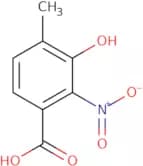
CAS:<p>Please enquire for more information about Dynorphin A (1-13) amide trifluoroacetate salt including the price, delivery time and more detailed product information at the technical inquiry form on this page</p>Formula:C75H127N25O14Purity:Min. 95%Molecular weight:1,602.97 g/mol3-Hydroxy-4-methyl-2-nitro-benzoic acid
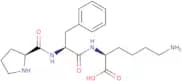
CAS:<p>3-Hydroxy-4-methyl-2-nitrobenzoic acid is an analog of the natural substrate for the enzyme nitroreductase. It can be used in oxidative coupling reactions to generate a covalently bonded product, which is immobilized on sepharose. 3-Hydroxy-4-methyl-2-nitrobenzoic acid has a high affinity for nucleic acids and can be used in biospecific assays. The chromophore of 3-hydroxy-4-methyl-2-nitrobenzoic acid is easily oxidized, leading to its use in nitroreduction reactions in which a nitro group is reduced to an amino group.</p>Purity:Min. 95%H-Pro-Phe-Lys-OH acetate salt
CAS:<p>Please enquire for more information about H-Pro-Phe-Lys-OH acetate salt including the price, delivery time and more detailed product information at the technical inquiry form on this page</p>Formula:C20H30N4O4Purity:Min. 95%Molecular weight:390.48 g/molAc-Lys-Gln-Lys-Leu-Arg-AMC trifluoroacetate salt
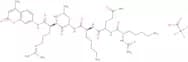
CAS:<p>Please enquire for more information about Ac-Lys-Gln-Lys-Leu-Arg-AMC trifluoroacetate salt including the price, delivery time and more detailed product information at the technical inquiry form on this page</p>Formula:C41H66N12O9Purity:Min. 95%Molecular weight:871.04 g/molEthylenediaminetetraacetic acid tripotassium salt dihydrate
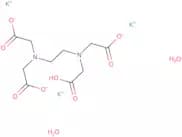
CAS:<p>Ethylenediaminetetraacetic acid tripotassium salt dihydrate is an anticoagulant that can be used as a coagulant for blood samples. It is often used in polymerase chain reactions to synthesize DNA, or to isolate and purify genomic DNA. This compound has ferroelectric properties and can be used as a target cell in optical imaging applications. Ethylenediaminetetraacetic acid tripotassium salt dihydrate is also used in the production of polyurethanes and as a polymerization inhibitor in cinnamon oil.</p>Formula:C10H13K3N2O8·2H2OPurity:Min. 95%Molecular weight:442.54 g/mol2-Hydrazinobenzoic acid hydrochloride - technical grade
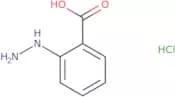
CAS:<p>2-Hydrazinobenzoic acid hydrochloride is a synthetic compound that can be used as a ligand or substrate for the polymerase. It has been shown to interact with the NS5B polymerase, which is involved in viral replication and drug resistance. 2-Hydrazinobenzoic acid hydrochloride also produces reduction products and luminescence when combined with chloride. The luminescence is thought to be due to an interaction with the nucleophilic carbonyl group of 2-hydrazinobenzoic acid hydrochloride and a nucleophilic attack on the carbonyl oxygen atom by chloride ions. This reaction produces blue light at around 470 nm.</p>Formula:C7H8N2O2·xHClPurity:(%) Min. 60%Color and Shape:PowderMolecular weight:188.61 g/molMagnesium acetate anhydrous
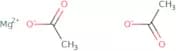
CAS:<p>Magnesium acetate anhydrous is the magnesium salt of acetic acid and has been used as a polymerase chain reaction (PCR) buffer for DNA amplification. This product is also used in wastewater treatment to remove organic acids and carbonates from water. Magnesium acetate anhydrous has been shown to have a Langmuir adsorption isotherm that can be described by a single-site binding model with a Kd value of 2.8x10⁻² M. The compound was found to bind to liver cells, which may be due to its hydroxyl group on the central atom of the molecule. Magnesium acetate anhydrous has been shown to have electrochemical impedance spectroscopy properties at Ω=1 MΩ-1, which are indicative of ionic conductivity and good chemical stability.</p>Formula:C4H6MgO4Purity:Min. 95%Color and Shape:White PowderMolecular weight:142.39 g/mol(Des-Pyr 1,D-Ser(tBu)6,Azagly10)-LHRH acetate salt
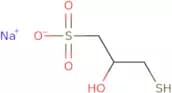
CAS:Controlled Product<p>Please enquire for more information about (Des-Pyr 1,D-Ser(tBu)6,Azagly10)-LHRH acetate salt including the price, delivery time and more detailed product information at the technical inquiry form on this page</p>Formula:C54H79N17O12Purity:Min. 95%Molecular weight:1,158.31 g/mol2-Hydroxy-3-mercapto-1-propanesulfonic acid sodium salt
CAS:<p>2-Hydroxy-3-mercapto-1-propanesulfonic acid sodium salt (2HMP) is a diagnostic agent that can be used for the detection of bacterial infections. The conformational properties of 2HMP are similar to those of ATP, which allows it to bind to the polymerase chain reaction enzyme and initiate an enzymatic reaction. This leads to the production of a signal that can be detected by spectrophotometry or fluorometry. 2HMP has also been shown to have chemokine activity in vitro, but this has not been tested in vivo. 2HMP is a competitive inhibitor of human protein serine proteases, such as trypsin and chymotrypsin, with an IC50 value of approximately 1 μM.</p>Formula:C3H7NaO4S2Purity:Min. 95%Molecular weight:194.2 g/mol