Carboxylic Acids
Carboxylic acids are organic molecules characterized by having a carboxyl-type functional group (-COOH). These acids are fundamental in various chemical reactions, including esterification, amidation, and decarboxylation. Carboxylic acids are widely used in the production of pharmaceuticals, polymers, and agrochemicals. In this section, you can find a large number of carboxylic acids ready to be used. At CymitQuimica, we provide a broad range of high-quality carboxylic acids to support your research and industrial applications.
Found 12453 products of "Carboxylic Acids"
Sort by
Purity (%)
0
100
|
0
|
50
|
90
|
95
|
100
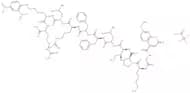
Mca-Gly-Lys-Pro-Ile-Leu-Phe-Phe-Arg-Leu-Lys(Dnp)-D-Arg-NH2 trifluoroacetate salt
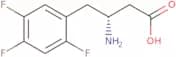
CAS:<p>Please enquire for more information about Mca-Gly-Lys-Pro-Ile-Leu-Phe-Phe-Arg-Leu-Lys(Dnp)-D-Arg-NH2 trifluoroacetate salt including the price, delivery time and more detailed product information at the technical inquiry form on this page</p>Formula:C85H122N22O19Purity:Min. 95%Molecular weight:1,756.02 g/mol(R)-3-Amino-4-(2,4,5-trifluorophenyl)butyric acid
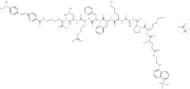
CAS:<p>(R)-3-Amino-4-(2,4,5-trifluorophenyl)butyric acid is an antibacterial agent that inhibits the enzyme acetylcholine esterase. This inhibition prevents the breakdown of acetylcholine, leading to increased levels of this neurotransmitter in the brain and an enhancement of cholinergic transmission. (R)-3-Amino-4-(2,4,5-trifluorophenyl)butyric acid has been shown to be effective against bacterial strains resistant to β-lactam antibiotics. The synthesis of taxol as well as other β-amino acids has been demonstrated using a variety of enzymatic methods. A reaction scheme for the synthesis of nicotinic acetylcholine has also been proposed. (R)-3-Amino-4-(2,4,5-trifluorophenyl)butyric acid is a dipept</p>Formula:C10H10F3NO2Purity:Min. 95%Color and Shape:PowderMolecular weight:233.19 g/molH-Glu(EDANS)-Lys-Pro-Ala-Lys-Phe-Phe-Arg-Leu-Lys(DABCYL)-NH2 trifluoroacetate salt
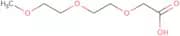
CAS:<p>Please enquire for more information about H-Glu(EDANS)-Lys-Pro-Ala-Lys-Phe-Phe-Arg-Leu-Lys(DABCYL)-NH2 trifluoroacetate salt including the price, delivery time and more detailed product information at the technical inquiry form on this page</p>Formula:C88H124N22O15SPurity:Min. 95%Molecular weight:1,762.13 g/mol(2-(2-Methoxyethoxy)ethoxy)acetic acid
CAS:<p>2-(2-Methoxyethoxy)ethoxy)acetic acid (MEAA) is a cell stabilizer that can be used in the treatment of cancer, diabetes, and other diseases. MEAA has been shown to inhibit the growth of cells by binding to and stabilizing the cytoskeleton through inhibition of protein synthesis. It also prevents the activation of pro-inflammatory cytokines and reactive oxygen species. MEAA's magnetic resonance spectroscopy properties have been studied in detail and it has been shown to bind well with silver ions. MEAA has also been shown to have high cytotoxicity when combined with laser ablation therapy.</p>Formula:C7H14O5Purity:90%Color and Shape:Clear LiquidMolecular weight:178.18 g/mol17-α,21-Dihydroxy-16-a-methylpregna-1,4,9(11)-triene-3,20-dione 21-acetate
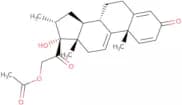
CAS:Controlled Product<p>Please enquire for more information about 17-alpha,21-Dihydroxy-16-a-methylpregna-1,4,9(11)-triene-3,20-dione 21-acetate including the price, delivery time and more detailed product information at the technical inquiry form on this page</p>Formula:C24H30O5Purity:Min. 95%Molecular weight:398.49 g/mol3,5-Diiodothyroformic acid
CAS:<p>3,5-Diiodothyroformic acid is a fine chemical that is used as a versatile building block in organic synthesis. It is also an intermediate for research chemicals and speciality chemicals. In addition to its use as a reagent, 3,5-Diiodothyroformic acid has been shown to be useful as a building block for the synthesis of pharmaceuticals and agricultural chemicals.</p>Formula:C13H8I2O4Purity:Min. 95%Molecular weight:482.01 g/mol1-Butanesulfonic acid sodium
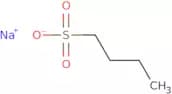
CAS:<p>1-Butanesulfonic acid sodium salt is a perfluorinated compound that inhibits the activity of various enzymes in the body, such as kinases and phosphatases. It has been used to study the effects of these enzymes on chemical reactions. 1-Butanesulfonic acid sodium salt is also used to detect the presence of selenium compounds in urine samples. The inhibition of an enzyme by this compound results in a decreased rate of reaction and a change in kinetic behavior. This can be observed by measuring the time it takes for the reaction to reach half its maximum value. Sodium taurocholate, chloride, and trifluoroacetic acid are all reagents that are commonly used with this compound when performing kinetic studies. 1-Butanesulfonic acid sodium salt has been shown to inhibit cholesterol synthesis in many animal models. In addition, this compound has been shown to bind to and inhibit plasma mass spectrometry by chromatography on silica gel from human plasma</p>Formula:C4H10O3S•NaPurity:Min. 95%Color and Shape:PowderMolecular weight:161.18 g/mol(Asp371)-Tyrosinase (369-377) (human) trifluoroacetate salt
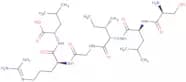
CAS:<p>Trifluoroacetate salt</p>Formula:C42H66N10O16S2Purity:Min. 95%Molecular weight:1,031.16 g/mol(Des-Ser3)-ACTH (1-24) (human, bovine, rat) trifluoroacetate salt
<p>Please enquire for more information about (Des-Ser3)-ACTH (1-24) (human, bovine, rat) trifluoroacetate salt including the price, delivery time and more detailed product information at the technical inquiry form on this page</p>Formula:C133H205N39O29SPurity:Min. 95%Molecular weight:2,846.36 g/mol1,1-Cyclohexanediacetic acid anhydride
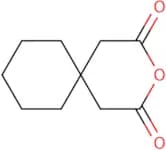
CAS:<p>1,1-Cyclohexanediacetic acid anhydride is a synthetic polymer that is soluble in water. It is used in wastewater treatment to remove organic contaminants. 1,1-Cyclohexanediacetic acid anhydride reacts with gabapentin to form amide and monoamide derivatives. This reaction is catalyzed by acylation agents such as hydrochloric acid and organic solvents such as benzene. The resulting products are virulent, allowing them to be used in the treatment of epilepsy.</p>Formula:C10H14O3Purity:Min. 95%Molecular weight:182.22 g/molPAR-2 (1-6) (mouse, rat) trifluoroacetate salt
CAS:<p>Please enquire for more information about PAR-2 (1-6) (mouse, rat) trifluoroacetate salt including the price, delivery time and more detailed product information at the technical inquiry form on this page</p>Formula:C29H55N9O8Purity:Min. 95%Molecular weight:657.8 g/molH-Pro-Pro-Pro-Gly-Met-Arg-Pro-Pro-OH trifluoroacetate salt
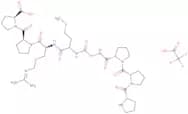
CAS:<p>Please enquire for more information about H-Pro-Pro-Pro-Gly-Met-Arg-Pro-Pro-OH trifluoroacetate salt including the price, delivery time and more detailed product information at the technical inquiry form on this page</p>Formula:C38H61N11O9SPurity:Min. 95%Molecular weight:848.03 g/molCopeptin (rat) trifluoroacetate salt
CAS:<p>Copeptin (rat) trifluoroacetate salt is a peptide that belongs to the group of protein inhibitors. It can inhibit the activity of the acetylcholine receptor, which leads to an increase in muscle tone and rigidity. Copeptin is also used as a research tool for studying protein interactions, antibody-antigen reactions, cell biology, ligand-receptor binding, pharmacology and life sciences. Copeptin has been shown to inhibit ion channels such as nicotinic receptors and potassium channels. The CAS number for copeptin (rat) trifluoroacetate salt is 86280-64-0.</p>Formula:C183H307N57O61Purity:Min. 95%Molecular weight:4,281.74 g/mol(3,5-Diiodo-Tyr1,D-Ala2,N-Me-Phe4,glycinol5)-Enkephalin acetate salt
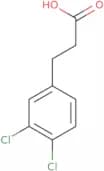
CAS:Controlled Product<p>Please enquire for more information about (3,5-Diiodo-Tyr1,D-Ala2,N-Me-Phe4,glycinol5)-Enkephalin acetate salt including the price, delivery time and more detailed product information at the technical inquiry form on this page</p>Formula:C26H33I2N5O6Purity:Min. 95%Molecular weight:765.38 g/mol3-(3,4-dichlorophenyl)propanoic acid
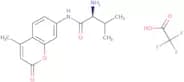
CAS:<p>3-(3,4-Dichlorophenyl)propanoic acid is a potent inhibitor of the lysine methyltransferase enzyme. This enzyme catalyzes the transfer of methyl groups from S-adenosylmethionine to lysine residues in proteins, and it is involved in cancer cell proliferation. 3-(3,4-Dichlorophenyl)propanoic acid inhibits the activity of this enzyme by covalently binding to lysine residues on the protein and preventing their methylation. Research has shown that 3-(3,4-Dichlorophenyl)propanoic acid can block tumor growth by inhibiting the activity of this enzyme.</p>Formula:C9H8O2Cl2Purity:Min. 95%Color and Shape:PowderMolecular weight:219.06 g/molH-Val-AMC trifluoroacetate salt
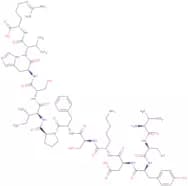
CAS:<p>Please enquire for more information about H-Val-AMC trifluoroacetate salt including the price, delivery time and more detailed product information at the technical inquiry form on this page</p>Formula:C15H18N2O3Purity:Min. 95%Molecular weight:274.32 g/molGAP 26 trifluoroacetate salt
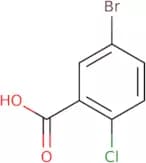
CAS:<p>13-mer connexin mimetic peptide, composed of residue numbers 63-75 of the first extracellular loop of connexin 43 (gap junction blocker), containing the SHVR amino acid motif.</p>Formula:C70H107N19O19SPurity:Min. 95%Molecular weight:1,550.78 g/mol5-Bromo-2-chlorobenzoic acid
CAS:<p>Intermediate in the synthesis of dapagliflozin</p>Formula:C7H4BrClO2Purity:Min. 95%Color and Shape:PowderMolecular weight:235.46 g/molBradykinin (1-7) acetate salt
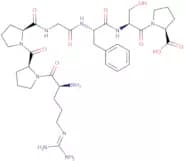
CAS:<p>Bradykinin (1-7) acetate salt H-Arg-Pro-Pro-Gly-Phe-Ser-Pro-OH acetate salt is a synthetic peptide that was designed to simulate the activity of bradykinin. It has been shown to be effective in the treatment of angina pectoris and as an analgesic. This peptide can also be used in the analysis of carboxypeptidase activity, by adding it to homogenates and measuring the reaction products. Bradykinin (1-7) acetate salt H-Arg-Pro-Pro-Gly-Phe-Ser-Pro-OH acetate salt can also be used to analyze salivary glands, activated erythrocytes, and silicon wafers. It is particularly useful for examining morphology and nanowires.</p>Formula:C35H52N10O9Purity:Min. 95%Molecular weight:756.85 g/molBiotinyl-pTH (44-68) (human) trifluoroacetate salt
CAS:<p>Please enquire for more information about Biotinyl-pTH (44-68) (human) trifluoroacetate salt including the price, delivery time and more detailed product information at the technical inquiry form on this page</p>Formula:C127H213N43O43SPurity:Min. 95%Molecular weight:3,062.38 g/mol