Aldehydes
Aldehydes are organic compounds containing a carbonyl group (C=O) bonded to at least one hydrogen atom. These versatile compounds are fundamental in various chemical reactions, including oxidation, reduction, and nucleophilic addition. Aldehydes are essential building blocks in the synthesis of pharmaceuticals, fragrances, and polymers. At CymitQuimica, we provide a diverse selection of high-quality aldehydes to support your research and industrial applications.
Found 8551 products of "Aldehydes"
Sort by
Purity (%)
0
100
|
0
|
50
|
90
|
95
|
100
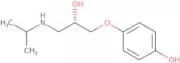
Prenalterol
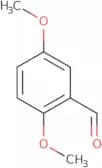
CAS:<p>Prenalterol is a drug that can be used to treat congestive heart failure and high blood pressure. It belongs to the class of 2-adrenergic receptor agonists, which are drugs that stimulate the sympathetic nervous system. Prenalterol has been shown to have a positive effect on the cardiovascular system by increasing cardiac output. This drug also has an anti-inflammatory effect, which may be due to its ability to inhibit protein synthesis genes in cells. Prenalterol has also been shown to reduce post-myocardial infarction remodeling by reducing myocardial fibrosis, although it does not affect the incidence of myocardial infarcts.</p>Formula:C12H19NO3Purity:Min. 95%Color and Shape:White PowderMolecular weight:225.28 g/mol2,5-Dimethoxybenzaldehyde
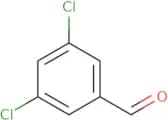
CAS:<p>Intermediate in organic synthesis</p>Formula:C9H10O3Purity:Min. 98 Area-%Color and Shape:Off-White PowderMolecular weight:166.17 g/mol3,5-Dichlorobenzaldehyde
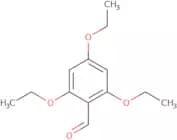
CAS:<p>3,5-Dichlorobenzaldehyde is an organic compound with the formula CHClO. It is a colorless liquid that smells like freshly cut grass. 3,5-Dichlorobenzaldehyde is used in organic synthesis as an electrophile for the preparation of substituted benzoquinones and other heterocycles. It is also used to prepare aromatic amines via aldol condensation with ketones. In addition, it can be used to generate azides from nitroarenes or nitroalkanes in the presence of sodium azide or potassium azide. Finally, it can be used to synthesize molybdenum compounds such as molybdic acid and ammonium molybdate.</p>Formula:C7H4Cl2OPurity:Min. 95%Color and Shape:PowderMolecular weight:175.01 g/molPhloroglucinol aldehyde triethyl ether
CAS:<p>Phloroglucinol aldehyde triethyl ether is a high quality, research chemical, speciality chemical and versatile building block. It is used in the synthesis of complex compounds that are useful as intermediates or fine chemicals. The CAS No. for this compound is 59652-88-9.</p>Formula:C13H18O4Purity:Min. 95%Molecular weight:238.28 g/mol3-Methoxy-2-nitrobenzaldehyde
CAS:<p>3-Methoxy-2-nitrobenzaldehyde is a synthetic compound that has been used in the industrial process of synthesizing other compounds. It is a nucleophilic compound, which means it can react with electrophiles to form new bonds. 3-Methoxy-2-nitrobenzaldehyde is also an oriented molecule, meaning that when it reacts with an electrophile, the resulting product can be determined by the orientation of the molecules. The rate of this reaction depends on how many functional groups are present and the presence of catalysts. 3-Methoxy-2-nitrobenzaldehyde is fluorescent, so it will emit light in a spectroscopic experiment. It has six functional groups which are all nucleophilic and capable of participating in reactions with other molecules. Catalytic rates for this reaction depend on concentration and temperature, as well as the number of chlorine atoms and polydentate ligands present in solution.</p>Formula:C8H7NO4Purity:Min. 95%Color and Shape:Slightly Yellow PowderMolecular weight:181.15 g/mol5-(4-Chlorophenyl)-2-furaldehyde
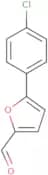
CAS:<p>5-(4-Chlorophenyl)-2-furaldehyde (5-CPFA) is an antitubercular drug that inhibits the growth of tuberculosis bacteria by disrupting the synthesis of DNA. It is a functional theory that 5-CPFA inhibits the bacterial enzyme, chalcone hydroxylase, which is involved in the conversion of chalcones to flavones. This inhibition prevents the formation of reactive oxygen species and leads to cell death. The mechanism of action for 5-CPFA has been shown to be due to its ability to form covalent bonds with metal ions such as copper, zinc, and iron. When exposed to ultraviolet radiation, this compound reacts with these metal ions and causes bond cleavage in DNA strands. The resulting damage in DNA strands leads to cell death within hours.</p>Formula:C11H7ClO2Purity:Min. 95%Color and Shape:PowderMolecular weight:206.62 g/mol3-Bromo-5-chloro-2-hydroxybenzaldehyde
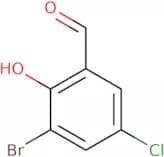
CAS:<p>3-Bromo-5-chloro-2-hydroxybenzaldehyde is a molecule that contains nitrogen atoms. It has coordination geometry and a chelate ring. 3-Bromo-5-chloro-2-hydroxybenzaldehyde also has electrochemical properties, which can be studied by cyclic voltammetry. This molecule is a copper complex that exhibits fluorescence properties and dihedral angles. The magnetic resonance spectrum of 3-bromo-5-chloro-2 hydroxybenzaldehyde displays hydrogen bonding interactions and an imine nitrogen. 3BChBrOH also absorbs light at wavelengths of 280 nm (max) and 240 nm (min).</p>Formula:C7H4BrClO2Purity:Min. 95%Color and Shape:PowderMolecular weight:235.46 g/mol1-Naphthaldehyde
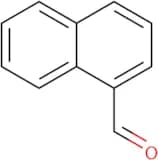
CAS:<p>1-Naphthaldehyde is a coordination compound that contains 1 naphthyl group and an oxygen atom. It can be used as an oxidation catalyst, intramolecular hydrogen, or a reaction solution. The antimicrobial activity of 1-naphthaldehyde has been shown in the presence of sodium carbonate or potassium phosphate buffer. 1-Naphthaldehyde has been shown to possess structural properties similar to those of other metal chelates, such as zinc pyrithione. The protonated form of 1-naphthaldehyde has been identified by means of analytical methods including gas chromatography and mass spectrometry.</p>Formula:C11H8OPurity:Min. 95%Color and Shape:Yellow To Brown LiquidMolecular weight:156.18 g/mol2,6-Dimethyl-4-fluorobenzaldehyde
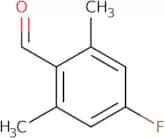
CAS:<p>2,6-Dimethyl-4-fluorobenzaldehyde is a fine chemical that is used as a building block in the synthesis of other chemicals. It can be used as a reagent and as a speciality chemical. This product has high purity and quality and is versatile in its use as both an intermediate or scaffold molecule. It can be used in reactions to create complex compounds with useful properties.</p>Formula:C9H9FOPurity:Min. 95%Color and Shape:PowderMolecular weight:152.17 g/mol2,6-Dihydroxybenzaldehyde
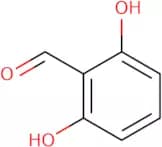
CAS:<p>2,6-Dihydroxybenzaldehyde is a chemical compound that has been used as an intermediate in the synthesis of other chemicals. It is also used as a precursor for benzaldehyde and benzoic acid. 2,6-Dihydroxybenzaldehyde can be synthesized by reacting sodium carbonate with pluronic F127 in the presence of cationic surfactant. The surface methodology used in this process involves the use of hydrophobic molecules to form micelles and liposomes on the surface of the electrode. The interaction between these micelles and liposomes is pH dependent. This reaction causes an increase in hydrogen ions, which leads to an increase in conductivity at acidic pH values. Electrochemical impedance spectroscopy (EIS) results show that 2,6-dihydroxybenzaldehyde reacts with high concentrations of salt and water vapor. FTIR spectroscopy shows that it has two hydroxyl groups and one double</p>Formula:C7H6O3Purity:Min. 95%Color and Shape:PowderMolecular weight:138.12 g/mol4-Benzyloxy-3-methoxybenzaldehyde
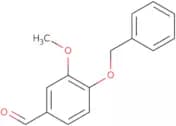
CAS:<p>4-Benzyloxy-3-methoxybenzaldehyde is a deuterium isotope analog of the natural compound benzaldehyde. This molecule has been shown to inhibit the growth of cancer cells in tissue culture by binding to DNA. The molecular mechanism of this inhibition is believed to involve an enzymatic process that results in the substitution of chloride for chlorine, thereby inhibiting DNA synthesis and preventing cell division. 4-Benzyloxy-3-methoxybenzaldehyde also inhibits the production of growth factors and thus has anticancer activity.</p>Formula:C15H14O3Purity:Min. 95%Color and Shape:PowderMolecular weight:242.27 g/mol3-Methoxy-4-methylbenzaldehyde
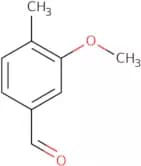
CAS:<p>3-Methoxy-4-methylbenzaldehyde is a chemical compound that belongs to the class of phenylpropanoids. It has been shown to have a variety of uses, including as a drug substance and in natural products. 3-Methoxy-4-methylbenzaldehyde can be used for labeling, mass spectrometric detection, physicochemical techniques, and chromatographic science. The compound can be detected using electron ionization, mass spectrometric detection, or chromatographic science. Isomers of this compound are often difficult to identify due to the presence of other similar compounds.</p>Formula:C9H10O2Purity:Min. 95%Color and Shape:PowderMolecular weight:150.17 g/mol2-Fluoro-6-methoxybenzaldehyde
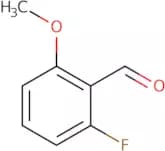
CAS:<p>2-Fluoro-6-methoxybenzaldehyde is a quinone that is used as an intermediate in the synthesis of other organic compounds. It has been shown to be a competitive inhibitor of malonate-induced fibrillation in heart muscle and also slows the reaction time. The pharmacokinetic properties of 2-fluoro-6-methoxybenzaldehyde have been evaluated in dogs, rats, and rabbits. In all three species, 2-fluoro-6-methoxybenzaldehyde showed no significant accumulation in any tissue after intravenous injection and was rapidly excreted unchanged in urine. 2-Fluoro-6-methoxybenzaldehyde may have some potential as an antihypertensive agent due to its ability to reduce blood pressure in rabbits.</p>Formula:C8H7FO2Purity:Min. 95%Color and Shape:PowderMolecular weight:154.14 g/mol5-Bromo-3,4-dihydroxybenzaldehyde
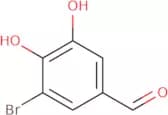
CAS:<p>5-Bromo-3,4-dihydroxybenzaldehyde (5BDBA) is a chemical compound that can be used as a reactive dye and photochemical crosslinker in the preparation of polymers. 5BDBA has been shown to have chemoattractant properties for immune cells, such as activated T lymphocytes and neutrophils. It also has been shown to have an effect on β-cells in the pancreas and skin cells. This compound has been found to activate the nuclear factor kappa-light-chain enhancer (NFκB), which leads to increased expression of chemoattractant protein (MCP). In 3T3-L1 preadipocytes, 5BDBA has been shown to induce accumulation of fatty acids by activating peroxisome proliferator activator receptor gamma.</p>Formula:C7H5BrO3Purity:Min. 95%Color and Shape:Yellow PowderMolecular weight:217.02 g/molTerephthaldicarboxaldehyde
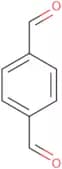
CAS:<p>Terephthaldicarboxaldehyde is a white crystalline solid that has been shown to be soluble in hydrogen fluoride, water vapor, and sodium salts. It is also insoluble in water. Langmuir adsorption isotherm experiments have shown that the solubility of terephthaldicarboxaldehyde increases with increasing concentration of chitosan polymer. Terephthaldicarboxaldehyde has been used as an analytical method for p-hydroxybenzoic acid (PHBA) and terephthalic acid (TPA). It can also be used as a fluorescent probe to detect the presence of these compounds in aqueous solutions.</p>Formula:C8H6O2Purity:Min. 95%Color and Shape:PowderMolecular weight:134.13 g/mol2-Chloro-6-fluorobenzaldehyde oxime
CAS:<p>2-Chloro-6-fluorobenzaldehyde oxime is the chemical compound with the formula ClCH=C(O)N(OH)Cl. It is a white solid that is soluble in water and ethanol. 2-Chloro-6-fluorobenzaldehyde oxime is used as a versatile building block in organic synthesis, for example as a reagent for the preparation of amides, esters, and nitriles. It is also useful as a reagent for the conversion of ketones to nitriles.</p>Formula:C7H5ClFNOPurity:Min. 95%Molecular weight:173.57 g/mol4-(Dimethylamino)benzaldehyde
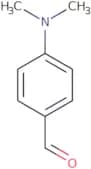
CAS:<p>4-(Dimethylamino)benzaldehyde (4DMAB) is an analytical reagent used to identify sulfa drugs. It has been shown to react with sulfonamides by the formation of a complex ion, which can be detected by analytical methods such as electrochemical impedance spectroscopy or ultraviolet spectroscopy. 4DMAB has also been studied for its anticarcinoid properties. The carcinoid syndrome is characterized by a tumor that releases serotonin and other substances into the bloodstream, causing severe diarrhea, flushing, and bronchial spasms. Studies have shown that 4DMAB inhibits the release of serotonin in this condition. As a result, it may be effective against carcinoid syndrome.</p>Formula:C9H11NOPurity:Min. 95%Color and Shape:White Slightly Yellow PowderMolecular weight:149.19 g/mol4-Ethoxy-3-hydroxybenzaldehyde
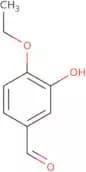
CAS:<p>4-Ethoxy-3-hydroxybenzaldehyde (4EHB) is a thioacetal that has been shown to be an effective precursor for the synthesis of many other molecules, such as combretastatin a-4. It is prepared by reaction of ethylmagnesium bromide and acetone. 4EHB has been shown to have antifungal properties in vitro, and can be used in the treatment of cancer cells. This compound is volatile and can be easily detected with headspace techniques. The functional group of this molecule is an alcohol group, which is found on the ring structure. Spectroscopic analysis shows that it has a carbonyl group with an OH group attached to it.</p>Formula:C9H10O3Purity:Min. 95%Color and Shape:Colorless PowderMolecular weight:166.17 g/mol2-Benzyloxy-3-methoxybenzaldehyde
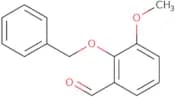
CAS:<p>2-Benzyloxy-3-methoxybenzaldehyde is an enantiopure compound that has been shown to have antiproliferative effects on cancer cells. It was also found to have a strong binding affinity for DNA and protein. The antiproliferative effects of 2-Benzyloxy-3-methoxybenzaldehyde were found to be due to its ability to bind to dna and inhibit the enzyme activity of pyrazine-2-carboxylic acid, leading to a decrease in the production of proteins vital for cell division. 2-Benzyloxy-3-methoxybenzaldehyde has been shown to have anticancer activity against colorectal cancer cells and may serve as a lead compound for future drug development.</p>Formula:C15H14O3Purity:Min. 95%Molecular weight:242.27 g/mol5-Carboxyvanillin
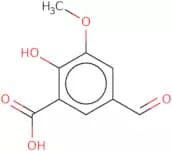
CAS:<p>5-Carboxyvanillin is the oxidation product of isoeugenol and p-hydroxybenzoic acid. It can be produced by reacting these two compounds with a peroxide in an oxidizing reaction. The reaction products include 5-carboxyvanillic acid, which can be hydrolyzed to vanillin. 5-Carboxyvanillin is a white crystalline solid with a chemical nature similar to that of vanillin. It has been shown to have antimicrobial properties against tissues, such as guinea pig ileum and rat liver, but not against bacterial cultures. This compound may also be used in pulping processes for the production of paper or cellulose fibers.</p>Formula:C9H8O5Purity:Min. 95%Color and Shape:PowderMolecular weight:196.16 g/mol