Aldehydes
Aldehydes are organic compounds containing a carbonyl group (C=O) bonded to at least one hydrogen atom. These versatile compounds are fundamental in various chemical reactions, including oxidation, reduction, and nucleophilic addition. Aldehydes are essential building blocks in the synthesis of pharmaceuticals, fragrances, and polymers. At CymitQuimica, we provide a diverse selection of high-quality aldehydes to support your research and industrial applications.
Found 8551 products of "Aldehydes"
Sort by
Purity (%)
0
100
|
0
|
50
|
90
|
95
|
100
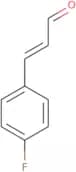
4-Fluorocinnamaldehyde
CAS:<p>4-Fluorocinnamaldehyde is a reactive molecule that can be used in the catalytic asymmetric synthesis of 4-fluoroalkylbenzenes, which are used as intermediates in the production of pharmaceuticals. It reacts with hydroxymethyl groups to form 4-fluoroalkylbenzene derivatives, which are substrates for asymmetric reactions. This compound has been shown to react with amines and thiols to form Michael acceptors and Michael donors respectively. The crystallographic data obtained from this molecule shows that it belongs to space group P2 and its crystal system is orthorhombic. It also has optical properties that make it suitable for use as an optical material or nanowires.</p>Formula:C9H7FOPurity:Min. 80%Color and Shape:Clear LiquidMolecular weight:150.15 g/mol3-Hydroxy-4-methylbenzaldehyde
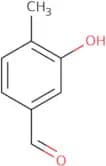
CAS:<p>3-Hydroxy-4-methylbenzaldehyde is a chemical that is synthesized from 3-hydroxy-4-methylphenol and dimethylformamide. It has been shown to interact with aluminium, which may be due to its ability to form a 1:1 complex with the metal. 3-Hydroxy-4-methylbenzaldehyde also exhibits electrochemical methods and isomers with other aldehydes. This chemical can be used in gas chromatography/mass spectrometry (GCMS) as an internal standard for fatty acid analysis.</p>Formula:C8H8O2Purity:Min. 95%Color and Shape:White PowderMolecular weight:136.15 g/mol3-Hydroxy-5-nitrobenzaldehyde
CAS:<p>3-Hydroxy-5-nitrobenzaldehyde is a solvent that has been used as a probe to measure chloride concentration in multimedia. It can be used as a sensor and an algorithm to detect the colorimetric change of 3-hydroxy-5-nitrobenzaldehyde in the presence of chloride ions. This probe is also used in colorimetric tests for linker, nonpolar, and surfactant compounds. The 3-hydroxy-5-nitrobenzaldehyde oxime can be cleaved by UV light to produce an unstable nitronium ion that reacts with metal ions such as copper(II) or silver(I) to form an insoluble precipitate.</p>Formula:C7H5NO4Purity:Min. 95%Color and Shape:PowderMolecular weight:167.12 g/mol3-Ethoxysalicylaldehyde
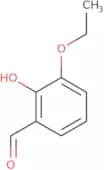
CAS:<p>3-Ethoxysalicylaldehyde (3ESA) is a colorless liquid that has been shown to be soluble in methanol. 3ESA has a molecular weight of 172.2 and an experimental solubility data of 1.01 g/mL at 25 °C. The compound has a coordination geometry of tetrahedral with one metal ion and three oxygen atoms. The compound also contains one hydroxyl group and two hydrogen bonds, which are intramolecular hydrogen bonds. 3ESA has shown high resistance to human serum, suggesting that it is stable in the presence of human proteins, and is able to bind copper ions to form copper complexes.</p>Formula:C9H10O3Purity:Min. 95%Color and Shape:PowderMolecular weight:166.17 g/mol2-Fluoro-1-naphthalenecarboxaldehyde
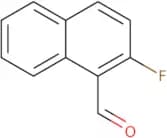
CAS:<p>2-Fluoro-1-naphthalenecarboxaldehyde is a high quality, complex compound that can be used as a versatile building block in the synthesis of many different compounds. As a reagent, it is used for the conversion of alcohols to ketones, esters to acid chlorides and amides to nitriles. It is also an intermediate in the synthesis of other chemicals such as 2-fluoronaphthalene, 2-(2-fluoroethyl)naphthalene, 1H-indole-2-carboxylic acid, and 3-(2-fluoropropyl)benzothiazole.</p>Formula:C11H7FOPurity:Min. 95%Color and Shape:PowderMolecular weight:174.17 g/mol5-Fluoro-2-hydroxybenzaldehyde
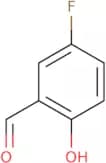
CAS:<p>5-Fluoro-2-hydroxy benzaldehyde is a hydrogen bonding compound that has been shown to be an acid complex. It reacts with copper to form a copper complex that can be detected by x-ray diffraction data. 5-Fluoro-2-hydroxybenzaldehyde also has the ability to react with hydroxyl groups, which allow for its use as a fluorescence probe. The presence of this compound in urine has been used to detect kidney disease and urinary tract infections. 5-Fluoro-2-hydroxybenzaldehyde is also thought to have antiinflammatory properties because it can inhibit kinase activity and may inhibit the production of inflammatory cytokines such as IL1β, IL6, and TNFα.</p>Formula:C7H5FO2Purity:Min. 95%Color and Shape:PowderMolecular weight:140.11 g/mol5-Benzyloxyindole-3-carboxaldehyde
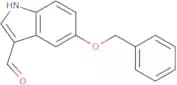
CAS:<p>5-Benzyloxyindole-3-carboxaldehyde is a merocyanine dye that can be used as an antimycobacterial agent in cell culture. It is also fluorescent and has been shown to inhibit the growth of Mycobacterium tuberculosis. 5-Benzyloxyindole-3-carboxaldehyde has been synthesised by reacting 5,5′-dibenzoyloxydihydropyrene with indole and benzaldehyde. The hydrolysis of this compound yields the corresponding carboxylic acid and benzoic acid, which are then converted to the desired product by action of sodium ethoxide. Merocyanine dyes are characterized by a distinctive absorption band in the visible region at about 540 nm. These compounds have also been shown to inhibit renal cells, which may be due to their ability to act as nucleophiles or tautomers.</p>Formula:C16H13NO2Purity:Min. 95%Color and Shape:Off-White PowderMolecular weight:251.28 g/mol2,4-Dimethoxy-5-methylbenzaldehyde
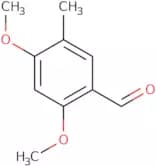
CAS:<p>2,4-Dimethoxy-5-methylbenzaldehyde is an aryl aldehyde that can be synthesized from 2,4-dimethoxyphenol and methyl benzoate. It can also be produced by condensation of benzaldehyde with chloroform in the presence of zinc chloride. This compound is used in the production of various pharmaceuticals, including antihistamines, antidepressants, and antipsychotics.</p>Formula:C10H12O3Purity:Min. 95%Color and Shape:PowderMolecular weight:180.2 g/mol3-Bromo-4-hydroxybenzaldehyde
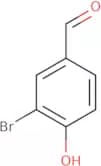
CAS:<p>3-Bromo-4-hydroxybenzaldehyde is a fluorescence probe that can be used to identify the presence of hydroxyl groups in organic solutions. It reacts with hydrochloric acid to form a green solution and a gas. 3-Bromo-4-hydroxybenzaldehyde has been used to study hydroxyl groups in human serum, plant physiology, and surfactant sodium dodecyl (SDS). This compound has shown potent inhibition against an enzyme called benzoyl peroxide reductase. 3-Bromo-4-hydroxybenzaldehyde is soluble in water, but not in ether. The molecular weight of this compound is 176.3 g/mol.</p>Formula:C7H5BrO2Purity:Min. 95%Color and Shape:PowderMolecular weight:201.02 g/mol3,5-Di-tert-butyl-2-hydroxy benzaldehyde
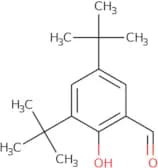
CAS:<p>3,5-Di-tert-butyl-2-hydroxy benzaldehyde is a molecule that has been shown to have inhibitory effects on cancer cells. It has been tested in vitro on carcinoma cell lines with promising results and shows the potential to be used as an anticancer agent. 3,5-Di-tert-butyl-2-hydroxy benzaldehyde inhibits the growth of cancer cells by binding to their DNA and preventing the synthesis of proteins. This drug is also effective against bacterial strains such as Escherichia coli, Salmonella typhimurium, Klebsiella pneumoniae, Pseudomonas aeruginosa, and Vibrio cholerae. 3,5-Di-tert-butyl-2-hydroxy benzaldehyde forms hydrogen bonds with nitrogen atoms that are present in the molecules of these bacteria. The intramolecular hydrogen bonding interactions between 3,5-di tert butyl 2 hydroxyben</p>Formula:C15H22O2Purity:Min. 95%Color and Shape:Off-White PowderMolecular weight:234.33 g/mol2-(2-Chlorophenyl)thiazole-4-carbaldehyde
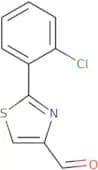
CAS:<p>Please enquire for more information about 2-(2-Chlorophenyl)thiazole-4-carbaldehyde including the price, delivery time and more detailed product information at the technical inquiry form on this page</p>Formula:C10H6ClNOSPurity:Min. 95%Color and Shape:PowderMolecular weight:223.68 g/mol2-Bromo-4,5-difluorobenzaldehyde
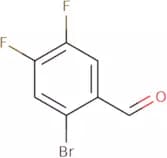
CAS:<p>2-Bromo-4,5-difluorobenzaldehyde is a chemical intermediate and speciality chemical. It is an important building block for the synthesis of organic compounds, such as pharmaceuticals and agrochemicals. This product is a versatile building block, which can be used in a wide range of reactions and is suitable for use as an intermediate or scaffold. It has high quality and complex structure that can be used to synthesize a number of different compounds.</p>Formula:C7H3BrF2OPurity:Min. 97%Color and Shape:PowderMolecular weight:221 g/mol2,6-Dichloro-3-nitrobenzaldehyde
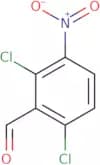
CAS:<p>2,6-Dichloro-3-nitrobenzaldehyde (DCNB) is an electrophilic bidentate ligand that reacts with chlorine to form chloroform. It is also a good ligand for many metal ions, such as copper and nickel. DCNB can catalyze the epoxidation of alkenes to form epoxides. DCNB has been used in the industrial production of chlorinated solvents and hydrocarbons. It is a very efficient reagent for formylation, which can be used to convert alcohols and amines into formyl groups or carboxylic acids. The DCN group is also an excellent leaving group, which makes it useful as a solvent in organic syntheses. Finally, DCNB reacts with chlorine atoms to produce chloride ions that are soluble in water and organic solvents.</p>Formula:C7H3Cl2NO3Purity:Min. 95%Molecular weight:220.01 g/mol4-Hydroxybutyraldehyde
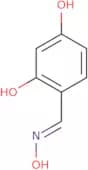
CAS:Controlled Product<p>4-Hydroxybutyraldehyde is a carbonyl group that contains a zirconium oxide fragment. It is acidic and can be used as an inhibitor of tumor cells. 4-Hydroxybutyraldehyde has been shown to deuterium isotope effect on the reaction mechanism. This chemical ionization process leads to the production of an H3+ cation, which reacts with the sample in order to produce a protonated product. The hydrogenated form of this molecule undergoes an addition reaction with butyrolactone, forming the desired product. The synthetic pathway for this molecule starts with metal carbonyl complexes, which react with nucleophiles such as ammonia or amines to produce 4-hydroxybutyraldehyde.</p>Formula:C4H8O2Purity:Min. 95%Color and Shape:Clear LiquidMolecular weight:88.11 g/molβ-Resorcylic aldehyde oxime
CAS:<p>beta-Resorcylic aldehyde oxime is a compound that can be used as a reagent, speciality chemical, and research chemical. It has the CAS number 5399-68-8, and it is a fine chemical that has been shown to be useful in organic synthesis. beta-Resorcylic aldehyde oxime is soluble in methanol, ethanol, benzene, diethyl ether, and acetone. This compound can be used as a building block for other compounds by reacting with amines or carboxylic acids. It can also be used as an intermediate for other reactions. beta-Resorcylic aldehyde oxime has been shown to have versatile properties that make it an excellent scaffold for creating new compounds.</p>Formula:C7H7NO3Molecular weight:153.14 g/mol4-Bromo-3,5-dimethylbenzaldehyde
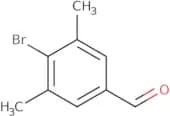
CAS:<p>4-Bromo-3,5-dimethylbenzaldehyde is an organic compound that contains a benzene ring with a bromine atom in the 4 position. It is used as a reagent and intermediate in organic synthesis. The compound can be converted to radical cations by reaction with electron-deficient alkylating agents such as methyl iodide or trimethylsilyl chloride. Radical cations are classified as reactive intermediates and have been shown to react with other organic compounds to form new products.</p>Formula:C9H9BrOPurity:Min. 95%Molecular weight:213.07 g/mol3-Fluoro-2-methoxybenzaldehyde
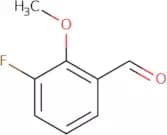
CAS:<p>3-Fluoro-2-methoxybenzaldehyde is a synthetic chemical that has been used as a precursor in the synthesis of pharmaceuticals and other organic compounds. 3-Fluoro-2-methoxybenzaldehyde can be prepared through the lithiation, chloromethylation, or trimethylation of 3-fluoroacetophenone. The compound can be oxidized to 3,4-dihydrobenzofuran with peroxide at low temperature. This conversion can be achieved using a variety of reagents, such as boron tribromide or boron trichloride.</p>Formula:C8H7FO2Purity:Min. 95%Color and Shape:Colorless PowderMolecular weight:154.14 g/mol4-Ethoxy-3-methoxybenzaldehyde
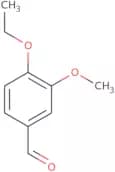
CAS:<p>4-Ethoxy-3-methoxybenzaldehyde is an organic compound that can be found in plants, such as in the leaves of the nutmeg plant. It is a cleavage product of 4-hydroxycoumarin. 4-Ethoxy-3-methoxybenzaldehyde is a dicarboxylic acid by substructure and it has been shown to be an intermediate in the synthesis of ethylene acetal and hydrogen peroxide. It is also postulated to react with chloride to form 4-chloroacetophenone and chloride ions, which are then reacted with hydrogen peroxide to form hydrochloric acid. The acute toxicity of this compound has not been determined but it may cause toxic effects on extracellular cells, such as radical species. The toxicities of 4-ethoxy-3-methoxybenzaldehyde have been observed in biphenyl which causes skin irritation, liver toxicity, kidney damage, and respiratory irritation</p>Formula:C10H12O3Purity:Min. 95%Color and Shape:PowderMolecular weight:180.2 g/mol3-Bromo-5-chloro-2-hydroxybenzaldehyde
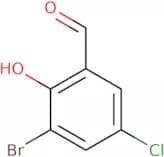
CAS:<p>3-Bromo-5-chloro-2-hydroxybenzaldehyde is a molecule that contains nitrogen atoms. It has coordination geometry and a chelate ring. 3-Bromo-5-chloro-2-hydroxybenzaldehyde also has electrochemical properties, which can be studied by cyclic voltammetry. This molecule is a copper complex that exhibits fluorescence properties and dihedral angles. The magnetic resonance spectrum of 3-bromo-5-chloro-2 hydroxybenzaldehyde displays hydrogen bonding interactions and an imine nitrogen. 3BChBrOH also absorbs light at wavelengths of 280 nm (max) and 240 nm (min).</p>Formula:C7H4BrClO2Purity:Min. 95%Color and Shape:PowderMolecular weight:235.46 g/mol1-Naphthaldehyde
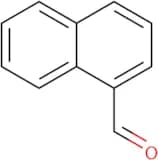
CAS:<p>1-Naphthaldehyde is a coordination compound that contains 1 naphthyl group and an oxygen atom. It can be used as an oxidation catalyst, intramolecular hydrogen, or a reaction solution. The antimicrobial activity of 1-naphthaldehyde has been shown in the presence of sodium carbonate or potassium phosphate buffer. 1-Naphthaldehyde has been shown to possess structural properties similar to those of other metal chelates, such as zinc pyrithione. The protonated form of 1-naphthaldehyde has been identified by means of analytical methods including gas chromatography and mass spectrometry.</p>Formula:C11H8OPurity:Min. 95%Color and Shape:Yellow To Brown LiquidMolecular weight:156.18 g/mol