Aldehydes
Aldehydes are organic compounds containing a carbonyl group (C=O) bonded to at least one hydrogen atom. These versatile compounds are fundamental in various chemical reactions, including oxidation, reduction, and nucleophilic addition. Aldehydes are essential building blocks in the synthesis of pharmaceuticals, fragrances, and polymers. At CymitQuimica, we provide a diverse selection of high-quality aldehydes to support your research and industrial applications.
Found 8540 products of "Aldehydes"
Sort by
Purity (%)
0
100
|
0
|
50
|
90
|
95
|
100
Methoxyacetaldehyde diethyl acetal
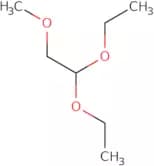
CAS:<p>Methoxyacetaldehyde diethyl acetal is a viscous liquid with a low vapor pressure. This substance is stable at high temperatures and has a high resistance to chemical interactions. It is also hydrophobic in nature. Methoxyacetaldehyde diethyl acetal has been shown to interact with the aminoglycoside antibiotics, erythromycin, streptomycin, and neomycin. The interaction of this substance with these antibiotics may be due to the fact that it has proton resonances similar to those of amino acids, as well as its ability to form hydrogen bonds with the antibiotic molecules. Methoxyacetaldehyde diethyl acetal also interacts with triethyl orthoformate, which can lead to the formation of an ester bond between them.</p>Formula:C7H16O3Purity:Min. 95%Color and Shape:Colorless Clear LiquidMolecular weight:148.2 g/mol2,4-Dichlorobenzaldehyde
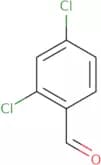
CAS:<p>2,4-Dichlorobenzaldehyde is a compound that is a member of the class of phenylpropanoids. It has been shown to react with curcumin analogues to form 1,3-dichloro-2,4-bis(chloromethyl)benzene and 1,3-dichloro-2,4-(1′,2′-dichloroethoxy)benzene. These products have been found to have high values for fluorescence analysis. This molecule also has physiological effects as a growth regulator and antimicrobial agent. 2,4-Dichlorobenzaldehyde has been used in analytical methods such as dihedral angle determination and synthetic processes like the synthesis of benzaldehydes.</p>Formula:C7H4Cl2OPurity:Min. 95%Color and Shape:PowderMolecular weight:175.01 g/mol4-Acetoxybenzaldehyde
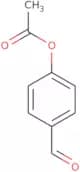
CAS:<p>4-Acetoxybenzaldehyde is a compound with an acetyl group attached to the benzene ring. It is potentially toxic to cells and has been shown to produce reactive oxygen species (ROS) in v79 cells, which can lead to cell death. The biological properties of 4-acetoxybenzaldehyde are not well understood, but it has been shown to have antioxidant properties in other studies. This compound also reacts with amines, forming acetamides and amides. 4-Acetoxybenzaldehyde is found in environmental pollution as a result of its presence in the atmosphere and its use as a solvent. It was first synthesized by the reaction of coumaric acid and acetyl chloride with formaldehyde at reflux temperature. The compound can be purified by chromatographic methods or mass spectrometric analysis.</p>Formula:C9H8O3Purity:Min. 95%Color and Shape:LiquidMolecular weight:164.16 g/molBiotinyl-Asp-Glu-Val-Asp-aldehyde (pseudo acid)
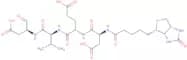
CAS:<p>Biotinyl-Asp-Glu-Val-Asp-aldehyde (pseudo acid) is a biotinylated amino acid, which can be used to study the affinity of caspases and other proteases. Biotin binds to the peptide through an amide bond and the amino group on the biotin molecule reacts with reactive groups on proteins, such as lysine, cysteine, histidine, or arginine. This reaction leads to the formation of a stable link between biotin and the target protein. The biotinylated peptide can then be purified from a sample by using an affinity chromatography column that has been pre-coated with streptavidin.<br>Biotin is not toxic because it does not bind to DNA.</p>Formula:C28H42N6O12SPurity:Min. 95%Molecular weight:686.73 g/molZ-Leu-Leu-4,5-dehydro-Leu-aldehyde
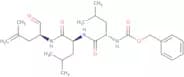
CAS:<p>Please enquire for more information about Z-Leu-Leu-4,5-dehydro-Leu-aldehyde including the price, delivery time and more detailed product information at the technical inquiry form on this page</p>Formula:C26H39N3O5Purity:Min. 95%Molecular weight:473.61 g/mol2-Bromo-5-chlorobenzaldehyde
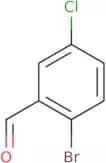
CAS:<p>2-Bromo-5-chlorobenzaldehyde is an industrial chemical that is used as a precursor for the production of other chemicals. It can be synthesized by reacting 3-chlorobenzaldehyde with sodium bromide in the presence of a catalyst. 2-Bromo-5-chlorobenzaldehyde has been shown to have high reactivity, and can be used as a catalyst to produce large amounts of organic compounds. This chemical can also be produced in large quantities by neutralizing alkalis with acid, which is an effective way to dispose of these hazardous substances.</p>Formula:C7H4BrClOPurity:Min. 95%Molecular weight:219.46 g/mol(S,S,S)-Enalapril maleate
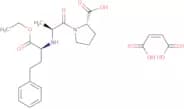
CAS:<p>Prodrug of ACE inhibitor MK-422</p>Formula:C24H32N2O9Purity:Min. 95%Color and Shape:White PowderMolecular weight:492.52 g/molAc-Tyr-Val-Lys-Asp-aldehyde (pseudo acid)
CAS:<p>Ac-Tyr-Val-Lys-Asp-aldehyde is a synthetic compound that can be used to study the apoptotic process. It is an aldehyde and has been found to activate caspases, aspartyl proteases, at high concentrations. This pseudo acid also has a significant activation of n-terminal protein kinase (SB203580) when irradiated with UV light. Ac-Tyr-Val-Lys-Asp-aldehyde can be used as a marker for the apoptotic process because it is synthesized by cells during this process. In addition, it has been shown to produce a red color during staining and can be detected using immunohistochemical techniques.</p>Formula:C26H39N5O8Purity:Min. 95%Molecular weight:549.62 g/molFormaldehyde-13C solution
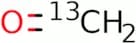
CAS:<p>20% by weight in water. 98 atom % 13C</p>Formula:H13CHOPurity:Min. 95%Molecular weight:42.12 g/molCell-permeable Caspase-1 Inhibitor I trifluoroacetate salt
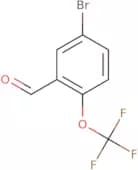
CAS:<p>Please enquire for more information about Cell-permeable Caspase-1 Inhibitor I trifluoroacetate salt including the price, delivery time and more detailed product information at the technical inquiry form on this page</p>Formula:C97H160N20O24Purity:Min. 95%Molecular weight:1,990.43 g/mol5-Bromo-2-(trifluoromethoxy)benzaldehyde
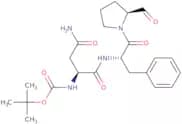
CAS:<p>5-Bromo-2-(trifluoromethoxy)benzaldehyde is a chemical that is used as a reactant in organic chemistry. It can be used as a building block for the synthesis of complex compounds, or as an intermediate in the preparation of fine chemicals. 5-Bromo-2-(trifluoromethoxy)benzaldehyde is also useful in research and development. It has been used to synthesize pharmaceuticals, pesticides, and other organic compounds.</p>Formula:C8H4BrF3O2Purity:Min. 95%Color and Shape:PowderMolecular weight:269.02 g/molBoc-Asn-Phe-Pro-aldehyde
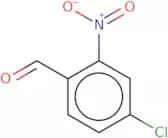
CAS:<p>Boc-Asn-Phe-Pro-aldehyde is a cytosolic proteolytic target enzyme that hydrolyzes peptides with an aliphatic amino acid residue at the carboxy terminus. It is localized in the cytoplasm, where it is activated by serine proteases. Boc-Asn-Phe-Pro-aldehyde has been shown to be effective in cell culture and supernatant. This enzyme can also be used to demonstrate the presence of a particular peptide by releasing a reactive chloride, which can be detected using tetrazolium chloride. This protease has been shown to exacerbate inflammation when administered in vivo.</p>Formula:C23H32N4O6Purity:Min. 95%Molecular weight:460.52 g/mol4-Chloro-2-nitrobenzaldehyde
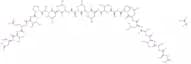
CAS:<p>4-Chloro-2-nitrobenzaldehyde is a reactive intermediate that has been used to investigate the reaction mechanism of protonation. It is an n-oxide and has been shown to react with calcium carbonate under acidic conditions, forming a stable product. 4-Chloro-2-nitrobenzaldehyde has also been used in the synthesis of amides and nitro compounds. This compound possesses two functional groups, which are a nitro group and a chloro group on the aromatic ring.</p>Formula:C7H4ClNO3Purity:Min. 95%Color and Shape:PowderMolecular weight:185.56 g/molAc-Ala-Ala-Val-Ala-Leu-Leu-Pro-Ala-Val-Leu-Leu-Ala-Leu-Leu-Ala-Pro-Ile-Glu-Thr-Asp-aldehyde trifluoroacetate salt
CAS:<p>Please enquire for more information about Ac-Ala-Ala-Val-Ala-Leu-Leu-Pro-Ala-Val-Leu-Leu-Ala-Leu-Leu-Ala-Pro-Ile-Glu-Thr-Asp-aldehyde trifluoroacetate salt including the price, delivery time and more detailed product information at the technical inquiry form on this page</p>Formula:C95H162N20O26Purity:Min. 95%Molecular weight:2,000.42 g/molZ-Ile-Glu(OtBu)-Ala-Leu-aldehyde
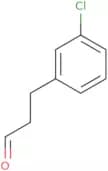
CAS:<p>Z-Ile-Glu(OtBu)-Ala-Leu-aldehyde, also known as ZILEAL, is a potent immunosuppressant that binds to the Toll-like receptor (TLR) and inhibits NF-κB binding activity. It has been shown to reduce the activation of macrophages by inhibiting the production of proinflammatory cytokines such as tumor necrosis factor alpha (TNFα), IL-1β, and IL-6. This drug has been shown to inhibit HIV replication in vitro and was also found to have an antiviral effect against herpes simplex virus type 1 in vivo. ZILEAL also inhibits dsDNA binding activity, which may have potential applications in cancer treatment.</p>Formula:C32H50N4O8Purity:Min. 95%Molecular weight:618.76 g/mol3-(3-Chlorophenyl)propionaldehyde
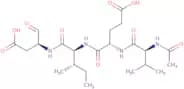
CAS:<p>Please enquire for more information about 3-(3-Chlorophenyl)propionaldehyde including the price, delivery time and more detailed product information at the technical inquiry form on this page</p>Formula:C9H9ClOPurity:Min. 95%Molecular weight:168.62 g/molAc-Val-Glu-Ile-Asp-aldehyde (pseudo acid)
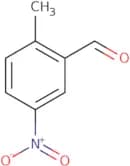
CAS:<p>Ac-Val-Glu-Ile-Asp-aldehyde is a pseudo acid that has been shown to induce apoptotic cell death in cultured cells. It is localized in the cerebellar granule and mitochondria of HL-60 cells and HK-2 cells. Ac-Val-Glu-Ile-Asp-aldehyde induces necrotic cell death when it binds to the serine protease zymogen, which is localized in the mitochondrial membrane. It also induces apoptosis by disrupting the mitochondrial membrane potential, leading to a release of cytochrome c into the cytosol. Ac-Val-Glu-Ile-Asp-aldehyde can bind to annexin and tubule cells, which are important for β cell function.</p>Formula:C22H36N4O9Purity:Min. 95%Molecular weight:500.54 g/mol2-Methyl-5-nitrobenzaldehyde
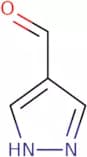
CAS:<p>2-Methyl-5-nitrobenzaldehyde is a nitro compound that is used in the synthesis of dobutamine. It has been shown to undergo rearrangements, with the formation of 2-methyl-5-nitrophenol. Kinetic studies have shown that chlorine can be substituted for hydrogen at the 2 position, and this substitution leads to an increase in reactivity. 2-methyl-5-nitrobenzaldehyde also reacts with dopamine to form a ketone. The hydroxy group on this molecule is nucleophilic and can attack electrophiles, making it useful as an active site for synthetic reactions. This compound is also pyrophoric, which means it will spontaneously ignite in air and burn until all its fuel is consumed.</p>Formula:C8H7NO3Purity:Min. 95%Color and Shape:Off-White PowderMolecular weight:165.15 g/mol1H-Pyrazole-4-carbaldehyde
CAS:<p>1H-Pyrazole-4-carbaldehyde is a chemical compound that inhibits the growth of bacteria by binding to the enzyme ribonucleotide reductase. It has been shown to have significant antifungal activity against Candida albicans and Saccharomyces cerevisiae, as well as in vitro antifungal activity against other fungi. The 1H-pyrazole-4-carbaldehyde has also been found to inhibit xanthine oxidase and nitric oxide synthase (NOS) in vitro and in vivo, which may be due to its ability to reduce oxidative stress. This chemical compound is a coumarin derivative and contains a pyrazole ring.</p>Formula:C4H4N2OPurity:Min. 95%Color and Shape:White PowderMolecular weight:96.09 g/molZ-Leu-Leu-Tyr-a-keto aldehyde
CAS:<p>Please enquire for more information about Z-Leu-Leu-Tyr-a-keto aldehyde including the price, delivery time and more detailed product information at the technical inquiry form on this page</p>Formula:C30H39N3O7Purity:Min. 95%Molecular weight:553.65 g/mol