Aldehydes
Found 8576 products of "Aldehydes"
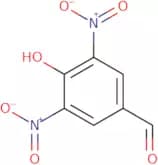
3,5-Dinitro-4-hydroxybenzaldehyde
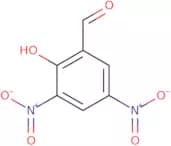
CAS:Please enquire for more information about 3,5-Dinitro-4-hydroxybenzaldehyde including the price, delivery time and more detailed product information at the technical inquiry form on this pageFormula:C7H4N2O6Purity:Min. 95%Color and Shape:PowderMolecular weight:212.12 g/mol3,5-Dinitrosalicylaldehyde
CAS:3,5-Dinitrosalicylaldehyde is an oxidizing agent that is used in organic chemistry to produce aldehydes or carboxylic acids. It reacts with the amino groups of lysine residues and converts them to nitro groups. 3,5-Dinitrosalicylaldehyde is also used as a reagent in the determination of the number of lysine residues in proteins by titration with hydrochloric acid. The reaction mechanism of 3,5-dinitrosalicylaldehyde involves formation of an electron deficient intermediate that oxidizes chloride ions to form water molecules and chloride radicals. These intermediates react with nitro groups on lysine residues, resulting in nitro compounds. Crystallography studies have shown that the molecular structure of 3,5-dinitrosalicylaldehyde has two nitro groups and one hydroxyl group.
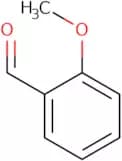
Formula:C7H4N2O6Purity:Min. 95%Color and Shape:Yellow PowderMolecular weight:212.12 g/molo-Anisaldehyde
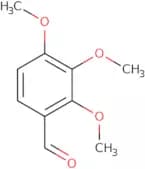
CAS:o-Anisaldehyde is a chemical compound that has the molecular formula CH3CHO. It is an aromatic compound that contains a hydroxyl group (-OH) bonded to a benzene ring. o-Anisaldehyde is soluble in water and reacts with copper chloride to form copper (II) o-anisate, which can be used as a reagent for oxidation reactions. It also forms coordination compounds with metal ions like zinc and iron. The crystal structure of o-anisaldehyde has been determined by x-ray crystallography and shows that it contains two asymmetric carbon atoms, which are oriented in opposite directions. This molecule can be synthesized from phenol or catechol by heating them with an acidified solution of sodium nitrite in ethanol. The reaction mechanism of this process involves the formation of an oxime intermediate followed by hydrolysis. The kinetics data of this reaction have been obtained using titration calorimetry and kinetic energy measurements show that the reactionFormula:C8H8O2Purity:Min. 95%Color and Shape:PowderMolecular weight:136.15 g/mol2,3,4-Trimethoxybenzaldehyde
CAS:2,3,4-Trimethoxybenzaldehyde is a hydroxylated aromatic compound that is used as a dietary supplement. It is found in the natural form of zirconium oxide and has been shown to have cancer-fighting properties. It has also been shown to be able to inhibit the growth of liver cancer cells in vitro and in vivo models. The mechanism of 2,3,4-trimethoxybenzaldehyde's ability to inhibit cancer growth is not fully understood but it may be due to its ability to react with reactive oxygen species and its ability to bind with methoxy groups and benzyl groups.
Formula:C10H12O4Purity:Min. 95%Color and Shape:PowderMolecular weight:196.2 g/mol3-Methoxybenzaldehyde
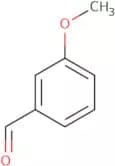
CAS:3-Methoxybenzaldehyde is a chemical compound that is used as an intermediate in the synthesis of organic compounds. This compound has shown to be a potent inhibitor of several enzymes, including diamine tetraacetic acid (DAT)-dependent aminotransferase, trimethyl amine N-oxide reductase, and hydrochloric acid hydrolases. 3-Methoxybenzaldehyde also inhibits the growth of hepg2 cells and induces apoptosis. The chemical structure of this compound contains a boron nitride group that can form hydrogen bonds with other molecules and fatty acids that can act as a substrate for oxidation reactions.
Formula:C8H8O2Purity:Min. 98 Area-%Color and Shape:Clear LiquidMolecular weight:136.15 g/mol2-(2-Bromoethyl)benzaldehyde
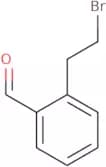
CAS:2-(2-Bromoethyl)benzaldehyde is an organic compound that is used in the synthesis of many other compounds. It is produced by the acetylation of 2-bromoethanol with acetic anhydride and hydrochloric acid. This reaction mechanism starts with the formation of a carbocation from the protonated bromine and ethylene, followed by nucleophilic attack by the acetate anion to form a tertiary alcohol. The final step involves elimination of bromine to give 2-(2-bromoethyl)benzaldehyde. Techniques such as basic hydrolysis or chiral resolution can be used to produce optically pure 2-(2-bromoethyl)benzaldehyde.Formula:C9H9BrOPurity:(%) Min. 80%Color and Shape:Clear LiquidMolecular weight:213.07 g/mol2-Hydroxy-3,4-dimethoxybenzaldehyde
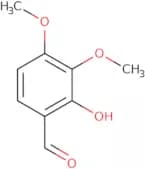
CAS:2-Hydroxy-3,4-dimethoxybenzaldehyde is a molecule that has an acidic character. It has been shown to be able to form a copper complex with good optical properties. A method using this compound as the monomer was found to be efficient for synthesizing polymers with size exclusion chromatography. 2-Hydroxy-3,4-dimethoxybenzaldehyde is a monocarboxylic acid that contains an aliphatic hydrocarbon and hydroxyl group. It can also act as a monomer in polymerization reactions and can be used in chemical structures such as multidrugs, which are made from large molecules of different types of atoms. The acid catalyst is required for these reactions to take place.Formula:C9H10O4Purity:Min. 95%Color and Shape:PowderMolecular weight:182.17 g/mol2,4-Difluoro-3-methylbenzaldehyde
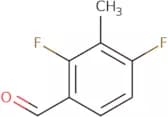
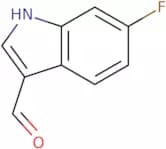
CAS:2,4-Difluoro-3-methylbenzaldehyde is a chemical compound that is used as a building block for the synthesis of other chemicals. It can be used as a research chemical or intermediate due to its versatility. 2,4-Difluoro-3-methylbenzaldehyde has a CAS number of 847502-88-9 and is classified as a speciality chemical with high quality. This compound may be useful in the synthesis of polymers and pharmaceuticals due to its ability to form covalent bonds with other molecules.Formula:C8H6F2OPurity:Min. 95%Color and Shape:Clear LiquidMolecular weight:156.13 g/mol6-Fluoroindole-3-carboxaldehyde
CAS:6-Fluoroindole-3-carboxaldehyde (6FLA) is a synthetic compound that inhibits biosynthesis of the phytoalexins salicylic acid and lignin in plants. It also inhibits the β-glucuronidase enzyme, which hydrolyzes the glucuronide conjugates of phenolic compounds and xenobiotics. 6FLA has been shown to cause mild liver damage in rats, but its effects on humans are unknown. 6FLA may be used as a detectable substance for assays.
Formula:C9H6FNOPurity:Min. 95%Molecular weight:163.15 g/molAtranol
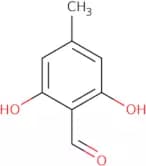
CAS:Atranol is a phenolic compound that is found in plants such as the leaves of the white willow tree. It has been shown to have anti-inflammatory properties and is being researched for its potential use in treatment of inflammatory bowel disease. Atranol has been shown to inhibit the production of inflammatory cytokines such as tumor necrosis factor-α (TNF-α) and interleukin-1β (IL-1β), which are key mediators of inflammation, by inhibiting NFκB activation. The reaction mechanism for atranol's inhibition of IL-1β production involves atranol binding with the cystein residue on IκB kinase β, which prevents phosphorylation and thus activation.
Formula:C8H8O3Purity:Min. 95%Color and Shape:Brown Yellow PowderMolecular weight:152.15 g/mol4-Hydroxybenzaldehyde
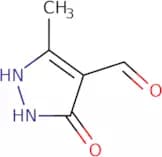
CAS:4-Hydroxybenzaldehyde is a phenolic compound that is produced in plants. 4-Hydoxybenzaldehyde is used as an extractant for sodium carbonate and hydroxyl group from acetate extract. The locomotor activity of animals was tested following administration of this substance, and it has been shown to have a high resistance against x-ray crystallography. The reaction mechanism for the formation of p-hydroxybenzoic acid from 4-hydroxybenzaldehyde has been proposed, which may be due to the oxidation of 4-hydroxybenzaldehyde by hydrogen peroxide. This reaction also induces apoptosis pathway in cells. Kinetic data for the reaction between 4-hydroxybenzaldehyde and hydrogen peroxide were obtained using UV spectroscopy.Formula:C7H6O2Purity:Min. 95%Color and Shape:White PowderMolecular weight:122.12 g/mol5-Hydroxy-3-methyl-1H-pyrazole-4-carbaldehyde
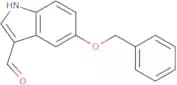
CAS:5-Hydroxy-3-methyl-1H-pyrazole-4-carbaldehyde is an organic compound that is used as a building block in the synthesis of a variety of complex compounds. It can be used as a reaction component and is also useful in the production of speciality chemicals. 5-Hydroxy-3-methyl-1H-pyrazole-4-carbaldehyde has been shown to form complexes with metals, such as copper, silver, and gold. These complexes are useful for research into catalytic reactions and electrochemistry. This chemical is also used in the production of pharmaceuticals, agrochemicals, and other high quality reagents.Formula:C5H6N2O2Purity:Min. 95%Color and Shape:PowderMolecular weight:126.11 g/mol5-Benzyloxyindole-3-carboxaldehyde
CAS:5-Benzyloxyindole-3-carboxaldehyde is a merocyanine dye that can be used as an antimycobacterial agent in cell culture. It is also fluorescent and has been shown to inhibit the growth of Mycobacterium tuberculosis. 5-Benzyloxyindole-3-carboxaldehyde has been synthesised by reacting 5,5′-dibenzoyloxydihydropyrene with indole and benzaldehyde. The hydrolysis of this compound yields the corresponding carboxylic acid and benzoic acid, which are then converted to the desired product by action of sodium ethoxide. Merocyanine dyes are characterized by a distinctive absorption band in the visible region at about 540 nm. These compounds have also been shown to inhibit renal cells, which may be due to their ability to act as nucleophiles or tautomers.
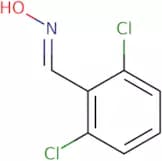
Formula:C16H13NO2Purity:Min. 95%Color and Shape:Off-White PowderMolecular weight:251.28 g/mol2,6-Dichlorobenzaldehyde oxime
CAS:2,6-Dichlorobenzaldehyde oxime is a synthetic molecule that is prepared by the reaction of triphenylphosphine oxide and halides. It is also known as aldoxime and has been used in a number of chemical reactions. 2,6-Dichlorobenzaldehyde oxime has been used in the synthesis of a variety of organic compounds, including toxicants and preservatives.
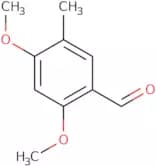
Formula:C7H5Cl2NOPurity:Min. 95 Area-%Color and Shape:White PowderMolecular weight:190.03 g/mol2,4-Dimethoxy-5-methylbenzaldehyde
CAS:2,4-Dimethoxy-5-methylbenzaldehyde is an aryl aldehyde that can be synthesized from 2,4-dimethoxyphenol and methyl benzoate. It can also be produced by condensation of benzaldehyde with chloroform in the presence of zinc chloride. This compound is used in the production of various pharmaceuticals, including antihistamines, antidepressants, and antipsychotics.Formula:C10H12O3Purity:Min. 95%Color and Shape:PowderMolecular weight:180.2 g/mol2-Naphthaldehyde oxime
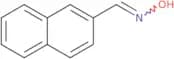
CAS:2-Naphthaldehyde oxime is a reactive aldoxime that can be used as an oxidant in organic chemistry. It is able to increase the rate of hydrolysis by acid catalysts, and has been shown to cause biomolecular damage due to its ability to react with functional groups such as amines and alcohols. 2-Naphthaldehyde oxime reacts with silicon, styrene, and polystyrene. The reaction produces carbon dioxide, hydrogen, and water. This product also has the capability of solvating organic compounds through the use of water molecules. Hypervalent oxidation reactions may occur with 2-naphthaldehyde oxime due to its ability to form multiple bonds with oxygen atoms.
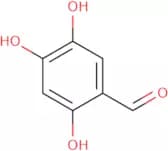
Formula:C11H9NOPurity:Min. 95%Color and Shape:PowderMolecular weight:171.2 g/mol2,4,5-Trihydroxybenzaldehyde
CAS:2,4,5-Trihydroxybenzaldehyde is a natural compound that has been shown to have significant cytotoxicity. It induces apoptosis by activating the caspase-mediated apoptotic pathway. 2,4,5-Trihydroxybenzaldehyde also modulates the cellular redox balance by increasing mitochondrial membrane potential and decreasing intracellular ATP levels. This compound has been shown to be effective against human leukemia HL-60 cells and colon cancer Caco-2 cells. 2,4,5-Trihydroxybenzaldehyde can be found in dietary sources such as ganoderma lucidum and may act as a chelate ligand for some growth factors.
Formula:C7H6O4Purity:80%Color and Shape:Yellow PowderMolecular weight:154.12 g/mol5-Cyanoindole-3-carboxaldehyde
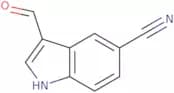
CAS:5-Cyanoindole-3-carboxaldehyde is an aldehyde that is used in synthesis of β-unsaturated aldehydes. It is prepared by the reaction of 3-cyanoindole with formaldehyde. 5-Cyanoindole-3-carboxaldehyde has antibacterial activity against gram positive and gram negative bacteria. It also has a high yield and can be purified by filtration or by condensation with chlorobenzene. 5-Cyanoindole-3-carboxaldehyde can be activated by irradiation, which makes it useful for the production of pharmaceuticals.Formula:C10H6N2OPurity:Min. 95%Molecular weight:170.17 g/mol7-Benzyloxindole-3-carboxaldehyde
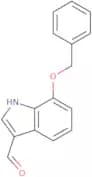
CAS:7-Benzyloxindole-3-carboxaldehyde (BXA) is an assembled molecule that can be synthesized in a scalable and catalytic manner. BXA is an unwanted product that arises from the reaction of 7-benzyloxyindole with adrenaline. The hydrogenolysis of BXA yields the enantiomeric 7-benzyloxyindole, which has been shown to possess anti-inflammatory properties. When debenzylated by hydrogenolysis, crystallization of the byproduct is observed.Formula:C16H13NO2Purity:Min. 95%Molecular weight:251.28 g/mol3-Cyanopropionaldehydedimethylacetal
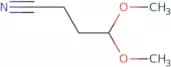
CAS:3-Cyanopropionaldehydedimethylacetal (3CPDMA) is a reactive compound that inhibits the proliferation of muscle cells. It has been shown to inhibit the synthesis of 3-hydroxy-3-methylglutaryl coenzyme A, which is required for the production of cholesterol and fatty acids. This inhibition leads to a decrease in the growth of cells and their ability to divide. 3CPDMA has also been shown to have an inhibitory effect on picolinic acid, which is involved in the activation of receptors that induce cellular proliferation. The inhibition of this receptor may be due to its ability to compete with other ligands for binding sites on the receptor. It has been shown that 3CPDMA acts as an antagonist against acarids, which are mites that feed on skin cells. This property may be due to its antagonistic effects on amino acid composition, which may affect calcium uptake by cells or cell membrane permeability.Formula:C6H11NO2Purity:Min. 95%Color and Shape:PowderMolecular weight:129.16 g/mol