Aldehydes
Found 8576 products of "Aldehydes"
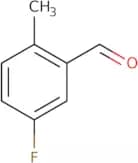
5-Fluoro-2-methylbenzaldehyde
CAS:5-Fluoro-2-methylbenzaldehyde is a fine chemical that is used as an intermediate in the synthesis of pharmaceuticals, agrochemicals, and other organic molecules. It is also useful in the preparation of synthetic resins, dyes, and flavors. 5-Fluoro-2-methylbenzaldehyde has been shown to be a versatile building block with many potential applications. This molecule can be used as a reaction component or as a speciality chemical to produce high quality reagents.
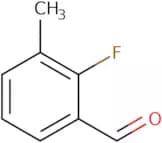
Formula:C8H7FOPurity:90%Color and Shape:Clear LiquidMolecular weight:138.14 g/mol2-Fluoro-3-methylbenzaldehyde
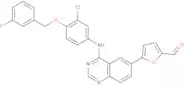
CAS:2-Fluoro-3-methylbenzaldehyde is a chemical that can be used in the synthesis of other chemicals, such as pharmaceuticals. It is a versatile building block that can be used in the synthesis of complex compounds and scaffolds. The compound has been shown to react with amines to form ureas.Formula:C8H7FOPurity:80%Molecular weight:138.14 g/mol5-(4-((3-Chloro-4-((3-fluorobenzyl)oxy)phenyl)amino) quinazolin-6-yl)furan-2-carbaldehyde
CAS:5-(4-((3-Chloro-4-((3-fluorobenzyl)oxy)phenyl)amino)quinazolin-6-yl)furan-2-carbaldehyde is a heterocyclic compound that has been used to study protein tyrosine kinase activity. This drug binds to the active site of the enzyme and inhibits its function by forming an irreversible covalent bond with the enzyme's reactive cysteine residue, which prevents the transfer of phosphate groups from ATP to the substrate (tyrosine).Formula:C26H17ClFN3O3Purity:Min. 95%Molecular weight:473.88 g/mol3-Bromo-4-fluorobenzaldehyde
CAS:3-Bromo-4-fluorobenzaldehyde is a drug substance that is used in the synthesis of pharmaceuticals. It is also a potential anticancer agent. 3-Bromo-4-fluorobenzaldehyde inhibits bacterial growth by binding to DNA, preventing transcription and replication. The high frequency of human activity has been shown using a patch clamp technique on human erythrocytes. This active form is metabolized through a number of metabolic transformations, including hydrolysis by esterases or glucuronidases, oxidation by cytochrome P450 enzymes, reduction by glutathione reductase, or conjugation with glucuronic acid. 3-Bromo-4-fluorobenzaldehyde also specifically binds to markers expressed at high levels in Mycobacterium tuberculosis strains (e.g., ESX-1 secretion system protein) and inhibits cell growth in culture.
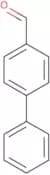
Formula:C7H4BrFOPurity:Min. 95%Color and Shape:PowderMolecular weight:203.01 g/mol4-Biphenylcarboxaldehyde
CAS:4-Biphenylcarboxaldehyde is a chemical compound that belongs to the group of hydrocarbons. It is a colorless liquid with an unpleasant odor, soluble in ether and benzene, and has a boiling point of 210 °C. 4-Biphenylcarboxaldehyde can be used as a raw material for the production of pharmaceuticals and agrochemicals. The molecular structure of this compound is unsymmetrical due to its biphenyl backbone and two carbonyl groups. Hydrochloric acid reacts with 4-biphenylcarboxaldehyde to form 2-bromoethylbenzene and hydrogen gas:Formula:C13H10OPurity:Min. 95%Color and Shape:White PowderMolecular weight:182.22 g/mol3-Iodo-4-hydroxybenzaldehyde
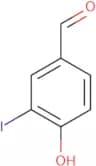
CAS:3-Iodo-4-hydroxybenzaldehyde (3IB) is an amide that is found in plant tissue. It has been shown to have a number of biological activities, including hypoiodous acid production, chromatographic activity, and ether extract activity. 3IB can be synthesized from benzofuran derivatives or by treating the corresponding nitrobenzene with hydrochloric acid. Bioassays using thyroid enzyme have shown that 3IB may inhibit the synthesis of daunorubicin, a potent antitumour drug. Molecular modelling studies suggest that 3IB binds to ATP synthase by forming hydrogen bonds with the amino acids Gly and His in the active site.Formula:C7H5IO2Purity:90%Color and Shape:PowderMolecular weight:248.02 g/mol3,4,5-Triacetoxybenzaldehyde
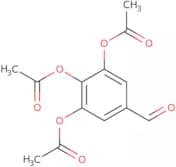
CAS:3,4,5-Triacetoxybenzaldehyde is a fine chemical that is useful as a scaffold for the synthesis of complex compounds. It is also used as a building block in the synthesis of research chemicals and speciality chemicals. 3,4,5-Triacetoxybenzaldehyde has been shown to be an intermediate in organic syntheses and reagents for laboratory use. This compound can be used as a reaction component in various reactions with other organic compounds to form new compounds. 3,4,5-Triacetoxybenzaldehyde is a high quality product that has been manufactured to the highest standards.Formula:C13H12O7Purity:Min. 95%Color and Shape:PowderMolecular weight:280.23 g/molCinnamaldehyde
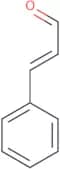
CAS:Cinnamaldehyde is an aldehyde that occurs naturally in plants such as cinnamon, apples, and cumin. It is used as a flavoring agent for foods and beverages, as well as in perfumes. Cinnamaldehyde has been shown to have minimal toxicity and minimal mutagenic or carcinogenic potential. This compound has been shown to exhibit antimicrobial activity against bacteria by inhibition of bacterial cell growth through inhibition of the synthesis of proteins essential for cell division. Cinnamaldehyde also exhibits anti-inflammatory properties by inhibiting prostaglandin synthesis. The antimicrobial effects of cinnamaldehyde are due to its ability to bind to the enzyme alcohol dehydrogenase, which prevents the conversion of alcohols into aldehydes. Cinnamaldehyde can be found in many natural compounds such as cinnamic acid and eugenol.
Formula:C6H5CHCHCHOPurity:Min. 95%Color and Shape:Colorless Clear LiquidMolecular weight:132.16 g/mol3-Hydroxy-2-iodobenzaldehyde
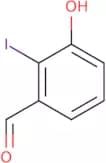
CAS:3-Hydroxy-2-iodobenzaldehyde is a heterocyclic compound that is synthesized from an acetoacetic ester. It is a photochemical precursor to many organic compounds, such as phenanthrene. The synthesis of 3-hydroxy-2-iodobenzaldehyde can be achieved by reacting acetoacetic acid with iodine and sodium nitrite in the presence of a base. This reaction yields 2-iodobenzoic acid in addition to the desired product. 3-Hydroxy-2-iodobenzaldehyde has been studied for its use in the preparation of natural products and research advances.Formula:C7H5IO2Purity:Min. 95%Color and Shape:PowderMolecular weight:248.02 g/molPhloroglucinol aldehyde triethyl ether
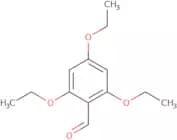
CAS:Phloroglucinol aldehyde triethyl ether is a high quality, research chemical, speciality chemical and versatile building block. It is used in the synthesis of complex compounds that are useful as intermediates or fine chemicals. The CAS No. for this compound is 59652-88-9.Formula:C13H18O4Purity:Min. 95%Molecular weight:238.28 g/mol2,6-Dimethylbenzaldehyde oxime
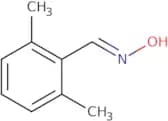
CAS:2,6-Dimethylbenzaldehyde oxime is a reagent and useful intermediate for the synthesis of complex compounds. It is also a building block for speciality chemicals. 2,6-Dimethylbenzaldehyde oxime has been used in research and as a reaction component for various organic syntheses. This compound has a CAS number of 55882-62-7.Formula:C9H11NOPurity:Min. 95%Molecular weight:149.19 g/mol5-(Trifluoromethoxy)salicylaldehyde
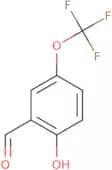
CAS:5-(Trifluoromethoxy)salicylaldehyde is a ligand that binds to the active site of the enzyme catalysis, thereby inhibiting its activity. It has been shown to be effective in colon cancer and other cancers due to its ability to inhibit protein synthesis. 5-(Trifluoromethoxy)salicylaldehyde also inhibits the production of prostaglandins, which may prevent inflammation. The compound is also used in supramolecular chemistry and biological studies as a tool for studying protein-ligand interactions. 5-(Trifluoromethoxy)salicylaldehyde has been shown to have dose-dependent effects on cell proliferation and protein synthesis.Formula:C8H5F3O3Purity:Min. 95%Color and Shape:PowderMolecular weight:206.12 g/mol3-Iodobenzaldehyde
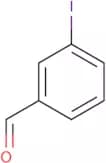
CAS:3-Iodobenzaldehyde is an atypical, isomeric, low energy, functional group. It has a fluorine atom in the 3-position and three different types of functional groups: alcohol, aldehyde and carboxylic acid. This compound has been studied for its ability to bind to receptors. 3-Iodobenzaldehyde can be synthesized by reacting benzalchohde with iodine and hydrochloric acid. The technique used to produce this compound is called Grignard reaction. 3-Iodobenzaldehyde can also be prepared by heating the corresponding nitrobenzene with sodium iodide in dry ether or under refluxing conditions. This compound has a low boiling point and melts at about 170 degrees Celsius. The frequency of this molecule ranges from 98 to 102 megahertzFormula:C7H5IOPurity:Min. 95%Color and Shape:PowderMolecular weight:232.02 g/mol3-Fluoro-2-methylbenzaldehyde - 80%
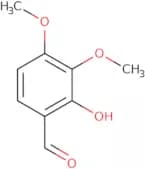
CAS:3-Fluoro-2-methylbenzaldehyde is a colorless liquid that has a strong odor. It is used as an intermediate in organic synthesis, especially for the production of fluorine compounds. 3-Fluoro-2-methylbenzaldehyde is also used to study the bioconversion of aldehydes and reductases in fungi. This chemical can be detected by its spectra and its ability to react with fluorine. 3-Fluoro-2-methylbenzaldehyde can also be synthesized by reacting naphthalene with anisole and hydrogen fluoride gas.Formula:C8H7FOPurity:Min. 95%Color and Shape:Clear LiquidMolecular weight:138.14 g/mol2-Hydroxy-3,4-dimethoxybenzaldehyde
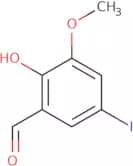
CAS:2-Hydroxy-3,4-dimethoxybenzaldehyde is a molecule that has an acidic character. It has been shown to be able to form a copper complex with good optical properties. A method using this compound as the monomer was found to be efficient for synthesizing polymers with size exclusion chromatography. 2-Hydroxy-3,4-dimethoxybenzaldehyde is a monocarboxylic acid that contains an aliphatic hydrocarbon and hydroxyl group. It can also act as a monomer in polymerization reactions and can be used in chemical structures such as multidrugs, which are made from large molecules of different types of atoms. The acid catalyst is required for these reactions to take place.Formula:C9H10O4Purity:Min. 95%Color and Shape:PowderMolecular weight:182.17 g/mol2-Hydroxy-5-iodo-3-methoxybenzaldehyde
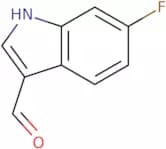
CAS:Please enquire for more information about 2-Hydroxy-5-iodo-3-methoxybenzaldehyde including the price, delivery time and more detailed product information at the technical inquiry form on this pageFormula:C8H7IO3Purity:Min. 98%Color and Shape:PowderMolecular weight:278.04 g/mol6-Fluoroindole-3-carboxaldehyde
CAS:6-Fluoroindole-3-carboxaldehyde (6FLA) is a synthetic compound that inhibits biosynthesis of the phytoalexins salicylic acid and lignin in plants. It also inhibits the β-glucuronidase enzyme, which hydrolyzes the glucuronide conjugates of phenolic compounds and xenobiotics. 6FLA has been shown to cause mild liver damage in rats, but its effects on humans are unknown. 6FLA may be used as a detectable substance for assays.
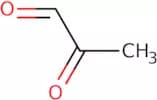
Formula:C9H6FNOPurity:Min. 95%Molecular weight:163.15 g/molPyruvic aldehyde - Technical grade, 35-45% w/w aqueous solution
CAS:Pyruvic aldehyde is a reactive compound that is an intermediate in the glycolytic pathway. It is used in vitro to measure enzyme activities and as a model system for studying pathogenic mechanisms. Pyruvic aldehyde has been shown to damage mitochondrial membranes by increasing the production of reactive oxygen species, leading to the collapse of mitochondrial membrane potential and cell death. The methylglyoxal-derived compound also has pharmacological effects, such as anti-inflammatory activities. Pyruvic aldehyde can be prepared using preparative high-performance liquid chromatography (Hplc) or by reacting pyruvate with acidified ethyl acetate.
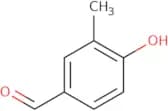
Formula:C3H4O2Color and Shape:Brown Yellow Clear LiquidMolecular weight:72.06 g/mol4-Hydroxy-3-methylbenzaldehyde
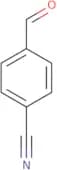
CAS:4-Hydroxy-3-methylbenzaldehyde is a fungicidal agent that has been shown to have activity against Cryptococcus neoformans. It inhibits the mitochondrial functions of this fungus, which leads to cell death by disrupting the synthesis of fatty acids and other cellular components. 4-Hydroxy-3-methylbenzaldehyde binds to C. neoformans with high affinity, producing a reaction product that interferes with the organism's ability to produce butyric acid. The molecular modelling of this compound shows that it is a pyrazole ring with two benzyl groups on either side of an aldehyde group. This chemical also inhibits gram-negative bacteria by binding to fatty acids in their outer membrane.Formula:C8H8O2Purity:Min. 95%Color and Shape:PowderMolecular weight:136.15 g/mol4-Cyanobenzaldehyde
CAS:4-Cyanobenzaldehyde is an acid that inhibits tyrosinase, an enzyme involved in the production of melanin. It has been shown to have a strong inhibitory effect on the activity of this enzyme in a variety of biological studies. 4-Cyanobenzaldehyde is chemically stable and does not react with hydrochloric acid or water at room temperature, making it suitable for use in experiments involving these substances. This chemical also has antiinflammatory properties and can be used as a substitute for phenols in some chemical reactions. 4-Cyanobenzaldehyde is soluble in methanol and reacts with diphenolase, an enzyme involved in the synthesis of lignin, to produce benzophenone and benzoic acid. This reaction may be important for the formation of lignin during wood decomposition.Formula:C8H5NOPurity:80%Color and Shape:PowderMolecular weight:131.13 g/mol