Aldehydes
Aldehydes are organic compounds containing a carbonyl group (C=O) bonded to at least one hydrogen atom. These versatile compounds are fundamental in various chemical reactions, including oxidation, reduction, and nucleophilic addition. Aldehydes are essential building blocks in the synthesis of pharmaceuticals, fragrances, and polymers. At CymitQuimica, we provide a diverse selection of high-quality aldehydes to support your research and industrial applications.
Found 8540 products of "Aldehydes"
Sort by
Purity (%)
0
100
|
0
|
50
|
90
|
95
|
100
Methoxyacetaldehyde diethyl acetal
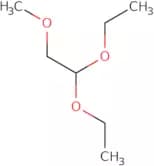
CAS:<p>Methoxyacetaldehyde diethyl acetal is a viscous liquid with a low vapor pressure. This substance is stable at high temperatures and has a high resistance to chemical interactions. It is also hydrophobic in nature. Methoxyacetaldehyde diethyl acetal has been shown to interact with the aminoglycoside antibiotics, erythromycin, streptomycin, and neomycin. The interaction of this substance with these antibiotics may be due to the fact that it has proton resonances similar to those of amino acids, as well as its ability to form hydrogen bonds with the antibiotic molecules. Methoxyacetaldehyde diethyl acetal also interacts with triethyl orthoformate, which can lead to the formation of an ester bond between them.</p>Formula:C7H16O3Purity:Min. 95%Color and Shape:Colorless Clear LiquidMolecular weight:148.2 g/mol(2,2,3-Trimethylcyclopent-3-en-1-yl)acetaldehyde
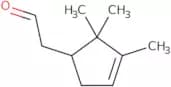
CAS:<p>(2,2,3-Trimethylcyclopent-3-en-1-yl)acetaldehyde is an epoxide. It is a colorless liquid with a pleasant odor and taste that can be used as a flavoring agent. This compound is biosynthesized by bacteria from the alpha-terpineol or 2,2,3-trimethylcyclopentanone. The biological activity of (2,2,3-Trimethylcyclopent-3-en-1-yl)acetaldehyde has been investigated in cultures and in vitro studies on acid bacteria. The production of this compound was found to be stimulated by the presence of other terpenoids such as limonene and alpha pinene.</p>Formula:C10H16OPurity:Min. 95%Molecular weight:152.23 g/mol2-Bromo-5-chlorobenzaldehyde
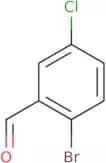
CAS:<p>2-Bromo-5-chlorobenzaldehyde is an industrial chemical that is used as a precursor for the production of other chemicals. It can be synthesized by reacting 3-chlorobenzaldehyde with sodium bromide in the presence of a catalyst. 2-Bromo-5-chlorobenzaldehyde has been shown to have high reactivity, and can be used as a catalyst to produce large amounts of organic compounds. This chemical can also be produced in large quantities by neutralizing alkalis with acid, which is an effective way to dispose of these hazardous substances.</p>Formula:C7H4BrClOPurity:Min. 95%Molecular weight:219.46 g/molBenzimidazole-5-aldehyde
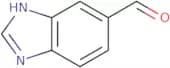
CAS:<p>Please enquire for more information about Benzimidazole-5-aldehyde including the price, delivery time and more detailed product information at the technical inquiry form on this page</p>Formula:C8H6N2OPurity:Min. 95%Color and Shape:PowderMolecular weight:146.15 g/mol4-Chloro-2-nitrobenzaldehyde
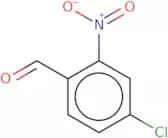
CAS:<p>4-Chloro-2-nitrobenzaldehyde is a reactive intermediate that has been used to investigate the reaction mechanism of protonation. It is an n-oxide and has been shown to react with calcium carbonate under acidic conditions, forming a stable product. 4-Chloro-2-nitrobenzaldehyde has also been used in the synthesis of amides and nitro compounds. This compound possesses two functional groups, which are a nitro group and a chloro group on the aromatic ring.</p>Formula:C7H4ClNO3Purity:Min. 95%Color and Shape:PowderMolecular weight:185.56 g/molAc-Val-Asp-Val-Ala-Asp-aldehyde (pseudo acid)
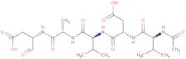
CAS:<p>Ac-Val-Asp-Val-Ala-Asp-aldehyde is a pseudo acid that is used in molecular modeling and kinetic studies. Ac-Val-Asp-Val-Ala-Asp-aldehyde has been shown to be a potent inhibitor of caspase activity and has been shown to inhibit the activity of various other enzymes as well, including cyclohexane ring hydroxylases and nitroreductases. Ac-Val-Asp-Val-Ala-Asp--aldehyde analogs are being studied for their ability to bind to specific proteins or inhibit enzyme activities. Ac-- Val-- Asp-- Val-- Ala-- Asp-- aldehyde binds to the active site of caspase 3 and prevents it from cleaving its target protein, which leads to cell death.</p>Formula:C23H37N5O10Purity:Min. 95%Molecular weight:543.57 g/mol3-Hydroxyisonicotinaldehyde
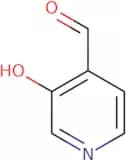
CAS:<p>3-Hydroxyisonicotinaldehyde is a disulfide bond that plays an important role in enzyme catalysis. The active site of the enzyme, which contains a nucleophilic attack on the electrophilic carbon atom, is composed of two cysteine residues with their sulfhydryl group (-SH) bonded to each other through a disulfide bond. This bond can be broken by either an acidic environment or protonation. In the absence of these conditions, the -SH groups are coordinated to metal ions and form a complex. The hydroxyl group (-OH) on one cysteine residue can coordinate to the nitrogen atom on the other cysteine residue and form tautomers. These tautomers correspond to two different configurations of the molecule: one where both sulfur atoms are in a trans configuration (tautomer A), and one where they are in a cis configuration (tautomer B). The biological properties of 3-hydroxyison</p>Formula:C6H5NO2Purity:Min. 95%Molecular weight:123.11 g/molCaspase-3/7 Inhibitor II Ac-Asp-Asn-Leu-Asp-aldehyde (pseudo acid)
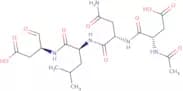
CAS:<p>Caspase-3/7 Inhibitor II Ac-Asp-Asn-Leu-Asp-aldehyde (pseudo acid) is a peptide inhibitor of caspases. It blocks the activation of these proteases and their subsequent cleavage of substrates in the apoptotic pathway. This drug has potent inhibitory activity against caspases 3, 7, 8, 9, and 10. Caspase-3/7 Inhibitor II Ac-Asp-Asn-Leu-Asp-aldehyde (pseudo acid) specifically interacts with the active site and inhibits the enzyme by binding to an aspartic acid residue at position D197 in human caspase 3. Caspase 3/7 Inhibitor II Ac-Asp-Asn-Leu-Asp-aldehyde (pseudo acid) is localized to mitochondria and binds to acetyldeviceine (acDEV), a substrate for caspases</p>Formula:C20H31N5O10Purity:Min. 95%Molecular weight:501.49 g/molAc-Asp-Glu-Val-Asp-aldehyde (pseudo acid)
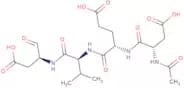
CAS:<p>Ac-Asp-Glu-Val-Asp-aldehyde (pseudo acid) is a pro-apoptotic protein that belongs to the group of pseudo acids. It is able to induce apoptosis. Ac-Asp-Glu-Val-Asp-aldehyde (pseudo acid) can induce neuronal death by activating caspases and apoptosis pathway, which are involved in the process of programmed cell death. This protein also has anti-inflammatory properties, which may be due to its ability to inhibit cyclase activity. Ac-Asp-Glu-Val-Asp (pseudo acid) has been shown to be present at physiological levels in the brain and heart, where it may play an important role in maintaining cell viability.</p>Formula:C20H30N4O11Purity:Min. 95%Molecular weight:502.47 g/mol4-Acetoxybenzaldehyde
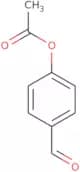
CAS:<p>4-Acetoxybenzaldehyde is a compound with an acetyl group attached to the benzene ring. It is potentially toxic to cells and has been shown to produce reactive oxygen species (ROS) in v79 cells, which can lead to cell death. The biological properties of 4-acetoxybenzaldehyde are not well understood, but it has been shown to have antioxidant properties in other studies. This compound also reacts with amines, forming acetamides and amides. 4-Acetoxybenzaldehyde is found in environmental pollution as a result of its presence in the atmosphere and its use as a solvent. It was first synthesized by the reaction of coumaric acid and acetyl chloride with formaldehyde at reflux temperature. The compound can be purified by chromatographic methods or mass spectrometric analysis.</p>Formula:C9H8O3Purity:Min. 95%Color and Shape:LiquidMolecular weight:164.16 g/mol5-(2-Bromo-acetyl)-2-hydroxy-benzaldehyde
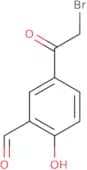
CAS:<p>5-Bromo-2-hydroxybenzaldehyde is an organic compound with a chemical formula of CHBrO. It is a white solid that is soluble in water, ethanol, and acetone. The synthesis of 5-bromo-2-hydroxybenzaldehyde has been achieved by the acylation reaction of benzaldehyde with bromide ion. The selectivity for this reaction can be increased by using sodium borohydride as a reducing agent instead of lithium aluminum hydride. This method can be applied to the synthesis of salmeterol, which is used as a medicine in the treatment of asthma.</p>Formula:C9H7BrO3Purity:Min. 95%Molecular weight:243.05 g/mol4-Bromobenzaldehyde
CAS:<p>4-Bromobenzaldehyde is a chemical compound that belongs to the group of aromatic compounds. It has been shown to have a potent stimulatory effect on locomotor activity in mice, which may be due to its ability to increase levels of epidermal growth factor and gamma-aminobutyric acid in the brain. 4-Bromobenzaldehyde can be synthesized from 2,4-dibromophenol and anhydrous copper chloride in the presence of sodium hydroxide. The reaction mechanism for this synthesis is believed to involve an intermediate enamine form of 4-bromobenzaldehyde, which can then undergo hydrolysis into 2,4-dibromophenol and benzaldehyde. This product is used as a reagent in organic synthesis because it can be used to form esters with trifluoroacetic acid or hydrochloric acid in high yield.</p>Formula:C7H5BrOPurity:Min. 90 Area-%Color and Shape:White PowderMolecular weight:185.02 g/molAc-Trp-Glu-His-Asp-aldehyde (pseudo acid)
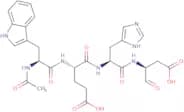
CAS:<p>Ac-Trp-Glu-His-Asp-aldehyde is a tetrapeptide that has been shown to inhibit the activity of caspases. Caspases are proteases that play an important role in cell death by inducing apoptosis and necrosis. The structure of the Ac-Trp-Glu-His-Asp-aldehyde was determined by X-ray crystallography, revealing a hydrophobic molecule with a pseudo acid residue. This compound binds to peptides and blocks the binding site for caspase substrates, which prevents their activation. Acetylation of this compound also increases its hydrophobicity, making it more likely to bind to other molecules such as proteins or lipids.</p>Formula:C28H33N7O9Purity:Min. 95%Molecular weight:611.6 g/molAc-Leu-Glu-His-Asp-aldehyde (pseudo acid) trifluoroacetate salt
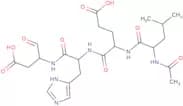
CAS:<p>Ac-Leu-Glu-His-Asp-aldehyde (pseudo acid) trifluoroacetate salt is a chemical compound that belongs to the group of apoptosis proteins. It has been shown to have anti-inflammatory and neuroprotective effects in primary cells, as well as to induce apoptosis in HL60 cells. Ac-Leu-Glu-His-Asp-aldehyde (pseudo acid) trifluoroacetate salt is also able to inhibit the activation of the caspase pathway by preventing the release of cytochrome c from mitochondria and decreasing the mitochondrial membrane potential. The protein may be used as an agent for skin cancer treatment.</p>Formula:C23H34N6O9Purity:Min. 95%Molecular weight:538.55 g/mol4,6-Dimethoxysalicylaldehyde
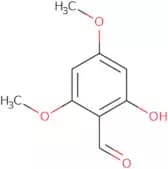
CAS:<p>4,6-Dimethoxysalicylaldehyde is a protonated molecule with a cyclohexane ring and 4 hydroxyl groups. Its chemical formula is C6H8O3. The compound has low bioavailability due to the presence of an intramolecular hydrogen bond that causes high redox potential. There are two amines on the aromatic ring which can coordinate with metal ions to form a complex. This compound's structural analysis has been conducted using X-ray crystallography, NMR spectroscopy, and IR spectroscopy. The structure of 4,6-dimethoxysalicylaldehyde is unsymmetrical due to the presence of two asymmetric carbon atoms in the molecule. It forms hydrogen bonds with other molecules due to its hydroxyl group and intramolecular hydrogen bond. Hydrogen bonding interactions occur between this compound and other molecules including water, alcohols, ammonia, amines, and carboxylic acids.</p>Formula:C9H10O4Purity:Min. 95%Color and Shape:Off-White PowderMolecular weight:182.17 g/mol2-Hydroxy-4-fluorobenzaldehyde
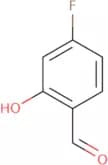
CAS:<p>2-Hydroxy-4-fluorobenzaldehyde is a chemical used as a diagnosis agent to detect radiation exposure. It reacts with magnesium and water molecules to form an amination reaction that produces hydrogen fluoride gas. 2-Hydoxy-4-fluorobenzaldehyde has been shown to have the ability to penetrate into mitochondria, which may be related to its use in the treatment of hepatitis. The chemical structure of this compound is similar to salicylaldehyde, which is used as a reagent for formylation reactions and optical properties. It has also been shown that 2-hydroxy-4-fluorobenzaldehyde can act as a fluorescence probe for the detection of hydrophobic regions on proteins.</p>Formula:C7H5FO2Purity:Min. 95%Color and Shape:PowderMolecular weight:140.11 g/mol3,5-Dihydroxybenzaldehyde
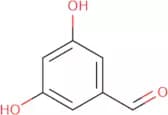
CAS:<p>3,5-Dihydroxybenzaldehyde (DHBA) is a plant metabolite that is classified as a phenolic compound. It is found in many plants and has important biological functions such as the production of carotenoids or the cleavage of carotenoid to form other compounds. DHBA can be extracted from plant tissue with hydrochloric acid or carbon sources. It has been shown that DHBA inhibits the growth of soil bacteria by binding to amines and thus preventing them from reacting with substrates. This may be due to its ability to act as an electron donor, which could also explain its inhibitory activity on carotenoid cleavage.</p>Formula:C7H6O3Purity:Min. 98 Area-%Color and Shape:Off-White To Beige To Brown SolidMolecular weight:138.12 g/mol3-Acetoxybenzaldehyde
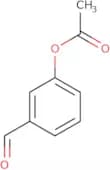
CAS:<p>3-Acetoxybenzaldehyde is a chemical compound that has been used as a photosensitiser for the production of hydrogen peroxide. When irradiated with light, it undergoes a series of reactions, including the removal of an electron from the molecule and the formation of a reactive oxygen species (ROS). This ROS then reacts with chloride ions to form chlorine radicals. These chlorine radicals can react with acetyl groups to form 3-acetoxybenzoic acid. 3-Acetoxybenzaldehyde is also used in organic synthesis to produce ketones and aldehydes. The functional groups on this compound are an acetyl group and a carbonyl group. 3-Acetoxybenzaldehyde is produced by the dehydrogenation of trimethyl acetate, which is catalyzed by palladium on charcoal or platinum oxide.</p>Formula:C9H8O3Purity:Min. 95%Color and Shape:Clear LiquidMolecular weight:164.16 g/mol5-(2-Methyl-4-nitrophenyl)-2-furaldehyde
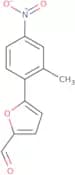
CAS:<p>Please enquire for more information about 5-(2-Methyl-4-nitrophenyl)-2-furaldehyde including the price, delivery time and more detailed product information at the technical inquiry form on this page</p>Formula:C12H9NO4Purity:Min. 95%Molecular weight:231.2 g/mol