Lactones
Found 491 products of "Lactones"
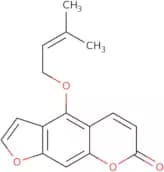
Isoimperatorin
CAS:Isoimperatorin is a naturally occurring furanocoumarin, which is a phytochemical compound found in certain plants, particularly within the Apiaceae family, such as Angelica dahurica. It is extracted from these botanical sources through processes like solvent extraction. Isoimperatorin exhibits a diverse mode of action, including the inhibition of various enzymes and modulation of signaling pathways. It has demonstrated significant effects on cytochrome P450 enzymes, potentially influencing drug metabolism. Additionally, Isoimperatorin has shown antioxidant properties and the ability to interfere with cell proliferation and apoptosis mechanisms.Formula:C16H14O4Purity:Min. 98 Area-%Color and Shape:PowderMolecular weight:270.29 g/molNordalbergin
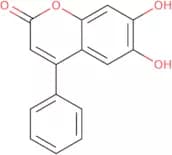
CAS:Please enquire for more information about Nordalbergin including the price, delivery time and more detailed product information at the technical inquiry form on this pageFormula:C15H10O4Molecular weight:254.24 g/mol5-Geranyloxy-7-methoxycoumarin
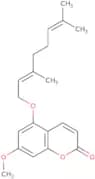
CAS:5-Geranyloxy-7-methoxycoumarin is a naturally occurring compound known as a coumarin derivative, which is primarily sourced from specific plant species such as those within the Rutaceae family. This compound is characterized by its unique chemical structure that incorporates both geranyloxy and methoxy functional groups, conferring specific biological activities.Formula:C20H24O4Purity:Min. 95%Color and Shape:PowderMolecular weight:328.4 g/mol4-Hydroxy-3-phenylcoumarin
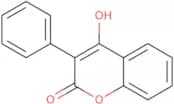
CAS:4-Hydroxy-3-phenylcoumarin is an organic compound, which is a derivative of coumarin. It is synthetically derived through chemical modification processes that introduce a hydroxy group and a phenyl ring to the coumarin core structure. Its mechanism of action involves the inhibition of vitamin K epoxide reductase, an enzyme critical for the cyclic conversion of vitamin K. This inhibition prevents the activation of vitamin K-dependent clotting factors, thereby exerting its anticoagulant effects.
Formula:C15H10O3Purity:Min. 98 Area-%Color and Shape:PowderMolecular weight:238.24 g/molFraxin
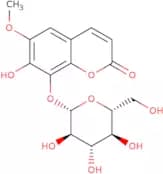
CAS:Fraxin is a naturally occurring anticoagulant, which is derived from the bark of certain species of the Fraxinus tree. It functions by inhibiting thrombin and other key enzymes in the coagulation cascade, thus preventing the formation of blood clots. This mode of action makes it particularly valuable in research settings focused on cardiovascular diseases, as well as in the development of therapeutic agents targeting coagulopathies.Formula:C16H18O10Purity:Min. 95%Color and Shape:PowderMolecular weight:370.31 g/molOsthole
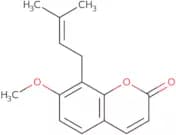
CAS:Osthole is a coumarin derivative, which is a type of natural compound. It is predominantly sourced from the Cnidium monnieri plant, as well as other Apiaceae family members. Osthole exerts its effects primarily through modulation of various molecular pathways, including the suppression of inflammatory mediators and the modulation of calcium channels, which results in vasodilation and various other physiological effects.Formula:C15H16O3Purity:Min. 95%Color and Shape:PowderMolecular weight:244.29 g/molFraxidin
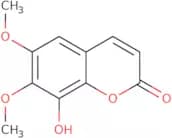
CAS:Fraxidin is a naturally occurring compound, specifically an O-methylated coumarin, which is derived from certain plant sources such as the fruits of the ash tree. It is primarily obtained through the processing of various plant materials within the Rutaceae family. The mode of action of Fraxidin involves the inhibition of oxidative damage due to its capacity to scavenge free radicals, thus leading to potential antioxidant properties in biological systems.Formula:C11H10O5Purity:Min. 98 Area-%Color and Shape:PowderMolecular weight:222.19 g/molRef: 3D-M-3330
25gTo inquire50gTo inquire100gTo inquire250gTo inquire500gTo inquire-Unit-ggTo inquireEsculin hydrate
CAS:Fluorescent dye used in diagnostic culture media
Formula:C15H16O9·xH2OPurity:Min. 98 Area-%Color and Shape:White PowderMolecular weight:340.28 g/molScopolin
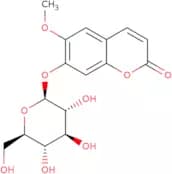
CAS:Scopolin is a coumarin glucoside, which is derived from the plant secondary metabolism. It originates predominantly from species within the Solanaceae family, including tobacco and potato plants. Its biosynthesis involves the conversion of scopoline, a precursor molecule, through glucosylation. This process is catalyzed by glucosyltransferases, which facilitate the attachment of a glucose moiety.
Formula:C16H18O9Purity:Min. 98 Area-%Color and Shape:White PowderMolecular weight:354.31 g/mol6'-Dehydromarmin
CAS:6'-Dehydromarmin is a natural product, classified as a coumarin derivative, which is primarily sourced from certain plant species, notably within the Rutaceae family. This compound arises through the biochemical transformation of secondary metabolites in plants, typically involving oxidation processes that occur under specific enzymatic conditions.Formula:C19H22O5Purity:Min. 95%Molecular weight:330.37 g/molXanthotoxol
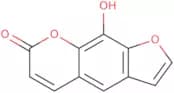
CAS:Xanthotoxol is a naturally occurring furanocoumarin, which is derived from various plant species, primarily within the Apiaceae family. This compound exhibits its biological activity through several mechanisms, including the inhibition of enzyme pathways, modulation of signaling pathways, and interaction with cellular proteins, impacting various physiological processes.Formula:C11H6O4Purity:Min. 95%Color and Shape:Brown PowderMolecular weight:202.16 g/mol1H-Isochromen-1-one
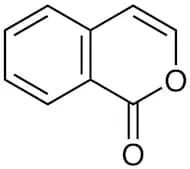
CAS:Formula:C9H6O2Purity:>95.0%(GC)Color and Shape:White to Light yellow powder to lumpMolecular weight:146.15Ellagic Acid
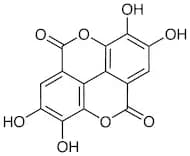
CAS:Formula:C14H6O8Purity:>95.0%(T)(HPLC)Color and Shape:White to Light yellow powder to crystalMolecular weight:302.19Decursidin
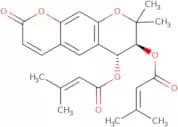
CAS:Decursidin is a chemical compound, classified as a coumarin derivative, which is a bioactive constituent derived from the roots of the Angelica gigas plant. This compound is prominent for its pharmacological activities, attributed to its distinct chemical structure.Purity:Min. 95%Murrangetin
Murrangetin is a flavonoid compound, which is a natural phytochemical sourced from the peels of various citrus fruits. Its mode of action primarily involves the modulation of inflammatory pathways, potentially through the inhibition of specific enzymes like cyclooxygenases and lipoxygenases. This flavonoid is also known for its antioxidative properties, which contribute to its ability to scavenge free radicals, thereby reducing oxidative stress in biological systems.
Purity:Min. 95%Murralongin
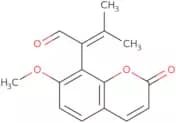
CAS:Murralongin is a natural compound that falls under the category of sesquiterpenes, a class of terpenoids characterized by their three isoprene units. It is derived from the leaves and stems of the plant Eremophila mitchellii, a species known for its rich diversity of bioactive compounds often utilized in traditional medicine. The primary mode of action of Murralongin involves modulation of specific enzymatic pathways, potentially influencing a range of biological processes, including anti-inflammatory and antimicrobial activities.Formula:C15H14O4Purity:Min. 95%Molecular weight:258.27 g/mol7-(Diethylamino)-3-(1-methyl-2-benzimidazolyl)coumarin
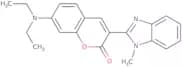
CAS:7-(Diethylamino)-3-(1-methyl-2-benzimidazolyl)coumarin is a fluorescent dye, which is synthesized through chemical derivatization of coumarin compounds. Originating from coumarin, a naturally occurring compound in plants, this dye is particularly noted for its ability to fluoresce under UV and visible light.
Formula:C21H21N3O2Purity:Min. 95%Molecular weight:347.41 g/molBergapten
CAS:Bergapten is a naturally occurring furanocoumarin, which is derived from the essential oils of citrus fruits, such as bergamot. It is recognized for its photosensitizing properties due to its ability to interact with DNA upon exposure to ultraviolet (UV) light. The mode of action involves the formation of monoadducts with pyrimidine bases in DNA, which can lead to cross-linking and ultimately disrupt DNA replication and transcription.Formula:C12H8O4Molecular weight:216.19 g/molUmbelliprenin
CAS:Umbelliprenin is a naturally occurring prenylated coumarin, which is primarily isolated from plants in the Apiaceae family. These plants are rich sources of various biologically active compounds. The mode of action of umbelliprenin is attributed to its ability to modulate multiple cellular pathways, including apoptosis and cell cycle arrest. This modulation is largely due to its interaction with reactive oxygen species and various signaling molecules within the cell.
Formula:C24H30O3Purity:Min. 95%Molecular weight:366.49 g/mol