Anilines
Found 104 products of "Anilines"
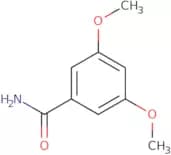
3,5-Dimethoxybenzamide
CAS:3,5-Dimethoxybenzamide belongs to the class of quinolone drugs. It is a potentiator of nabilone, which is a synthetic cannabinoid similar to THC. 3,5-Dimethoxybenzamide has been shown to be an electron-deficient compound that reacts with 5-hydroxytryptamine (serotonin) in vitro. This reaction leads to the formation of hydrogen bonds and modifications in the structure of serotonin molecules. 3,5-Dimethoxybenzamide also has grignard reagent activity and can be used as a carboxyamide or amide precursor in organic synthesis.Formula:C9H11NO3Purity:Min. 95%Color and Shape:PowderMolecular weight:181.19 g/mol2,4,6-Tribromo-3-nitroaniline
CAS:2,4,6-Tribromo-3-nitroaniline is a brominating agent that can produce hydrogen peroxide. It is prepared by the reaction of hydrochloric acid with 2,4,6-tribromoaniline. The bromination of 2,4,6-tribromo-3-nitroaniline produces 4 equivalents of hydrogen peroxide.
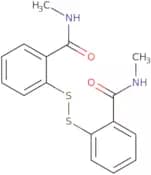
Formula:C6H3Br3N2O2Purity:Min. 95%Color and Shape:Beige To Brown SolidMolecular weight:374.81 g/molDithio-2,2'-bis(N-methylbenzamide)
CAS:Dithio-2,2'-bis(N-methylbenzamide) is a chlorphenesin and benzyl alcohol combination that also contains pyrithione, benzyl chloride and benzalkonium chloride. It is a microbicide that inhibits the growth of bacteria by reacting with their cell membranes. Dithio-2,2'-bis(N-methylbenzamide) is used in cosmetics as a preservative, and has been shown to have antimicrobial properties against the section Micrococcus luteus. This product also contains imidazolidinyl urea as an anti-fungal agent.
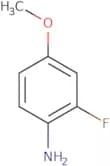
Formula:C16H16N2O2S2Purity:Min. 95%Color and Shape:White PowderMolecular weight:332.44 g/mol2-Fluoro-4-methoxyaniline
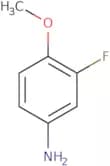
CAS:2-Fluoro-4-methoxyaniline is a non-selective amide that forms in the presence of amines, aminobutyraldehyde, and fluorine. 2-Fluoro-4-methoxyaniline is a product of the industrial process for synthesizing acetylated products through the use of dichloroketene as an acetylating agent. This chemical compound has been used to produce five-membered heterocycles that are used in the manufacture of pharmaceuticals. Mechanistic studies have shown that this chemical reacts with oxygen, water, and halogens to form a variety of products.Formula:C7H8FNOPurity:Min. 95%Color and Shape:Yellow PowderMolecular weight:141.14 g/mol3-Fluoro-4-methoxyaniline
CAS:3-Fluoro-4-methoxyaniline is a chemical intermediate. It is an aminopyridine that is used in the synthesis of bosutinib, an anticancer drug. 3-Fluoro-4-methoxyaniline binds to the ATP binding site of the cell's mitochondria and prevents the release of cytochrome c from the mitochondria, which leads to apoptosis. 3-Fluoro-4-methoxyaniline also has antimitotic effects and can inhibit the growth of tumor cells. 3-Fluoro-4-methoxyaniline has been shown to have poor cellular uptake, which may be due to its interaction with positron emission tomography (PET) agents such as cyanuric acid or glycopeptide. This chemical has also been shown to be a good surrogate for chloride ions in studies on transfected tumor cells.Formula:C7H8FNOPurity:Min. 98.5%Color and Shape:Off-White PowderMolecular weight:141.14 g/mol4-Amino-3-chloro-5-methylphenol hydroiodide
CAS:Please enquire for more information about 4-Amino-3-chloro-5-methylphenol hydroiodide including the price, delivery time and more detailed product information at the technical inquiry form on this pageFormula:C7H8ClNO•HIPurity:Min. 95%Molecular weight:285.51 g/molSulfabenzamide
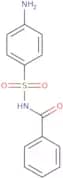
CAS:Sulfabenzamide is a sulfa drug that has been used in the treatment of infectious diseases. It inhibits microbial growth by inhibiting synthesis of folic acid, which is essential for bacterial growth. Sulfabenzamide has been shown to have antimicrobial effects against a number of microorganisms, including several Gram-positive and Gram-negative bacteria. This drug also has anti-inflammatory properties and can be used in the treatment of bowel disease, such as ulcerative colitis. Sulfabenzamide is used to treat choroidal neovascularization in patients with age-related macular degeneration. This drug binds to glycol esters on the surface of human erythrocytes and can be extracted using dispersive solid-phase extraction (DSPE). The DSPE extract was analyzed by a LC-MS/MS method and found to contain sulfabenzamide and sulfadiazine.Formula:C13H12N2O3SPurity:Min. 95%Color and Shape:White PowderMolecular weight:276.31 g/mol3-Chloro-4-fluoroaniline
CAS:3-Chloro-4-fluoroaniline is a versatile building block that can be used in the synthesis of many different compounds. It is a reagent that is used in research, where it can be used as a reactant or an intermediate. This chemical has been shown to have high quality and can be used as a starting material for the synthesis of other chemicals. 3-Chloro-4-fluoroaniline has been shown to react with various functional groups such as amines and acid chlorides. It is also useful for the construction of scaffolds, which are three dimensional structures that are built from small molecules and organic compounds. 3-Chloro-4-fluoroaniline is classified as a speciality chemical and its CAS number is 367-21-5.Formula:C6H5ClFNMolecular weight:145.56 g/mol2,6-Dimethoxyaniline
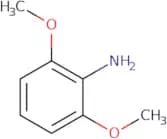
CAS:2,6-Dimethoxyaniline is a synthetic compound that has been used in the past as an antibacterial agent. It has been shown to be effective against Staphylococcus aureus and Escherichia coli, but not against Pseudomonas aeruginosa. 2,6-Dimethoxyaniline forms nanowires with an average diameter of 100 nm and lengths up to 1 micron when exposed to radiation (e.g., gamma rays). The reaction rate is dependent on the architecture and morphology of the azobenzene moiety. The chloride anion coordinates with the nitrogen atom in the molecule, which leads to a phase transition temperature of about 230 K.Formula:C8H11NO2Purity:Min. 95%Color and Shape:White PowderMolecular weight:153.18 g/mol2-Mercapto-N-methylbenzamide
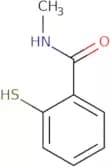
CAS:2-Mercapto-N-methylbenzamide is a synthetic compound that has been shown to have inhibitory activities against activated brain cells and cell lines. This drug has been used in the synthesis of axitinib, a cancer drug that inhibits cellular growth. 2-Mercapto-N-methylbenzamide is also used as a preservative in cosmetics and can be found in carbonated drinks and foods. It has been shown to inhibit the production of serotonin in microbicidal reactions by inhibiting the enzyme hydroxymethyl transferase, which catalyzes the conversion of 5-hydroxytryptophan to serotonin. It also prevents the reaction products from being formed by reacting with hypoxanthine, xanthine, and phosphoribosyl pyrophosphate (PRPP). 2-Mercapto-N-methylbenzamide also reacts with plasma samples to form ethylmercaptoacetate, which is then oxidized to merc
Formula:C8H9NOSPurity:Min. 95%Color and Shape:White PowderMolecular weight:167.23 g/mol2,6-Dichloro-4-methoxyaniline
CAS:2,6-Dichloro-4-methoxyaniline is a chemical that belongs to the group of methyl derivatives. It is used as an industrial chemical and as a precursor to other chemicals in the production of pesticides, herbicides, and other products. 2,6-Dichloro-4-methoxyaniline can be found in brominated flame retardants and phenolic resins. It is also present in pentachlorophenol (PCP) and hydroxylated congeners. 2,6-Dichloro-4-methoxyaniline has been detected in humans at levels ranging from 10 to 100 parts per billion. The chemical structure of 2,6-dichloro-4-methoxyaniline is similar to that of triclosan, which has been shown to have antimicrobial activity against bacteria such as Staphylococcus aureus and EscherichFormula:C7H7Cl2NOPurity:Min. 95%Molecular weight:192.04 g/mol2-Phenoxyaniline
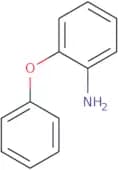
CAS:2-Phenoxyaniline is a nitro compound that can be converted to the corresponding palladium complexes. It is an inhibitor of the acylation reaction, which is a type of chemical reaction in which an organic molecule reacts with an acid. The inhibition of this reaction has been shown to have an effect on heart disease, specifically by lowering cholesterol levels and reducing atherosclerosis. 2-Phenoxyaniline has also been shown to inhibit the activation energy for electron transfer reactions, making it useful as a catalyst in analytical methods. 2-Phenoxyaniline also undergoes vibrational spectroscopy when exposed to liquid chromatography and other analytical methods.
Formula:C12H11NOPurity:Min. 95%Color and Shape:Brown PowderMolecular weight:185.22 g/mol3,3',5,5'-Tetramethylbenzidine, free base
CAS:3,3',5,5'-Tetramethylbenzidine is a high quality chemical that has been used as a research chemical and in the synthesis of other chemicals. It is also used as an intermediate in the synthesis of various building blocks such as benzylidene-p-dioxanone, 3-chloro-2-methylbenzoyl chloride, and 3-phenylpropionitrile. The compound can be used to synthesize a wide range of compounds including pharmaceuticals, pesticides, dyes, and perfumes. It is also useful for the production of drugs such as haloperidol and chloroquine phosphate.
Formula:C16H20N2Molecular weight:240.35 g/molRef: 3D-T-2101
Discontinued product2,2'-Methylenedianiline
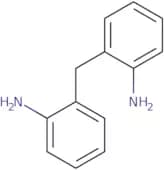
CAS:2,2'-Methylenedianiline is a quinoline derivative that is used in the synthesis of herbicides and insecticides. It is classified as a biodegradable substance and has been shown to be rapidly mineralized by arthropods. 2,2'-Methylenedianiline is also water soluble and can be degraded by microorganisms in wastewater treatment plants. 2,2'-Methylenedianiline has been shown to inhibit the growth of bacteria and fungi, but it does not have any effect on algae or protozoa. The degradation of 2,2'-methylenedianiline occurs mainly through hydrolysis with amines reacting with the methyl group to form methyl amides.
Formula:C13H14N2Purity:Min. 95 Area-%Color and Shape:Off-White PowderMolecular weight:198.26 g/molRef: 3D-FM75241
Discontinued product3-Amino-4-methoxybenzamide
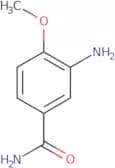
CAS:3-Amino-4-methoxybenzamide (3AMB) is a transcriptional regulator that inhibits the expression of genes encoding for the synthesis of aminoglycoside antibiotics. 3AMB binds to DNA, forming a heteromer with the transcription factor HANATX, which prevents RNA polymerase from binding to DNA. This in turn inhibits gene expression and bacterial growth. 3AMB has been shown to trigger diabetic neuropathy by inhibiting xylitol dehydrogenase, an enzyme required for neuron protection against oxidative stress. The drug also has a high affinity for nucleophiles and can bind to various substrates such as sulfhydryl groups or hydroxyl groups.
Formula:C8H10N2O2Purity:Min. 98%Color and Shape:Off-White PowderMolecular weight:166.18 g/molRef: 3D-FA64884
Discontinued product4,5-Dichloro-1,2-phenylenediamine
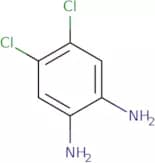
CAS:4,5-Dichloro-1,2-phenylenediamine is a cytotoxic agent that can inhibit the enzymes urea amidolyase and fatty acid synthase in tissue culture. This compound also inhibits the production of urea nitrogen and fatty acids in human serum. 4,5-Dichloro-1,2-phenylenediamine may be useful as a cancer treatment because it has been shown to cause leukemia cell death as well as inhibition of t-cell proliferation. The drug may also induce apoptosis by inhibiting DNA synthesis through its reaction with benzimidazole compounds. The basic structure of 4,5-Dichloro-1,2-phenylenediamine is similar to protocatechuic acid and malignant brain tumor cells.
Formula:C6H6Cl2N2Purity:Min. 95%Color and Shape:PowderMolecular weight:177.03 g/molRef: 3D-FD00402
Discontinued product3-Nitrobenzamide
CAS:3-Nitrobenzamide is a substance that inhibits the replication of some viruses. It has been shown to inhibit the polymerase chain reaction and to be active against hepatitis B virus. 3-Nitrobenzamide was also observed to have inhibitory properties against herpes simplex virus type 1 (HSV-1) and HSV-2. The solid form of this compound is stable at room temperature, but may undergo hydrolysis in solution. 3-Nitrobenzamide reacts with water to form nitrous acid, which may cause corrosion of metal surfaces.
Formula:C7H6N2O3Purity:Min. 95%Color and Shape:PowderMolecular weight:166.13 g/molRef: 3D-FN70933
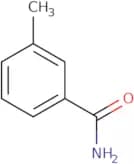
Discontinued product3-Methylbenzamide
CAS:3-Methylbenzamide is an organic compound that belongs to the class of benzamides. It has been shown to cause a decrease in blood pressure and a decrease in viscosity, as well as an increase in blood flow to the testes. 3-Methylbenzamide has also been shown to inhibit the enzyme that catalyzes the conversion of tyrosine into dopamine and may be used for the treatment of Parkinson's disease with mild symptoms. The chemical ionization technique was used to study the binding of 3-methylbenzamide with rat plasma proteins and showed that this molecule binds with high affinity to albumin and alpha 1-acid glycoprotein. This binding was found to be reversible, which suggests that 3-methylbenzamide may not be metabolized by liver enzymes.
Formula:C8H9NOPurity:Min. 95%Color and Shape:White PowderMolecular weight:135.16 g/molRef: 3D-FM37057
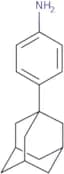
Discontinued product4-(1-Adamantyl)aniline
CAS:4-(1-Adamantyl)aniline is a monomer with electron-deficient properties. It can be synthesized from 1-adamantanol and trifluoroacetic acid, followed by hydrolysis to remove the trifluoromethyl group. 4-(1-Adamantyl)aniline has been shown to have high cytotoxicity against tumor cells in vitro. This compound also inhibits the production of necrosis factor, an inflammatory cytokine that plays an important role in many pathological processes, such as septic shock and acute respiratory distress syndrome.
Formula:C16H21NPurity:Min. 95%Color and Shape:White PowderMolecular weight:227.34 g/molRef: 3D-FA67613
Discontinued product3,3',5,5'-Tetramethylbenzidine, free base
CAS:Please enquire for more information about 3,3',5,5'-Tetramethylbenzidine, free base including the price, delivery time and more detailed product information at the technical inquiry form on this page
Formula:C16H20N2Purity:Min. 99.0 Area-%Molecular weight:240.35 g/molRef: 3D-T-2102
Discontinued product