Benzenes
Subcategories of "Benzenes"
- Benzamides(62 products)
- Benzoic Acids(5,475 products)
- Benzyl alcohols(1,457 products)
- Halogenated Benzenes(33,965 products)
- Phenols(2,664 products)
Found 11886 products of "Benzenes"
3,5-Diisopropyl-4-hydroxybenzoic acid
CAS:3,5-Diisopropyl-4-hydroxybenzoic acid is a white, crystalline compound that can be found as a dimer. It is soluble in solvents such as chloroform and ethers but insoluble in water. 3,5-Diisopropyl-4-hydroxybenzoic acid is used in the production of polyesters, polymers, and resins. This compound has been used to produce propofol and decarboxylating monomers for organic solvents. 3,5-Diisopropyl-4-hydroxybenzoic acid reacts with chloride ion at high temperatures to form chlorine gas and hydrogen chloride. The melting point of this compound is 169 degrees Celsius.Formula:C13H18O3Purity:Min. 95%Color and Shape:PowderMolecular weight:222.28 g/mol5-Bromo-2-nitrobenzoic acid
CAS:5-Bromo-2-nitrobenzoic acid is a chemical compound that belongs to the group of bromonitrobenzenes. It is an important intermediate in organic chemistry and has been used as a reagent for the synthesis of various heterocyclic compounds. 5-Bromo-2-nitrobenzoic acid can be used as a building block for pharmaceuticals, agrochemicals, dyes, and other chemicals. This versatile chemical has been widely used in research and development as a reaction component for synthesizing pharmaceuticals or speciality chemicals or as a building block to produce useful scaffolds.
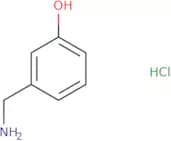
Formula:C7H4BrNO4Purity:Min. 95%Color and Shape:Slightly Yellow PowderMolecular weight:246.02 g/mol3-Hydroxybenzylamine hydrochloride
CAS:3-Hydroxybenzylamine hydrochloride (3HBH) is a chemical compound that has been used as a reagent and in the synthesis of other compounds. It is also known to be a useful scaffold for complex compounds, and can be used as a building block for the synthesis of fine chemicals. 3HBH has been found to have many applications in research, such as being an intermediate for pharmaceuticals, pesticides, dyes, and agrochemicals. 3HBH is also useful in organic syntheses where it has been found to react with nitriles and amides to form esters and amides respectively.
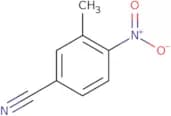
Formula:C7H9NO·HClPurity:Min. 95%Color and Shape:PowderMolecular weight:159.61 g/mol3-Methyl-4-nitrobenzonitrile
CAS:3-Methyl-4-nitrobenzonitrile is a fluorescing aromatic amine that is synthesized by aliphatic amines. It has been shown to inhibit the growth of cells in culture, which may be due to its ability to bind with and inhibit the insulin-like growth factor receptor-1 (IGF-1R). 3-Methyl-4-nitrobenzonitrile has also been shown to bind with cytochrome P450 enzymes, where it can be oxidized or reduced. The conformation of 3-methyl-4 nitrobenzonitrile is dependent on the solvent molecules present.Formula:C8H6N2O2Purity:Min. 95%Color and Shape:PowderMolecular weight:162.15 g/mol4-Dimethylamino-2-methoxybenzaldehyde
CAS:4-Dimethylamino-2-methoxybenzaldehyde is a chemical used as a research reagent and intermediate. It can be used to synthesize other compounds, such as pharmaceuticals, pesticides, and agrochemicals. It is also useful in the production of various dyes, pigments, and fragrances, representing effective staining under anaerobic conditions. CAS No. 84562-48-1Formula:C10H13NO2Molecular weight:179.22 g/moln-Heptyl 4-hydroxybenzoate
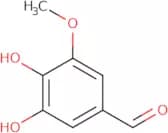
CAS:n-Heptyl 4-hydroxybenzoate is a preservative and antimicrobial agent that is used in cosmetics, pharmaceuticals, and food. It is primarily used to inhibit the growth of bacteria and fungi. The mechanism by which heptyl 4-hydroxybenzoate inhibits the growth of microorganisms is not well understood. It has been shown to be an effective inhibitor of Gram-positive bacteria such as Bacillus subtilis, but not against Gram-negative bacteria such as Escherichia coli. Heptyl 4-hydroxybenzoate has been shown to have no effect on the growth of probiotic bacteria such as Lactobacillus acidophilus. The chemical structure of n-heptyl 4-hydroxybenzoate includes a glycol ether moiety and two parabens that are linked by hydrogen bonds. These bonds can be broken by enzymes found in rat liver microsomes, leading to the release of n-Formula:C14H20O3Purity:Min. 95%Color and Shape:White Off-White PowderMolecular weight:236.31 g/mol3,4-Dihydroxy-5-methoxybenzaldehyde
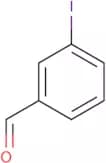
CAS:3,4-Dihydroxy-5-methoxybenzaldehyde is a synthetic compound that has shown to have inhibitory effects on the replication of DNA and RNA. It also inhibits the growth of bacteria in culture by binding to the nucleic acid. The chemical structure of 3,4-Dihydroxy-5-methoxybenzaldehyde is similar to that of bisbenzylisoquinoline alkaloids, which are found in plants such as opium poppy. This similarity may explain its ability to inhibit bacterial growth. 3,4-Dihydroxy-5-methoxybenzaldehyde may be used as a drug candidate for treating bacterial infections.Formula:C8H8O4Purity:Min. 95%Color and Shape:PowderMolecular weight:168.15 g/mol3-Iodobenzaldehyde
CAS:3-Iodobenzaldehyde is an atypical, isomeric, low energy, functional group. It has a fluorine atom in the 3-position and three different types of functional groups: alcohol, aldehyde and carboxylic acid. This compound has been studied for its ability to bind to receptors. 3-Iodobenzaldehyde can be synthesized by reacting benzalchohde with iodine and hydrochloric acid. The technique used to produce this compound is called Grignard reaction. 3-Iodobenzaldehyde can also be prepared by heating the corresponding nitrobenzene with sodium iodide in dry ether or under refluxing conditions. This compound has a low boiling point and melts at about 170 degrees Celsius. The frequency of this molecule ranges from 98 to 102 megahertzFormula:C7H5IOPurity:Min. 95%Color and Shape:PowderMolecular weight:232.02 g/mol4-Iodobenzaldehyde
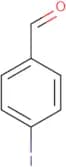
CAS:4-Iodobenzaldehyde is a chemical compound with the molecular formula C6H5IO. It is an aromatic compound that can be used in cancer therapy. 4-Iodobenzaldehyde reacts with trifluoroacetic acid to form an intramolecular hydrogen, which is detected using a low-energy monomer and high detection sensitivity. 4-Iodobenzaldehyde has two phenyl substituents and a serine protease functional group, which are required for its interaction with other molecules. The presence of these functional groups allows analytical methods to be used to identify 4-iodobenzaldehyde in various samples. Using analytical methods, it can be determined that 4-iodobenzaldehyde interacts with an acceptor molecule at the reaction vessel thermally or by irradiation.Formula:C7H5IOPurity:Min. 95%Color and Shape:Yellow PowderMolecular weight:232.02 g/mol3,5-Dichloro-4-hydroxybenzoic acid
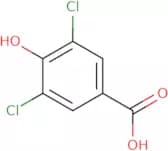
CAS:3,5-Dichloro-4-hydroxybenzoic acid is a phenolic acid that can be found in aromatic hydrocarbons. It has been shown to have antiallergic properties and has been used as an extract to treat acute toxicities. 3,5-Dichloro-4-hydroxybenzoic acid has also been shown to inhibit the production of p-hydroxybenzoic acid by rat liver microsomes. This compound may be useful in treating high blood pressure and vascular disease. It may also be used as a natural remedy for arthritis, as it has shown antiinflammatory effects. In addition, this compound can inhibit the growth of cancer cells and stimulate the immune system by binding to monoclonal antibodies that are specific for acidic pH.Formula:C7H4Cl2O3Purity:Min. 95%Color and Shape:PowderMolecular weight:207.01 g/mol4-Amino-3-nitrobenzylamine hydrochloride
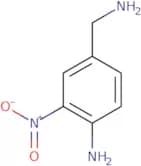
CAS:4-Amino-3-nitrobenzylamine hydrochloride is a potential vanilloid receptor antagonist with potent antagonistic activities. It has been shown to inhibit the activation of neuronal TRPV1 receptors, as well as the uptake of 4-aminobenzoic acid (4-BA) in rat brain synaptosomes. In addition, this compound can be used to optimize drug structure, acting as an amide and alkyl groups. 4-Amino-3-nitrobenzylamine hydrochloride binds to the vanilloid receptor TRPV1 and blocks its activation. This prevents the release of proinflammatory substances that are responsible for pain, inflammation, and tissue injury.Formula:C7H9N3O2·HClPurity:Min. 95%Color and Shape:PowderMolecular weight:203.63 g/mol3,5-Dibromo-2-anisic acid
CAS:3,5-Dibromo-2-anisic acid is a short chain dodecyl amine with the chemical formula CH2Br2C6H4N. It is an active compound that has been shown to have nematicidal activity and also shows high activity against saprophytes. 3,5-Dibromo-2-anisic acid is synthesized by reacting chlorine with salicylaldehyde in the presence of a base. The compound is used in the synthesis of various other organic compounds such as amides and amines.Formula:C8H6Br2O3Purity:Min. 95%Color and Shape:PowderMolecular weight:309.94 g/mol3,4-Dihydroxybenzonitrile
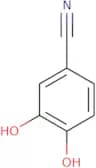
CAS:3,4-Dihydroxybenzonitrile is a chemical compound that is found in soybean lipoxygenase. The molecule has been shown to be an excellent Michaelis-Menten substrate and hydrogen bonding partner. It also reacts with chlorine to form chlorinating agents such as 3,4-dichlorobenzonitrile and 3,4-dibromobenzonitrile. 3,4-Dihydroxybenzonitrile can act as a nucleophile and forms stable complexes when reacted with hydroxyl group compounds such as protocatechuic acid or reaction solution. This chemical is reactive and can be activated by redox cycling or light. 3,4-Dihydroxybenzonitrile has been used to treat protocatechuic acid levels in the blood of patients with chronic liver disease who are being treated for alcoholism.Formula:C7H5NO2Purity:Min. 95%Color and Shape:PowderMolecular weight:135.12 g/mol4-(4-Fluorophenoxy)benzylamine hydrochloride
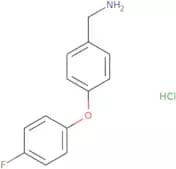
CAS:4-(4-Fluorophenoxy)benzylamine hydrochloride is a metabolic agent that inhibits the metabolism of phenylpropionic acid and butanoic acid. It is used industrially as an oxime to protect other organic compounds from damage by peroxides, such as in polymerization reactions. 4-(4-Fluorophenoxy)benzylamine hydrochloride has been shown to be effective in treating metabolic diseases, such as phenylketonuria and urea cycle disorders.Formula:C13H12FNO·HClPurity:Min. 95%Color and Shape:PowderMolecular weight:253.7 g/mol2-Bromo-6-fluorobenzonitrile
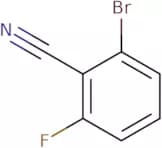
CAS:2-Bromo-6-fluorobenzonitrile is an organic compound with a molecular formula of C6H3BrF. It is a colorless liquid that is used as a precursor in the synthesis of other compounds. 2-Bromo-6-fluorobenzonitrile has been shown to be an efficient fluorophore and can be activated by electron transfer, thermally, or chemically. 2-Bromo-6-fluorobenzonitrile also has a quantum efficiency of 0.5% and transport properties that make it ideal for fluorescence microscopy. The fluorescence intensity of 2-bromo-6-fluorobenzonitrile is proportional to the amount of energy absorbed, which makes it useful for quantifying the concentration of fluorescent molecules in solution. 2-Bromo-6-fluorobenzonitrile has also been shown to have high quantum yields and high efficiency levels when
Formula:C7H3BrFNPurity:Min. 95%Color and Shape:PowderMolecular weight:200.01 g/mol2-Bromo-5-methoxybenzoic acid
CAS:2-Bromo-5-methoxybenzoic acid (BMBA) is a natural compound that belongs to the class of ellagitannins. It has been shown to inhibit the proliferation of leukemia cells and induce apoptosis in these cells. The mechanism of this apoptotic activity may be due to BMBA's inhibition of the progesterone receptor, which has been demonstrated by molecular modeling and 13C NMR spectroscopy experiments. This receptor is involved in cancer development and progression. BMBA also inhibits the mitochondrial membrane potential, leading to cell death. In addition, 2-Bromo-5-methoxybenzoic acid has been shown to have anti-inflammatory properties in mice with chronic colitis. This compound also has an effect on bacteria such as Pseudomonas aeruginosa, which was observed using thermodynamic calculations.Formula:C8H7BrO3Purity:Min. 95%Color and Shape:PowderMolecular weight:231.04 g/mol2,5-Dimethoxybenzoic acid
CAS:2,5-Dimethoxybenzoic acid (2,5-DMA) is a plant metabolite that belongs to the group of cinnamic acid derivatives. It can be found in plants and has been shown to have systemic effects. 2,5-DMA is involved in the cycloacylation of protocatechuic acid. This reaction is catalyzed by an enzyme called cyclooxygenase and requires molecular oxygen as a cofactor. 2,5-DMA also forms hydrogen bonds with methoxy groups and other molecules. The monoclonal antibodies against 2,5-DMA have been used for radiation therapy and are effective against cancer cells. Model studies show that 2,5-DMA can be converted into more potent metabolites by the action of cytochrome P450 enzymes or glutathione S-transferases.Formula:C9H10O4Purity:Min. 95%Color and Shape:PowderMolecular weight:182.17 g/mol4-Hydroxybenzoic acid
CAS:4-Hydroxybenzoic acid is a plant metabolite that is found in many plants and fruits. 4-Hydroxybenzoic acid has been shown to have anti-diabetic effects in vitro. This compound also has anti-inflammatory properties, which may be due to its ability to inhibit the production of effector proteins such as nitric oxide synthase and cyclooxygenase. The biological activity of 4-hydroxybenzoic acid is dependent on the concentration; at low concentrations it inhibits glucose uptake by cells, while at high concentrations it prevents cell growth.Formula:C7H6O3Purity:Min. 98 Area-%Color and Shape:White Off-White PowderMolecular weight:138.12 g/mol2-Hydroxy-6-methylbenzoic acid
CAS:2-Hydroxy-6-methylbenzoic acid is a natural product that is synthesized by the enzyme p. pastoris. It is a member of the polyketide class of compounds and has shown to have physiological effects such as anti-inflammatory and antioxidant properties. 2-Hydroxy-6-methylbenzoic acid also has been shown to inhibit ATP binding cassette transporter (ABC) proteins, which are involved in drug resistance, from transporting drugs out of cells, making it an attractive candidate for drug discovery.
Formula:C8H8O3Purity:Min. 95%Color and Shape:PowderMolecular weight:152.15 g/mol4-Ethoxybenzonitrile
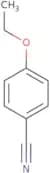
CAS:4-Ethoxybenzonitrile is an organic compound that belongs to the group of nitroalkanes. It is a substrate for reductive amination, which is a reaction in which the nitro group on 4-ethoxybenzonitrile is reduced by an amine to form an amide. This reaction can be facilitated by metal catalysts, such as copper(II) acetate and zinc chloride. The reaction yields high selectivity (>90%) with respect to the product formed and has been shown to be more efficient than other reductive amination reactions. 4-Ethoxybenzonitrile has been used as a building block for various compounds, including dyestuffs, pharmaceuticals, and pesticides. 4-Ethoxybenzonitrile is also resistant to tyrosinase due to its lack of electron donating groups on its aromatic ring.Formula:C9H9NOPurity:Min. 98 Area-%Color and Shape:PowderMolecular weight:147.17 g/mol